Tilray Stock Declines 52% in 2026 as Bulls Eye Rescheduling Catalyst
Cannabis multi-state operator Tilray Brands (TLRY) has shed more than half its market cap year-to-date, but analysts point to federal reform as a potential turnaround driver.
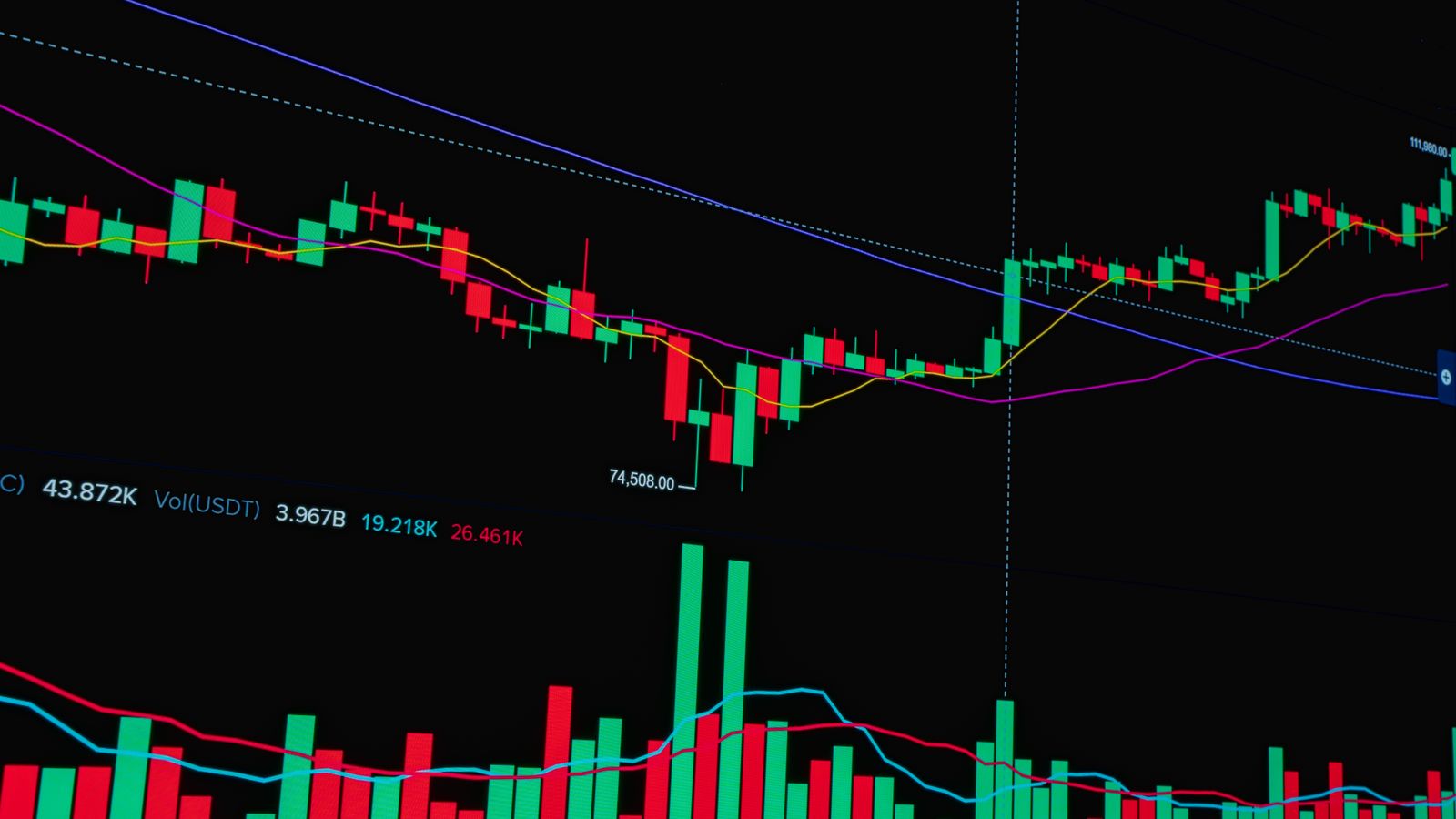
Bright candlestick chart showing stock market trends and analysis.
Year-to-Date Performance and Valuation Compression
Tilray's stock closed at $1.08 per share on September 15, down from $2.25 at the start of 2026. That erased roughly $1.4 billion in shareholder value. The company's enterprise value now sits at approximately $2.1 billion, with a trailing twelve-month revenue multiple of 0.6x—well below the 1.2x average for North American cannabis operators with comparable revenue scale.
The sell-off accelerated in Q2 2026 following the company's May earnings report, which showed a 9% year-over-year decline in cannabis segment revenue and continued cash burn in its craft beverage division. Tilray reported a net loss of $47 million for the quarter ended April 30, 2026, marking the eighth consecutive quarter of negative net income.
Trading volume has remained elevated. Daily average volume hit 38 million shares in August, more than double the 2025 average, signaling heightened volatility and potential capitulation by retail holders.
The Bullish Thesis: Rescheduling as a Margin Unlock
Proponents of Tilray at current levels point to the potential reclassification of cannabis from Schedule I to Schedule III under the Controlled Substances Act. This regulatory shift would eliminate 280E tax restrictions and materially improve EBITDA margins. Under 280E, cannabis companies can't deduct ordinary business expenses—including payroll, rent, and marketing—resulting in effective tax rates that often exceed 70% of gross profit.
If rescheduling is finalized, Tilray's management has projected that the company could swing to positive net income within two quarters, driven by an estimated $60 million in annual tax savings. That figure represents roughly 4% of trailing revenue. It would mark the company's first sustained profitability since its 2018 public debut.
The Drug Enforcement Administration's notice of proposed rulemaking remains under review, with a final rule expected by the end of 2026. A favorable outcome would also open the door to uplisting on major exchanges and access to institutional investment pools currently restricted by federal illegality.
Operational Challenges and Cash Position
Tilray ended its most recent quarter with $191 million in cash and cash equivalents. That's down from $287 million six months prior, raising questions about runway ahead of any regulatory catalyst. The company burned $52 million in operating cash flow during the quarter, driven in part by inventory write-downs in its craft beer segment and higher interest expense on its $485 million convertible debt.
CEO Irwin Simon has signaled cost-cutting measures, including the closure of two cultivation facilities in Canada and a 12% reduction in corporate headcount. The company also announced plans to divest non-core beverage assets, though no binding offers have been disclosed.
Debt maturities present another risk. Tilray's 2027 convertible notes carry a 5% coupon and a conversion price of $23 per share—more than 20 times the current stock price—meaning the company will likely need to refinance or face a cash call of $485 million within 15 months.
Peer Comparison and Sector Context
Tilray's 52% decline outpaces losses at peers including Curaleaf Holdings, which is down 34% year-to-date, and Green Thumb Industries, off 29%. The divergence reflects Tilray's higher debt load, lower margins, and slower top-line growth relative to U.S.-focused MSOs that have maintained positive EBITDA throughout the downturn.
The broader cannabis sector has faced headwinds from state-level oversupply, pricing compression, and delayed federal reform. The AdvisorShares Pure U.S. Cannabis ETF has declined 38% in 2026, while the MSOS ETF is down 41%, underscoring sector-wide pressure.
Tilray's international exposure—particularly in Germany and Portugal—differentiates it from U.S.-only operators, but European revenue contributed just 11% of total sales in the most recent quarter. That limits the diversification benefit.
Analyst Sentiment and Price Targets
Sell-side coverage on Tilray remains mixed. Consensus price target sits at $1.50 per share—implying 39% upside from current levels—but the median recommendation is Hold. Cantor Fitzgerald reiterated a Neutral rating on September 10, citing "binary regulatory risk" and limited visibility on profitability absent rescheduling.
Cowen downgraded the stock to Market Perform in July, pointing to deteriorating unit economics in Canada and execution risk in the beverage portfolio. The firm lowered its 2027 EBITDA estimate by 18% to $140 million, citing margin pressure and slower-than-expected international expansion.
A minority of analysts maintain Buy ratings. Stifel argues that the current valuation "prices in permanent impairment" and doesn't reflect the optionality embedded in federal reform or M&A activity.
Risk-Reward Profile for Contrarian Investors
At $1.08 per share, Tilray trades at a 94% discount to its 2021 peak and a 78% discount to its net tangible book value. That creates a high-risk, high-reward setup for investors willing to bet on regulatory catalysts. The stock's beta of 2.3 signals extreme volatility, and options markets are pricing a 60% implied move over the next six months—consistent with event-driven speculation around rescheduling timelines.
The bear case centers on liquidity risk, dilution risk from potential equity raises, and the possibility that rescheduling is delayed or doesn't occur. The bull case hinges entirely on federal action and the company's ability to stabilize operations long enough to capture the margin uplift.
For full background on this story, see the CannIntel topic hub on Tilray stock performance. Investors considering exposure should size positions accordingly and monitor DEA rulemaking updates, which remain the primary catalyst for a reversal in sentiment.
For complete background, history, and our ongoing coverage of this story:
Open the CannIntel topic hub →Frequently asked questions
Why has Tilray stock declined so sharply in 2026?
Tilray has lost 52% of its value in 2026 due to operational headwinds including declining cannabis revenue, cash burn in its beverage division, and broader sector pressure from state-level oversupply and delayed federal reform. The company reported an $8 million net loss in Q2 and burned $52 million in operating cash flow.
What is the bullish case for Tilray at current levels?
Bulls argue that cannabis rescheduling from Schedule I to Schedule III would eliminate 280E tax restrictions, unlocking an estimated $60 million in annual tax savings for Tilray and enabling the company to reach profitability within two quarters. The stock also trades at a steep discount to book value and historical highs.
What are the main risks facing Tilray investors?
Key risks include liquidity concerns with cash declining to $191 million, $485 million in convertible debt maturing in 2027, potential dilution from equity raises, and the possibility that federal rescheduling is delayed or does not occur. The company has also posted eight consecutive quarters of net losses.
How does Tilray's performance compare to other cannabis stocks?
Tilray's 52% decline outpaces peers like Curaleaf (down 34%) and Green Thumb Industries (down 29%). The company's higher debt load, lower margins, and slower growth relative to U.S.-focused MSOs have contributed to underperformance versus the broader cannabis sector.
What is the analyst consensus on Tilray stock?
Sell-side analysts maintain a consensus Hold rating with a median price target of $1.50 per share, implying 39% upside from current levels. Cowen downgraded the stock to Market Perform in July, while Stifel maintains a Buy rating, citing deep valuation and regulatory optionality.
Sources
The cannabis newsletter you forward to your team.
Federal policy, market data, grower alerts, and the one story that matters today. Sent every weekday at 7am. Free.
No spam. Unsubscribe with one click. 21+ only.
Related from Business
Minnesota Hits $150M in Adult-Use Sales During First Year
The state's recreational program launched in September 2025 with limited retail footprint and reached nine figures in twelve months.

Glass House Brands Advances on Production Scale and Market Expansion
Investor optimism rises as the California cultivator scales greenhouse operations and pushes into new retail markets.

Minnesota Dispensaries Cross $250 Million in First-Year Sales
Adult-use cannabis retailers hit the revenue milestone 12 months after launch, signaling strong demand despite a limited license rollout.
More from the newsroom
Vext Closes Ohio Dispensary After Customer Health Events
Multi-state operator shutters location pending investigation into undisclosed adverse reactions.

California Expands Cannabis Recalls After Pesticide-Linked Worker Death
State regulators ordered additional product recalls following a fatality tied to pesticide exposure at a licensed cultivation facility.

Law Enforcement Group Backs Campaign to Keep California Cannabis Ban
Law Enforcement Action Partnership endorses No On 8 campaign, opposing November ballot measure that would repeal state's adult-use prohibition.