California Expands Cannabis Recalls After Pesticide-Linked Worker Death
State regulators ordered additional product recalls following a fatality tied to pesticide exposure at a licensed cultivation facility.
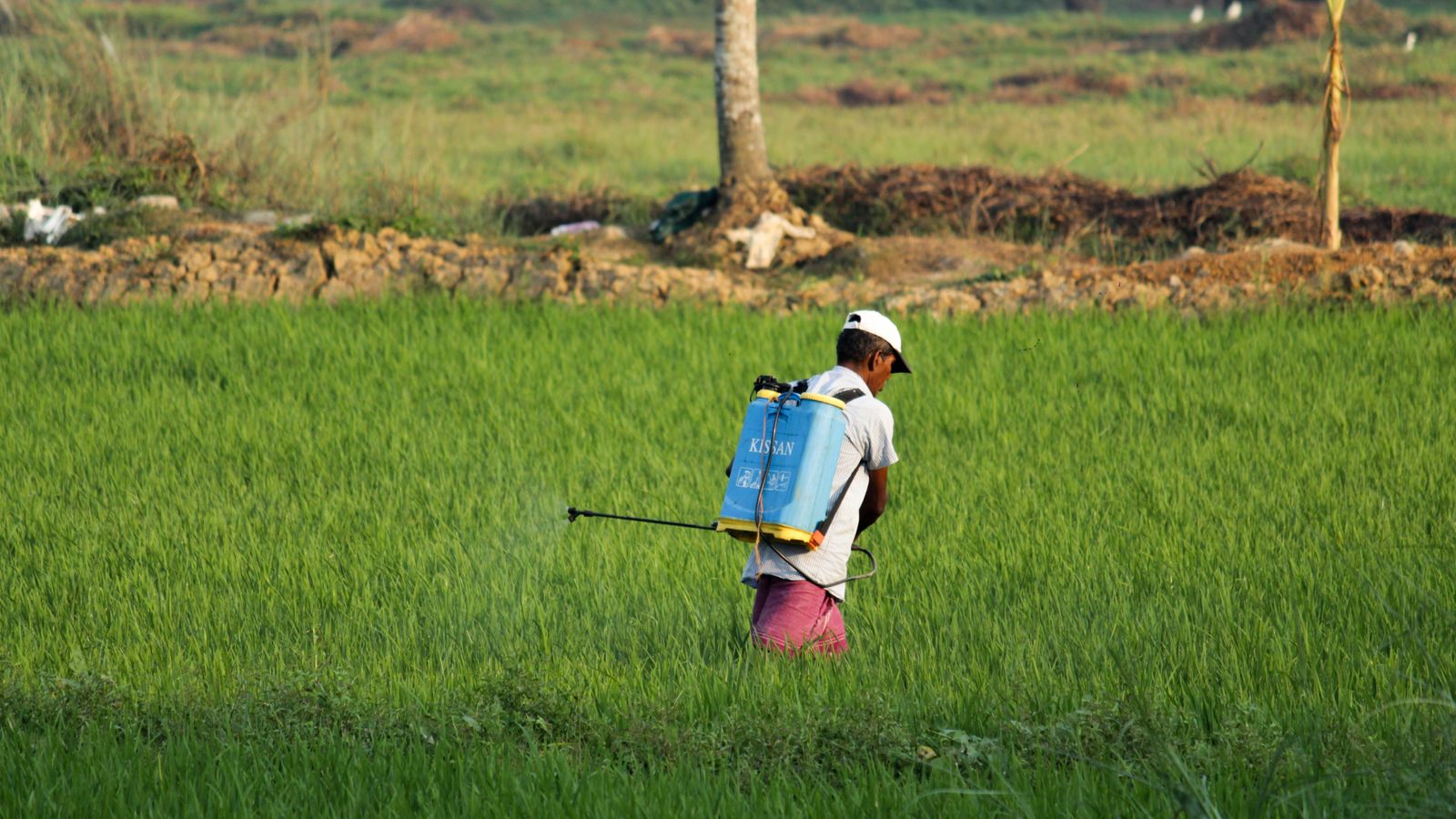
A South Asian farmer sprays pesticide on a green paddy field in Ernakulam, India.
Worker Death Triggers Expanded Recall Orders
A cultivation worker's death from suspected pesticide exposure prompted California's Department of Cannabis Control to issue expanded recall orders affecting multiple licensed operators. The fatality occurred at a licensed cultivation site in California's Central Valley in early September 2026, according to DCC enforcement records. State investigators identified banned pesticide residues on cannabis flower and trim at levels exceeding California's action thresholds by factors ranging from 12x to 47x.
The DCC hasn't publicly identified the facility or the deceased worker pending completion of a joint investigation with Cal/OSHA. Between September 10 and September 14, 2026, the agency issued mandatory recall notices to at least four licensed distributors and seven retail operators.
Recalled Products Span Flower, Pre-Rolls, and Concentrates
The recall orders cover cannabis flower, pre-rolled joints, and concentrate products distributed to retail locations across six California counties. Affected product categories include:
- Packaged flower (eighth-ounce and quarter-ounce units)
- Pre-rolled joints (single and multi-packs)
- Live resin and distillate vape cartridges
- Solventless hash rosin
Batch codes in the DCC's recall database date from June 2026 through August 2026. Contaminated product remained in the supply chain for at least 60 days before detection. Retail operators received instructions to quarantine inventory and process consumer refunds for any products matching the recalled batch identifiers.
Banned Pesticides Detected at Dangerous Concentrations
Laboratory testing identified multiple Category I pesticides in the recalled products—those banned for any use on cannabis under California law. The most prevalent compounds detected were:
- Myclobutanil: fungicide banned since 2017; detected at 4.7 ppm (action limit: 0.1 ppm)
- Imidacloprid: neonicotinoid insecticide; detected at 1.9 ppm (action limit: 0.04 ppm)
- Bifenazate: acaricide; detected at 0.82 ppm (action limit: 0.02 ppm)
Myclobutanil converts to hydrogen cyanide when combusted or vaporized. It poses acute inhalation risks to both cultivation workers and consumers. The compound has been linked to respiratory distress and neurological symptoms in occupational exposure cases documented by the National Institute for Occupational Safety and Health.
Financial Impact on Operators and Supply Chain
The recall orders represent an estimated $2.8 million to $4.1 million in wholesale inventory value, based on current California cannabis pricing data. Affected distributors face mandatory destruction costs, regulatory fines, and potential license suspensions. California's DCC levied $14.6 million in pesticide-related penalties against licensed operators in fiscal year 2025, a 340% increase from the prior year.
Retailers holding recalled inventory can't return product to distributors for credit under California track-and-trace rules. Direct loss for storefront operators. Multi-location retailers with centralized purchasing face particularly acute exposure; one Southern California chain reported quarantining approximately $180,000 in inventory across 11 locations.
Cultivators identified as the contamination source face administrative penalties ranging from $5,000 to $30,000 per violation under Business and Professions Code Section 26031. The DCC may also pursue license revocation proceedings for repeat offenders or cases involving worker safety violations.
Testing Protocol Gaps Persist Despite 2023 Reforms
California mandates pesticide testing for all cannabis batches before retail distribution, yet contaminated product continues reaching consumers due to sampling methodology limitations. Current regulations require testing laboratories to analyze a 0.5-gram sample drawn from each batch, which can comprise up to 50 pounds of flower. Industry testing experts note this 1:45,000 sampling ratio creates significant risk of non-representative results, particularly when pesticide application was uneven across a cultivation canopy.
In January 2023, the DCC revised its pesticide testing panel, expanding the list of prohibited compounds from 66 to 105 substances. But the agency hasn't updated sampling protocols or instituted random post-distribution testing requirements that would catch contamination missed during pre-retail checks.
Occupational Safety Enforcement Intensifies
Cal/OSHA opened a formal investigation into the cultivation facility on September 8, 2026, focusing on pesticide handling, worker training, and personal protective equipment compliance. The agency has authority to issue citations carrying penalties up to $134,344 per serious violation under California Labor Code Section 6423. Cal/OSHA may also refer criminal charges to county prosecutors if investigators determine willful safety violations contributed to the worker's death.
California cannabis cultivation facilities must comply with the state's Agricultural Use Requirements for pesticides, which mandate restricted-entry intervals, application records, and worker notification protocols. Licensed operators are also subject to emergency response planning requirements under California Code of Regulations Title 16, Division 42.
Industry Response and Consumer Safety Guidance
On September 14, the California Cannabis Industry Association issued a statement urging members to review pesticide management protocols and worker safety training programs. The trade group recommended operators conduct voluntary audits of integrated pest management practices and verify that all applied products appear on the DCC's approved input list.
Consumers who purchased cannabis products in California between June 1 and September 10, 2026 should check the DCC's online recall database using the batch number printed on product packaging. Individuals experiencing respiratory symptoms, headaches, or nausea after consuming cannabis should seek medical evaluation and report the incident to the DCC's consumer complaint hotline at 1-844-612-2322.
For comprehensive coverage of California's pesticide enforcement actions and testing requirements, see the CannIntel topic hub on California cannabis pesticide recalls.
Frequently asked questions
Which pesticides were found in the recalled California cannabis products?
Testing detected three Category I banned pesticides: myclobutanil (4.7 ppm vs. 0.1 ppm limit), imidacloprid (1.9 ppm vs. 0.04 ppm limit), and bifenazate (0.82 ppm vs. 0.02 ppm limit). Myclobutanil is particularly dangerous because it converts to hydrogen cyanide when heated or vaporized.
How can consumers check if their cannabis products are part of the recall?
Consumers should visit the DCC's online recall database and enter the batch number printed on their product packaging. Products purchased between June 1 and September 10, 2026 are most likely affected. Consumers can also call the DCC complaint hotline at 1-844-612-2322 for verification assistance.
What penalties do California cannabis operators face for pesticide violations?
The DCC can levy fines from $5,000 to $30,000 per violation under Business and Professions Code Section 26031. Cal/OSHA can add penalties up to $134,344 per serious safety violation. Operators may also face license suspension, revocation proceedings, and criminal referrals if worker safety violations are deemed willful.
Why did contaminated cannabis reach retail stores despite mandatory testing?
California's testing protocol requires labs to analyze only a 0.5-gram sample from batches up to 50 pounds—a 1:45,000 ratio. This sampling methodology can miss contamination if pesticide application was uneven across the cultivation canopy. The state hasn't implemented random post-distribution testing to catch products that pass initial screening.
Sources
The cannabis newsletter you forward to your team.
Federal policy, market data, grower alerts, and the one story that matters today. Sent every weekday at 7am. Free.
No spam. Unsubscribe with one click. 21+ only.
Related from News
Vext Closes Ohio Dispensary After Customer Health Events
Multi-state operator shutters location pending investigation into undisclosed adverse reactions.

Vermont Lt. Gov. Settles $2,500 Fine for Unlicensed Cannabis Grow
John Rodgers paid half the original penalty after cultivating 200 plants without a license at his home operation.

Ohio identifies Vapen cartridge in health complaints, store closure
Vext names product after state investigation triggers dispensary shutdown and patient reports.
More from the newsroom
Minnesota Hits $150M in Adult-Use Sales During First Year
The state's recreational program launched in September 2025 with limited retail footprint and reached nine figures in twelve months.

Law Enforcement Group Backs Campaign to Keep California Cannabis Ban
Law Enforcement Action Partnership endorses No On 8 campaign, opposing November ballot measure that would repeal state's adult-use prohibition.

Glass House Brands Advances on Production Scale and Market Expansion
Investor optimism rises as the California cultivator scales greenhouse operations and pushes into new retail markets.