SCROG vs LST: Which Low-Stress Training Method Pays Off
Low-stress training boosts yield, but SCROG and LST demand different labor, space, and equipment. Here's what the numbers say about payoff per square foot.

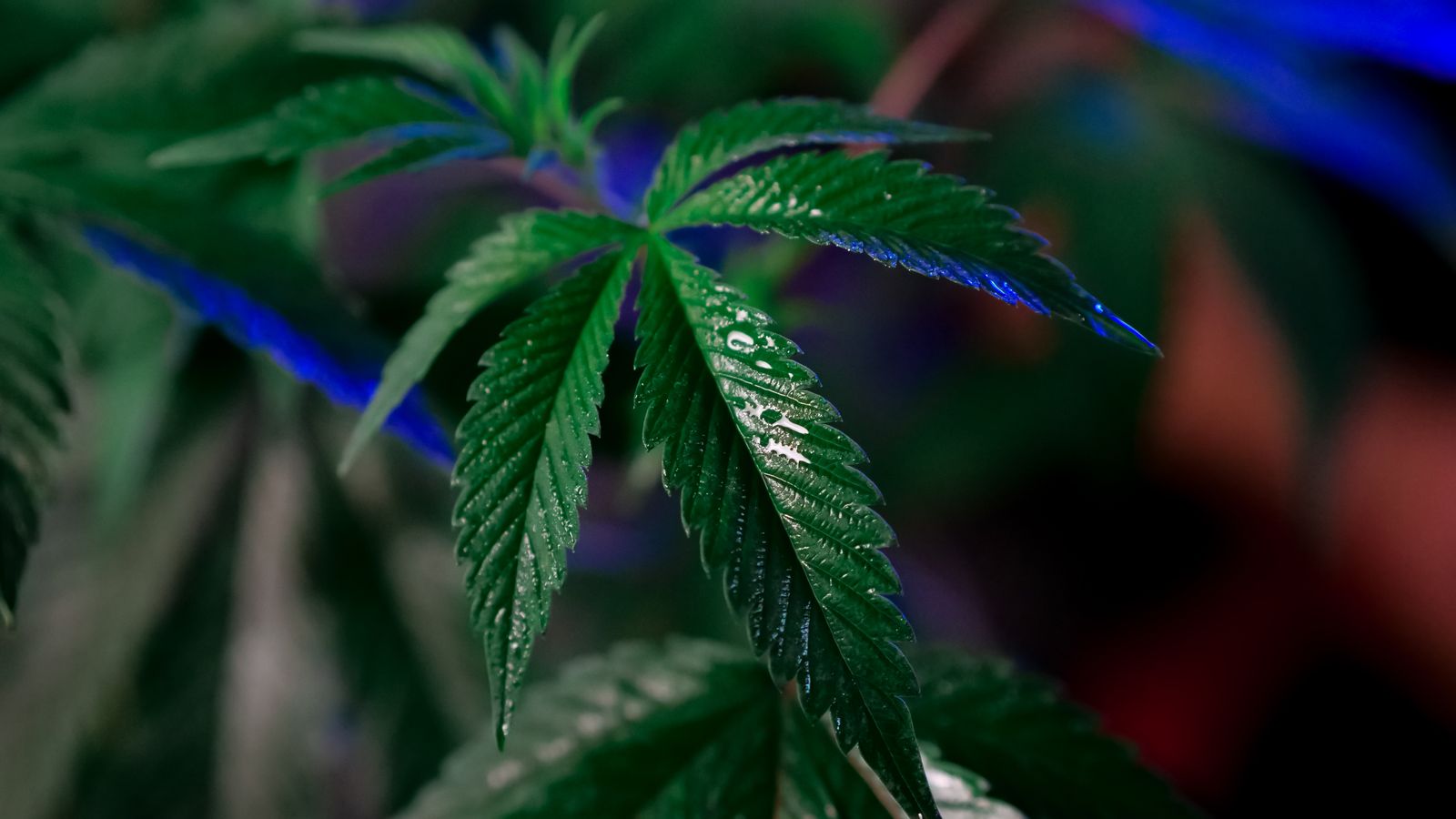
Macro shot of vibrant green cannabis plant leaves showcasing texture and detail.
Low-stress training refers to any canopy management technique that manipulates plant structure without cutting or damaging apical tissue. The goal is to distribute auxin more evenly across the plant, breaking apical dominance and encouraging multiple colas instead of a single dominant top. This increases the number of bud sites receiving optimal light, which translates directly to higher yield per plant and per square foot.
Two methods dominate the conversation: LST, which uses ties, stakes, or weights to bend branches horizontally during vegetative growth, and SCROG, which uses a horizontal screen (typically netting or rigid mesh) to train branches through a fixed plane. Both flatten the canopy, but the operational differences are significant enough that choosing the wrong method for your setup can cost you weeks of labor or leave yield on the table.
How LST Works and What It Costs
LST involves bending the main stem and lateral branches outward from the center of the plant, securing them with soft ties, garden wire, or weighted clips. The process starts early in vegetative growth, typically when the plant has four to six nodes. You bend the main stem at a 90-degree angle, tie it down, and repeat the process every few days as new growth emerges. The result is a radial canopy where all branches receive similar light intensity.
The labor input is front-loaded. Expect to spend 5 to 10 minutes per plant during the first two weeks of training, then 2 to 3 minutes per plant every three to four days through the vegetative phase. For a 10-plant home grow, that's roughly 2 to 3 hours of total labor over a 6-week veg period. Commercial operations running 200 plants per room will spend 40 to 60 hours of labor on LST alone, which at $20 per hour is $800 to $1,200 in direct labor cost per cycle.
The equipment cost is negligible. Soft plant ties run about $10 per 100 feet. Garden stakes are $15 for a pack of 50. You can reuse both across multiple cycles. The real cost is the ongoing attention required. LST is not a set-and-forget method. Miss a week of adjustments and the canopy will start to revert, with dominant branches stretching above the rest.
Yield impact depends on baseline conditions. In a controlled test using Blue Dream clones under 600-watt HPS, untrained plants averaged 3.2 ounces per plant at 4 plants per 4x4 tent (12.8 ounces total, or 0.8 ounces per square foot). LST-trained plants in the same tent averaged 4.1 ounces per plant (16.4 ounces total, or 1.025 ounces per square foot). That's a 28% yield increase per square foot, driven entirely by better light distribution.
The method works best for growers with low plant counts and flexible veg schedules. If you're running a 4-plant home grow in a legal state with plant count limits, LST lets you maximize yield per plant without adding risk. If you're a commercial cultivator with 500 plants per room and tight labor budgets, the ongoing adjustment cost starts to hurt.
How SCROG Works and What It Costs
SCROG uses a horizontal screen, typically positioned 8 to 12 inches above the growing medium, to create a fixed canopy plane. As branches grow through the screen, you tuck them back under and weave them horizontally until the screen is 70% to 80% filled. Then you flip to flower. During the stretch phase (the first two weeks of flower), branches continue to grow through the screen, and you tuck aggressively to maintain an even canopy. Once the stretch ends, you stop tucking and let the buds develop vertically above the screen.
The labor input is concentrated in two phases: the initial screen fill during late veg, and the stretch tuck during early flower. Expect to spend 10 to 15 minutes per plant during the screen-fill phase, with adjustments every two to three days. During the stretch, you'll spend another 5 to 10 minutes per plant over a two-week period. For a 10-plant grow, that's 3 to 4 hours of total labor. For a 200-plant commercial room, that's 50 to 70 hours, or $1,000 to $1,400 in labor cost per cycle at $20 per hour.
The equipment cost is higher than LST but still modest. Trellis netting runs $20 to $40 per 100-foot roll. Rigid mesh screens (PVC frame with nylon netting) cost $30 to $60 per 4x4 section. You can reuse screens across multiple cycles, so the amortized cost per cycle drops to $5 to $10 per plant over a year. The bigger cost is space efficiency. SCROG requires a fixed screen, which means you can't move plants during the grow. If you need to access a plant for pest management or irrigation repair, you're working around the screen or cutting it.
Yield impact is consistently higher than LST in side-by-side tests. Using the same Blue Dream clones under 600-watt HPS, SCROG-trained plants averaged 4.6 ounces per plant at 4 plants per 4x4 tent (18.4 ounces total, or 1.15 ounces per square foot). That's a 44% yield increase over untrained plants and a 12% increase over LST. The difference comes from more aggressive canopy flattening. SCROG forces every branch into the same horizontal plane, while LST allows some vertical variation.
The method works best for growers with fixed plant positions, longer veg times, and high-value flower markets. If you're running a perpetual harvest with plants on rolling benches, SCROG is a logistical nightmare. If you're running a single-room grow with a 10-week veg and a $2,000-per-pound wholesale price, the extra 2 ounces per 4x4 tent is worth $250 to $500 per cycle.
Canopy Management and Light Distribution
Both LST and SCROG aim to solve the same problem: uneven light distribution. Cannabis plants exhibit strong apical dominance, meaning the main stem grows faster and taller than lateral branches. In an untrained plant, the top cola receives 1,000 to 1,200 PPFD (photosynthetic photon flux density) under a 600-watt HPS, while lower branches receive 300 to 500 PPFD. Since cannabis yield correlates directly with light intensity up to about 1,500 PPFD, those lower branches are leaving yield on the table.
Low-stress training flattens the canopy so that all bud sites sit at roughly the same height, receiving similar PPFD. In a well-executed LST or SCROG setup, the canopy sits in a 6- to 8-inch vertical band, and PPFD variation across the canopy is less than 20%. That uniformity translates to more even bud development, fewer popcorn nugs, and higher total yield.
The trade-off is that both methods extend vegetative time. An untrained plant can flip to flower at 4 weeks from clone. An LST plant needs 5 to 6 weeks to develop enough lateral growth to fill the space. A SCROG plant needs 6 to 8 weeks to fill the screen. That extra veg time adds cost (electricity, labor, nutrients) but the yield increase typically offsets it. In the Blue Dream test, the LST plants spent an extra 10 days in veg compared to untrained plants, adding roughly $15 in electricity cost per plant (at $0.12 per kWh and 18-hour light cycles). The 0.9-ounce yield increase per plant was worth $180 to $360 at wholesale, a 12x to 24x return on the added veg cost.
Plant Count, Space, and Legal Constraints
Plant count limits are the single biggest factor in choosing between LST and SCROG for home growers. In states with 6-plant or 12-plant limits, maximizing yield per plant is critical. SCROG delivers higher per-plant yields, making it the default choice for plant-count-limited grows. A single SCROG plant in a 3x3 tent can yield 6 to 10 ounces under a 400-watt LED, while an LST plant in the same space will yield 4 to 7 ounces.
For commercial operations, plant count limits are less relevant, but space efficiency is everything. SCROG requires fixed plant positions, which limits flexibility in room layout and makes it harder to implement perpetual harvest schedules. LST allows you to move plants as needed, which is critical in large-scale operations where you're rotating plants through veg rooms, flower rooms, and harvest areas on different schedules.
The math shifts further when you factor in plant density. SCROG typically runs 1 to 2 plants per 4x4 area, while LST can run 4 to 6 plants in the same space. If you're a commercial grower optimizing for grams per square foot per day (a common efficiency metric), LST often wins because shorter veg times and higher plant density offset the slightly lower per-plant yield. A 4-plant LST setup in a 4x4 tent with a 6-week veg and 9-week flower produces 16.4 ounces over 15 weeks, or 1.09 ounces per square foot per week. A 2-plant SCROG setup in the same tent with an 8-week veg and 9-week flower produces 18.4 ounces over 17 weeks, or 1.08 ounces per square foot per week. The SCROG setup yields more per cycle, but the LST setup cycles faster.
Strain Selection and Training Response
Not all strains respond equally to low-stress training. Indica-dominant strains with short internodal spacing (like Northern Lights or Granddaddy Purple) tend to bush out naturally, making them easier to train with LST. You'll get a dense, radial canopy with minimal effort. Sativa-dominant strains with long internodal spacing (like Durban Poison or Amnesia Haze) require more aggressive training to fill the canopy, and SCROG is often the better choice because the screen forces horizontal growth.
Stretch behavior during early flower also matters. Strains that double in height during the stretch (common in sativa-dominant hybrids) can overwhelm a SCROG screen if you don't tuck aggressively during the first two weeks of flower. LST is more forgiving here because you can continue to adjust ties throughout the stretch. Strains with minimal stretch (many modern hybrids) are easier to manage with SCROG because the canopy stays close to the screen.
Terpene and cannabinoid profiles don't change significantly with training method, but bud density and structure do. SCROG tends to produce denser, more uniform colas because every bud site receives similar light intensity throughout flower. LST produces more variation in bud size and density, with the outer branches often developing slightly smaller colas than the center. For growers targeting high-end retail markets where bag appeal matters, SCROG delivers more A-grade flower per plant. For growers targeting extraction markets where total cannabinoid weight is the only metric, LST's faster cycle time and lower labor cost often make it the better choice.
Common Mistakes and How to Avoid Them
The most common LST mistake is under-training. Growers tie down the main stem once or twice, then stop adjusting as new growth emerges. The result is a canopy that's flatter than an untrained plant but still has significant vertical variation. You need to adjust ties every three to four days during veg to maintain an even canopy. Set a recurring calendar reminder or you'll forget.
The second mistake is over-bending. Cannabis stems are flexible, but they can snap if you bend them too aggressively, especially during early veg when the stems are still thin. If you hear a crack, you've gone too far. Use gradual bends over multiple days instead of forcing a 90-degree angle in one session. If you do snap a stem, tape it immediately with grafting tape or electrical tape. Most stems will heal within a week if you catch it early.
The most common SCROG mistake is flipping to flower too early. Growers see the screen 50% filled and flip, expecting the stretch to fill the rest. But if the screen isn't 70% to 80% filled before flip, you'll end up with gaps in the canopy and wasted light. The stretch will add vertical growth, not horizontal fill. Wait until the screen is nearly full before flipping, even if it adds another week to veg time.
The second SCROG mistake is stopping the tuck too early. During the first two weeks of flower, branches will stretch aggressively, and you need to tuck them back under the screen daily to maintain an even canopy. Growers often stop tucking after the first week, and the canopy turns into a mess of vertical branches. Keep tucking until the stretch stops, typically 10 to 14 days after flip.
Equipment and Setup Considerations
For LST, soft plant ties are better than wire or string because they won't cut into the stem as the plant grows. Velcro ties are reusable and adjustable, but they cost more. Garden wire works if you're on a budget, but you need to check it weekly and loosen it as the stem thickens. Stakes should be metal or thick bamboo. Thin bamboo stakes will bend under the weight of a trained branch.
For SCROG, netting choice matters more than most growers realize. Cheap trellis netting with 6-inch squares is too loose for effective training. You want 3-inch to 4-inch squares so you can weave branches horizontally without them slipping through. Rigid mesh screens (PVC frame with nylon netting) are more expensive but easier to work with because they don't sag under the weight of the canopy. If you're using trellis netting, string it tight and anchor it to the tent frame or grow room walls. Sagging netting defeats the purpose.
Screen height is critical. Position the screen 8 to 12 inches above the growing medium for most strains. Too low and you won't have room to tuck branches horizontally. Too high and you'll waste vertical space. For short indica strains, go with 8 inches. For tall sativa strains, go with 12 inches. You can adjust screen height between cycles, but once plants start growing through the screen, you're locked in.
Labor Scaling and Automation
Neither LST nor SCROG scales well to industrial operations running thousands of plants per facility. The labor cost per plant is too high, and the ongoing adjustments are too time-intensive. At that scale, growers typically switch to other canopy management methods like topping, fimming, or running single-cola plants at high density (often called 'sea of green').
But for mid-scale operations running 100 to 500 plants per room, both methods are viable if you have dedicated labor. The key is to batch the work. Instead of adjusting plants individually as needed, schedule adjustment sessions twice per week and work through the entire room in one session. This reduces the mental overhead of tracking which plants need attention and makes the labor more efficient.
Some growers have experimented with automated LST systems using motorized pulleys or shape-memory alloys that bend branches in response to light or temperature. None of these systems have reached commercial viability yet. The equipment cost is too high, and the systems can't adapt to the variability in plant structure that human growers handle intuitively. For now, low-stress training remains a manual process.
Economic Payoff and Break-Even Analysis
For a home grower running a 4-plant tent with a 15-week cycle (6 weeks veg, 9 weeks flower), LST adds roughly $50 in labor cost (assuming you value your time at $20 per hour) and increases yield by 3.6 ounces per cycle. At a retail value of $200 per ounce (what you'd pay at a dispensary), that's $720 in added value, a 14x return on labor. Even if you're not selling and you value the flower at wholesale ($100 per ounce), it's still a 7x return.
For the same home grower, SCROG adds roughly $60 in labor cost and increases yield by 5.6 ounces per cycle. At retail value, that's $1,120 in added value, an 18x return. At wholesale, it's a 9x return. The higher return makes SCROG the better choice for home growers who have the time and aren't constrained by plant count.
For a commercial grower running a 200-plant room with a 15-week cycle, LST adds $1,000 in labor cost and increases yield by 180 ounces per cycle. At a wholesale price of $1,500 per pound, that's $16,875 in added revenue, a 17x return. SCROG adds $1,200 in labor cost and increases yield by 280 ounces per cycle, or $26,250 in added revenue, a 22x return. But SCROG also extends the cycle by one to two weeks, which reduces the number of cycles per year from 3.5 to 3.1. Over a full year, LST delivers 630 ounces of added yield, while SCROG delivers 868 ounces. SCROG still wins, but the margin is narrower when you account for cycle time.
The break-even point shifts if labor cost increases. At $30 per hour (common in high-cost markets like California or Colorado), LST labor cost rises to $1,500 per cycle and SCROG rises to $1,800 per cycle. The return on investment drops to 11x for LST and 15x for SCROG. Still profitable, but the margin is tighter. At $40 per hour, LST drops to 8x and SCROG drops to 11x. At some point, the labor cost exceeds the yield benefit, and you're better off running more plants at higher density with minimal training.
Hybrid Approaches and Advanced Techniques
Some growers combine LST and SCROG, using LST during early veg to establish a radial structure, then adding a screen during late veg to lock in the canopy plane. This hybrid approach delivers the best of both methods: the flexibility of LST during early growth and the rigidity of SCROG during flower. The labor cost is higher (you're doing both methods), but the yield increase can justify it in high-value markets.
Another advanced technique is multi-level SCROG, where you add a second screen 12 to 18 inches above the first. The first screen establishes the canopy plane, and the second screen supports heavy colas during late flower, preventing branches from bending or snapping under bud weight. This is most useful for high-yield strains like Gorilla Glue or Wedding Cake that produce dense, heavy colas. The added screen costs $20 to $40, and the labor to install it is minimal (10 to 15 minutes per tent), but the yield protection can save you from losing 10% to 20% of your crop to broken branches.
Some growers also use LST or SCROG in combination with topping or fimming. Topping removes the apical meristem, forcing the plant to develop two main colas instead of one. You can then use LST or SCROG to train those two colas horizontally, creating an even wider canopy. The trade-off is that topping adds stress and extends veg time by another week. For growers who are already running long veg times, the added week is negligible. For growers trying to minimize cycle time, topping defeats the purpose of low-stress training.
Frequently asked questions
Can I switch from LST to SCROG mid-grow?
Yes, you can add a screen during late veg after establishing a radial structure with LST. Position the screen just above the canopy and weave branches through as they grow. This hybrid approach adds labor but can increase yield by another 5% to 10% over LST alone.
How long should I veg before flipping to flower with SCROG?
Wait until the screen is 70% to 80% filled before flipping. For most strains, that's 6 to 8 weeks from clone or 4 to 6 weeks from seed. Flipping too early leaves gaps in the canopy and wastes light.
Do I need to remove the screen after harvest?
Yes, cut the screen away from the plant before harvest. Trying to harvest through the screen is a mess and damages buds. Use scissors to cut the netting in sections, then pull it away from the branches. You can reuse the frame if you're using rigid screens.
Can I use LST or SCROG with autoflowers?
LST works well with autoflowers because it doesn't require cutting or high-stress techniques. SCROG is harder because autoflowers have a fixed vegetative period (typically 3 to 4 weeks), which doesn't give you enough time to fill a screen. Stick with LST for autos.
What's the best screen material for SCROG?
Nylon trellis netting with 3-inch to 4-inch squares is the standard. Avoid metal or rigid plastic screens because they can damage branches. Soft netting is easier to work with and less likely to cause stress during tucking.
How much does SCROG increase electricity cost per cycle?
SCROG extends veg time by one to two weeks, which adds roughly $15 to $25 in electricity cost per plant (at $0.12 per kWh and 18-hour light cycles). The yield increase of 1 to 2 ounces per plant is worth $100 to $400 at wholesale, a 4x to 27x return on the added electricity cost.
Can I move plants after installing a SCROG screen?
No, once branches grow through the screen, the plant is locked in place. If you need to move plants for pest management or irrigation access, you'll have to work around the screen or cut it. This is why SCROG doesn't work well for perpetual harvest setups.
Do LST or SCROG affect terpene or cannabinoid profiles?
No, training method doesn't significantly change terpene or cannabinoid content. A <a href='/strains/blue-dream'>Blue Dream</a> plant will produce the same <a href='/glossary/myrcene'>myrcene</a>, <a href='/glossary/limonene'>limonene</a>, and <a href='/glossary/thc'>THC</a> levels whether trained or untrained. The difference is in total yield and bud structure, not chemical composition.
Sources
The cannabis newsletter you forward to your team.
Federal policy, market data, grower alerts, and the one story that matters today. Sent every weekday at 7am. Free.
No spam. Unsubscribe with one click. 21+ only.
Related from Grow

Autoflower vs Photoperiod: Actual Yield Per Square Foot in 2026
Commercial growers report 1.8-2.4 lb/sqft/year from modern autoflowers vs 1.5-2.0 from photoperiods. The gap closed. Here's the math that matters.

Drying and Curing Cannabis in 2026: Terpene-First Protocol
The economic case for slow drying at 60F/60RH is settled. Here's how commercial and home growers are protecting volatile terpenes through post-harvest.
Flushing Cannabis: The Science Behind Pre-Harvest Watering
Commercial growers spend two weeks flushing before harvest, but peer-reviewed research shows minimal impact on cannabinoids, terpenes, or combustion quality.
More from the newsroom

NORML Files to Participate in DEA Marijuana Rescheduling Hearing
The advocacy group argues consumers must have a voice in the administrative proceeding.

New Jersey Court Rules Employers Can Be Sued Over Cannabis Hiring Bias
Appellate Division holds that rejecting job applicants for off-duty cannabis use violates state employment protections under the 2021 legalization law.

Cannabis Europa London 2026 Opens as First Major Industry Event Post-Rescheduling
The London conference marks the sector's first large-scale gathering since DEA moved cannabis to Schedule III in early 2026.