Blue Dream
Blueberry × Haze
California's daytime workhorse. Berry on the inhale, clarity on the back end. Heat-tolerant for southern outdoor grows.
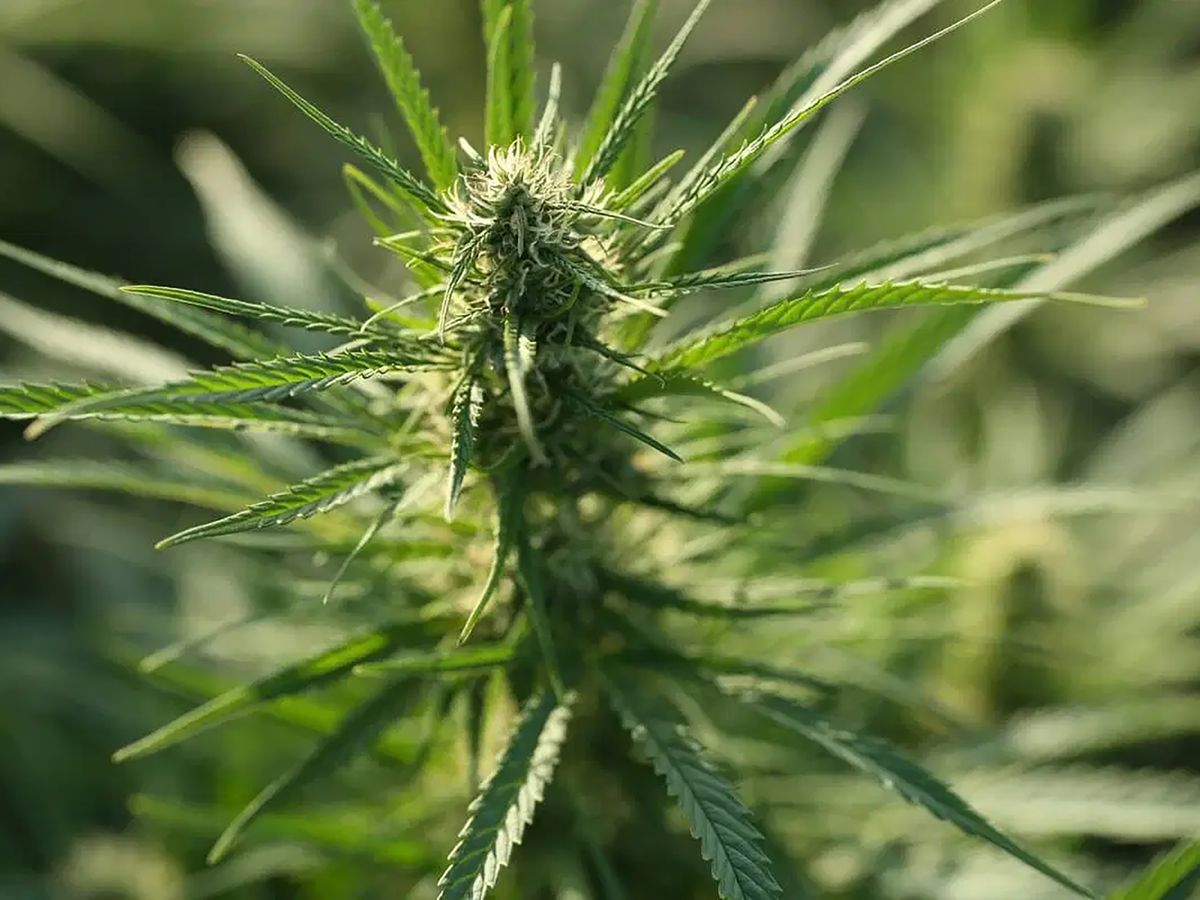
Blue Dream emerged from the West Coast cannabis scene in the early 2000s, a cross between Blueberry and a classic Haze cultivar. The breeder origin remains contested, with both DJ Short and Santa Cruz growers claiming involvement in its development. What's clear is that by the mid-2000s, Blue Dream had become the workhorse sativa-dominant hybrid of California dispensaries, valued for high yields, moderate difficulty, and broad consumer appeal. Its genetic stability and commercial viability made it a staple, though oversaturation in some markets has dulled its novelty.
The Blueberry parent contributes fruity aromatics and a slightly broader leaf structure, while the Haze lineage provides the stretchy growth pattern, longer flowering time, and cerebral effect profile. This combination produces a plant that leans sativa in structure and effect but retains enough indica influence to keep flower density reasonable and flowering times from extending past ten weeks. Blue Dream typically expresses as a tall, vigorous plant with moderate lateral branching and a tendency to develop one dominant central cola if not topped or trained.
Phenotype Expression and Seed Variation
Blue Dream is most commonly available as a clone-only or feminized seed line derived from the original Santa Cruz cut. Phenotype variation exists across seed batches, particularly from breeders who've worked their own versions of the cross. Expect some plants to lean more Blueberry, with tighter node spacing and deeper blue hues in cooler temperatures, while others will express more Haze traits, stretching significantly during the first three weeks of flower and developing airier buds if lighting or nutrients are insufficient.
Most phenotypes share a recognizable terpene signature dominated by myrcene and pinene, though the ratio shifts depending on environmental conditions and specific lineage. Plants from seed will generally show sex by the fourth or fifth week of vegetative growth. Hermaphroditic tendencies are low but not absent, particularly under stress from light leaks or nutrient swings during early flower.
Cultivation Profile
Blue Dream performs well in both indoor and outdoor environments, though it rewards growers who can provide ample vertical space. Indoor cultivators should plan for plants that will double or triple in height during the flowering stretch. Topping at the fourth or fifth node and employing LST or a SCROG setup helps manage height and encourages more even canopy development. Without training, lower branches often remain shaded and produce smaller, less developed flowers.
Lighting needs are standard for a sativa-dominant hybrid. Indoors, 600-1000W HPS or equivalent LED per square meter will support dense flower development. Blue Dream responds well to higher light intensity during weeks three through six of flower, when bud sites are bulking. Outdoor growers in temperate climates should expect harvest in early to mid-October in the Northern Hemisphere, making it a viable choice for regions where early frosts are not a concern.
Feeding requirements are moderate to heavy, particularly during the flowering stretch. Blue Dream will show nitrogen deficiency if not fed adequately through the first half of flower, often beginning with lower fan leaves yellowing prematurely. Transition to bloom nutrients gradually, maintaining some nitrogen availability until pistil development slows around week four. Phosphorus and potassium uptake increases significantly from weeks five through seven, and underdosing during this window results in smaller, less dense flowers.
Common problems include nutrient lockout in soilless media if pH drifts above 6.5, and calcium or magnesium deficiencies under LED lighting. Blue Dream is moderately susceptible to powdery mildew, especially in dense canopies with poor airflow. Outdoor growers in humid climates should monitor for botrytis during late flower, as the larger colas can trap moisture. Defoliation during the transition and again around week three of flower improves airflow and light penetration without stressing the plant excessively.
Flower Structure and Yield
Blue Dream produces elongated, moderately dense flowers with a high calyx-to-leaf ratio. Properly grown plants develop a thick central cola with substantial secondary branches if topped early. Trichome production is consistent, with a visible resin layer by week five that continues building through week eight. The flowers rarely achieve the rock-hard density of indica-dominant strains, but they're far from airy when grown under adequate lighting and nutrient regimens.
Indoor yields range from 450 to 600 grams per square meter under dialed conditions, with experienced growers occasionally pushing higher in optimized SCROG setups. Outdoor plants in full sun with room to stretch can yield one to two pounds per plant, though this depends heavily on vegetative time, container size, and regional climate. The strain's high yield potential is one reason it became a commercial favorite, though the market's shift toward exotic, lower-yielding cultivars has reduced its prevalence in some regions.
THC content typically ranges from 17 to 24 percent, with most lab-tested samples landing between 19 and 22 percent. This places Blue Dream slightly above the mid-tier potency range for modern hybrids but well below the 28-plus percent numbers pushed by newer cuts. The cannabinoid profile is usually THC-dominant with minimal CBD, though some phenotypes express trace amounts of CBG.
Effects and Consumer Experience
Blue Dream's effect profile is what built its reputation. The high comes on relatively quickly, within five to ten minutes of inhalation, beginning with a clear-headed, focused cerebral effect that most users describe as energizing without anxiety. This initial phase is Haze-forward, promoting conversation, creativity, and task focus. The myrcene content softens the edge, providing a body relaxation that prevents the jittery overstimulation some pure sativas can cause.
The experience plateaus into a balanced state that lasts two to three hours for occasional users, with diminishing effects extending another hour or two. Tolerance builds relatively quickly with daily use, and heavy consumers often report Blue Dream as too mild for evening use. It's better suited for daytime or early evening sessions where functionality is desired. Pain relief is moderate, and most users report it's more effective for managing stress or mild anxiety than chronic pain conditions.
Dose awareness matters. A single inhalation or low-dose edible made from Blue Dream flower will provide the clear-headed effect most users seek. Overconsumption, particularly in concentrates, can push the experience into uncomfortable territory with racing thoughts and increased heart rate, especially for those sensitive to high-myrcene sativas.
Terpene Profile and Sensory Characteristics
The dominant terpenes are myrcene, pinene, and caryophyllene, typically in that order. Myrcene contributes the earthy, slightly musky base note and is largely responsible for the calming body effect that balances the cerebral stimulation. Pinene provides the sharp, pine-forward aroma that hits immediately when breaking up the flower, and it may contribute to the alert, focused mental state users report. Caryophyllene adds a subtle spice and may offer mild anti-inflammatory effects, though this is more pronounced in strains where it's a primary terpene.
The overall aroma is sweet berry and citrus on the inhale, with a piney, slightly herbal exhale. Cured properly, Blue Dream has a pleasant but not overwhelming smell. Poorly cured batches can lose the berry sweetness and lean too heavily into generic hay or grass notes, a common issue with high-myrcene strains dried too quickly. The flavor holds up reasonably well in joints and dry herb vaporizers, though it's less distinctive than some modern terpene-heavy cultivars.
Market Position and Cultural Context
Blue Dream's rise coincided with California's medical cannabis expansion in the mid-2000s. It became the default sativa offering in many dispensaries, valued for consistency, patient feedback, and profitability. For several years, it was among the top three most popular strains in West Coast markets, alongside OG Kush and Sour Diesel.
Oversaturation led to backlash. By the early 2010s, Blue Dream was so ubiquitous that it became a punchline among connoisseurs seeking novelty. Growers shifted toward limited-release exotics and Instagram-friendly phenotypes with higher bag appeal. Blue Dream's market share declined, though it never disappeared. It remains a volume mover in recreational markets where price-conscious consumers prioritize value and predictability over hype.
Outside California, Blue Dream maintains stronger appeal. Growers in prohibition and newly legal markets appreciate its forgiving nature and reliable yields. It's a sensible choice for first-time cultivators stepping up from autoflowers, offering enough challenge to build skills without the finicky requirements of landrace sativas or temperamental elite cuts.
Honest Assessment
Blue Dream's strengths are clear: it grows vigorously, yields well, and produces a consumer-friendly effect profile that satisfies a broad audience. It's not the most potent, the most flavorful, or the most exotic, but it does what it does reliably. For commercial operations prioritizing throughput and lower risk, it's still a defensible choice. For growers chasing clout or top-shelf pricing, it's a poor fit.
The strain's weaknesses stem from its ubiquity. It's not unique enough to command premium pricing in saturated markets, and its moderate potency limits appeal to high-tolerance users. The effect profile, while pleasant, lacks the punch or distinctiveness that drives word-of-mouth hype. Mold susceptibility in humid climates and the need for adequate vertical space can complicate grows for those with limited resources.
For home growers, Blue Dream is worth running once. It teaches canopy management, nutrient timing, and harvest windows without punishing mistakes too harshly. Whether it earns a permanent spot in the rotation depends on personal priorities. If you value yield, ease, and a daytime-friendly high, it delivers. If you're hunting for the next big thing, keep looking.
Blue Dream FAQ
Is Blue Dream indica or sativa?
Blue Dream is a sativa-dominant hybrid, typically expressing 60-70% sativa genetics from its Haze parent and 30-40% indica influence from Blueberry. The plant structure, flowering time, and effect profile all lean sativa, though the indica lineage tempers the intensity and shortens flowering compared to pure Haze strains.
How long does Blue Dream take to flower?
Blue Dream flowers in 9 to 10 weeks indoors, with most growers harvesting around day 63 to 67. Outdoor cultivators in the Northern Hemisphere should expect harvest in early to mid-October. Letting the plant go an extra few days can increase resin production, but waiting too long risks amber trichomes and a heavier, less cerebral effect.
What does Blue Dream taste and smell like?
Blue Dream smells of sweet berries and pine, with an earthy undertone from its high myrcene content. The flavor on inhale is fruity and slightly citrus, transitioning to a piney, herbal exhale. Properly cured flower retains the berry sweetness; poorly handled batches lose complexity and can taste generic or grassy.
How potent is Blue Dream?
Blue Dream typically tests between 17 and 24 percent THC, with most samples in the 19-22% range. This is slightly above the mid-tier potency for modern cannabis but well below the 28-plus percent figures common in newer elite cuts. It's potent enough for most users but may feel mild to heavy daily consumers.
What are Blue Dream's effects?
Blue Dream produces a clear-headed, energizing cerebral high that promotes focus and creativity, balanced by mild body relaxation from its myrcene content. Effects last two to three hours for occasional users, with a gradual decline rather than a sharp drop. Overconsumption can lead to racing thoughts or anxiety, especially in concentrates, so dose awareness is important.
Is Blue Dream easy to grow?
Blue Dream is moderately easy to grow, suitable for cultivators with some experience. It requires vertical space due to significant flowering stretch and benefits from training techniques like topping or SCROG. Common issues include nutrient deficiencies during early flower, powdery mildew in dense canopies, and botrytis in humid outdoor environments. Overall, it's forgiving enough for intermediate growers but not entirely beginner-proof.
What is the lineage of Blue Dream?
Blue Dream is a cross between Blueberry and Haze. The exact breeder origin is disputed, with both DJ Short and Santa Cruz cultivators claiming involvement in its creation. The strain rose to prominence in California's medical cannabis market in the early 2000s and quickly became one of the West Coast's most popular hybrids.
Where can I buy Blue Dream seeds?
Blue Dream seeds are available from various licensed seed banks in regions where cannabis seeds are legal to purchase. Look for feminized seed options or reputable breeders who have stabilized their own version of the cross. Many growers also source clones from local dispensaries or cultivation networks where the original Santa Cruz cut is still circulated. Always verify the legality of seed purchases in your jurisdiction before ordering.
The cannabis newsletter you forward to your team.
Federal policy, market data, grower alerts, and the one story that matters today. Sent every weekday at 7am. Free.
No spam. Unsubscribe with one click. 21+ only.