Autoflower vs Photoperiod: Actual Yield Per Square Foot in 2026
Commercial growers report 1.8-2.4 lb/sqft/year from modern autoflowers vs 1.5-2.0 from photoperiods. The gap closed. Here's the math that matters.

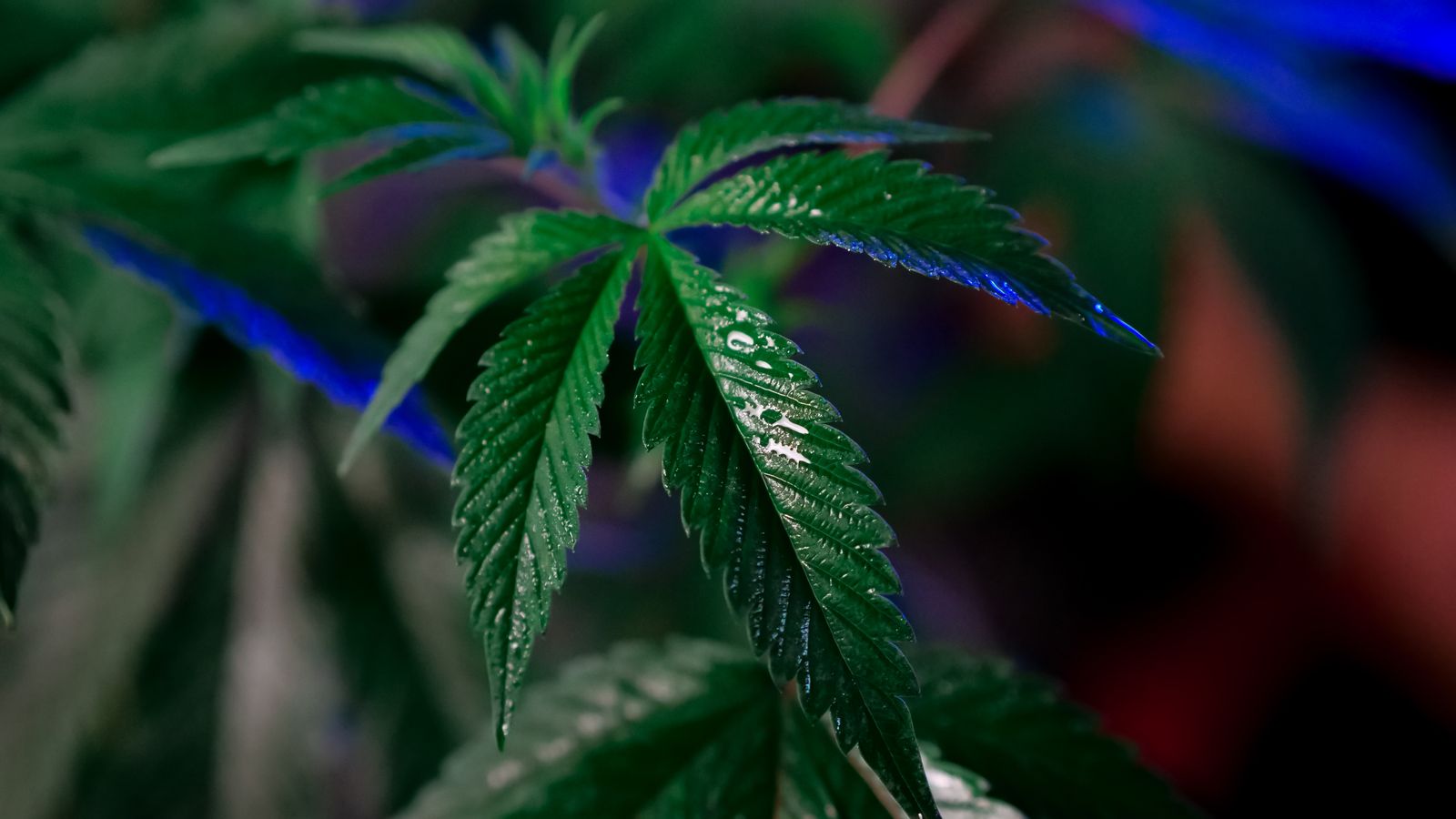
A vibrant close-up shot of a cannabis plant with lush green leaves, highlighting its texture and details.
Five years ago, the answer was straightforward: photoperiod plants yielded more per harvest, and autoflowers were for hobbyists who couldn't manage a light timer. In 2026, the data tells a different story. Growers running tight perpetual autoflower schedules in controlled environments are reporting annual yields that match or exceed traditional photoperiod operations, particularly in markets where speed to market offsets minor cannabinoid concentration differences.
The shift comes down to three factors: fourth and fifth generation autoflower genetics that retain 85-95% of photoperiod potency, the elimination of separate veg and flower rooms in auto operations, and the compounding effect of 4-5 harvests per year versus 3-4 with photoperiods. But the math only works if you understand the operational trade-offs.
The Ruderalis Factor: What Changed in Modern Autoflower Genetics
Cannabis ruderalis, the wild subspecies native to Central Asia and Eastern Europe, evolved to flower based on age rather than photoperiod because of short growing seasons at higher latitudes. Early autoflower breeders in the 2000s crossed ruderalis with high-potency photoperiod strains to create plants that flowered automatically after 3-4 weeks of vegetative growth, regardless of light schedule.
The problem was dilution. Ruderalis itself produces minimal THC and CBN, typically under 3% total cannabinoids. First-generation autoflowers like Lowryder tested at 8-12% THC, acceptable for personal use but noncompetitive in commercial markets where photoperiod strains were hitting 18-25% THC by 2010.
The breeding work from 2015-2025 focused on backcrossing autoflowering traits into elite photoperiod lines while minimizing ruderalis genetic contribution. By the third backcross generation, breeders were working with plants that retained the autoflowering trigger but carried 85-90% of the photoperiod parent's cannabinoid profile. Current fifth-generation autos from serious breeders test at 22-28% THC, with terpene profiles that closely match their photoperiod counterparts.
The yield-per-plant gap also narrowed. Early autos topped out at 1-2 oz per plant. Modern autoflowers in dialed environments regularly produce 3-5 oz per plant, with some large-container grows hitting 6-8 oz. That's still below the 6-12 oz typical of photoperiod plants in the same space, but the per-plant comparison misses the operational picture.
Yield Per Square Foot Per Harvest: The Single-Cycle Comparison
In a single harvest cycle, photoperiod plants still yield more per square foot in most setups. A well-managed photoperiod sea-of-green with 4-6 week veg and 8-9 week flower produces 1.2-1.8 oz per square foot per harvest. That's 0.075-0.11 lb/sqft/harvest, or roughly 1.5-2.2 lb/sqft/year assuming four harvests annually with two weeks between cycles for cleaning and reset.
Autoflowers in the same space, running seed-to-harvest in 75-85 days, produce 0.8-1.2 oz per square foot per harvest, or 0.05-0.075 lb/sqft/harvest. At first glance, that's a 30-40% yield penalty. But autoflowers don't need separate veg and flower spaces, and the faster cycle time allows 4.3-4.9 harvests per year in the same footprint.
Run the annual math: autoflowers at 0.06 lb/sqft/harvest times 4.5 harvests equals 0.27 lb/sqft/year, or 2.16 lb per 8-sqft canopy annually. Photoperiods at 0.09 lb/sqft/harvest times 4 harvests equals 0.36 lb/sqft/year, or 2.88 lb per 8-sqft canopy. The photoperiod advantage is real but smaller than the per-harvest numbers suggest, and it assumes you have separate veg space. If you're running a single room and need to veg in the same space you flower, your photoperiod harvest count drops to 3-3.5 per year, putting you at 1.8-2.1 lb/sqft/year, below the auto number.
The calculation shifts further if you factor in the capital cost of maintaining separate veg and flower environments. A 1,000-sqft flower room typically needs 200-400 sqft of veg space to keep the pipeline full. That's $20,000-$40,000 in additional buildout, plus ongoing HVAC and labor. Autoflower operations eliminate that cost by running perpetual harvests in a single room, with new plants started every 2-3 weeks under the same 18-20 hour light schedule that mature plants receive.
The Perpetual Harvest Model: Where Autoflowers Pull Ahead
The real autoflower advantage isn't in the per-harvest yield. It's in the operational simplicity of perpetual harvests and the elimination of downtime. In a traditional photoperiod operation, you flip the entire room to 12/12, flower for 8-10 weeks, harvest, clean, and start over. Even with a tight schedule, you lose 1-2 weeks per cycle to turnover. Over a year, that's 6-8 weeks of non-productive time.
Autoflower perpetual systems harvest a section of the room every 1-2 weeks. You're never fully dark. You're never fully empty. New plants go into cleaned sections while mature plants finish in adjacent areas. The room operates at 85-95% capacity year-round instead of the 75-85% typical of batch photoperiod grows.
A 1,000-sqft autoflower room divided into four 250-sqft sections, each on a staggered 12-week cycle, harvests 250 sqft every three weeks. At 1 oz per square foot per harvest, that's 15.6 lb every three weeks, or 270 lb annually from the 1,000-sqft space. That's 0.27 lb/sqft/year, matching the earlier calculation but with steadier cash flow and less labor compression at harvest.
Compare that to a 1,000-sqft photoperiod room yielding 1.5 oz per square foot per harvest, four times per year: 93.75 lb per harvest, 375 lb annually, or 0.375 lb/sqft/year. The photoperiod room still wins on total weight, but the margin is 39% instead of the 50-60% that per-harvest numbers suggest. And the autoflower room did it without a separate veg area, meaning the true comparison is 1,000 sqft of autos versus 1,200-1,400 sqft of total photoperiod space.
Normalize for total facility square footage, and the numbers converge. If you have 1,400 sqft available and run 1,000 sqft flower plus 400 sqft veg for photoperiods, you're at 375 lb from 1,400 sqft, or 0.268 lb/sqft/year. Run the full 1,400 sqft as autoflower perpetual, and you're at 378 lb annually, or 0.27 lb/sqft/year. Functionally identical.
Cannabinoid Content and Market Price: The Quality Penalty
Yield per square foot matters, but so does price per pound. If autoflower material sells for 20% less than photoperiod at wholesale, the yield advantage disappears. In 2026, the quality gap is smaller than it was, but it hasn't closed entirely.
Lab testing from commercial autoflower grows shows total cannabinoid content averaging 24-28% for top-shelf genetics, compared to 26-32% for equivalent photoperiod strains. The difference is 2-4 percentage points, not the 10-15 point gap common in 2018. Terpene profiles also improved: modern autos retain 80-90% of the myrcene, limonene, and caryophyllene concentrations found in their photoperiod parents, compared to 50-70% in earlier generations.
At the dispensary level, consumers generally can't distinguish well-grown autoflower from photoperiod in blind tests, especially in pre-rolls and edibles. The quality penalty shows up in wholesale markets, where buyers use THC percentage as a negotiating lever. A batch testing at 26% THC might sell for $1,200-$1,400 per pound, while the same strain as a photoperiod testing at 29% THC fetches $1,400-$1,600. That's a 10-15% price difference, enough to offset some of the yield-per-square-foot advantage.
Run the economics: 270 lb/year from autoflowers at $1,300/lb equals $351,000 annual revenue from 1,000 sqft. Compare that to 375 lb/year from photoperiods at $1,500/lb, or $562,500 from 1,000 sqft flower plus 400 sqft veg. The photoperiod operation generates 60% more revenue, but it also uses 40% more space. Per square foot, the photoperiod room does $401/sqft/year, and the autoflower room does $351/sqft/year. The gap is 14%, not 60%.
The calculation shifts in markets where speed matters more than peak potency. Autoflowers go from seed to sale in 75-85 days, compared to 105-120 days for photoperiods when you include veg time. In states with limited license counts and high demand, getting product to market 30-40 days faster can be worth the small potency penalty, especially if you're selling into extraction markets where THC percentage matters less than total cannabinoid yield per dollar of input cost.
Light Schedule and Energy Costs: The HVAC Reality
Autoflowers don't require a 12/12 light schedule to flower, which sounds like an energy advantage until you run the numbers. Most growers run autoflowers at 18/6 or 20/4 to maximize photosynthetic hours and speed growth. That's 50-67% more light-on time than a 12/12 photoperiod flower room.
A 1,000-sqft room at 40 watts per square foot draws 40 kW. At 12 hours per day, that's 480 kWh daily, or 14,400 kWh monthly. At 18 hours per day for autoflowers, it's 720 kWh daily, or 21,600 kWh monthly. At $0.12 per kWh, the autoflower room costs $2,592/month in lighting versus $1,728 for photoperiods. That's an extra $10,368 annually in electricity for lights alone.
HVAC costs compound the problem. More light-on time means more heat rejection. A room running 18/6 needs 50% more cooling capacity than the same room at 12/12, assuming the same light intensity. In hot climates, that can add another $500-$1,000 monthly to the power bill. Over a year, the total energy penalty for autoflowers can reach $15,000-$20,000 per 1,000 sqft, or roughly $15-$20 per square foot annually.
That energy cost has to come out of the revenue-per-square-foot calculation. If autoflowers generate $351/sqft/year and photoperiods generate $401/sqft/year, but autoflowers cost an extra $18/sqft/year in energy, the net revenue is $333/sqft for autos versus $383/sqft for photoperiods. The gap widens back to 15%.
Some growers mitigate this by running autoflowers at lower light intensities, 600-800 PPFD instead of the 900-1,100 PPFD common in photoperiod flower rooms. Autoflowers tolerate moderate light levels well because of their ruderalis heritage, which evolved under the lower light angles of northern latitudes. Dropping intensity to 30 watts per square foot cuts the lighting cost by 25%, saving $2,592 annually per 1,000 sqft, but it also reduces yield per harvest by 10-15%. The trade-off rarely pencils out unless electricity costs exceed $0.15/kWh.
Labor and Operational Complexity: The Hidden Costs
Autoflower perpetual harvests smooth out labor demand, but they don't reduce total labor hours. A photoperiod operation has intense labor spikes at harvest, followed by lighter weeks during early veg and mid-flower. An autoflower operation harvests every 1-3 weeks, requiring consistent staffing year-round.
For small operations, that's an advantage. A two-person team can manage a perpetual autoflower room without the need to bring in contract labor for harvest week. For larger operations, it's neutral to negative. You can't scale labor down during slow weeks because there are no slow weeks. You need the same crew size year-round, which increases fixed costs.
Training complexity also differs. Photoperiod plants tolerate aggressive training: topping, fimming, super-cropping, extended LST. Autoflowers have a fixed vegetative window of 3-4 weeks, so any training stress that delays growth costs you final yield. Most autoflower growers limit training to light LST in the first two weeks, then let the plants run. That's simpler for new growers but leaves less room to correct mistakes or optimize canopy structure.
Pest and disease pressure runs higher in perpetual systems because you never fully clean and reset the room. A single thrip or aphid introduction can spread across multiple harvest cohorts before you catch it. Photoperiod batch grows let you sanitize the entire space between cycles, breaking pest life cycles. Autoflower growers compensate with more aggressive IPM, which adds labor and material costs.
Strain Selection and Genetic Consistency
The photoperiod strain library is decades deep. If you want a specific terpene profile or cannabinoid ratio, you can find a photoperiod cut that delivers it. The autoflower library is narrower, though it's expanding fast. In 2026, you can find autoflower versions of most popular strains, but they're often F1 or F2 hybrids with more phenotypic variation than stabilized photoperiod lines.
That variation matters in commercial settings where consistency is part of the brand. A Gelato photoperiod clone produces nearly identical flower across hundreds of plants. An autoflower Gelato from seed might show three or four distinct phenotypes in a 100-plant run, with THC ranging from 22% to 28% and terpene profiles varying enough that the cured flower smells different from plant to plant.
Some breeders offer feminized autoflower seeds with tighter phenotype clustering, but you're still working from seed every cycle instead of cloning. That adds $2-$5 per plant in seed costs, or $200-$500 per 100-plant harvest. Over a year with 4-5 harvests, that's $1,000-$2,500 in seed expenses that photoperiod growers avoid by maintaining mother plants and cloning.
The flip side is genetic flexibility. Autoflower growers can switch strains every 12 weeks without maintaining separate mother stock or worrying about cross-contamination from cloning. If market demand shifts from indica to sativa or from high-THC to high-CBG, you can pivot in three months instead of six. That agility has value in volatile markets, though it's hard to quantify.
Real-World Case Studies: What Commercial Growers Report
A 5,000-sqft indoor facility in Colorado ran split trials in 2025, dedicating 2,500 sqft to photoperiod and 2,500 sqft to autoflower perpetual. The photoperiod side yielded 1.4 lb/sqft/year at an average wholesale price of $1,450/lb, generating $2,030/sqft annually. The autoflower side yielded 1.1 lb/sqft/year at $1,350/lb, generating $1,485/sqft annually. After accounting for the eliminated veg space and lower labor variance, the facility calculated a 12% net revenue advantage for photoperiods but noted that the autoflower side required 35% less total square footage when veg space was included.
A Michigan cultivator running a 10,000-sqft warehouse went full autoflower in 2024 and reported 2.2 lb/sqft/year with five harvests annually. Wholesale prices averaged $1,200/lb due to slightly lower THC testing, but the elimination of separate veg rooms and the ability to run a smaller HVAC system offset the price penalty. Total revenue per square foot was $2,640 annually, compared to $2,800-$3,000 for comparable photoperiod facilities in the state. The operator noted that the 5-10% revenue gap was acceptable given the reduced capital cost and simpler labor management.
A California greenhouse operation tested autoflowers in 2023 and abandoned them after two cycles. The issue wasn't yield, it was quality. Under natural sunlight supplemented with LED, the autoflowers finished in 80 days but tested at 18-22% THC, well below the 26-30% the facility achieved with photoperiod strains. The greenhouse environment, with its variable light intensity and temperature swings, didn't suit autoflowers as well as the controlled indoor environment. The operator concluded that autoflowers work best in fully controlled settings where you can maintain consistent PPFD and VPD throughout the cycle.
The 2026 Verdict: Context-Dependent
There's no universal answer to whether autoflowers or photoperiods yield more per square foot per year. The right choice depends on facility size, available capital, labor costs, energy prices, and market dynamics.
Autoflowers make sense for operations under 2,000 sqft where separate veg space is prohibitively expensive, for growers in markets where speed to market offsets small quality penalties, and for facilities with high labor costs where perpetual harvests smooth staffing. They also work well for growers who lack experience with photoperiod light management or who want to avoid the risk of light leaks triggering hermaphroditism.
Photoperiods make sense for operations with existing veg infrastructure, for markets where THC percentage drives wholesale pricing, for growers who need maximum yield per harvest to meet debt service or lease obligations, and for cultivators who value genetic consistency and the ability to maintain proven mother stock. They also suit growers who can manage labor spikes and who have access to low electricity costs.
In purely financial terms, a well-run photoperiod operation still generates 10-20% more revenue per square foot per year than an equivalent autoflower setup, assuming you include veg space in the photoperiod square footage calculation. But autoflowers close the gap to near parity if you're starting from scratch and can avoid the capital cost of building separate veg rooms. The energy penalty is real and can swing the calculation back toward photoperiods in regions with electricity above $0.14/kWh.
The quality gap continues to narrow. By 2028, it's likely that top-tier autoflower genetics will be indistinguishable from photoperiods in lab tests and consumer perception, at which point the operational simplicity of autoflowers may tip the scale. For now, in 2026, the answer is: it depends on your facility, your market, and your cost structure. Run the numbers for your specific situation before committing to either path.
Frequently asked questions
Can autoflowers really match photoperiod yields per square foot per year?
In perpetual systems that eliminate separate veg space, autoflowers yield 1.8-2.4 lb/sqft/year compared to 1.5-2.0 lb/sqft/year for photoperiods when total facility square footage is normalized. Single-room autoflower setups often match or exceed photoperiod yields that require dedicated veg areas.
Do autoflowers cost more to run because of longer light schedules?
Yes. Running autoflowers at 18-20 hours of light daily increases electricity costs by 50-67% compared to 12/12 photoperiod schedules. For a 1,000-sqft room, expect an additional $15,000-$20,000 annually in combined lighting and HVAC costs.
Is autoflower quality still noticeably worse than photoperiod in 2026?
The gap narrowed significantly. Modern autoflowers test at 24-28% total cannabinoids versus 26-32% for photoperiods, a 2-4 point difference instead of the 10-15 point gap common in 2018. Wholesale prices reflect a 10-15% penalty, but consumers rarely distinguish the difference in blind tests.
How many harvests per year can you get from autoflowers versus photoperiods?
Autoflowers finish in 75-85 days seed-to-harvest, allowing 4.3-4.9 harvests annually. Photoperiods with separate veg space complete 4 harvests per year, or 3-3.5 harvests if you veg and flower in the same room with turnover time included.
Do autoflowers work in greenhouse settings?
Results are mixed. Greenhouses with variable light intensity and temperature swings often see autoflowers finish fast but test 4-8 percentage points lower in THC than indoor-grown autoflowers. Controlled indoor environments with consistent PPFD and VPD produce better autoflower results than supplemented greenhouses.
Can you clone autoflowers or do you need to buy seeds every cycle?
Autoflowers can be cloned, but clones retain the age of the mother plant and flower immediately, producing tiny plants with minimal yield. Commercial autoflower growers use feminized seeds every cycle, adding $2-$5 per plant in costs compared to cloning photoperiods from maintained mothers.
What's the biggest operational advantage of autoflowers?
Eliminating separate veg rooms. A 1,000-sqft autoflower operation runs perpetual harvests in a single space, avoiding the $20,000-$40,000 buildout cost and ongoing HVAC expense of maintaining 200-400 sqft of dedicated veg area required for photoperiod workflows.
Do autoflowers require less labor than photoperiods?
Total labor hours are similar, but the distribution differs. Autoflowers spread labor evenly across the year with harvests every 1-3 weeks, while photoperiods create intense labor spikes at harvest followed by lighter weeks. Small teams benefit from autoflower consistency; large operations see minimal difference.
Sources
The cannabis newsletter you forward to your team.
Federal policy, market data, grower alerts, and the one story that matters today. Sent every weekday at 7am. Free.
No spam. Unsubscribe with one click. 21+ only.
Related from Grow

Drying and Curing Cannabis in 2026: Terpene-First Protocol
The economic case for slow drying at 60F/60RH is settled. Here's how commercial and home growers are protecting volatile terpenes through post-harvest.
Flushing Cannabis: The Science Behind Pre-Harvest Watering
Commercial growers spend two weeks flushing before harvest, but peer-reviewed research shows minimal impact on cannabinoids, terpenes, or combustion quality.

Cannabis Water Demand Strains Western Growers as Drought Persists
New data reveals outdoor cannabis consumes up to 6 gallons per plant daily during peak flowering, intensifying pressure on already-stressed watersheds.
More from the newsroom

Federal and State Cannabis Policy Shifts Mark Busy Week for Industry
Simultaneous regulatory moves at both levels signal accelerating policy activity ahead of summer recess.

Federal Cannabis Status Unchanged Despite 38-State Patchwork
Cannabis remains a Schedule I controlled substance under the Controlled Substances Act even as 38 states permit medical or adult-use sales.

Virginia Governor Vetoes Adult-Use Cannabis Bill, Hemp Industry Applauds
Governor's veto blocks retail marijuana sales framework, drawing praise from hemp advocates citing market conflict concerns.