Federal Cannabis Status Unchanged Despite 38-State Patchwork
Cannabis remains a Schedule I controlled substance under the Controlled Substances Act even as 38 states permit medical or adult-use sales.
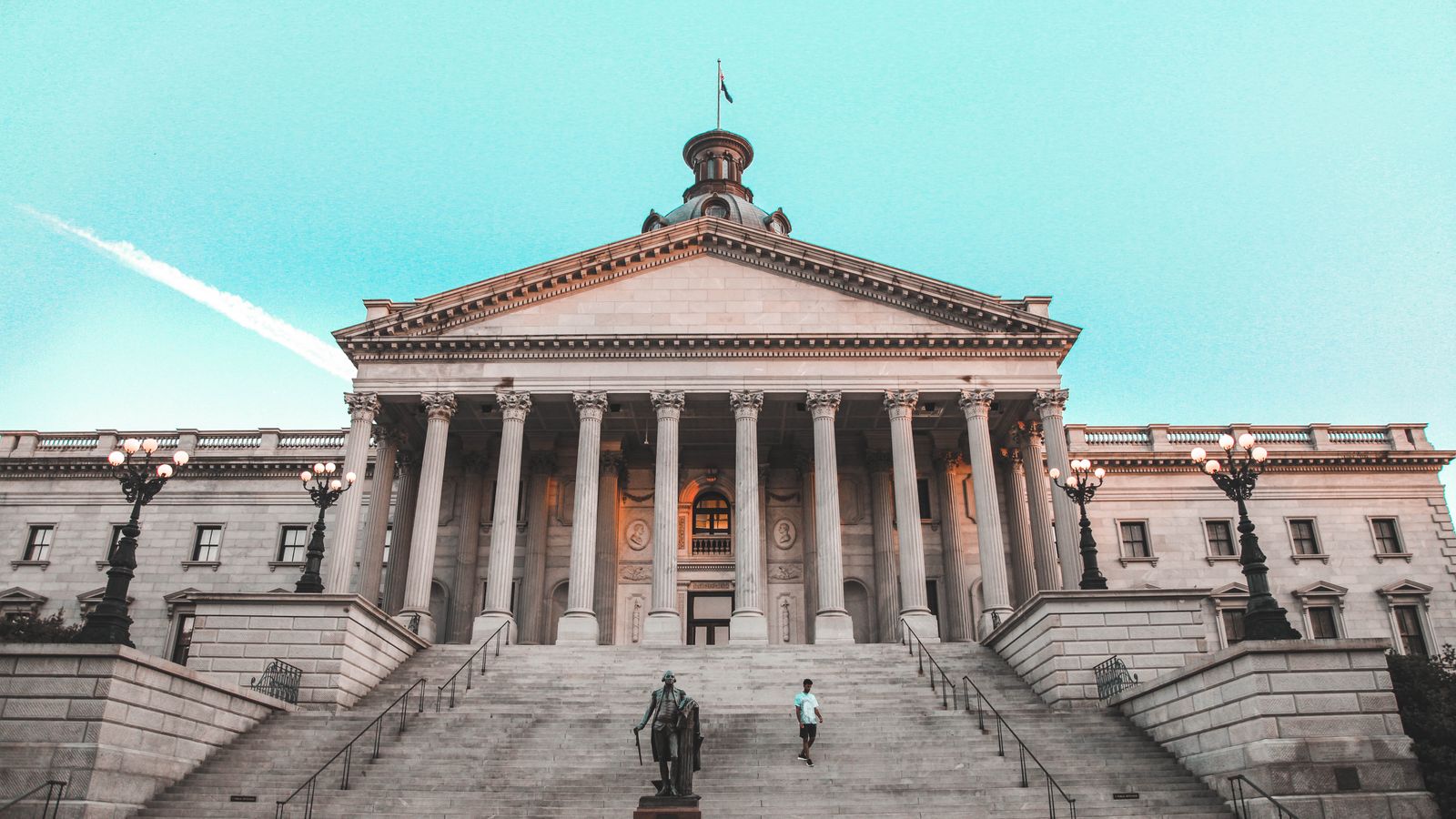
Striking view of the South Carolina State House with its grand steps and clear blue sky backdrop.
Federal Schedule I Classification Persists
Cannabis remains a Schedule I controlled substance under the Controlled Substances Act, the strictest federal drug classification reserved for substances with no accepted medical use and high abuse potential. The Drug Enforcement Administration maintains this designation despite ongoing rescheduling petitions and a 2022 directive from President Biden to review cannabis's classification. Schedule I status subjects cannabis to the same federal enforcement framework as heroin, placing state-licensed operators in technical violation of 21 U.S.C. § 841, which criminalizes manufacturing and distribution.
The Department of Justice hasn't updated its enforcement priorities since the rescission of the Cole Memo in 2018. Federal prosecutors retain authority to prosecute cannabis offenses in all 50 states, though resource constraints and political considerations have limited such actions in recent years.
38 States Operate Licensed Markets Under State Law
Thirty-eight states and the District of Columbia have enacted medical or adult-use cannabis programs, creating a $32 billion regulated market that exists in direct conflict with federal statute. State licensing regimes authorize cultivation, processing, testing, and retail sales through agencies including California's Department of Cannabis Control, New York's Office of Cannabis Management, and Illinois's Cannabis Control Board. These programs generate tax revenue and employment. But they offer no protection from federal enforcement.
State-licensed operators face unique compliance burdens:
- Banking restrictions under the Bank Secrecy Act limit access to deposit accounts and merchant services
- Internal Revenue Code Section 280E prohibits deductions for ordinary business expenses, creating effective tax rates exceeding 70 percent
- Interstate commerce remains prohibited, forcing each state to maintain closed-loop supply chains
- Federal trademark protection is unavailable for cannabis products and brands
Congressional Inaction Leaves Conflict Unresolved
The 119th Congress hasn't advanced comprehensive cannabis reform legislation despite bipartisan support for banking access and criminal-record relief. The SAFE Banking Act, which would permit financial institutions to serve state-licensed cannabis businesses without federal penalty, passed the House in 2021 and 2023 but stalled in the Senate both times. The Cannabis Administration and Opportunity Act, introduced by Senate Majority Leader Chuck Schumer in 2022, didn't receive a committee vote.
No cannabis-reform bill has reached the Senate floor for a vote in the current session. Legislative observers attribute the stalemate to disagreements over social-equity provisions, tax rates, and whether to permit continued state prohibition.
Rescheduling Petition Remains Pending at DEA
A petition to reschedule cannabis to Schedule III, filed in response to President Biden's October 2022 directive, remains under review at the Drug Enforcement Administration with no announced timeline for a final rule. The Department of Health and Human Services completed its scientific review in August 2023 and recommended rescheduling to Schedule III, which would acknowledge accepted medical use and lower abuse potential than Schedule I or II substances.
Rescheduling to Schedule III wouldn't legalize cannabis under federal law but would eliminate the Section 280E tax penalty and align federal classification with FDA-approved cannabinoid medications including Epidiolex.
The DEA published a notice of proposed rulemaking in May 2024 and held a public comment period that closed in July 2024. Administrative-law judges haven't yet issued a recommended decision. For procedural background, see the CannIntel topic hub on federal cannabis legality.
Enforcement Priorities Remain Unclear
The Department of Justice hasn't issued formal guidance on cannabis enforcement since Attorney General Jeff Sessions rescinded the Cole Memo in January 2018. That memo, issued in 2013, directed federal prosecutors to deprioritize cannabis cases in states with strong regulatory frameworks. Its rescission returned discretion to individual U.S. Attorneys, though prosecutions of state-compliant operators have remained rare.
Federal agencies continue to enforce cannabis prohibitions in specific contexts:
- The Bureau of Alcohol, Tobacco, Firearms and Explosives prohibits cannabis users from purchasing firearms under 18 U.S.C. § 922(g)(3)
- U.S. Customs and Border Protection seizes cannabis at international borders and ports of entry
- The Transportation Security Administration refers cannabis discoveries to local law enforcement
- Federal employers, including the U.S. Postal Service and Department of Defense, maintain zero-tolerance drug policies
This legal ambiguity creates operational risk for multi-state operators, investors, and ancillary service providers including landlords, insurers, and payroll companies.
Frequently asked questions
Is cannabis legal anywhere in the United States?
Cannabis is legal under state law in 38 states and the District of Columbia for medical or adult use, but it remains illegal under federal law as a Schedule I controlled substance. State authorization doesn't provide immunity from federal prosecution.
What is Schedule I and why does it matter?
Schedule I is the most restrictive drug classification under the Controlled Substances Act, reserved for substances with no accepted medical use and high abuse potential. Schedule I status subjects cannabis to criminal penalties under 21 U.S.C. § 841 and tax restrictions under Section 280E.
What would rescheduling to Schedule III change?
Rescheduling to Schedule III wouldn't legalize cannabis federally but would eliminate the Section 280E tax penalty, allowing state-licensed businesses to deduct ordinary expenses. It would acknowledge accepted medical use but maintain federal control and prohibition on interstate commerce.
Why can't cannabis businesses use banks?
The Bank Secrecy Act requires financial institutions to report transactions involving proceeds of illegal activity. Because cannabis remains federally illegal, banks face potential money-laundering liability under 18 U.S.C. § 1956 for serving cannabis clients, leading most institutions to refuse accounts.
Has Congress passed any cannabis reform legislation?
The House of Representatives passed the SAFE Banking Act in 2021 and 2023, but the Senate hasn't brought any comprehensive cannabis-reform bill to a floor vote. No cannabis legislation has been enacted into law as of May 2026.
Sources
The cannabis newsletter you forward to your team.
Federal policy, market data, grower alerts, and the one story that matters today. Sent every weekday at 7am. Free.
No spam. Unsubscribe with one click. 21+ only.
Related from Laws
Federal Cannabis Legality Remains Fragmented Across US in 2026
Despite state-level reforms, cannabis remains federally illegal with enforcement varying widely by jurisdiction and administration.
Cannabis Remains Schedule I Despite 38 State Programs, Federal Clash Persists
No federal legalization exists; state-legal cannabis operators face banking, tax, and criminal-law conflicts under the Controlled Substances Act.
Federal Cannabis Status Unchanged Despite State-Level Reforms
Cannabis remains a Schedule I controlled substance under federal law despite legalization in 24 states and ongoing DEA rescheduling review.
More from the newsroom

Cannabis Remains Federally Illegal Despite State-Level Reforms
Despite 38 states permitting medical or adult-use cannabis, federal prohibition under the Controlled Substances Act continues to govern interstate commerce and federal enforcement.

Federal and State Cannabis Policy Shifts Mark Busy Week for Industry
Simultaneous regulatory moves at both levels signal accelerating policy activity ahead of summer recess.

Virginia Governor Vetoes Adult-Use Cannabis Bill, Hemp Industry Applauds
Governor's veto blocks retail marijuana sales framework, drawing praise from hemp advocates citing market conflict concerns.