Cannabis Remains Schedule I Despite 38 State Programs, Federal Clash Persists
No federal legalization exists; state-legal cannabis operators face banking, tax, and criminal-law conflicts under the Controlled Substances Act.
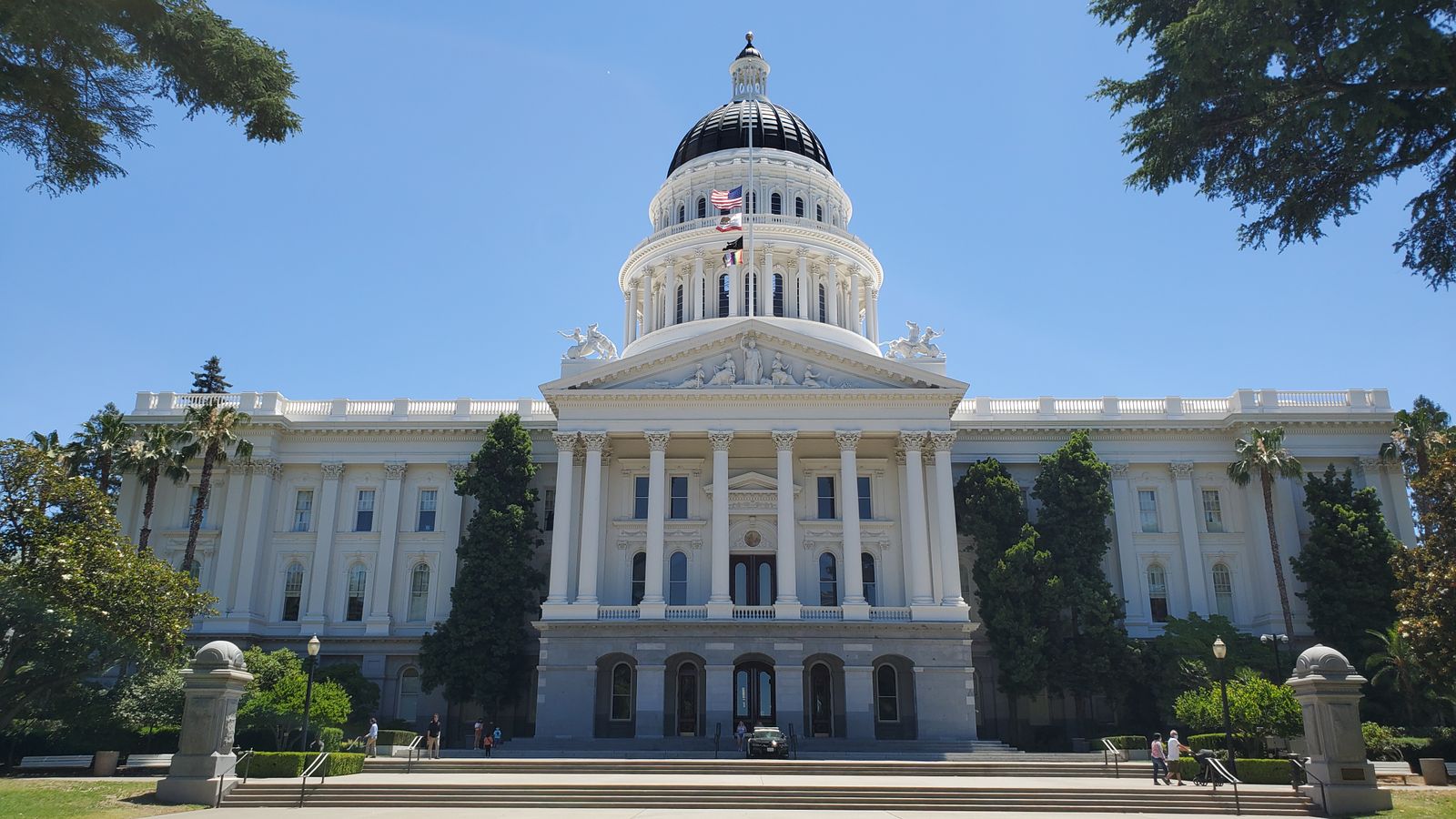
Front view of Sacramento's California State Capitol with clear blue sky.
Federal Classification Under the Controlled Substances Act
Cannabis is classified as a Schedule I substance under 21 U.S.C. § 812, the same category as heroin and LSD, meaning the federal government considers it to have no accepted medical use and high abuse potential. This classification hasn't changed since the Controlled Substances Act took effect in 1970, despite multiple petitions to the Drug Enforcement Administration for rescheduling.
The DEA published a Notice of Proposed Rulemaking in May 2024 proposing to move cannabis to Schedule III. No final rule has been issued. Until a final rule takes effect, cannabis possession, cultivation, and distribution remain federal crimes under 21 U.S.C. § 841, punishable by up to five years in prison for first-time offenders and up to life imprisonment for large-scale operations.
The Department of Justice has issued guidance memos—most notably the 2013 Cole Memo, rescinded in 2018—advising federal prosecutors to deprioritize enforcement in states with strong regulatory frameworks. That guidance carries no legal force. It can be withdrawn at any time.
State-Level Legalization Does Not Override Federal Law
Thirty-eight states and the District of Columbia have legalized cannabis for medical or adult use, but state law can't nullify federal criminal statutes under the Supremacy Clause of the U.S. Constitution. Operators licensed by California, Colorado, Michigan, and other states remain subject to federal prosecution, asset forfeiture, and criminal penalties.
Federal law enforcement retains jurisdiction to prosecute cannabis offenses on federal property, across state lines, and in any state regardless of local law. The Bureau of Alcohol, Tobacco, Firearms and Explosives prohibits cannabis users from purchasing firearms under 18 U.S.C. § 922(g)(3). Immigration authorities can deny naturalization or deport noncitizens for cannabis-related conduct even when state-legal.
State licensing provides no safe harbor from federal criminal liability; operators remain vulnerable to prosecution, particularly if they trigger federal enforcement priorities such as diversion to minors or interstate trafficking.
280E Tax Penalties and Banking Restrictions
Internal Revenue Code § 280E prohibits businesses trafficking in Schedule I or II substances from deducting ordinary business expenses, resulting in effective tax rates of 70% or higher for cannabis operators. This applies to all federally illegal cannabis businesses, including state-licensed dispensaries and cultivators.
The IRS has consistently applied 280E in audits and Tax Court cases, disallowing deductions for rent, payroll, marketing, and other costs. Only cost of goods sold—limited to direct production costs—can be deducted. The Ninth Circuit upheld 280E's application to state-legal cannabis in Olive v. Commissioner, 139 T.C. 19 (2012), and subsequent cases have followed that precedent.
Banking remains restricted because the Bank Secrecy Act requires financial institutions to file Suspicious Activity Reports for transactions involving proceeds of illegal activity. Most banks decline to serve cannabis clients to avoid potential money-laundering charges under 18 U.S.C. § 1956, forcing operators to conduct business in cash. The SAFE Banking Act, which would create a safe harbor for banks serving state-legal cannabis businesses, has passed the House seven times but hasn't cleared the Senate.
Congressional Inaction and Rescheduling Timeline
No federal cannabis legalization bill has advanced to a floor vote in either chamber of Congress, and the DEA's proposed rescheduling to Schedule III remains pending with no final rule date announced. The rescheduling NPRM published in the Federal Register on May 21, 2024 (Docket No. DEA-407) opened a 60-day comment period that closed in July 2024.
The DEA must review over 43,000 public comments before issuing a final rule. Administrative law experts estimate a final rule could take 12 to 24 months from the close of the comment period. Schedule I status is likely to persist through at least mid-2026. Even if rescheduled to Schedule III, cannabis would remain federally controlled, and cultivation or distribution without DEA registration would remain a federal crime.
Legislative proposals including the SAFE Banking Act, the STATES Act, and the MORE Act have stalled in committee or failed to advance in the Senate. No comprehensive federal legalization framework has cleared either chamber.
What Operators and Consumers Should Know
State-legal cannabis operators face ongoing federal legal risk, tax burdens, and banking exclusion until Congress or the DEA changes federal law. Operators should monitor the DEA rescheduling docket and maintain compliance with state regulations to minimize federal enforcement risk, though compliance doesn't eliminate exposure.
Key operational risks include:
- Federal prosecution under 21 U.S.C. § 841 for cultivation, distribution, or possession with intent to distribute
- Asset forfeiture under 21 U.S.C. § 881 for property used in drug trafficking
- 280E tax liability resulting in 70%+ effective tax rates
- Banking exclusion forcing cash-only operations and increasing security and compliance costs
- Immigration consequences for noncitizens, including inadmissibility and deportation
Consumers in state-legal markets face minimal federal enforcement risk for personal possession, but federal law prohibits possession on federal property, including national parks, military bases, and federally subsidized housing. Employers can terminate employees for cannabis use even in legal states. Federal contractors must maintain drug-free workplace policies under the Drug-Free Workplace Act.
For full background on this issue, see the CannIntel topic hub on federal cannabis legalization.
The next major signal: the DEA's final rule on rescheduling, expected no earlier than Q3 2026. Until then, the federal-state legal conflict remains unresolved.
For complete background, history, and our ongoing coverage of this story:
Open the CannIntel topic hub →Frequently asked questions
Is cannabis legal at the federal level in the United States?
No. Cannabis is a Schedule I controlled substance under 21 U.S.C. § 812, making cultivation, distribution, and possession federal crimes punishable by up to five years in prison. State legalization doesn't override federal law.
Can state-licensed cannabis businesses be prosecuted by federal authorities?
Yes. Federal law enforcement retains jurisdiction to prosecute cannabis offenses in any state. DOJ guidance memos advising deprioritization carry no legal force and can be withdrawn. Operators remain subject to federal prosecution, asset forfeiture, and criminal penalties.
What is 280E and how does it affect cannabis businesses?
Internal Revenue Code § 280E prohibits businesses trafficking in Schedule I or II substances from deducting ordinary business expenses. This results in effective tax rates of 70% or higher for state-legal cannabis operators, who can deduct only cost of goods sold.
When will the DEA finalize the proposed rescheduling to Schedule III?
No final rule date has been announced. The DEA must review over 43,000 public comments submitted during the 60-day comment period that closed in July 2024. Administrative law experts estimate a final rule could take 12 to 24 months, meaning mid-2026 at the earliest.
Would rescheduling to Schedule III make cannabis federally legal?
No. Cannabis would remain a federally controlled substance. Cultivation or distribution without DEA registration would remain a federal crime. Rescheduling would eliminate 280E tax penalties but wouldn't legalize cannabis or resolve banking restrictions without additional legislative action.
Sources
The cannabis newsletter you forward to your team.
Federal policy, market data, grower alerts, and the one story that matters today. Sent every weekday at 7am. Free.
No spam. Unsubscribe with one click. 21+ only.
Related from Laws
Federal Cannabis Legality Remains Fragmented Across US in 2026
Despite state-level reforms, cannabis remains federally illegal with enforcement varying widely by jurisdiction and administration.
Federal Cannabis Status Unchanged Despite State-Level Reforms
Cannabis remains a Schedule I controlled substance under federal law despite legalization in 24 states and ongoing DEA rescheduling review.

Cannabis Remains Federally Illegal Despite State-Level Reforms
Despite 38 states permitting medical or adult-use cannabis, federal prohibition under the Controlled Substances Act continues to govern interstate commerce and federal enforcement.
More from the newsroom

Federal and State Cannabis Policy Shifts Mark Busy Week for Industry
Simultaneous regulatory moves at both levels signal accelerating policy activity ahead of summer recess.
Federal Cannabis Status Unchanged Despite 38-State Patchwork
Cannabis remains a Schedule I controlled substance under the Controlled Substances Act even as 38 states permit medical or adult-use sales.

Virginia Governor Vetoes Adult-Use Cannabis Bill, Hemp Industry Applauds
Governor's veto blocks retail marijuana sales framework, drawing praise from hemp advocates citing market conflict concerns.