Flushing Cannabis: The Science Behind Pre-Harvest Watering
Commercial growers spend two weeks flushing before harvest, but peer-reviewed research shows minimal impact on cannabinoids, terpenes, or combustion quality.
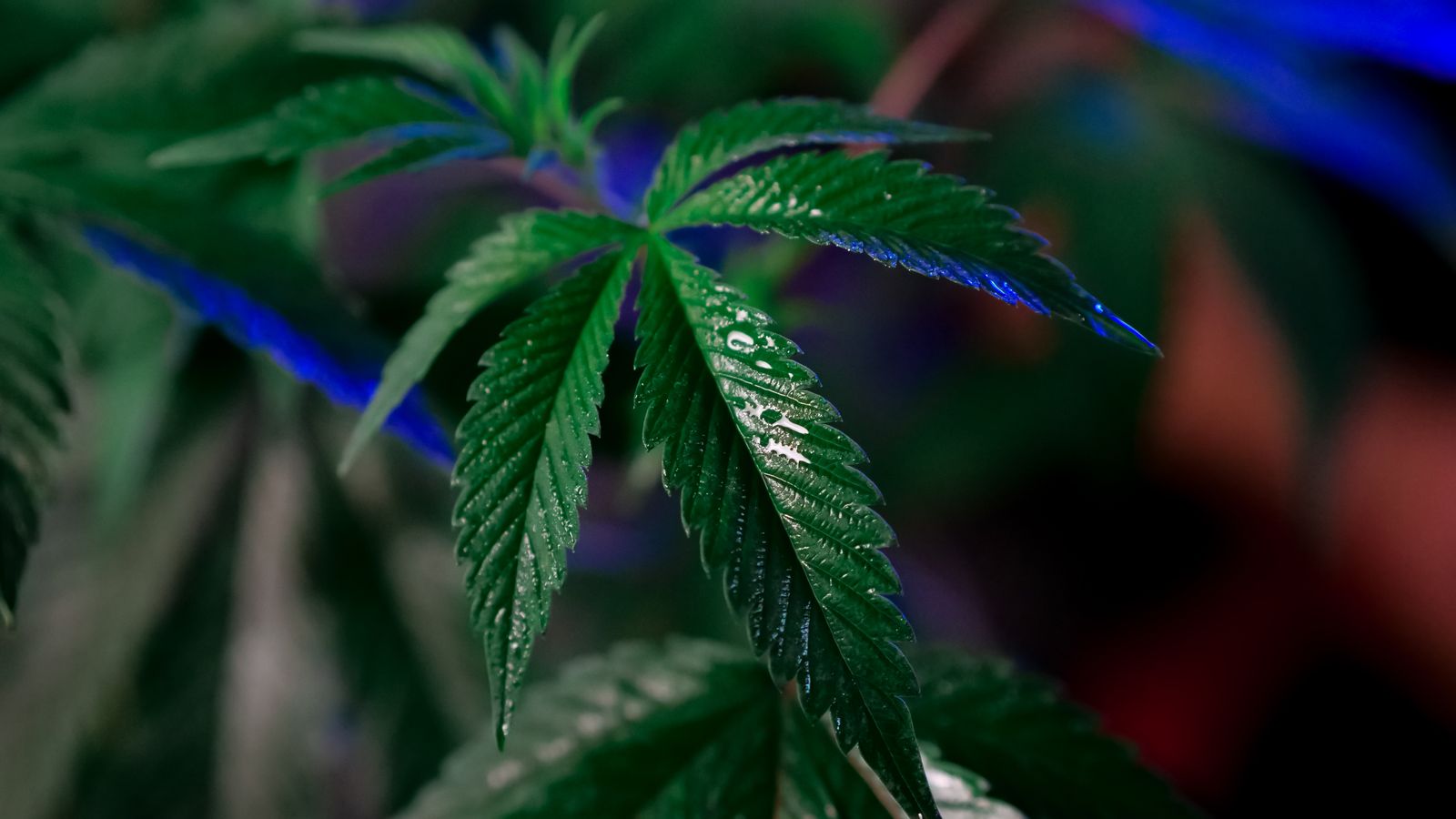
Detailed close-up of lush cannabis leaves with water droplets, exhibiting vibrant green hues.
The standard flushing protocol involves switching from nutrient solution to plain pH-adjusted water 10-14 days before harvest. The stated goal: force the plant to metabolize stored nutrients in leaves and flowers, reducing residual fertilizer salts that supposedly cause harsh smoke, black ash, and chemical taste. Walk into any cultivation facility and you will find strong opinions. What you will not find is strong evidence.
What the Peer-Reviewed Research Actually Shows
The most cited study comes from RX Green Technologies and Stockton University, published in 2020. Researchers grew Blue Dream under identical conditions except for pre-harvest flushing duration: 0 days, 7 days, or 14 days. They measured cannabinoid content, terpene profiles, mineral content in flower tissue, and conducted blind sensory panels for combustion quality.
The results challenge conventional wisdom on multiple fronts. THC content showed no statistically significant difference between flush durations, ranging from 19.8% to 20.1%. Total terpene content varied by less than 0.3% across treatments. Mineral analysis revealed that 14-day flushing reduced nitrogen, phosphorus, and potassium levels in dried flower by 12-18% compared to unflushed controls, but magnesium, calcium, and sulfur remained essentially unchanged.
The sensory panel, comprising experienced cannabis consumers, could not reliably distinguish flushed from unflushed samples in blind testing. Panelists rated smoothness, harshness, and overall quality with no consistent pattern. Ash color, often cited as proof of proper flushing, showed no correlation with flush duration when samples were combusted under controlled conditions.
A second study from the University of Guelph in 2021 examined nutrient mobility and flower quality across different feeding regimens. Researchers found that cannabis plants continue active nutrient uptake until 3-5 days before harvest regardless of whether growers provide fertilizer. The plant does not 'starve' and metabolize stored nutrients on the timeline most growers assume. Instead, senescence follows its own genetic program, triggered primarily by photoperiod signals and maturity, not nutrient availability.
The Physiology of Nutrient Mobility in Late Flower
Understanding why flushing produces minimal effects requires examining how cannabis moves and stores nutrients during the final weeks of flowering. Nitrogen, phosphorus, and potassium are mobile nutrients, meaning the plant can translocate them from older leaves to actively growing flowers when external supply runs low. Calcium, magnesium, iron, and most micronutrients are immobile or semi-mobile, locked in cell structures where they were originally deposited.
When you stop feeding, the plant does mobilize some nitrogen from fan leaves, visible as the yellowing that many growers interpret as successful flushing. But this process moves nutrients to the flowers, not out of the plant. The flowers themselves become a nutrient sink, accumulating mobile elements even as leaves fade. Immobile nutrients stay exactly where they are. No amount of plain water will extract calcium from trichome stalks or magnesium from chloroplasts in calyx tissue.
The minerals that remain in dried flower after harvest exist primarily in organic molecules, not as residual fertilizer salts. A flower tissue analysis showing 2.8% nitrogen by dry weight reflects amino acids, proteins, nucleic acids, and chlorophyll, not leftover calcium nitrate from your nutrient solution. These organic compounds do not rinse away. They are structural components of plant cells.
Combustion Chemistry and Ash Color
The clean burn argument rests on the assumption that flushing removes minerals that cause black ash and harsh smoke. The chemistry does not support this mechanism. When you combust cannabis, organic matter oxidizes at 400-900°C depending on oxygen availability. The ash consists primarily of carbonates, oxides, and phosphates of calcium, potassium, and magnesium. These minerals come from the plant's structural tissue, not residual fertilizer.
Ash color depends on combustion temperature and oxygen supply, not nutrient content. Complete combustion with adequate oxygen produces white or light gray ash regardless of how the plant was grown. Incomplete combustion leaves carbon residue, creating darker ash. The same flower can produce white ash in a joint with good airflow and black ash in a tightly packed bowl with restricted oxygen. Controlled studies using bomb calorimetry show no correlation between flower mineral content and combustion completeness.
The perception of harshness involves multiple factors: moisture content at consumption, terpene profile (especially caryophyllene and pinene, which can irritate airways), combustion temperature, and individual sensitivity. Blind testing consistently fails to link harshness to flush duration. What growers interpret as smoother smoke from flushed plants may reflect confirmation bias, or it may reflect other variables like slightly lower moisture content from the stress of nutrient deprivation.
The Yield Cost of Extended Flushing
While flushing may not improve flower quality, it demonstrably reduces yield. The RX Green study found that 14-day flushing decreased dry weight by 8-12% compared to continuous feeding through harvest. That translates to 0.8-1.2 pounds per light in a typical 10-light room, or $800-2,400 in lost revenue at $1,000/lb wholesale.
The mechanism is straightforward: photosynthesis requires nutrients. When you stop feeding, the plant cannot maintain full metabolic activity. Growth slows. Flowers that would have swelled another 5-10% in the final week instead plateau. The plant may cannibalize some leaf tissue, but this does not compensate for reduced photosynthetic capacity.
Some growers accept this trade-off, arguing that cleaner flavor justifies lower yield. But if blind panels cannot detect quality differences, you are sacrificing revenue for a benefit that exists primarily in marketing copy and grower perception. The math becomes especially unfavorable at commercial scale. A 50-light facility losing 50 pounds per cycle at four cycles per year gives up 200 pounds, or $200,000 in annual revenue if the quality improvement is imperceptible.
When Flushing Makes Operational Sense
The research argues against routine flushing, but specific scenarios justify the practice. If you have overfed and see nutrient burn, toxicity symptoms, or salt buildup in your medium, flushing with 2-3x the container volume of pH-adjusted water can leach excess salts and reset the root zone. This is corrective action, not a pre-harvest protocol.
In recirculating hydroponic systems, flushing the reservoir and running plain water for 24-48 hours before harvest simplifies cleanup and prevents nutrient solution from degrading in lines during the drying period. This is operational convenience, not a quality enhancement.
Some cultivators flush to reduce nitrogen levels specifically, believing that lower N produces smoother smoke even if total mineral content remains unchanged. The evidence for this is thin, but if your feeding program runs hot on nitrogen through late flower, a short flush may help. The key word is short: 3-5 days, not 14. Longer durations sacrifice yield without additional benefit.
The Role of Dry and Cure in Perceived Quality
Much of what growers attribute to flushing actually reflects dry and cure protocols. Properly dried flower at 10-12% moisture with 55-62% relative humidity during cure produces smooth smoke regardless of pre-harvest feeding. Flower dried too quickly or cured at improper humidity tastes harsh, even if you flushed for three weeks.
The cure allows chlorophyll to break down, reducing the 'green' taste that many growers mistake for residual nutrients. It allows terpene profiles to stabilize as volatile monoterpenes evaporate and less volatile sesquiterpenes become more prominent. A two-week cure does more for smoke quality than a two-week flush, and it does not cost you yield.
If your flower tastes chemical or burns black, examine your dry room conditions before blaming your feeding program. Drying above 65°F accelerates chlorophyll retention. Humidity below 45% dries the outside too fast, trapping moisture and chlorophyll inside. Curing in sealed containers without burping allows anaerobic bacteria to produce off-flavors. These problems will not be solved by withholding nutrients.
Alternative Approaches to Late-Flower Feeding
Rather than flushing, consider tapering nutrient strength in the final 10 days. Reduce EC from 1.8-2.2 to 1.2-1.4, maintaining balanced ratios but lowering overall concentration. This approach provides enough nutrition to sustain photosynthesis and final swell while avoiding excess accumulation. Several commercial cultivators report better results with tapering than with abrupt flushing.
Another strategy: maintain full feeding until trichomes show 10-15% amber, then harvest within 3-5 days. The plant continues active metabolism until you cut it. Nutrient uptake drops sharply in the final 72 hours as senescence accelerates, so you get most of the theoretical benefit of flushing without the extended yield sacrifice.
If you grow in living soil with organic amendments, flushing makes even less sense. The plant uptakes nutrients as they become available through microbial activity, not on your feeding schedule. Flooding the medium with plain water disrupts the soil food web without removing nutrients already in plant tissue. Organic growers who flush typically do so out of habit, not because the practice serves any purpose in their system.
The Marketing Problem
Flushing persists partly because it has become a marketing signal. Dispensaries advertise 'properly flushed' flower. Consumers ask budtenders whether a product was flushed. Growers who do not flush face skepticism from buyers who have been taught that flushing equals quality. This creates pressure to maintain the practice regardless of evidence.
The irony: most consumers cannot distinguish flushed from unflushed flower in blind testing, but they have been conditioned to believe they can. The expectation shapes the experience. If you tell someone a sample was flushed, they rate it smoother. If you say it was not flushed, they detect harshness. This is not deception, it is how human perception works. We taste what we expect to taste.
Breaking this cycle requires education at multiple levels. Cultivators need to understand the physiology so they can make evidence-based decisions. Dispensary staff need training to stop perpetuating myths. Consumers need access to information that goes beyond marketing claims. The industry is slowly moving in this direction, but legacy beliefs die hard.
What About Specific Nutrient Lines?
Some nutrient manufacturers market 'flushing agents' containing enzymes, chelators, or other compounds claimed to enhance nutrient removal. The evidence for these products is largely anecdotal. Enzymes can break down dead root material and organic matter in the medium, which may improve drainage and reduce pathogen load, but they do not extract minerals from plant tissue.
Chelators like EDTA can increase the solubility of certain minerals in the root zone, potentially enhancing leaching. But again, this affects what is in the medium, not what is already incorporated into flowers. If you want to use a flushing agent, use it to clean your medium between cycles, not as a pre-harvest treatment.
The most effective 'flushing agent' is properly pH-adjusted water at 2-3x your container volume, applied slowly to avoid channeling. This leaches salts from the medium. It does not leach nutrients from flowers. No product can do that short of solvents that would destroy the plant.
Strain-Specific Considerations
Some growers report that certain strains benefit more from flushing than others, particularly heavy feeders like OG Kush or strains with high myrcene content. The logic: plants that accumulate more nutrients need more aggressive flushing. The research does not support strain-specific flushing protocols. Nutrient mobility and senescence patterns are consistent across cultivars.
What may vary is how different terpene profiles interact with combustion byproducts to create perceived harshness. A limonene-dominant strain might taste 'cleaner' than a caryophyllene-heavy strain regardless of flushing, simply because limonene is less irritating to airways. Growers may attribute this difference to flushing when it actually reflects terpene chemistry.
If you grow multiple strains and some consistently taste harsher than others, examine your dry and cure protocols for those specific cultivars before adjusting your flush schedule. Dense flowers with high calyx-to-leaf ratios dry differently than airy flowers with more leaf material. Adjust your process to the flower structure, not the feeding program.
The Economic Reality for Commercial Growers
At commercial scale, every decision has a dollar value. Flushing for 14 days costs you 8-12% of yield. In a 10,000-square-foot facility producing 600 pounds per cycle, that is 48-72 pounds, or $48,000-72,000 per cycle at $1,000/lb. If you run four cycles per year, you are looking at $192,000-288,000 in lost revenue.
Can you recoup that through premium pricing for 'properly flushed' flower? Maybe, if your market values that claim. But as testing becomes more sophisticated and consumers more educated, marketing claims unsupported by chemistry will carry less weight. The trend is toward transparency and data, not tradition and anecdote.
The safer bet: optimize your dry and cure, dial in your late-flower feeding to avoid excess, and let the flower speak for itself. If your product tastes harsh, fix your post-harvest handling before you sacrifice yield on a pre-harvest protocol that peer-reviewed research says does not work.
What Growers Should Do Instead
If you currently flush for two weeks, try this experiment: flush half your crop, feed the other half at reduced EC through harvest. Dry and cure both batches identically. Send samples to a lab for cannabinoid, terpene, and mineral analysis. Conduct blind sensory testing with experienced consumers. Record your yield from both treatments.
Most growers who run this test find no quality difference and measurable yield loss from flushing. Some find that the unflushed batch actually tests higher in terpenes, likely because the plant maintained better metabolic function through harvest. A few find slight improvements in perceived smoothness from flushing, but not enough to justify the yield sacrifice.
The point is not to tell you what to do. The point is to test your assumptions with data from your specific environment, genetics, and protocols. Cannabis cultivation has too much received wisdom and not enough empirical verification. Be skeptical of anyone who claims absolute certainty on either side of the flushing debate. The research suggests flushing does not work as advertised, but your mileage may vary.
What we can say with confidence: if you flush, keep it short. Three to five days provides any theoretical benefit without major yield loss. Beyond that, you are sacrificing revenue for a practice that blind testing says consumers cannot detect. Spend that time and effort on post-harvest handling, where the evidence for quality improvement is much stronger.
Frequently asked questions
Does flushing remove nutrients from cannabis flowers before harvest?
No. Flushing with plain water can leach salts from growing medium, but it does not extract nutrients already incorporated into flower tissue. Minerals in dried cannabis exist as structural organic compounds like proteins and chlorophyll, not as residual fertilizer that rinses away.
Why does my unflushed cannabis have black ash?
Ash color reflects combustion temperature and oxygen availability, not nutrient content. Incomplete combustion leaves carbon residue creating dark ash, while complete combustion produces white ash regardless of feeding program. Controlled studies find no correlation between flush duration and ash color.
How much yield do I lose by flushing for two weeks?
Research shows 8-12% yield reduction from 14-day flushing compared to continuous feeding through harvest. In a typical 10-light room, that translates to 0.8-1.2 pounds per light or $800-2,400 in lost revenue per cycle at $1,000/lb wholesale.
Can blind taste tests distinguish flushed from unflushed cannabis?
No. Multiple studies using experienced consumer panels found no consistent ability to identify flushed versus unflushed samples in blind testing. Panelists rated smoothness, harshness, and overall quality with no pattern correlating to flush duration.
Should I flush if I overfed my plants?
Yes, but as corrective action, not routine pre-harvest protocol. If you see nutrient burn or salt buildup, flush with 2-3x container volume of pH-adjusted water to leach excess salts and reset the root zone. This is different from the standard two-week pre-harvest flush.
Do flushing agents or enzymes help remove nutrients from flowers?
No. Flushing agents may improve drainage or break down root material in growing medium, but they cannot extract minerals already incorporated into plant tissue. The most effective approach is pH-adjusted water at 2-3x container volume to leach salts from medium, not flowers.
What should I do instead of flushing for two weeks?
Taper nutrient strength from EC 1.8-2.2 down to 1.2-1.4 over the final 10 days, or maintain full feeding until 3-5 days before harvest. Both approaches provide nutrition for final swell without extended yield sacrifice. Focus effort on optimizing dry and cure protocols instead.
Why do so many growers still flush if research says it doesn't work?
Flushing has become a marketing signal and consumer expectation despite lack of evidence. Dispensaries advertise flushed flower, creating pressure to maintain the practice. Confirmation bias and the placebo effect reinforce the belief that flushing improves quality even when blind testing shows no difference.
Sources
The cannabis newsletter you forward to your team.
Federal policy, market data, grower alerts, and the one story that matters today. Sent every weekday at 7am. Free.
No spam. Unsubscribe with one click. 21+ only.
Related from Grow

Cannabis Water Demand Strains Western Growers as Drought Persists
New data reveals outdoor cannabis consumes up to 6 gallons per plant daily during peak flowering, intensifying pressure on already-stressed watersheds.

Botrytis Bud Rot: The Late-Flower Killer and How to Stop It
Grey mold can wipe out weeks of work in 72 hours. Here's the science behind Botrytis cinerea and the environmental controls that actually prevent it.
Russet Mites in Cannabis: Spotting Damage Before It Shows
Russet mites destroy crops before most growers see them. Learn the early signs, microscopy protocols, and IPM strategies that actually work at scale.
More from the newsroom

TSA Clarifies Medical Marijuana Air Travel Policy: FDA-Approved Only
Federal agency reiterates passengers may carry FDA-approved cannabis products through security, but state-legal marijuana remains prohibited.

Federal Marijuana Legalization Unlikely in 2026 Despite Rescheduling Push
DEA rescheduling timeline extends into 2027 while congressional legalization bills remain stalled in committee.
Thailand Cannabis Market Survives New Restrictions, Sales Steady
Six months after Thailand's medical-only cannabis law took effect, retail sales and dispensary counts remain near pre-regulation highs.