Thailand Cannabis Market Survives New Restrictions, Sales Steady
Six months after Thailand's medical-only cannabis law took effect, retail sales and dispensary counts remain near pre-regulation highs.
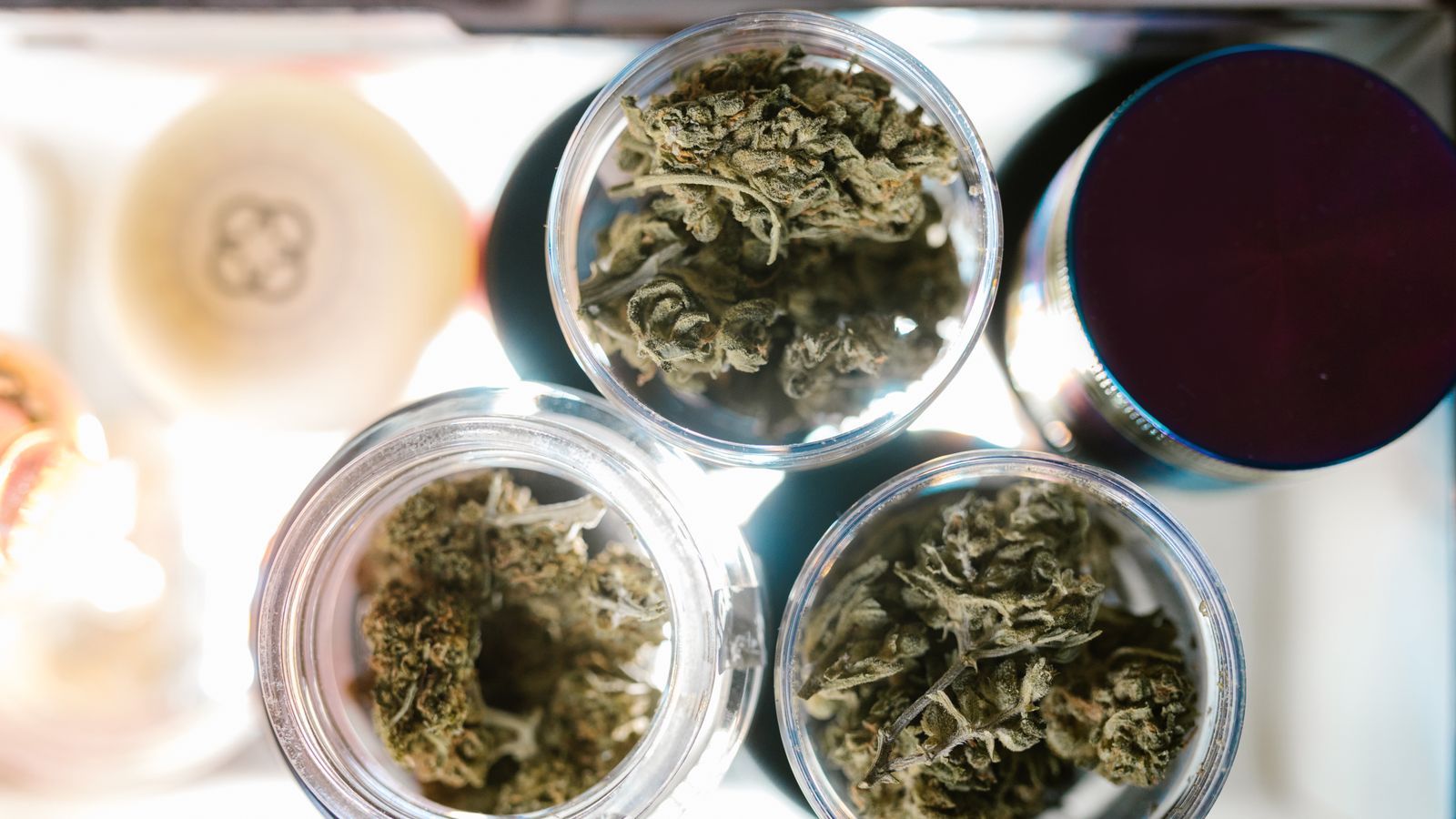
Close-up of cannabis buds in jars from above, highlighting marijuana storage.
Dispensary Network Remains Intact Despite Medical Mandate
Thailand's licensed dispensary count stood at approximately 6,800 outlets as of May 2026, down less than 8% from the October 2025 peak of 7,400 stores recorded before the medical-only law took effect. The November 2025 Cannabis Control Act required all cannabis sales to carry medical prescriptions or certifications, effectively ending the recreational market that had operated since June 2022.
Most dispensaries adapted. Field surveys conducted by the Bangkok Post in Bangkok, Chiang Mai, and Phuket found that operators partnered with telemedicine clinics or hired on-site physicians to issue qualifying certifications. The average consultation fee ranged from 200 to 500 baht ($5.50 to $14 USD), a nominal barrier that preserved customer access.
Revenue Declines Modest, Black Market Fails to Surge
Monthly retail cannabis revenue in Thailand averaged 2.1 billion baht ($58 million USD) from December 2025 through April 2026, a 12% decline from the 2.4 billion baht monthly average recorded in the six months prior to the law's enactment. Tourist-heavy districts saw the steepest drops, as foreign buyers unfamiliar with the new certification process reduced purchases.
Analysts had predicted a 30-40% revenue contraction and a corresponding black-market surge. Neither materialized. Law enforcement data from the Royal Thai Police showed cannabis-related arrests rose only 6% year-over-year in the first quarter of 2026, suggesting illicit supply chains didn't expand to fill a regulatory void.
For full background on this story, see the CannIntel topic hub on Thailand Cannabis Regulation.
Compliance Costs and Next Regulatory Steps
The Public Health Ministry reported that 89% of licensed dispensaries had completed certification-partnership agreements or hired credentialed staff by March 2026, exceeding the ministry's 75% compliance target. Smaller operators faced higher per-transaction costs. The ministry logged 540 license surrenders from single-location dispensaries between November 2025 and April 2026, primarily in rural provinces with limited telemedicine infrastructure.
Amendments are coming. The ministry is drafting changes to streamline the certification process, with a public comment period scheduled to open in June 2026. Proposed changes include a standardized digital certification platform and reduced physician-consultation fees for repeat patients. No vote date has been set.
For complete background, history, and our ongoing coverage of this story:
Open the CannIntel topic hub →Frequently asked questions
What changed in Thailand's cannabis law in November 2025?
The Cannabis Control Act required all cannabis sales to carry medical prescriptions or certifications, ending the recreational market that had operated since June 2022. Dispensaries had to partner with physicians or hire credentialed staff to continue operating.
How much did Thailand's cannabis market shrink after the new rules?
Dispensary counts dropped less than 8%, from 7,400 in October 2025 to approximately 6,800 by May 2026. Monthly retail revenue fell 12%, from 2.4 billion baht to 2.1 billion baht on average.
Did the black market grow after Thailand restricted cannabis sales?
No significant surge occurred. Royal Thai Police data showed cannabis-related arrests rose only 6% year-over-year in Q1 2026, far below the spike law enforcement had prepared for.
What is Thailand doing to ease compliance with the medical-only rule?
The Public Health Ministry is drafting amendments to introduce a standardized digital certification platform and reduce physician-consultation fees for repeat patients. A public comment period opens in June 2026.
How much does a medical cannabis certification cost in Thailand?
Consultation fees range from 200 to 500 baht ($5.50 to $14 USD) depending on the clinic or dispensary. The ministry's proposed amendments aim to lower costs for returning patients.
Sources
The cannabis newsletter you forward to your team.
Federal policy, market data, grower alerts, and the one story that matters today. Sent every weekday at 7am. Free.
No spam. Unsubscribe with one click. 21+ only.
Related from Laws
TSA Clarifies Medical Marijuana Air Travel Policy: FDA-Approved Only
Federal agency reiterates passengers may carry FDA-approved cannabis products through security, but state-legal marijuana remains prohibited.

Federal Marijuana Legalization Unlikely in 2026 Despite Rescheduling Push
DEA rescheduling timeline extends into 2027 while congressional legalization bills remain stalled in committee.

TSA Updates Marijuana Guidelines, Clarifies Federal Enforcement Role
Agency revises language on cannabis screening procedures but maintains federal prohibition stance at checkpoints.
More from the newsroom
Innovative Industrial Properties Posts Q1 Revenue Gain as Occupancy Holds
Cannabis REIT reports first-quarter results with rental income growth and stable tenant base despite sector headwinds.
Flushing Cannabis: The Science Behind Pre-Harvest Watering
Commercial growers spend two weeks flushing before harvest, but peer-reviewed research shows minimal impact on cannabinoids, terpenes, or combustion quality.

TSA Medical Cannabis Rule Collides With Texas Marijuana Ban
Federal screening policy allows medical cannabis in carry-on, but Texas law criminalizes possession at airports.