Innovative Industrial Properties Posts Q1 Revenue Gain as Occupancy Holds
Cannabis REIT reports first-quarter results with rental income growth and stable tenant base despite sector headwinds.
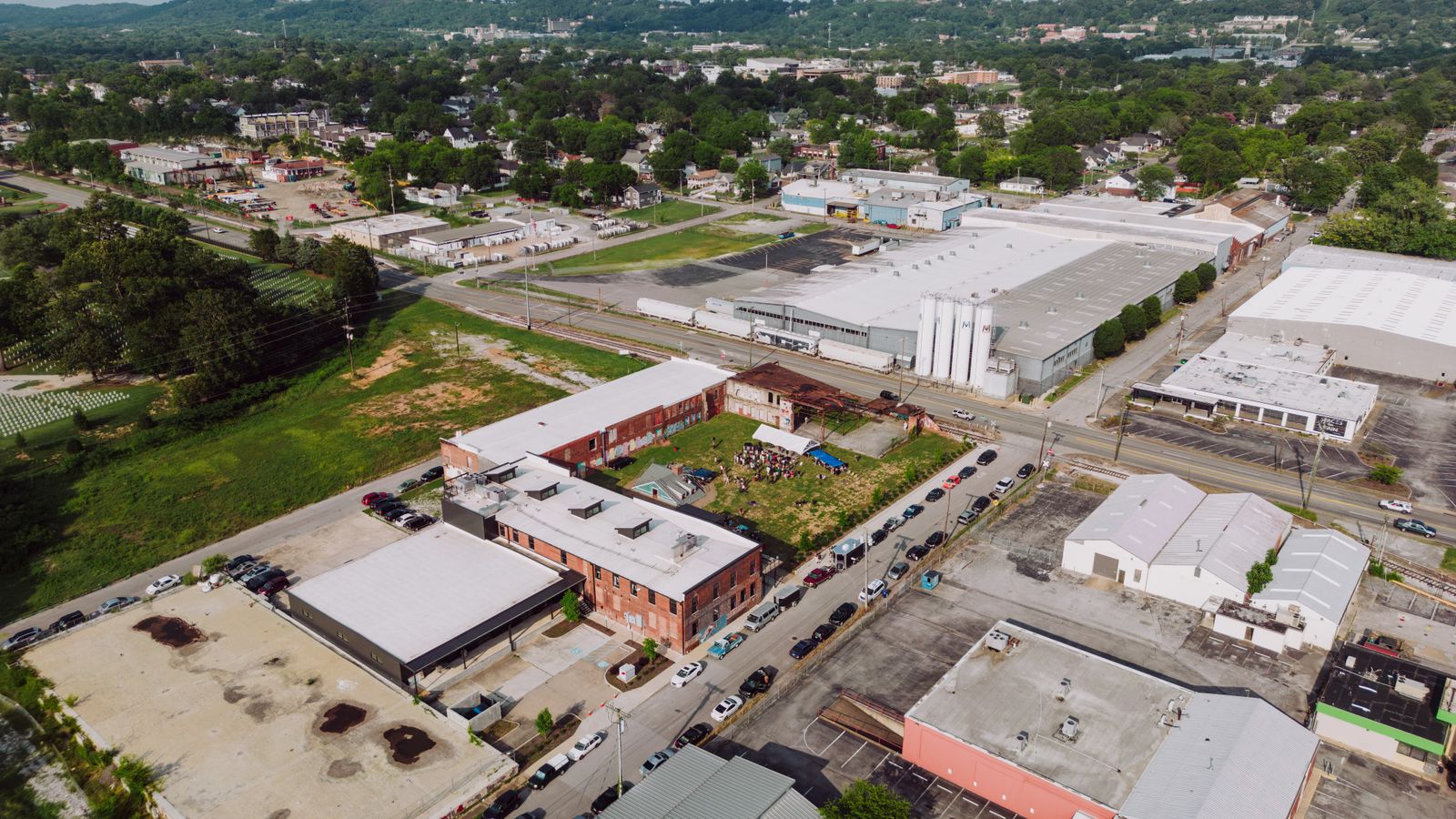
Explore the vibrant industrial landscape of Chattanooga, Tennessee from above.
Revenue Climbs on Portfolio Expansion
IIPR recorded total revenues of $74.3 million in Q1 2026, up 4.2% year-over-year, driven by rental income from properties acquired in late 2025 and rent escalations across its 108-property portfolio. The San Diego–based REIT operates a sale-leaseback model with state-licensed cannabis operators. It now holds $2.8 billion in real estate investments across 19 states. Management attributed the revenue lift to disciplined capital deployment in select markets where tenant credit profiles remain strong—notably in Pennsylvania, Illinois, and Massachusetts.
Funds from operations, the REIT industry's core profitability metric, came in at $2.01 per share. That's a modest uptick from $1.97 in Q1 2025. The performance reflects both revenue gains and controlled operating expenses, though it also underscores the limited margin expansion available when tenant rent coverage ratios compress industrywide.
Occupancy Rate Holds at 94% Despite Tenant Stress
IIPR maintained a 94% occupancy rate as of March 31, 2026, unchanged from the prior quarter and down only one percentage point year-over-year. That stability is notable. A wave of operator bankruptcies and restructurings swept the sector in 2025. The REIT disclosed that two tenants representing a combined 3% of annualized base rent are currently in forbearance discussions, but no new lease terminations occurred during the quarter.
CEO Paul Smithers said on the call that the company's underwriting discipline has insulated IIPR from the worst of the sector's distress. The REIT requires tenant rent coverage ratios above 1.5x and limits exposure to any single operator below 10% of the portfolio. Its weighted-average lease term stands at 14.7 years, providing long-duration cash flow visibility that differentiates it from traditional commercial real estate trusts.
Capital Deployment Slows as Deal Pipeline Thins
IIPR deployed $42 million in new capital during Q1 2026, the slowest quarterly pace since 2020, as the pipeline of creditworthy sale-leaseback candidates narrowed. The company closed two transactions: a $28 million facility expansion in Ohio and a $14 million acquisition in New Jersey. Management indicated that elevated interest rates and tighter bank lending to cannabis operators have reduced the volume of operators seeking sale-leaseback liquidity, a dynamic that's compressed IIPR's growth trajectory.
The REIT ended the quarter with $120 million in liquidity. No near-term debt maturities. It didn't issue equity in Q1, a shift from prior years when IIPR routinely tapped capital markets to fund acquisitions. That restraint reflects both the company's elevated cost of equity—its shares trade at a 12% dividend yield, implying investor skepticism—and management's stated preference to preserve balance-sheet flexibility until federal cannabis reform clarifies the sector's credit outlook.
Federal Rescheduling Debate Looms Over Tenant Economics
Pending DEA rescheduling of cannabis from Schedule I to Schedule III under the Controlled Substances Act could materially improve IIPR tenant cash flows by eliminating the 280E tax burden that currently blocks operators from deducting ordinary business expenses. Smithers acknowledged on the call that the rescheduling timeline remains uncertain—the DEA's notice-and-comment period closed in March 2026, but no final rule has been published—and that IIPR is modeling multiple scenarios for how tenant rent coverage would respond to 280E relief.
If 280E is lifted, the average IIPR tenant could see effective tax rates drop from 70% to the mid-20s, freeing up cash flow that directly improves rent coverage and reduces lease default risk.
IIPR's investor presentation estimated that 280E repeal could boost tenant EBITDA by 20-30% on average, though the benefit would vary widely by operator depending on current profitability and state tax structures. For context on the broader policy debate, see the CannIntel topic hub on IIPR's 2026 Q1 earnings.
Dividend Maintained at $1.90 Per Share
IIPR's board declared a quarterly dividend of $1.90 per share, unchanged for the sixth consecutive quarter, payable July 15 to shareholders of record as of June 30. At the stock's May 24 closing price of $62.80, that's a 12.1% annualized yield, well above the REIT sector median of 4.2%. The elevated yield reflects investor concern over tenant credit risk and federal prohibition, but it also signals management confidence in the sustainability of current cash flows.
The company's dividend payout ratio—dividends as a percentage of FFO—stood at 94% in Q1, leaving minimal retained earnings for reinvestment but remaining within the REIT industry norm. IIPR hasn't cut its dividend since initiating it in 2017, a track record that management emphasized as evidence of portfolio resilience even through the 2022-2025 cannabis downturn.
Analyst Outlook: Stability Priced In, Upside Contingent on Reform
Equity analysts covering IIPR view the Q1 results as confirmation of a stabilized but low-growth trajectory, with meaningful upside dependent on federal cannabis policy shifts that remain outside management's control. Cowen analyst Vivien Azer maintained a Market Perform rating, noting that the REIT's high dividend yield already compensates investors for elevated risk. Further stock appreciation requires either a material improvement in tenant fundamentals or a sector-wide rerating following rescheduling.
Management reiterated its full-year 2026 FFO range of $8.00 to $8.20 per share, implying flat to low-single-digit growth, consistent with the constrained capital deployment environment. The next catalyst to watch: publication of the DEA's final rescheduling rule, expected by late summer 2026, which would clarify the timeline for 280E relief and potentially unlock a new wave of tenant cash flow.
Sources
The cannabis newsletter you forward to your team.
Federal policy, market data, grower alerts, and the one story that matters today. Sent every weekday at 7am. Free.
No spam. Unsubscribe with one click. 21+ only.
Related from Business

Missouri Cannabis Workers File Union Election After NLRB Ruling
Federal labor decision opens door for multistate organizing push across dispensaries and cultivation facilities.

Veteran-Owned Dispensary Opens in Roselle, First in N.J. Social Equity Class
Roselle's new dispensary marks the state's first Black female disabled veteran-owned cannabis retail license under the social equity program.

Canopy Growth Stock Declines as Investor Caution Persists
Recent share-price weakness hasn't changed the fundamental thesis for Canada's largest cannabis company.
More from the newsroom

TSA Clarifies Medical Marijuana Air Travel Policy: FDA-Approved Only
Federal agency reiterates passengers may carry FDA-approved cannabis products through security, but state-legal marijuana remains prohibited.

Federal Marijuana Legalization Unlikely in 2026 Despite Rescheduling Push
DEA rescheduling timeline extends into 2027 while congressional legalization bills remain stalled in committee.
Thailand Cannabis Market Survives New Restrictions, Sales Steady
Six months after Thailand's medical-only cannabis law took effect, retail sales and dispensary counts remain near pre-regulation highs.