TSA Clarifies Medical Marijuana Air Travel Policy: FDA-Approved Only
Federal agency reiterates passengers may carry FDA-approved cannabis products through security, but state-legal marijuana remains prohibited.
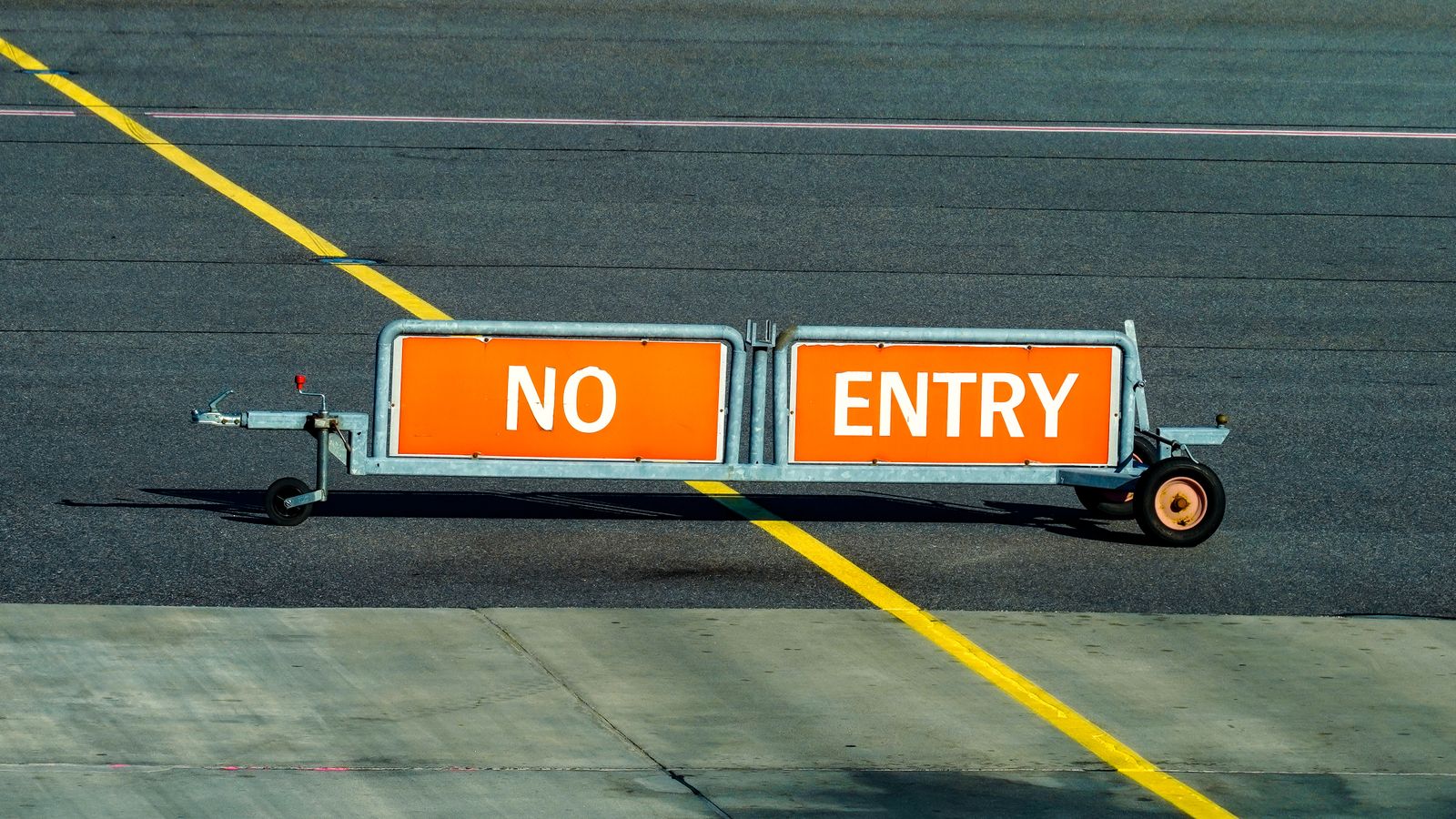
A warning sign indicating no entry on an airport taxiway with a bold yellow line.
TSA Policy Covers Only Three FDA-Approved Cannabis Medications
The TSA's medical marijuana exception applies exclusively to Epidiolex, Marinol, Syndros, and Cesamet—four prescription medications containing cannabinoids that have completed FDA New Drug Application review. Passengers carrying these products must present valid prescriptions. Products stay in original pharmacy packaging with patient name and prescribing physician information visible.
State-licensed medical marijuana cards don't create a carve-out here. Cannabis flower, vape cartridges, edibles, tinctures, and concentrates purchased from state-licensed retailers remain Schedule I controlled substances under the Controlled Substances Act, 21 U.S.C. § 812(c), regardless of state medical authorization. The policy draws a bright line.
TSA screening officers don't actively search for marijuana, but if discovered during routine security screening, officers must refer the matter to local law enforcement. Airport police jurisdiction determines whether passengers face arrest, citation, or confiscation.
Federal-State Conflict Creates Airport Enforcement Variability
Passengers carrying state-legal marijuana face inconsistent enforcement depending on airport location and local law enforcement policies. Airports in states with adult-use legalization—including California, Colorado, Illinois, and Massachusetts—often employ police agencies that decline to prosecute possession of amounts compliant with state limits.
Federal jurisdiction over airport property means DEA and FBI agents retain authority to enforce federal marijuana prohibition at any U.S. airport, though. International terminals and TSA checkpoints operate under federal law exclusively, creating enforcement risk even in states with comprehensive legalization frameworks.
- Denver International Airport allows possession of up to one ounce in accordance with Colorado Revised Statutes § 18-18-406, but prohibits boarding with marijuana.
- Los Angeles International Airport permits possession consistent with California Health and Safety Code § 11362.1, but warns passengers that departure and destination states may prosecute.
- Hartsfield-Jackson Atlanta International Airport enforces Georgia's felony marijuana possession statute, O.C.G.A. § 16-13-30, resulting in arrest for any amount.
Hemp-Derived CBD Products Face Separate Legal Framework
Cannabidiol products derived from hemp containing ≤0.3% delta-9 THC may be carried through TSA checkpoints under the 2018 Farm Bill, 7 U.S.C. § 1639o, provided they comply with FDA labeling requirements. The distinction hinges on THC concentration and plant source. Not product type or intended use.
Passengers carrying hemp-derived CBD oils, capsules, or topicals should retain certificates of analysis (COAs) demonstrating THC content below the 0.3% federal threshold. TSA officers may request documentation if product packaging doesn't clearly indicate hemp derivation and THC compliance.
The Farm Bill exemption doesn't extend to delta-8 THC, delta-10 THC, THC-O, or other semi-synthetic cannabinoids. DEA guidance issued September 2021 classified these compounds as Schedule I controlled substances when synthetically derived, regardless of hemp source material.
What Travelers Should Know Before Flying
Passengers should verify destination-state marijuana laws before traveling with any cannabis product, even FDA-approved medications. States including Idaho, Kansas, Nebraska, and South Carolina maintain complete prohibition with no medical exceptions, creating prosecution risk upon arrival.
For travelers with legitimate medical need, physicians may prescribe FDA-approved cannabinoid medications that satisfy both federal transportation law and destination-state controlled substances statutes. Epidiolex carries DEA Schedule V classification under 21 C.F.R. § 1308.15. That makes it legal to possess with valid prescription in all 50 states.
Patients relying on state-legal medical marijuana should plan alternative medication strategies for air travel or consider ground transportation through states with reciprocal medical marijuana recognition. For full background on this evolving policy area, see the CannIntel topic hub on TSA cannabis air travel policy.
Watch for TSA's fiscal year 2027 screening statistics, due October 2026, which will show whether marijuana referrals to law enforcement increased following this clarification.
For complete background, history, and our ongoing coverage of this story:
Open the CannIntel topic hub →Frequently asked questions
Can I fly with medical marijuana if I have a state-issued card?
No. State medical marijuana cards don't authorize possession of cannabis under federal law, which governs airport security. TSA permits only FDA-approved medications like Epidiolex with valid prescriptions. State-legal marijuana remains prohibited.
What happens if TSA finds marijuana in my bag?
TSA officers refer the matter to local law enforcement. Consequences depend on airport location: some jurisdictions confiscate without arrest, others prosecute under state law. Federal agents may enforce the Controlled Substances Act regardless of state legalization.
Are hemp-derived CBD products allowed on flights?
Yes, if they contain ≤0.3% delta-9 THC and comply with the 2018 Farm Bill. Carry certificates of analysis showing THC content. Delta-8 THC and synthetic cannabinoids remain Schedule I controlled substances and are prohibited.
Which states will arrest me for marijuana possession at airports?
Idaho, Kansas, Nebraska, South Carolina, and other states without medical marijuana programs enforce criminal possession statutes at airports. Georgia prosecutes marijuana possession as a felony. Check destination-state law before traveling.
Can I fly internationally with FDA-approved cannabis medications?
Possibly, but verify destination-country law. Many nations prohibit all cannabis products regardless of FDA approval. Epidiolex and synthetic THC medications require prescriptions and may face confiscation or criminal charges abroad.
Sources
The cannabis newsletter you forward to your team.
Federal policy, market data, grower alerts, and the one story that matters today. Sent every weekday at 7am. Free.
No spam. Unsubscribe with one click. 21+ only.
Related from Laws

Federal Marijuana Legalization Unlikely in 2026 Despite Rescheduling Push
DEA rescheduling timeline extends into 2027 while congressional legalization bills remain stalled in committee.
Thailand Cannabis Market Survives New Restrictions, Sales Steady
Six months after Thailand's medical-only cannabis law took effect, retail sales and dispensary counts remain near pre-regulation highs.

TSA Updates Marijuana Guidelines, Clarifies Federal Enforcement Role
Agency revises language on cannabis screening procedures but maintains federal prohibition stance at checkpoints.
More from the newsroom
Innovative Industrial Properties Posts Q1 Revenue Gain as Occupancy Holds
Cannabis REIT reports first-quarter results with rental income growth and stable tenant base despite sector headwinds.
Flushing Cannabis: The Science Behind Pre-Harvest Watering
Commercial growers spend two weeks flushing before harvest, but peer-reviewed research shows minimal impact on cannabinoids, terpenes, or combustion quality.

TSA Medical Cannabis Rule Collides With Texas Marijuana Ban
Federal screening policy allows medical cannabis in carry-on, but Texas law criminalizes possession at airports.