Foliar Feeding Cannabis: When It Works, When It Wastes Money
Leaf sprays can fix deficiencies fast or burn your crop. Here's the science on stomatal uptake, what nutrients move through leaves, and spray timing.

Macro photo of cannabis plant showing vibrant green leaves with delicate dew droplets.
Commercial growers treat foliar feeding two ways: either as an emergency tool when roots can't keep up, or as routine insurance they never questioned. The truth sits between those poles. Leaf absorption works for specific nutrients under specific conditions, but stomatal uptake has hard limits that marketing materials ignore.
The question isn't whether foliar feeding works in principle. Leaves absorb water and dissolved solutes through stomata and, to a lesser extent, through the cuticle. The question is whether spraying delivers better outcomes than addressing the root cause, whether that's pH lockout, media saturation, or a bad feed recipe. In a dialed room with healthy roots, foliar applications add labor and risk for minimal return. In a room with rootbound plants two weeks from harvest or a calcium deficiency spreading across new growth, a foliar spray can be the difference between finishing strong and watching margins evaporate.
How Leaf Absorption Actually Works
Cannabis leaves are covered in a waxy cuticle that repels water. That's the plant's design: keep pathogens out, keep moisture in. Stomata, the microscopic pores on the underside of leaves, open and close to regulate gas exchange and transpiration. When stomata are open, dissolved nutrients in a fine mist can enter the leaf and move into the apoplast, the network of cell walls and intercellular spaces where water and solutes travel.
Uptake efficiency depends on droplet size, surfactant chemistry, stomatal conductance, and nutrient mobility within the plant. Small molecules like urea, potassium nitrate, and some amino acids move readily. Larger chelated micronutrients move slower. Calcium, despite being critical during flower, moves almost exclusively through xylem, meaning foliar calcium helps new growth but won't reverse a deficiency in older leaves already showing necrotic spots.
Stomata open widest when vapor pressure deficit is low, typically early morning or late evening. Mid-day spraying when lights are full intensity and stomata are partially closed results in poor uptake and rapid evaporation, leaving salt residue on leaf surfaces. That residue can focus light like a lens and cause burn spots, especially under high-PPFD environments running 900+ µmol/m²/s.
The cuticle itself allows some penetration, particularly with the addition of surfactants that reduce surface tension. Non-ionic surfactants like yucca extract or polysorbates help the spray solution spread into a thin film rather than beading up. But even with surfactants, cuticle penetration is slow and inconsistent compared to stomatal entry. Growers who spray during lights-on without adjusting for stomatal rhythm are relying almost entirely on cuticle absorption, which is the least efficient pathway.
What Nutrients Move Through Leaves
Not all elements are equally mobile once inside the leaf. Nitrogen, potassium, magnesium, and phosphorus are phloem-mobile, meaning they can redistribute from older tissue to new growth. Foliar applications of these nutrients can help the whole plant if absorption is adequate. Calcium, iron, manganese, boron, and sulfur are largely immobile or slow-moving in phloem. Spraying these onto deficient lower leaves won't fix the problem; you're feeding the tissue you spray, not the whole plant.
This matters when diagnosing. If you see interveinal chlorosis on new growth and suspect iron deficiency, a foliar iron spray will green up those new leaves within days. If the same symptom appears on lower fans, foliar won't help; you need to fix root-zone pH or address antagonism with excess phosphorus.
Micronutrients are where foliar feeding shows the clearest advantage. Iron, manganese, zinc, and boron are needed in small amounts, and even minor pH swings or media issues can lock them out. A foliar application of chelated micronutrients at 0.5-1.0 mL/L can restore function faster than waiting for a root drench to correct. Chelation, typically with EDTA or amino acids, keeps the metal ion soluble and available for uptake even in the slightly alkaline environment of a leaf surface drying under air movement.
Macronutrients like nitrogen and potassium can be delivered foliarly, but the quantities needed to sustain growth are high enough that root feeding remains more practical. A foliar potassium spray might deliver 20-30 ppm to the leaf surface; a well-mixed reservoir delivers 180-220 ppm directly to the root zone every irrigation. The exception is late flower when root activity slows and a potassium-silica foliar can support final swell without pushing excess salts through a fading root system.
Silica: The Foliar Workhorse
Potassium silicate shows up in more foliar recipes than any other input, and for good reason. Silica strengthens cell walls, increases resistance to powdery mildew, and improves heat tolerance. Foliar silica applications at 0.5-1.0 mL/L of a soluble silicate product have shown measurable increases in leaf rigidity and pathogen resistance in university trials, though the effective window is vegetative growth and early flower.
Silica is not mobile in the plant. It deposits in cell walls and stays there, which means you're fortifying the tissue you spray. For that reason, silica foliar works best as a preventive measure in veg and the first two weeks of flower, not as a rescue treatment. Spraying silica onto leaves already infected with powdery mildew won't reverse the infection, but it can slow spread to new growth if combined with proper environmental controls and removal of infected material.
Application timing matters. Silica sprays raise the pH of the solution, often into the 9-10 range, which can cause phytotoxicity if not buffered or if sprayed during lights-on. Most growers apply silica foliar in the final hour before lights-off, allowing the plant to absorb while stomata are open and evaporation is slow. Mixing silica with other nutrients in the same spray tank can cause precipitation; calcium and silica, in particular, will crash out of solution and clog sprayers. Run silica as a standalone application or in combination with only potassium-based nutrients.
Some cultivators run weekly silica foliar through week three of flower, then stop to avoid any residue on developing buds. Others skip foliar silica entirely and rely on root drenches, accepting the trade-off of slower systemic uptake for simpler logistics. There's no hard evidence that foliar silica in early flower harms trichome development, but there's also no data showing it improves cannabinoid or terpene content. The benefit is structural and defensive, not metabolic.
Kelp and Hormonal Foliar Inputs
Kelp extracts, particularly cold-processed Ascophyllum nodosum, contain cytokinins, auxins, and betaines that can stimulate cell division and stress recovery. Foliar kelp applications at 2-5 mL/L are common in the first week after topping or during recovery from heat stress or transplant shock. The hormonal activity is real but dose-dependent and timing-sensitive.
Cytokinins promote shoot growth and delay senescence. Spraying kelp during late veg can encourage bushier branching and faster recovery from training. Spraying the same concentration during late flower can delay ripening and reduce the rate at which older fan leaves fade, which sounds beneficial until you realize that natural senescence is part of the plant's nutrient reallocation process. Keeping fans green longer doesn't increase yield if it slows the plant's ability to mobilize stored nitrogen and phosphorus into flowers.
Kelp also contains trace minerals, amino acids, and polysaccharides that may improve microbial activity on leaf surfaces. Some growers use kelp foliar as a carrier for beneficial bacteria or fungi, though the evidence for foliar-applied microbes establishing on leaf tissue is thin. Most research on microbial inoculants focuses on root-zone application where moisture, organic matter, and stable temperatures support colonization. A leaf surface that dries within two hours and swings 15°F between day and night is a harsh environment for microbes.
The risk with kelp foliar is over-application. Kelp is not a measured nutrient; it's a complex mix of bioactive compounds, and manufacturers don't standardize cytokinin content the way they standardize NPK. Spraying kelp every three days because it's 'natural' can lead to excessive vegetative growth, delayed flowering, and nutrient imbalances if the kelp product contains significant potassium. Treat kelp as a tool for specific situations, not a weekly ritual.
When Foliar Feeding Makes Sense
Foliar applications earn their cost and labor in a few scenarios. First, micronutrient deficiencies that appear suddenly and spread fast. If you see new growth coming in pale yellow with green veins, that's likely iron or manganese deficiency. A foliar spray of chelated micronutrient blend at label rate will green up new leaves within 48-72 hours while you troubleshoot the root cause, whether that's pH drift, over-watering, or excess phosphorus locking out iron.
Second, late-stage potassium support when roots are fading. In the final two weeks of flower, root mass declines and nutrient uptake slows. A light potassium sulfate or potassium silicate foliar at 0.5 mL/L can support continued carbohydrate transport into flowers without overloading a weakened root system with salts. This is a marginal gain, maybe 3-5% improvement in final density, but in a commercial room where every percentage point affects the price per pound, marginal gains add up.
Third, environmental stress recovery. If a room hits 95°F for six hours due to HVAC failure, a foliar application of kelp or a balanced micronutrient spray the following morning can accelerate recovery by providing resources directly to stressed tissue. The plant's roots may still be functional, but transpiration during heat stress can outpace nutrient uptake, creating a temporary deficiency even in a well-fed system.
Fourth, young plants with underdeveloped root systems. Clones in the first week after transplant or seedlings in the two-leaf stage benefit from a light foliar feeding because their root-to-shoot ratio is low. A dilute vegetative nutrient spray at 25% strength provides a nutrient bridge while roots establish. Once roots fill the container, foliar becomes redundant.
When Foliar Feeding Hurts
Spraying during flower after week three introduces risk with little upside. Moisture on dense buds creates microclimates where humidity spikes and airflow stalls, ideal conditions for botrytis. Even with fans running and dehumidification dialed, a foliar application adds 30-60 minutes of elevated surface moisture. In a room already running 60% RH, that's enough to tip into the danger zone.
Foliar feeding also masks root problems. If you're spraying every week to keep plants green, you're not addressing why the roots aren't delivering. Chronic foliar dependence usually points to pH lockout, over-watering, root disease, or a fundamentally broken feed schedule. Fixing the root cause eliminates the need for foliar and reduces labor and input costs.
High-concentration sprays cause burn. Some growers assume that if 1 mL/L works, 3 mL/L works better. It doesn't. Stomata can only process so much solute before the osmotic gradient reverses and cells lose water instead of gaining it. Leaf edges turn brown and crispy, new growth comes in distorted, and you've traded one problem for another. Always start at the low end of label rates and increase only if you see no response after two applications.
Spraying under high light is a common mistake. Even with stomata open, a foliar application under 800+ PPFD will evaporate faster than the leaf can absorb, leaving salt crystals on the surface. Those crystals act as tiny lenses, focusing light and causing burn spots that look like pest damage or disease. If your light schedule doesn't allow for an early-morning or late-evening spray, dim the lights to 400 PPFD for the hour following application or spray 30 minutes before lights-off.
Spray Technique and Equipment
Droplet size determines where the spray lands and how well it's absorbed. A coarse mist from a cheap pump sprayer produces droplets too large to stay suspended; they roll off leaves and puddle in the media. A fine mist from a quality atomizer or fogger produces droplets in the 50-100 micron range that settle evenly and penetrate stomata more effectively.
Spray the underside of leaves where stomatal density is highest. This requires lifting branches and angling the wand upward, which takes time in a canopy with tight spacing. Some growers skip the underside and justify it by saying the top surface has enough absorption. That's true for cuticle penetration, but stomatal uptake is 5-10 times higher on the underside. If you're going to spray, do it right or don't do it.
Water quality affects foliar efficacy. Hard water with 200+ ppm calcium carbonate will precipitate some nutrients and reduce uptake. Reverse osmosis water or distilled water is ideal for foliar mixing. If you're using tap water, at least let it sit for 24 hours to off-gas chlorine, or run it through a carbon filter. Chlorinated water won't kill the plant, but it can oxidize some organic inputs like kelp or humic acid, reducing their effectiveness.
Surfactants improve coverage but must be chosen carefully. Yucca extract at 1-2 mL/L is a safe, non-ionic option that reduces surface tension without leaving residue. Dish soap is not a surfactant; it's a detergent with additional compounds that can damage leaf tissue. Commercial spreader-stickers designed for agricultural use are worth the cost if you're running foliar programs at scale.
Foliar Feeding in Different Growth Stages
In vegetative growth, foliar feeding has the widest margin for error. Stomata are active, growth is rapid, and the plant can tolerate a range of inputs. A weekly foliar of kelp, silica, or a balanced micronutrient blend supports vigorous growth and can reduce the time to canopy fill by a few days. The risk is low because there are no flowers to protect and humidity tolerance is higher.
Early flower, weeks one through three, is the transition window. Stretch is active, new bud sites are forming, and nutrient demand is peaking. A foliar application of potassium and micronutrients during this phase can support the metabolic load without stressing roots. After week three, stop. The risk-reward ratio flips as flowers develop density and moisture becomes a liability.
Late flower foliar is a judgment call. Some growers run a final potassium-silica spray at the end of week six to support the last push of resin production. Others stop all foliar by week four and rely entirely on root feeding and environmental control. There's no universal answer; it depends on your room's baseline humidity, airflow, and strain susceptibility to mold. A Gelato cut with tight, dense flowers is a poor candidate for late foliar. A Durban Poison with airy sativa structure can handle it.
Common Mistakes and How to Avoid Them
The biggest mistake is treating foliar feeding as a primary nutrient strategy. It's not. Roots are the engine; foliar is the emergency brake or the turbo boost, depending on context. If your baseline root feeding is dialed, foliar applications should be infrequent and targeted.
Second mistake: spraying too often. Some growers fall into a rhythm of weekly foliar because it feels proactive. Unless you're addressing a specific deficiency or running a preventive silica program in veg, weekly spraying is overkill. It adds labor, increases the chance of user error, and creates dependency. Every input should have a reason; 'because I always do' is not a reason.
Third mistake: mixing incompatible products in the same tank. Calcium and sulfate will precipitate. Silica and phosphoric acid will gel. Some organic inputs will separate or foam when combined with synthetic salts. If you're running a multi-product foliar, test the mix in a small container first and watch for cloudiness, separation, or pH swings. If the solution doesn't stay clear and stable for 10 minutes, don't spray it.
Fourth mistake: ignoring pH. Most foliar sprays should be in the 5.5-6.5 range for optimal uptake. Silica pushes pH high; acids pull it low. Measure and adjust. A pH of 8.5 might not kill the plant, but uptake will be poor and you'll see leaf tip burn from the alkaline solution sitting on tissue.
Fifth mistake: spraying in flower without adjusting dehumidification. If you add moisture to the canopy, you need to pull it out faster. Increase exhaust, boost dehumidifier capacity, or add circulation fans. A foliar application that raises RH from 55% to 70% for an hour is manageable. Letting it sit at 70% for four hours invites problems.
Economics of Foliar Programs
A gallon of quality kelp extract runs $40-80. A gallon of potassium silicate runs $20-40. Chelated micronutrient blends run $30-60 per quart. If you're mixing 5 gallons of foliar solution per application and spraying 500 plants weekly, you're spending $15-25 per session in product cost, plus labor. Over a 10-week veg and flower cycle, that's $150-250 in foliar inputs alone.
Compare that to the cost of fixing the root issue. A pH meter costs $100. Calibration solution costs $15. A bag of quality media costs $30. If chronic foliar feeding is compensating for bad pH management or poor media choice, you're spending more on the workaround than the fix.
That said, foliar feeding can prevent crop loss. If a micronutrient deficiency spreads unchecked for a week, you lose growth, delay harvest, and reduce final quality. A $10 foliar application that stops the deficiency in two days pays for itself many times over. The key is knowing when you're solving a problem and when you're creating a ritual.
Strain-Specific Considerations
Some cultivars tolerate foliar applications better than others. Sativas with longer internodal spacing and airier flowers handle moisture better than dense indica-dominant hybrids. A OG Kush cut with golf-ball buds is a poor candidate for foliar feeding past week two of flower. A Sour Diesel with open structure can handle a light spray through week four if environmental controls are tight.
Trichome density also matters. Cultivars with heavy resin production early in flower, like many THC-dominant hybrids, develop a sticky surface that traps moisture and reduces airflow around the bud. Foliar sprays on these plants require extra caution and faster drying times. Strains with lower trichome density or slower resin development have more margin for error.
Terpene profiles don't directly correlate with foliar tolerance, but there's anecdotal evidence that high-myrcene strains, which tend toward sedative effects and denser flowers, are more susceptible to mold and should be treated conservatively. High-limonene or caryophyllene strains, often more sativa-leaning, seem to handle foliar moisture better, though this is observational and not controlled data.
Alternatives to Foliar Feeding
Before reaching for the sprayer, consider whether a root drench or media amendment solves the problem with less risk. Micronutrient deficiencies often respond just as fast to a properly pH'd root feeding as they do to foliar, especially if the root system is healthy. Calcium deficiencies are better addressed with gypsum or calcium nitrate in the reservoir than with foliar calcium, which won't reach the affected tissue anyway.
Improving root-zone conditions eliminates most of the situations where foliar feeding seems necessary. If your media is staying too wet, increase perlite or coco content. If pH is drifting, switch to a more stable buffering system or check your water source. If roots are diseased, treat with beneficial microbes or hydrogen peroxide and improve drainage. Foliar feeding treats symptoms; fixing the root zone treats causes.
Some growers use foliar feeding as a crutch to avoid learning their system. If you're spraying every week and still seeing deficiencies, the problem isn't foliar technique. It's your baseline program. Step back, test your media, check your pH, verify your nutrient ratios, and build a root feeding schedule that works. Once that's dialed, foliar becomes an occasional tool, not a weekly necessity.
Frequently asked questions
Can I spray during lights-on if I lower the intensity?
Yes, but only if you drop PPFD below 400 µmol/m²/s and spray at least 90 minutes before returning to full intensity. Stomatal conductance is still lower during the day than at night, so uptake will be reduced. Early morning or late evening remains more effective.
Will foliar feeding increase THC or terpene content?
No direct evidence supports this. Foliar micronutrients can prevent deficiencies that would otherwise limit metabolic function, but there's no data showing that foliar applications increase cannabinoid or terpene synthesis beyond what proper root feeding achieves. Silica may improve structural integrity, but that's not the same as potency.
How do I know if a deficiency needs foliar treatment or root correction?
If the deficiency appears on new growth and is spreading fast, foliar micronutrients can provide immediate relief while you fix the root cause. If it's on lower leaves or progressing slowly, focus on correcting pH, adjusting feed ratios, or improving media drainage. Foliar is a bridge, not a solution.
Can I mix silica and calcium in the same foliar spray?
No. Calcium and silicate will precipitate out of solution and clog your sprayer. Run silica as a standalone application or mix only with potassium-based nutrients. If you need both, apply them on separate days.
Is foliar feeding safe during flower if I have good airflow?
Through week three, yes, with caution. After week three, the risk of botrytis increases significantly even with strong airflow, especially on dense cultivars. If you spray late, increase dehumidification capacity and ensure the canopy dries within 60 minutes.
What's the ideal droplet size for foliar sprays?
50-100 microns is optimal for stomatal penetration and even coverage. Coarse sprays above 200 microns roll off leaves and waste product. Fine misters or foggers in that range provide better uptake and reduce runoff.
Do I need to pH-adjust foliar sprays?
Yes. Target 5.5-6.5 for most foliar applications. Silica-based sprays will push pH into the 9-10 range and need to be brought down with phosphoric or citric acid. High pH reduces uptake and can cause leaf burn.
Can I use foliar feeding to replace root feeding in hydro or coco?
No. Foliar uptake is too slow and inconsistent to meet the plant's macronutrient demands. Use foliar as a supplement for micronutrients or as emergency support, but root feeding remains the primary delivery method for nitrogen, phosphorus, and potassium.
Sources
The cannabis newsletter you forward to your team.
Federal policy, market data, grower alerts, and the one story that matters today. Sent every weekday at 7am. Free.
No spam. Unsubscribe with one click. 21+ only.
Related from Grow

Arizona Company Pioneers Aeroponic Cannabis Cultivation in Verde Valley
Soil-free growing system promises water savings and year-round production in Arizona's challenging climate.
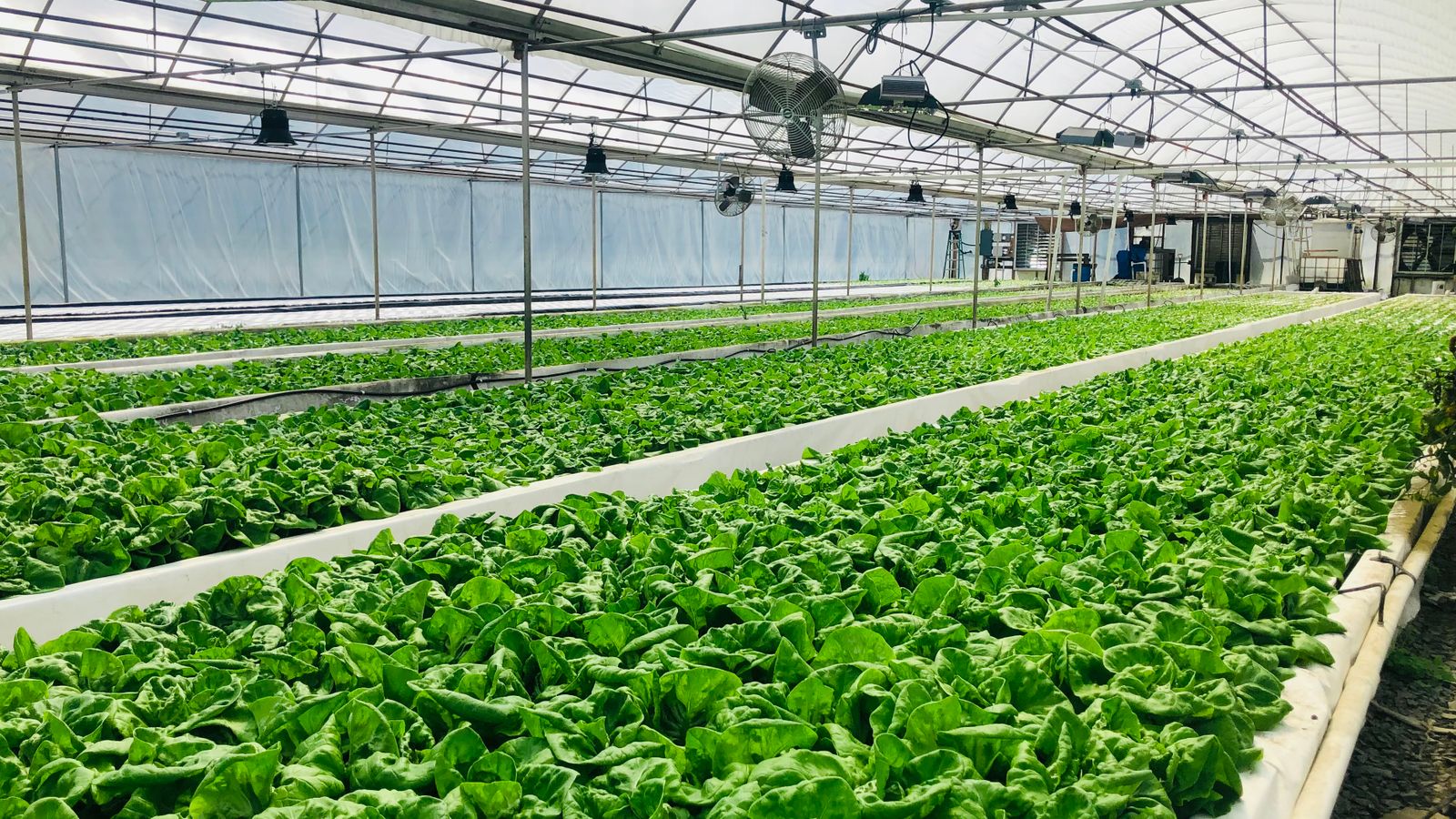
Arizona Cultivator Pioneers Soil-Free Cannabis Hydroponic System
An Arizona cannabis company has deployed a commercial-scale hydroponic cultivation system eliminating soil-based growing entirely.

Aeroponic Cannabis Cultivation Produces Cleaner, More Potent Flower
Air-based growing eliminates soil pathogens and boosts cannabinoid density, according to new cultivation data.
More from the newsroom

DEA Rescheduling Stalls as Cannabis Lawyers Face Regulatory Limbo
Federal rescheduling remains frozen in administrative review, leaving cannabis attorneys without clear compliance roadmaps.

Marijuana Odor Loses Probable-Cause Status in Growing Number of States
Courts and legislatures are stripping police of the authority to search vehicles based solely on cannabis smell.

Medical Cannabis Operators Face June 26 Deadline for DEA Registration
Businesses that file by Thursday preserve expedited review as federal oversight of medical cannabis supply chains begins.