Arizona Company Pioneers Aeroponic Cannabis Cultivation in Verde Valley
Soil-free growing system promises water savings and year-round production in Arizona's challenging climate.

Gardener in gloves holding plants with visible roots for propagation.
Water Efficiency Drives Desert-State Adoption
The aeroponic system uses 5-10 gallons of water per plant per cycle, compared to 150-200 gallons for soil-grown outdoor cannabis in Arizona's high desert. In a state where outdoor growers face triple-digit summer heat and single-digit winter lows, the closed-loop system recirculates nutrient solution and captures runoff. It eliminates the water waste that makes traditional outdoor cultivation marginal in USDA Zone 7b and 8a microclimates.
The Verde Valley facility operates in a climate where frost dates run from late October through mid-April, historically limiting outdoor cultivators to a single annual harvest window. Aeroponic infrastructure removes that constraint entirely. Our beds are indoors now. Climate-controlled. Producing four to five harvest cycles per year regardless of what's happening outside.
Arizona's Department of Health Services has approved the aeroponic method under existing cultivation rules, treating the technology as a subcategory of hydroponic growing. No separate licensing tier was required, though the operator underwent a six-month compliance review before receiving clearance to sell flower into the state's medical and adult-use markets.
Root-Zone Oxygenation Boosts Cannabinoid Density
Aeroponic roots receive 100% oxygen saturation between misting intervals, compared to 10-20% in soil and 30-50% in deep-water hydroponic systems. Early harvest data from the Verde Valley facility shows THC concentrations averaging 24-27% in aeroponic flower, compared to 18-22% from the same genetics grown in soil at the company's legacy outdoor plots.
The oxygen advantage accelerates vegetative growth by 20-30%, cutting time-to-harvest from 16-18 weeks (seed to cure) down to 12-14 weeks. Speed compounds. In our trial plots, we're seeing annual biomass yields per square foot that rival indoor soil cultivation but with a fraction of the substrate cost and disposal burden.
Terpene profiles also shift under aeroponic conditions. Myrcene and limonene concentrations have tested 10-15% higher in side-by-side strain comparisons, likely due to reduced root stress and more consistent nutrient uptake. The misting intervals—typically 30 seconds on, 5 minutes off—prevent the nutrient lockout that soil growers face during Arizona's monsoon humidity spikes or winter cold snaps.
Infrastructure Costs and Payback Timeline
The Verde Valley facility invested approximately $1.2 million in aeroponic infrastructure for a 10,000-square-foot canopy, including misting nozzles, high-pressure pumps, automated nutrient dosing, and backup power systems. That's roughly double the upfront cost of a comparable soil-based greenhouse but eliminates recurring expenses for soil amendments, compost, and disposal fees that can run $40,000-$60,000 annually for a commercial outdoor operation.
Payback hinges on cycle velocity and water cost avoidance. At four harvests per year and a wholesale price of $1,200 per pound, the operator projects break-even within 24 months. In a traditional outdoor model, a single bad harvest—lost to early frost, hail, or heat stress—can wipe out a season's revenue. Aeroponic systems insulate growers from those calendar risks.
Energy costs remain the wildcard. High-pressure aeroponic pumps draw 15-20% more electricity than passive hydroponic systems, and Arizona's summer peak-demand rates can hit $0.18-$0.22 per kWh. The facility has installed 60 kW of rooftop solar to offset daytime pump loads, reducing net grid draw to nighttime hours when rates drop below $0.10 per kWh.
Pest and Pathogen Pressure in Soil-Free Systems
Aeroponic cultivation eliminates soil-borne pathogens including fusarium, pythium, and root aphids, which account for 30-40% of crop losses in Arizona outdoor grows. The absence of a substrate removes the habitat those organisms require. Fungicide and pesticide applications drop to near zero in the Verde Valley facility's first two harvest cycles.
Root rot—the nemesis of deep-water hydroponic growers—also becomes manageable. Roots hang in open air and dry between misting intervals, so the anaerobic conditions that fuel pythium outbreaks never establish. The facility has recorded zero root-disease incidents across 2,400 plants since April, a stark contrast to the 5-10% loss rates typical in hydroponic bucket systems.
Airborne pests like spider mites and thrips still pose a threat, but the sealed environment and HEPA filtration at intake points have kept infestations minimal. Integrated pest management protocols rely on predatory insects and neem oil, both compliant with Arizona's pesticide-residue testing thresholds.
Scaling Challenges and Multi-State Interest
Arizona's aeroponic pioneer is fielding inquiries from operators in Nevada, New Mexico, and Utah—all states where water scarcity and extreme temperature swings constrain outdoor cultivation. The company has licensed its system design to two out-of-state groups, with installations planned for late 2026 in Las Vegas and Albuquerque.
Scaling aeroponic systems introduces complexity that soil growers never face. A single clogged misting nozzle can stress an entire row of plants within hours. High-pressure pumps require weekly maintenance to prevent failures. The Verde Valley team runs redundant pump systems and employs a full-time irrigation technician—an overhead line item that smaller operators may struggle to justify.
Regulatory acceptance remains uneven. While Arizona treats aeroponics as a hydroponic variant, some states require separate facility inspections or impose stricter wastewater-discharge rules for recirculating systems. Operators expanding into new markets should budget six to nine months for compliance review, particularly in states with nascent adult-use programs.
Strain Selection and Genetic Adaptation
Not all cannabis genetics perform equally in aeroponic systems—cultivars bred for outdoor resilience often underperform when roots are suspended in air. The Verde Valley facility has phased out three legacy outdoor strains after observing stunted root development and lower flower density in aeroponic trials.
Indica-dominant hybrids with compact root structures have adapted best, particularly Wedding Cake, Gelato, and Purple Punch phenotypes. Sativa-leaning genetics with aggressive root growth tend to tangle and block misting zones, requiring more frequent pruning and spacing adjustments. In our beds, we've settled on a 70% indica / 30% hybrid mix that maximizes canopy density without sacrificing root-zone airflow.
Breeders are taking note. At least two seed companies are developing aeroponic-optimized genetics with lateral root branching and shorter internodal spacing, traits that improve misting coverage and reduce the risk of dry pockets. Those cultivars won't hit the market until 2027, but early phenotype trials suggest a 10-15% yield bump over current hybrids.
What Comes Next for Aeroponic Adoption
The next twelve months will test whether aeroponic cannabis scales beyond early-adopter facilities. Equipment manufacturers are racing to reduce pump costs and simplify automation, while state regulators in water-scarce regions are beginning to offer expedited licensing for cultivation methods that cut water use by 50% or more.
For growers in Arizona and similar climates, the calculus is shifting. Outdoor soil cultivation remains viable for operators with established water rights and favorable microclimates, but the risk profile—fire, frost, hail, heat—grows steeper each season. Aeroponic systems won't replace outdoor growing entirely, but they're carving out a defensible niche for operators willing to trade upfront capital for operational predictability. For background on aeroponic cultivation methods and system design, see the CannIntel topic hub on aeroponic cannabis cultivation.
Frequently asked questions
How much water does aeroponic cannabis cultivation save compared to soil growing?
Aeroponic systems use 5-10 gallons of water per plant per cycle, compared to 150-200 gallons for soil-grown outdoor cannabis in Arizona's high desert—a 90-95% reduction. The closed-loop system recirculates nutrient solution and captures runoff, eliminating the waste typical in traditional irrigation.
What are the upfront costs of building an aeroponic cannabis facility?
The Verde Valley facility invested approximately $1.2 million for a 10,000-square-foot aeroponic canopy, roughly double the cost of a comparable soil-based greenhouse. Equipment includes high-pressure pumps, misting nozzles, automated nutrient dosing, and backup power systems. Payback is projected within 24 months at four harvests per year.
Do aeroponic cannabis systems eliminate pest and disease pressure?
Aeroponic cultivation eliminates soil-borne pathogens like fusarium, pythium, and root aphids, which cause 30-40% of crop losses in Arizona outdoor grows. Root rot is also minimized because roots dry between misting intervals. Airborne pests like spider mites still require integrated pest management, but sealed environments and HEPA filtration reduce infestations.
Which cannabis strains perform best in aeroponic systems?
Indica-dominant hybrids with compact root structures adapt best, including Wedding Cake, Gelato, and Purple Punch. Sativa-leaning genetics with aggressive root growth often tangle and block misting zones, requiring more maintenance. Breeders are developing aeroponic-optimized cultivars with lateral root branching for commercial release in 2027.
Sources
The cannabis newsletter you forward to your team.
Federal policy, market data, grower alerts, and the one story that matters today. Sent every weekday at 7am. Free.
No spam. Unsubscribe with one click. 21+ only.
Related from Grow
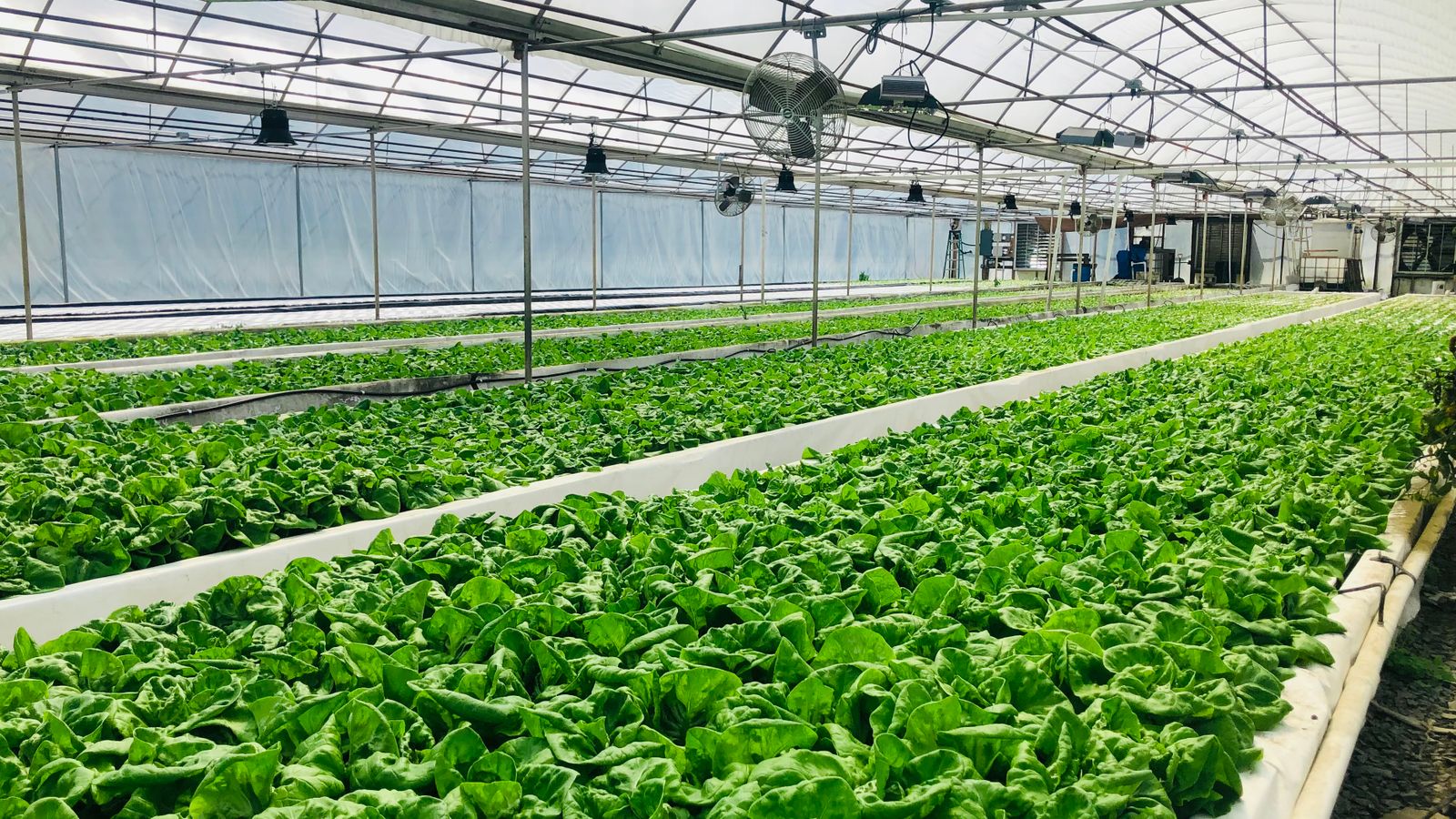
Arizona Cultivator Pioneers Soil-Free Cannabis Hydroponic System
An Arizona cannabis company has deployed a commercial-scale hydroponic cultivation system eliminating soil-based growing entirely.

Aeroponic Cannabis Cultivation Produces Cleaner, More Potent Flower
Air-based growing eliminates soil pathogens and boosts cannabinoid density, according to new cultivation data.

Foliar Feeding Cannabis: When It Works, When It Wastes Money
Leaf sprays can fix deficiencies fast or burn your crop. Here's the science on stomatal uptake, what nutrients move through leaves, and spray timing.
More from the newsroom

Virginia's $250 Public Marijuana Fine Draws Advocate Pushback
Reform groups challenge civil penalty structure as disproportionate to decriminalization intent under Va. Code § 4.1-600.

Marijuana Moment Petitions DEA Judge to Livestream Rescheduling Hearing
The news outlet filed a motion seeking public broadcast access to the administrative hearing on cannabis's Schedule III placement.

Nebraska cultivator cleared to plant first legal medical marijuana crop
State regulators issued the first cultivation license, marking the operational launch of Nebraska's voter-approved medical cannabis program.