Colorado warns of hazardous vapes sold at 405 dispensaries
State health officials issue consumer alert after contaminated cartridges distributed across licensed retail network.
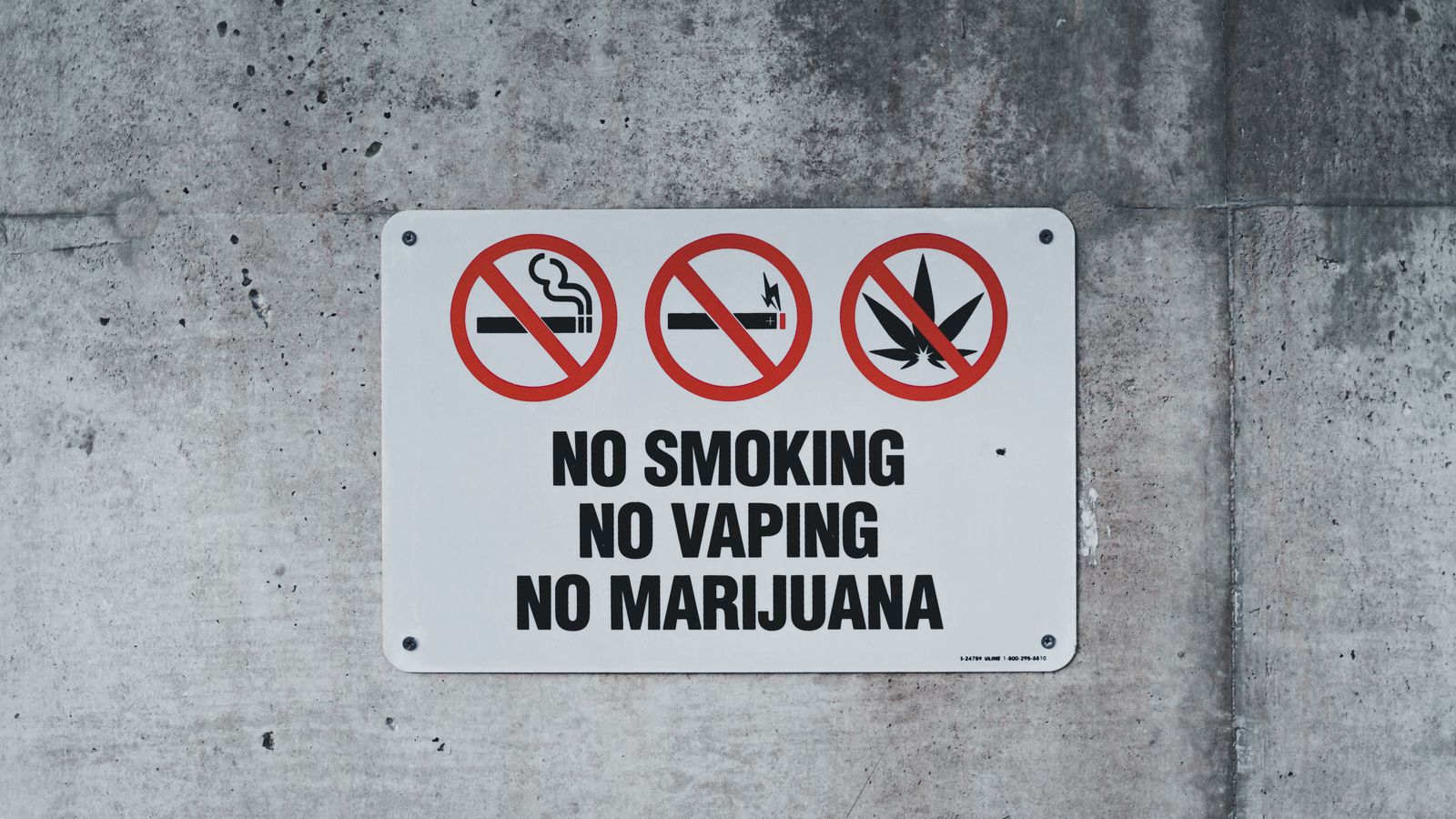
A clear warning sign prohibiting smoking, vaping, and marijuana on a concrete wall.
Scale of Distribution Spans Licensed Retail Network
The contaminated cartridges reached 405 dispensaries across Colorado's licensed retail system, according to the state health department's September 26 alert. The warning didn't specify the nature of the hazard, the number of units affected, or the manufacturer responsible for the tainted products.
Colorado operates roughly 550 licensed dispensaries as of mid-2026. That's 74% of the state's retail infrastructure.
State officials haven't disclosed whether the hazard stems from chemical contamination, microbial pathogens, heavy metals, or residual solvents. The alert also didn't indicate whether the products have been recalled or removed from shelves.
Consumer Health Risks Remain Undefined
The health department's warning provided no detail on the specific health threat posed by the cartridges, leaving consumers and retailers without clear guidance on symptoms or exposure risks. Vape-related health scares in the cannabis industry have historically involved vitamin E acetate, pesticide residues, and unregulated cutting agents.
Colorado's Marijuana Enforcement Division requires all cannabis concentrates to undergo potency and contaminant testing before retail sale, with labs checking for heavy metals (lead, arsenic, cadmium, mercury), microbial impurities (E. coli, salmonella, aspergillus), and residual solvents (butane, propane, ethanol).
Without specifics, the alert complicates risk assessment. Patients and adult-use consumers who may have purchased the products in recent weeks are left guessing.
Regulatory Gaps in Real-Time Tracking
Colorado's seed-to-sale tracking system, METRC, logs every licensed product movement but doesn't automatically flag contaminated batches for real-time consumer notification. Recalls typically require manual coordination between the Marijuana Enforcement Division, the health department, and individual retailers.
State rules mandate destruction of failed product batches. Enforcement timelines vary. Some contaminated inventory can remain on shelves for days after a lab failure if the recall notice doesn't reach retail staff immediately.
For full background on Colorado's product-safety enforcement, see the CannIntel topic hub on Colorado vape safety and product recalls.
Industry Precedent for Multi-Store Alerts
Multi-dispensary contamination events are rare but not unprecedented in mature cannabis markets. California issued a statewide vape recall in 2019 after pesticide residues were detected in cartridges sold by a major distributor, affecting more than 200 retail locations.
Oregon flagged moldy flower at 87 dispensaries in 2021 following a supply-chain breakdown during wildfire season. Michigan recalled vape cartridges from 63 stores in 2023 due to vitamin E acetate contamination.
Colorado's 405-store alert surpasses all recent precedents in geographic reach within a single state.
Operator Liability and Insurance Exposure
Dispensaries that sold the flagged cartridges face potential liability if consumers report adverse health effects, even if the contamination originated upstream in manufacturing or testing. Product-liability insurance in the cannabis industry typically covers third-party bodily injury claims, but coverage gaps are common for recalled inventory and reputational harm.
Retailers can't return contaminated products to distributors for refunds under Colorado law. Failed inventory must be destroyed under MED supervision, creating a total loss for the retailer unless the manufacturer voluntarily compensates stores.
Financial exposure varies by store size. A high-volume Denver dispensary moving 500 cartridges per week could face $15,000 to $25,000 in sunk inventory costs if the recall window spans two weeks.
What Retailers and Consumers Should Watch
The state hasn't published a list of affected dispensaries, product SKUs, or batch numbers, leaving consumers to rely on individual retailer notifications. Patients and adult-use buyers who purchased vape cartridges in Colorado in the past 30 days should contact their dispensary directly for product-specific guidance.
Retailers should cross-reference their METRC inventory logs against any forthcoming MED recall notices and pull suspect batches immediately. Proactive removal reduces downstream liability even if formal enforcement hasn't reached the store yet.
Expect the Marijuana Enforcement Division to release a detailed recall list within 72 hours if the hazard involves acute health risk. If no follow-up appears by October 1, the alert may reflect a precautionary measure rather than confirmed harm.
This is unsettled. Enforcement clarity will depend on whether the state discloses the contaminant type and manufacturer identity in the coming week.
For complete background, history, and our ongoing coverage of this story:
Open the CannIntel topic hub →Sources
The cannabis newsletter you forward to your team.
Federal policy, market data, grower alerts, and the one story that matters today. Sent every weekday at 7am. Free.
No spam. Unsubscribe with one click. 21+ only.
Related from News

Federal Study Finds 23% of U.S. Adults Used Cannabis in Past Year
Government-funded research reveals nearly one-quarter of American adults consumed marijuana in 2025, with most users employing multiple delivery methods.
Australia, New Zealand Arrest Dozens in 85-Raid Cannabis Crackdown
Trans-Tasman police operation targets organized cannabis cultivation networks across both nations.

Hudson, NY Blocks Cannabis Retailers on Warren Street Amid Zoning Fight
The upstate city's zoning board restricted adult-use shops from its main commercial corridor, sparking debate over local control versus state licensing.
More from the newsroom
Florida medical marijuana license winners signal early exit interest
Recent filings suggest at least two of Florida's newly awarded licensees are exploring sale options before launching operations.

Massachusetts CCC Opens Public Comment on Agent Registration Rules
The Cannabis Control Commission is soliciting informal feedback on registration requirements for cannabis agents before formal rulemaking begins.

Massachusetts Voters Face Cannabis Legalization Repeal Question in November
NORML calls Question 4 a national trial balloon by prohibitionist groups seeking to reverse state legal markets.