Supreme Court Cannabis Case Threatens Michigan State Tax Deductions
A pending Supreme Court case could bar state-level tax deductions for cannabis businesses, raising effective tax rates in Michigan and 37 other legal states.

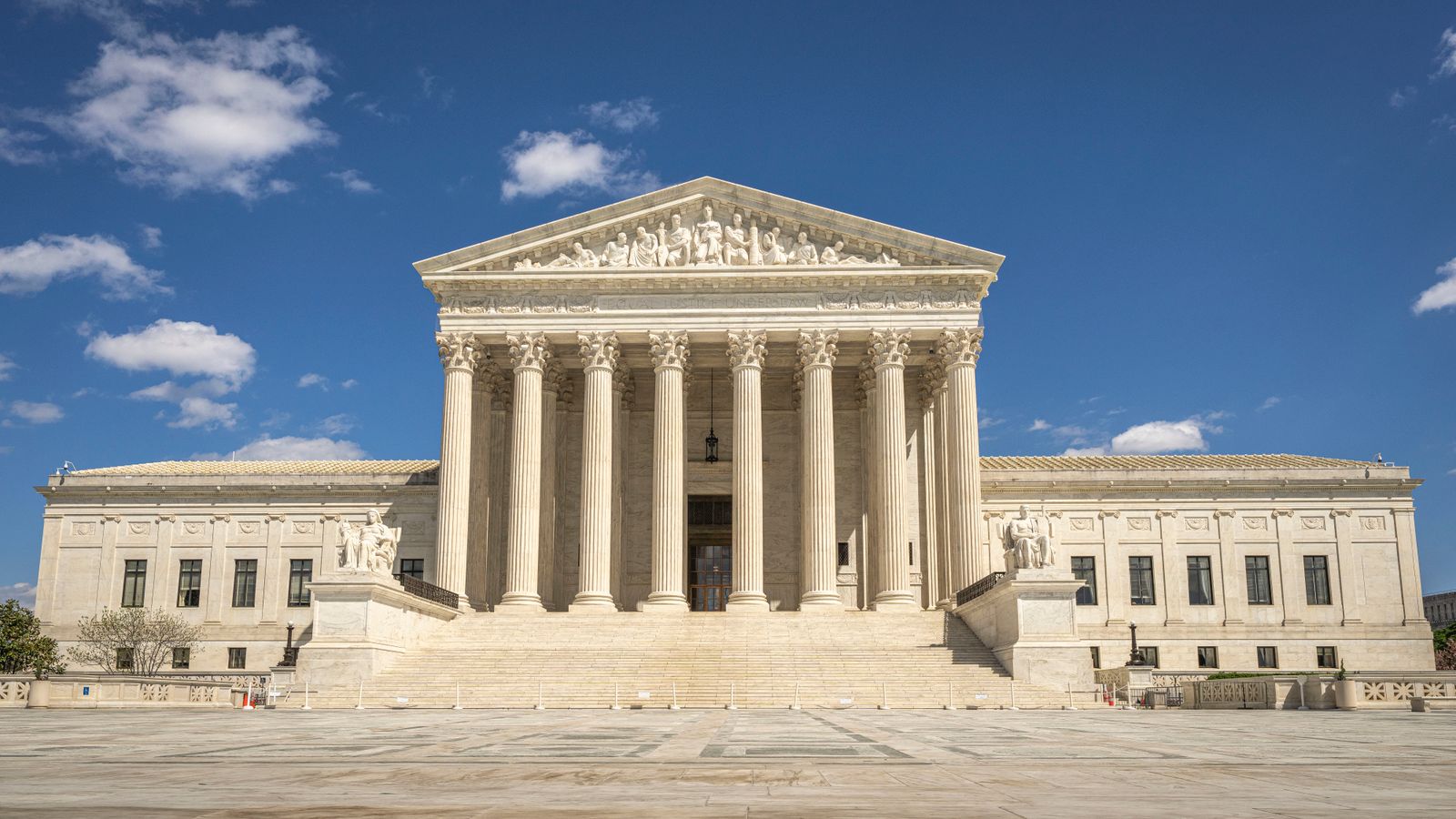
Front view of the Supreme Court building in New York City with blue skies.
Case Background and Constitutional Question
The case, Patients Mutual v. Commissioner of Internal Revenue, challenges whether the Supremacy Clause permits states to allow ordinary-and-necessary business deductions that federal law—specifically IRC §280E—expressly disallows for Schedule I trafficking. The petitioner, a Michigan provisioning center, argues that Michigan's Corporate Income Tax Act authorizes deductions for all lawful state business expenses. State tax sovereignty permits this divergence, the petitioner said. The Solicitor General's brief, filed in July, counters that §280E's disallowance is a floor that binds state tax codes under the doctrine of federal preemption.
Oral argument is scheduled for the Court's November sitting. A ruling is expected by June 2027.
Michigan's Current State-Tax Treatment
Michigan currently permits cannabis businesses to deduct ordinary operating expenses—rent, payroll, utilities, and cost-of-goods-sold (COGS)—on state corporate income tax returns, even though those same expenses are disallowed on federal returns under §280E. This split has been in place since the Michigan Regulation and Taxation of Marihuana Act took effect in December 2019. On a strict reading of the Michigan Corporate Income Tax Act (MCITA), state taxable income starts with federal adjusted gross income but then applies Michigan-specific adjustments. Michigan Treasury guidance issued in 2020 confirmed that §280E is a federal-only limitation.
If the Supreme Court rules for the government, Michigan would be compelled to conform its state tax base to the federal §280E disallowance. The Michigan Department of Treasury hasn't issued formal guidance on compliance mechanisms in the event of such a ruling, but tax practitioners expect the department would require addbacks on Schedule C and corporate returns to mirror the federal treatment.
Financial Impact on Michigan Operators
The median Michigan provisioning center reported $1.2 million in gross revenue and $780,000 in operating expenses in 2025, according to Cannabis Regulatory Agency data. Under current law, those expenses reduce state taxable income by $780,000, yielding a state tax liability of approximately $41,600 at Michigan's 6 percent corporate rate (assuming no other adjustments).
If the Supreme Court bars state-level deductions, the entire $1.2 million becomes taxable at the state level. That raises the state tax bill to $72,000—a 73 percent increase.
Combine that with the existing federal effective tax rate of 40-50 percent under §280E (federal tax on gross profit with no expense deductions except COGS), and the all-in effective rate for a Michigan operator could exceed 70 percent of gross revenue. Multi-state operators with Michigan licenses face even steeper exposure. They typically carry higher G&A and interest expenses that are currently deductible at the state level.
Implications for 37 Other State Markets
Thirty-seven states and the District of Columbia have legalized medical or adult-use cannabis, and 29 of those jurisdictions currently permit some form of state-level expense deduction that diverges from federal §280E treatment. A ruling in favor of the government would require conforming amendments in all 29 states. California, Illinois, and Massachusetts—three of the four largest state markets by revenue—currently allow state deductions. The fiscal impact in California alone is estimated at $140 million in additional state tax collections annually, according to a Legislative Analyst's Office memo circulated in August.
For context on the broader federal tax and legal landscape affecting cannabis operators, see the CannIntel topic hub on Supreme Court cannabis cases.
The case doesn't address the underlying constitutionality of §280E itself, which has survived multiple circuit-court challenges. It's narrowly confined to the Supremacy Clause question: whether a federal tax disallowance preempts contrary state tax treatment. The Court granted certiorari in June on a 6-3 vote, with Justices Sotomayor, Kagan, and Jackson dissenting from the grant.
We'll be watching for oral argument transcripts in November and any signaling from the Court on how broadly it interprets federal preemption in tax matters—a question with implications well beyond cannabis.
Frequently asked questions
What is IRC §280E?
Internal Revenue Code Section 280E disallows all business-expense deductions for taxpayers trafficking in Schedule I or II controlled substances, except cost-of-goods-sold. Cannabis remains Schedule I. The provision has been in effect since 1982.
Does Michigan currently allow state tax deductions for cannabis businesses?
Yes. Michigan permits ordinary-and-necessary business-expense deductions on state corporate income tax returns, even though those expenses are disallowed federally under §280E. This has been Michigan Treasury policy since 2020.
When will the Supreme Court rule?
Oral argument is scheduled for November 2026. A decision is expected by June 2027. The case is <em>Patients Mutual v. Commissioner of Internal Revenue</em>.
What happens if the Court rules for the government?
Michigan and 28 other states would be required to conform state tax codes to federal §280E, eliminating state-level expense deductions. Effective tax rates for Michigan operators would rise by an estimated 30-40 percentage points.
How many states would be affected?
Thirty-seven states and DC have legal cannabis markets. Twenty-nine of those jurisdictions currently permit state-level deductions that diverge from federal treatment. All 29 would face conforming amendments if the Court rules for preemption.
Sources
The cannabis newsletter you forward to your team.
Federal policy, market data, grower alerts, and the one story that matters today. Sent every weekday at 7am. Free.
No spam. Unsubscribe with one click. 21+ only.
Related from Laws

Boston Globe Editorial Calls Massachusetts Recreational Legalization a Mistake
The state's largest newspaper argues eight years of adult-use cannabis have produced unintended consequences that outweigh promised benefits.

Illinois Expands Medical Cannabis Patient and Dispensary Access
State regulators broaden qualifying conditions and ease dispensary location rules effective immediately.

Marijuana Rescheduling Could Generate $5B in Federal Revenue Annually
Moving cannabis to Schedule III would eliminate IRC §280E tax penalties, generating billions in new federal income tax revenue from previously disallowed deductions.
More from the newsroom

Illinois Approves 37 Dispensaries for Medical Cannabis in Decade's Largest Expansion
State officials issue dual-use licenses to existing adult-use retailers under 2026 omnibus cannabis law.
DEA denies petition to block Schedule III medical cannabis rescheduling
The agency rejected a legal challenge seeking to halt the Trump administration's proposed move of medical marijuana from Schedule I to Schedule III.

Henrico Begins Work on Cannabis Zoning Rules as Development Cases Stall
County planners will draft dispensary and cultivation setback rules while deferring two Hadad's Lake redevelopment proposals.