Illinois Expands Medical Cannabis Patient and Dispensary Access
State regulators broaden qualifying conditions and ease dispensary location rules effective immediately.
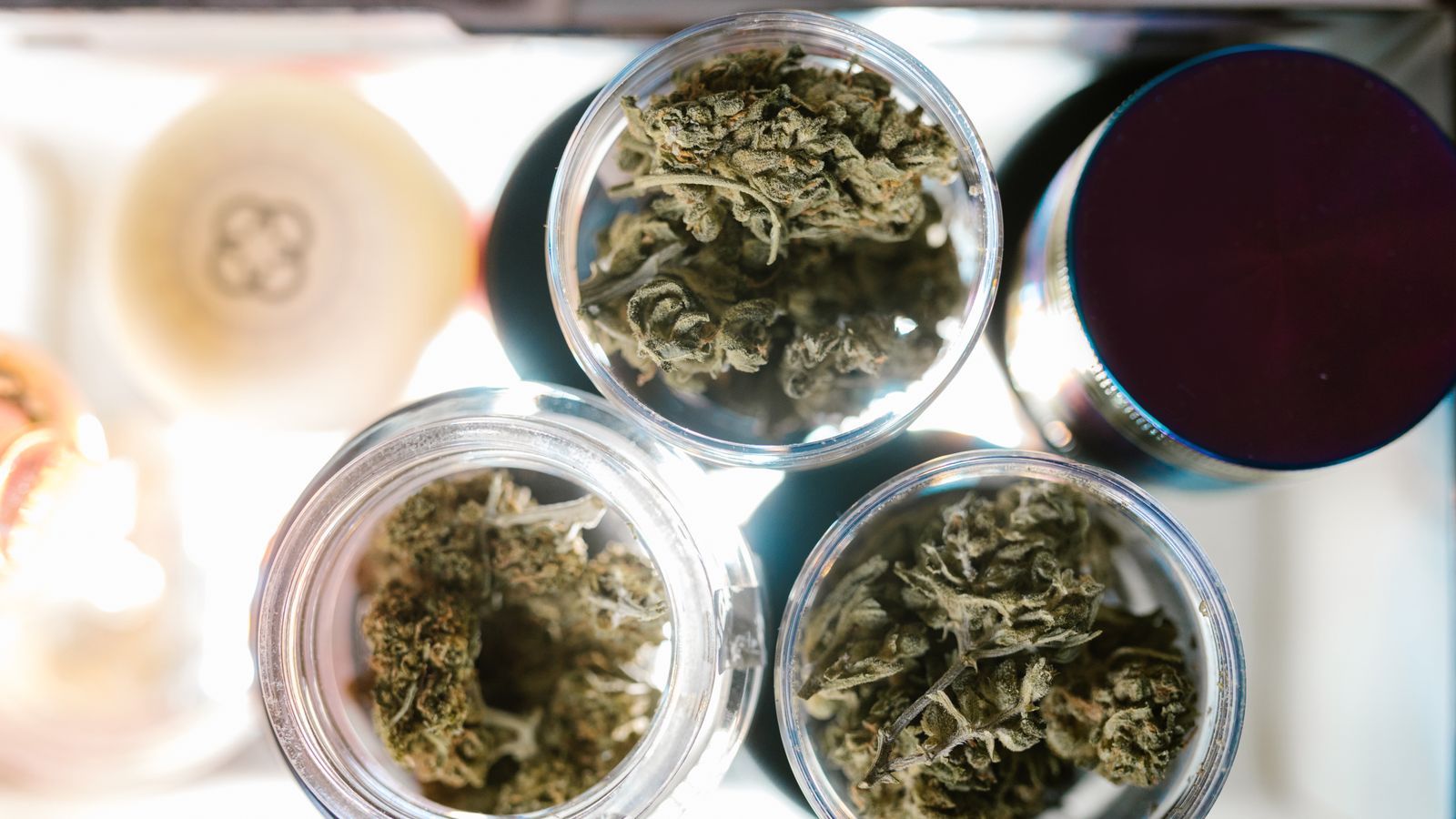
Close-up of cannabis buds in jars from above, highlighting marijuana storage.
Qualifying Condition List Expanded
Illinois added chronic migraines, anxiety disorders, and opioid use disorder to the list of qualifying medical conditions under 410 ILCS 130/10. The three additions bring the state's total qualifying conditions to 44, matching the count in states like Ohio and Pennsylvania. Patients with documented diagnoses from licensed physicians can now apply for registry identification cards through the Department of Public Health portal.
The amended statute requires anxiety disorders to carry a DSM-5 diagnostic code and at least six months of documented treatment history. Opioid use disorder qualifies only when certified by an addiction medicine specialist or psychiatrist. Chronic migraines need documentation of 15 or more headache days per month over a three-month period.
Dispensary Siting Rules Relaxed
The state eliminated the 1,000-foot buffer requirement between medical dispensaries and schools, effective September 10, 2026. Under prior regulations codified in 68 Ill. Adm. Code 1290.210, medical dispensaries couldn't operate within 1,000 feet of a K-12 school building. The revised rule cuts that buffer to 500 feet, aligning Illinois with California and Michigan standards.
Existing dispensaries in non-compliant locations receive automatic grandfathering. New applicants must still comply with local zoning ordinances, which in Chicago and Springfield often impose stricter buffers than state minimums. The change doesn't affect adult-use dispensaries. Those remain subject to the 1,000-foot rule under separate statute.
Patient Purchase Limits Unchanged
Illinois maintained its 2.5-ounce 14-day purchase limit for medical cannabis patients despite advocacy for higher caps. The limit, set in 410 ILCS 130/10(a), hasn't changed since the program launched in 2014. Patients with written physician authorization can request a waiver to purchase up to 5 ounces per 14-day period, but fewer than 8% of registered patients hold such waivers according to 2025 Department of Public Health data.
The state's refusal to raise the base limit contrasts with recent moves in Pennsylvania (3.5 ounces per month) and Ohio (90-day supply with no fixed weight cap). Illinois patient advocates argue the 2.5-ounce limit forces high-consumption patients into the adult-use market, where prices average 22% higher due to the state's 10% adult-use excise tax.
Dispensary Count and Revenue Context
Illinois operates 110 medical dispensaries and 190 adult-use locations as of August 2026, generating $1.8 billion in combined annual sales. Medical sales account for $420 million of that total, down from $510 million in 2023. Patient migration to adult-use channels explains the decline. Product selection is broader there. Wait times are shorter.
Medical cannabis remains exempt from the state's 10% adult-use excise tax and the 6.25% state sales tax, but patients pay a 1% privilege tax under 410 ILCS 130/205. That tax generated $4.2 million in fiscal year 2025. Expanding the qualifying condition list could reverse the medical-market decline, but the Department of Financial and Professional Regulation hasn't published enrollment projections.
What Operators and Patients Watch Next
The next regulatory signal is a proposed rule on home cultivation for medical patients, expected by December 2026. Illinois currently prohibits home cultivation for medical patients, unlike 18 other medical-cannabis states. A draft rule circulated in July 2026 would allow patients to grow up to five plants, but the Department of Agriculture hasn't published a formal notice of proposed rulemaking.
For context on Illinois's evolving medical program, see the CannIntel topic hub on Illinois Medical Cannabis Program. Dispensary operators should monitor local zoning boards in Chicago, Aurora, and Naperville, where municipal councils are considering new buffer rules that could override the state's 500-foot standard.
Sources
The cannabis newsletter you forward to your team.
Federal policy, market data, grower alerts, and the one story that matters today. Sent every weekday at 7am. Free.
No spam. Unsubscribe with one click. 21+ only.
Related from Laws

Boston Globe Editorial Calls Massachusetts Recreational Legalization a Mistake
The state's largest newspaper argues eight years of adult-use cannabis have produced unintended consequences that outweigh promised benefits.

Marijuana Rescheduling Could Generate $5B in Federal Revenue Annually
Moving cannabis to Schedule III would eliminate IRC §280E tax penalties, generating billions in new federal income tax revenue from previously disallowed deductions.
DEA denies petition to block Schedule III medical cannabis rescheduling
The agency rejected a legal challenge seeking to halt the Trump administration's proposed move of medical marijuana from Schedule I to Schedule III.
More from the newsroom
Illinois Approves 37 Dispensaries for Medical Cannabis in Decade's Largest Expansion
State officials issue dual-use licenses to existing adult-use retailers under 2026 omnibus cannabis law.

Henrico Begins Work on Cannabis Zoning Rules as Development Cases Stall
County planners will draft dispensary and cultivation setback rules while deferring two Hadad's Lake redevelopment proposals.

Supreme Court Cannabis Case Threatens Michigan State Tax Deductions
A pending Supreme Court case could bar state-level tax deductions for cannabis businesses, raising effective tax rates in Michigan and 37 other legal states.