Moderate Drought Cuts Cannabis Water Use Without Yield Loss, Study Finds
New research shows controlled water stress can slash irrigation needs while preserving flower weight and CBD content in hemp.
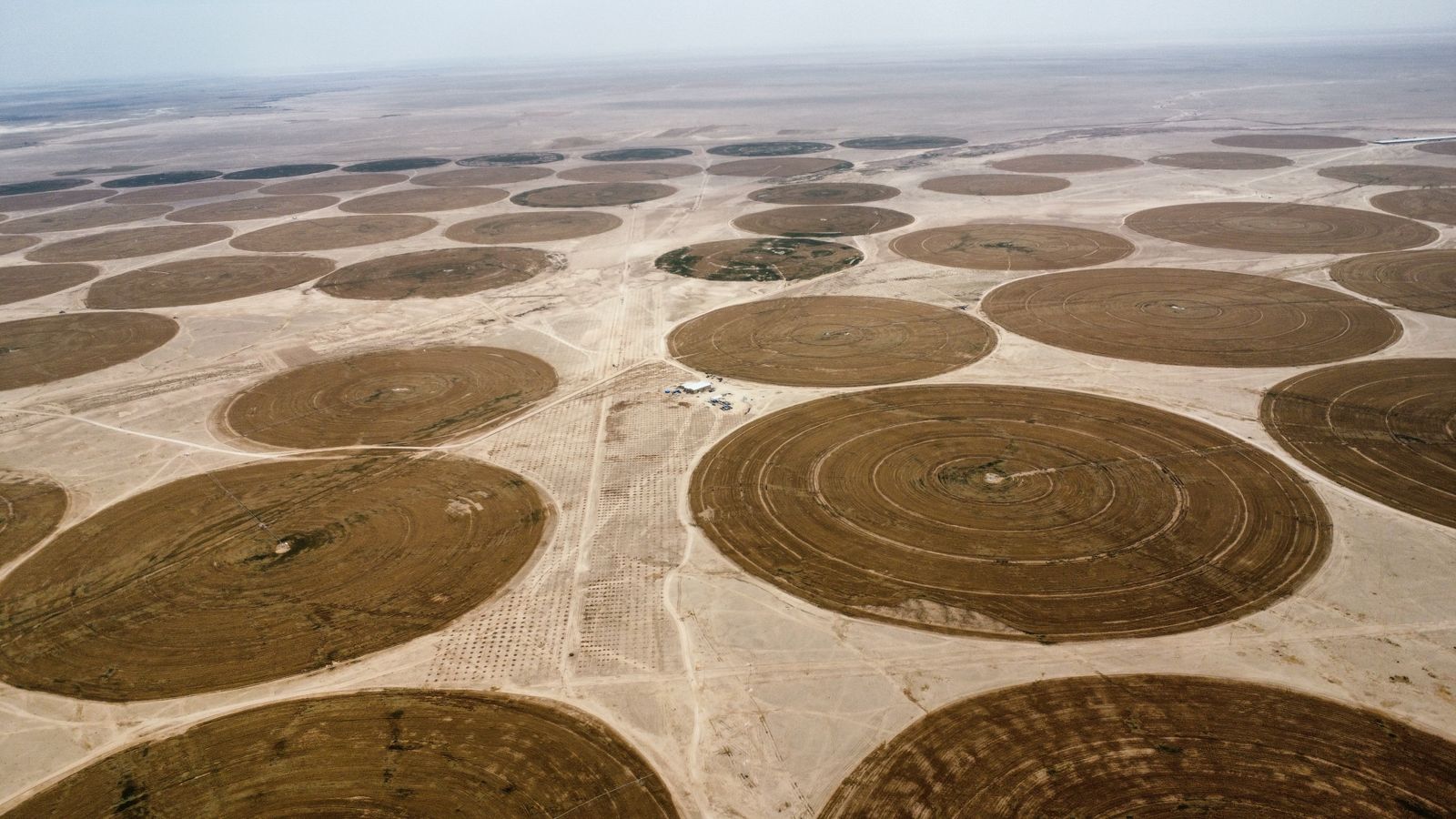
Aerial shot of circular irrigation patterns in an arid desert landscape.
Water Savings Without Yield Penalty
The study, conducted over two outdoor growing seasons, found that cannabis plants subjected to moderate water stress used 35-40% less water than fully irrigated controls while maintaining statistically equivalent dry flower weight and CBD concentration. Researchers applied deficit irrigation protocols during the vegetative and early flowering stages, allowing soil moisture to drop to predetermined thresholds before resuming watering cycles.
Water availability is the binding constraint for outdoor cannabis cultivation in California, Oregon, and other key production regions. Growers face allocation cuts, rising per-acre-foot costs, and regulatory pressure to document beneficial use.
Trial Design and Methodology
Researchers grew CBD-dominant hemp cultivars in field plots across two latitudes—one in Northern California and one in Southern Oregon—tracking soil moisture, plant transpiration, and final harvest metrics. Plants in the moderate-drought cohort received irrigation only when soil moisture dropped below 50% of field capacity, compared to 80% for the control group.
All plots used drip irrigation with inline emitters spaced 12 inches apart. Soil type, planting density, and nutrient regimens were held constant. The trial ran from May transplant through October harvest in both years.
No Decline in Flower Quality or Cannabinoid Profile
Lab analysis of cured flower samples showed no statistically significant difference in total CBD, minor cannabinoids, or terpene profiles between drought-stressed and fully watered plants. Total cannabinoid content averaged 14.2% in the deficit cohort versus 14.6% in controls—a difference within the margin of analytical error.
Terpene retention was likewise unaffected. Myrcene, beta-caryophyllene, and limonene concentrations remained consistent across irrigation treatments, suggesting that moderate water stress doesn't trigger defensive chemistry shifts that alter aromatic or therapeutic properties.
Implications for Outdoor Cultivators
The math is brutal. A 40% reduction in water use translates to roughly 1,200 gallons saved per plant over a 150-day season in trial plots, assuming baseline consumption of 3,000 gallons per plant in a Mediterranean climate. For a 10-acre outdoor farm running 4,000 plants, that's 4.8 million gallons—enough to matter when water costs $500 per acre-foot or when your allocation is capped by the local water district.
Growers in the Emerald Triangle and Southern Oregon's Rogue Valley are already testing deficit protocols based on similar research in almond and wine-grape production. This study gives them cultivar-specific data to dial in their schedules without gambling on harvest weight.
Timing and Threshold Management
The study emphasized that water stress must be carefully timed—early vegetative and pre-flowering stages tolerated deficit irrigation best, while the two-week window immediately after flower set required near-optimal moisture to avoid bud density loss. Researchers used soil tensiometers and plant-based sensors to trigger irrigation events, avoiding the guesswork of calendar-based schedules.
Growers without sensor infrastructure can approximate the protocol by monitoring leaf turgor and adjusting intervals. But the study's authors recommended investing in low-cost soil moisture probes to avoid undershooting the threshold and triggering severe stress.
Regulatory and Market Drivers
California's Cannabis Cultivation Policy since 2024 requires annual water-use reporting and adherence to watershed-specific diversion limits. Oregon's Department of Agriculture has signaled similar reporting mandates for 2027. Demonstrable water-use efficiency—backed by field data—positions farms favorably in permit renewals and expands access to grants for irrigation infrastructure upgrades.
For full background on water-use policy and agronomic best practices, see the CannIntel topic hub on Cannabis Water Conservation.
What Growers Should Watch
Next variable to model: replicating these results with THC-dominant cultivars, which may respond differently to water stress during trichome development. The study focused exclusively on CBD hemp, and anecdotal reports from THC farms suggest some strains show cannabinoid concentration increases under mild stress—a phenomenon the researchers plan to test in 2027 trials.
We'll be watching for follow-up data on high-THC genetics and multi-year soil health impacts as water costs climb and compliance tightens.
Frequently asked questions
Does moderate drought stress reduce cannabis flower yield?
No. The study found no statistically significant difference in dry flower weight between moderately drought-stressed plants and fully irrigated controls, provided water stress was applied during vegetative and early flowering stages and avoided during the critical two-week post-flower-set window.
How much water can cannabis growers save with deficit irrigation?
Field trials showed 35-40% reductions in total water use, equivalent to approximately 1,200 gallons saved per plant over a 150-day outdoor season in Mediterranean climates. Actual savings depend on baseline consumption, soil type, and climate zone.
Does water stress affect cannabis cannabinoid or terpene content?
Not at moderate stress levels. Lab analysis showed no significant difference in CBD concentration, minor cannabinoids, or terpene profiles between deficit-irrigated and fully watered plants. Total cannabinoid content remained within analytical margin of error across treatments.
When should cannabis growers apply deficit irrigation?
The study found early vegetative and pre-flowering stages tolerated deficit irrigation best. Growers should maintain near-optimal soil moisture during the two-week window immediately after flower set to avoid bud density loss, then resume deficit protocols through mid-flowering.
What tools do growers need to implement deficit irrigation safely?
Soil moisture sensors or tensiometers are essential to trigger irrigation events at the correct threshold—typically 50% of field capacity. Calendar-based schedules risk severe stress. Low-cost probes paired with drip systems allow precise control without infrastructure overhaul.
Sources
The cannabis newsletter you forward to your team.
Federal policy, market data, grower alerts, and the one story that matters today. Sent every weekday at 7am. Free.
No spam. Unsubscribe with one click. 21+ only.
Related from Grow
Cannabis Growers Lock Harvest Labor Months Early as Worker Shortage Deepens
Cultivators are signing seasonal trim crews in June and July—four months ahead of October harvest—as competition for experienced hands intensifies across major markets.
Purple Cannabis Cultivars Signal Flavonoid-Rich Chemotypes Growers Overlook
Anthocyanin pigments in purple flower correlate with measurable shifts in patient-reported effects, yet most cultivators still breed for THC alone.
Terpene Testing Labs Miss Key Flavor Compounds, Report Finds
Standard COA panels measure 20-40 terpenes but omit hundreds of volatile compounds that define strain character.
More from the newsroom
First Medical Cannabis Dispensary Opens in North Alabama
Operators launch the region's inaugural medical cannabis retail location as Alabama's program expands northward.

Ohio identifies Vapen cartridge in health complaints, store closure
Vext names product after state investigation triggers dispensary shutdown and patient reports.

New York vows hemp THC beverage crackdown amid illegal retail surge
State officials acknowledge widespread unlicensed sales despite prohibition outside licensed cannabis channels.