Grow Tent vs Dedicated Room: Setup Costs and Yield Math
Tent or room? The answer depends on your plant count, power budget, and whether you can afford to lose a bedroom. Numbers that matter in 2026.

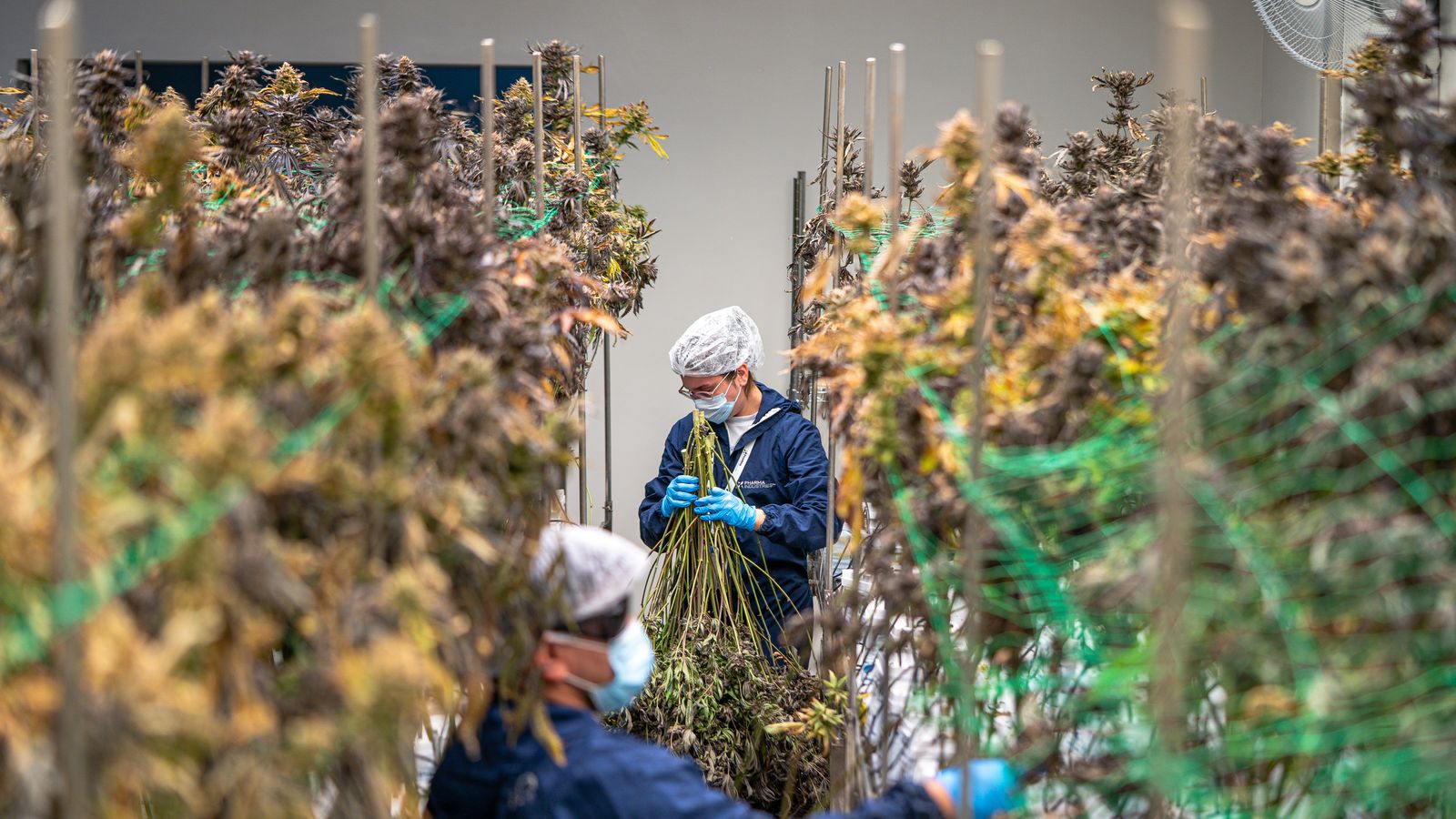
Worker tends cannabis plants in indoor facility wearing protective gear.
The grow tent versus dedicated room decision is fundamentally about scale, control, and capital. A tent is a self-contained environment you can set up in a weekend and tear down in an hour. A room is a fixed investment that requires wall prep, electrical upgrades, and HVAC planning. Both can produce high-quality flower, but the economics diverge sharply after your first harvest.
In 2026, the typical 4x4 tent setup costs $1,800 to $2,400 including a 480-watt LED, inline fan, carbon filter, and basic climate control. You can fit four to six plants in flower and expect 12 to 20 ounces per cycle if you dial in your environment. A 10x10 dedicated room costs $6,000 to $9,500 for buildout, pulls 1,800 to 2,400 watts, and can yield 48 to 80 ounces per cycle with the same skill level. The per-gram cost drops significantly at scale, but only if you can move the volume or have personal consumption that justifies the upfront spend.
Setup Costs: Line Item Breakdown
A beginner cannabis grower looking at a 4x4 tent will spend roughly $450 on the tent itself if buying a reputable brand with 1680D fabric and metal corner poles. Budget tents at $200 fail within two cycles, zippers separate, and light leaks appear. The tent is the least important expense but the one most likely to cause frustration if you cheap out.
Lighting is the largest single cost. A quality 480-watt full-spectrum LED bar fixture runs $600 to $900 in 2026. You want a fixture delivering 1,000 to 1,200 PPFD at canopy level with even distribution across the footprint. Cheaper fixtures claim equivalent wattage but use older diode bins with poor efficacy, meaning more heat per photon and higher power bills. A 480-watt fixture at $0.14 per kWh costs $48 per month running 18/6 in veg and $33 per month at 12/12 in flower. Over a year, that is $450 to $500 in electricity for a single tent.
Ventilation for a 4x4 requires a 6-inch inline fan rated for 400 CFM minimum, costing $120 to $180, plus a carbon filter at $80 to $120. You need to exchange the tent air every one to three minutes to manage heat and humidity. A 4x4 tent is 64 cubic feet, so a 400 CFM fan turns the air over six times per minute, which is overkill but necessary when the lights are generating 1,640 BTU per hour. Undersized fans create hotspots and humidity pockets that invite powdery mildew.
Climate control adds another $200 to $400. A small humidifier for veg, a dehumidifier for late flower, and an oscillating fan are non-negotiable. Growers in hot climates may need a portable AC unit, which adds $300 to $500 and another 50 to 80 watts of continuous draw. Tents have no thermal mass, so temperature swings are sharp without active cooling.
Soil, pots, nutrients, and pH meters add $150 to $250 for the first cycle. Fabric pots, quality soil, and a basic nutrient line are sufficient for a beginner. You will replace soil or coco each cycle, so budget $60 to $100 per run ongoing. Total first-cycle cost for a 4x4 tent is $1,800 to $2,400. Subsequent cycles drop to $300 to $400 in consumables and power.
Dedicated Room Economics
A 10x10 room is 100 square feet and requires 30 to 40 watts per square foot for flower, meaning 3,000 to 4,000 watts of lighting if you are running HPS or older LEDs, or 1,800 to 2,400 watts with current-generation bar LEDs. At $0.14 per kWh, a 2,000-watt flower room costs $200 per month in electricity alone during a 12/12 cycle. Veg rooms add another $100 to $150 per month if you are running perpetual.
Buildout costs for a dedicated room start with wall prep. You need reflective surfaces, either flat white paint with 85% reflectivity or panda film at $0.50 per square foot. Panda film is faster and cleaner but tears easily. White paint is permanent and easier to clean. Budget $100 to $200 for wall treatment in a 10x10 space.
Electrical upgrades are the hidden cost. A 2,000-watt flower room plus 500 watts of fans, dehumidifiers, and AC units requires a dedicated 20-amp circuit minimum, often two circuits to avoid tripping breakers. If your panel is maxed out or your wiring is old, you are looking at $800 to $1,500 for an electrician to run new lines. This is not optional. Running 2,000 watts on a shared circuit with household appliances is a fire risk and will trip breakers mid-flower, stressing plants and inviting hermaphroditism.
HVAC is the largest operational cost in a dedicated room. A 10x10 room generating 6,800 BTU per hour from lights alone needs a 10,000 BTU window unit or mini-split to maintain 75 to 80°F during lights-on. A mini-split costs $1,200 to $2,000 installed and is quieter and more efficient than a window unit, but requires a licensed HVAC tech in most jurisdictions. Window units are $400 to $600 and DIY-friendly but louder and less efficient. Either way, cooling adds 800 to 1,200 watts of draw during peak hours.
Dehumidification in flower is critical. A 10x10 room with 16 to 24 plants in late flower transpires 5 to 8 gallons of water per day. Without a 50-pint dehumidifier running continuously, you will hit 70% RH and invite botrytis. A quality dehumidifier costs $250 to $350 and pulls 500 to 700 watts. Budget $50 to $80 per month in power just for dehumidification during the last four weeks of flower.
Ventilation for a room requires an 8-inch or 10-inch inline fan rated for 800 to 1,000 CFM, costing $250 to $400, plus a large carbon filter at $150 to $250. You are moving significantly more air than a tent, and the filter will clog faster with higher plant counts. Replace filters every three to four cycles or when you notice odor bleed.
Total buildout cost for a 10x10 dedicated room is $6,000 to $9,500 including lights, HVAC, electrical work, and ventilation. Monthly operating costs are $350 to $500 in power, plus $100 to $150 in consumables. The first cycle is expensive, but per-gram costs drop sharply if you are harvesting 48 to 80 ounces every 10 to 12 weeks.
Yield Per Square Foot and Cycle Time
A 4x4 tent is 16 square feet. Competent growers hit 0.75 to 1.25 grams per watt with quality genetics and dialed environments. A 480-watt fixture should yield 360 to 600 grams, or 12 to 21 ounces, per cycle. Cycle time is 10 to 14 weeks from flip to harvest depending on strain. Fast-flowering indicas like Northern Lights finish in 8 weeks, while long-running sativas like Amnesia Haze take 12 to 13 weeks.
A 10x10 room with 2,000 watts of LED should yield 1,500 to 2,500 grams, or 53 to 88 ounces, per cycle at the same efficiency. You can fit 16 to 24 plants in 5-gallon pots or run a sea of green with 40 to 60 smaller plants in 2-gallon pots. Plant count matters for legal compliance, but yield per square foot is more about light intensity, airflow, and canopy management than raw plant numbers.
Cycle time in a room is identical to a tent, but rooms allow perpetual harvests if you partition space for veg and flower. A 10x10 room split into a 6x10 flower area and a 4x10 veg area lets you harvest every 5 to 6 weeks instead of every 10 to 12 weeks. This requires two separate light schedules and environmental controls, adding complexity but doubling annual yield.
Environmental Control and Failure Modes
Tents are easier to control because the volume is small and the environment is isolated. A 4x4 tent is 64 cubic feet. A single humidifier or dehumidifier can swing RH 20 points in 30 minutes. A single oscillating fan provides adequate airflow. The downside is that tents have no thermal mass, so temperature swings are sharp. Lights-off temps can drop 15°F in an hour without supplemental heat, stressing plants and slowing growth.
Tents also leak light. Even high-quality tents have small gaps around zippers and vent ports. If your tent is in a room with ambient light, you risk light leaks during the dark period, which can trigger hermaphroditism in sensitive strains. Blackout curtains or a dedicated dark room are necessary if you are running photoperiod plants.
Dedicated rooms offer better thermal stability because walls, floors, and ceilings provide thermal mass. A 10x10 room takes longer to heat up and cool down, smoothing temperature swings. The tradeoff is that rooms are harder to seal. Light leaks around doors, windows, and electrical outlets are common. You need weather stripping, door sweeps, and blackout film on windows to maintain a true dark period.
Rooms also have higher failure costs. If your AC unit dies mid-flower in a tent, you lose 12 to 20 ounces. If it dies in a room, you lose 48 to 80 ounces. Redundancy matters at scale. A backup dehumidifier and a spare inline fan are cheap insurance in a dedicated room.
Stealth and Portability
Tents are portable. You can disassemble a 4x4 tent in an hour and move it to a new location. This matters for renters, for growers in legal-gray jurisdictions, or for anyone who may need to relocate quickly. A tent leaves minimal evidence. A dedicated room requires wall modifications, electrical work, and HVAC installation that are difficult to reverse.
Odor control is easier in a tent because the entire environment is under negative pressure. A properly sized carbon filter eliminates smell entirely during flower. Rooms require more aggressive filtration and often need a separate odor-control system for the surrounding space. If you are growing in a shared building or near neighbors, a tent is the safer choice.
Legal Plant Counts and Compliance
Most home-grow jurisdictions cap plant counts at 4 to 12 plants depending on medical versus recreational status. A 4x4 tent fits comfortably within these limits. A 10x10 room can hold 16 to 60 plants depending on training method, which may exceed legal limits in many states. If you are in a 6-plant state, a dedicated room is overkill unless you are running large plants in 10-gallon pots with extended veg times.
Plant count also affects risk. A 4-plant tent is a misdemeanor in most jurisdictions if you exceed limits. A 40-plant room is a felony manufacturing charge in many states. Know your local laws and plan accordingly. The legal risk is not worth the extra yield if you are over the limit.
Skill Level and Learning Curve
Tents are more forgiving for beginner cannabis growers. The small environment is easier to monitor and adjust. You can check plants twice a day and make real-time changes to humidity, temperature, and airflow. Mistakes are cheaper. If you overwater or overfeed, you lose 4 plants instead of 20.
Rooms require more experience because the environment is harder to control and the stakes are higher. A single watering mistake in a 20-plant room can cost $2,000 in lost yield. A pest infestation spreads faster in a larger space. You need integrated pest management, regular scouting, and a disciplined feeding schedule. If you have never grown cannabis before, start with a tent. Move to a room after you have completed three to five successful cycles and understand your local climate, your water quality, and your strain preferences.
Power Consumption and Grid Limits
A 4x4 tent pulls 480 watts for lights, 100 watts for fans and filters, and 200 to 400 watts for climate control, totaling 780 to 980 watts during peak operation. This is manageable on a standard 15-amp household circuit, though you should avoid running other high-draw appliances on the same circuit.
A 10x10 room pulls 2,000 watts for lights, 500 watts for ventilation, 800 to 1,200 watts for AC, and 500 to 700 watts for dehumidification, totaling 3,800 to 4,400 watts during peak flower. This requires two dedicated 20-amp circuits minimum. If your home has an older electrical panel or you are in a region with high power costs, the monthly bill can exceed $500 during summer months when AC runs continuously.
Some growers in high-cost regions like California or Hawaii find that power costs exceed the value of the harvest. At $0.30 per kWh, a 2,000-watt room costs $432 per month in lights alone. Add HVAC and dehumidification, and you are at $700 to $900 per month. If you are yielding 60 ounces per cycle and selling at $1,200 per pound, your power cost is $2,100 to $2,700 per cycle, or $35 to $45 per ounce. This is sustainable only if you are consuming the flower yourself or have a buyer at $200+ per ounce.
Scalability and Future Expansion
Tents scale horizontally. You can add a second 4x4 tent for veg while the first runs flower, creating a perpetual cycle. Two tents cost $3,600 to $4,800 and fit in a 10x10 space, yielding 24 to 40 ounces every 5 to 6 weeks. This is a common path for growers who start with a single tent and expand as they gain experience.
Rooms scale vertically. Once you have built out a 10x10 room, adding a second tier of lights and shelving can double yield without expanding floor space. Vertical growing is labor-intensive and requires careful canopy management, but it is the most efficient use of space in urban environments where square footage is expensive.
Resale Value and Sunk Costs
Tents retain resale value. A used 4x4 tent in good condition sells for 50% to 70% of retail. LEDs hold value even better, often selling for 60% to 80% of new price if they have low hours and no diode failures. If you decide to stop growing, you can recover $1,000 to $1,500 of your initial investment.
Dedicated rooms have zero resale value. Electrical work, wall treatments, and HVAC installations are sunk costs. If you move or stop growing, you cannot take the buildout with you. The only recoverable assets are lights and fans, which represent 30% to 40% of total buildout cost. If you are renting or uncertain about long-term commitment, a tent is the safer financial choice.
When a Tent Makes Sense
A tent is the right choice if you are growing 4 to 6 plants, if you are renting, if you need portability, or if you are a beginner. Tents are also better for growers in hot climates where cooling a dedicated room is prohibitively expensive. A tent in an air-conditioned bedroom is easier to manage than a room with a standalone AC unit.
Tents work well for growers focused on quality over quantity. A 4x4 tent allows you to dial in a single strain, learn its nutrient needs, and optimize your environment without the complexity of managing 20 plants. If you are growing for personal use and consume 1 to 2 ounces per month, a tent provides more than enough flower.
When a Dedicated Room Makes Sense
A dedicated room is the right choice if you are growing 12+ plants, if you own your home, if you have experience with multiple successful cycles, or if you are growing for a small patient collective or caregiver program. Rooms are also better for growers running perpetual harvests or experimenting with multiple strains simultaneously.
Rooms make economic sense if your power costs are low and your yield per cycle exceeds 48 ounces. At $1,200 per pound, a 60-ounce harvest is worth $4,500. Subtract $500 in power, $150 in consumables, and $200 in labor, and you net $3,650 per cycle, or $11,000 to $14,600 per year with three to four cycles. A tent yielding 16 ounces per cycle nets $1,200 to $1,500 per cycle, or $4,800 to $6,000 per year. The room pays for itself in two to three cycles if you can move the volume.
Hybrid Approaches
Some growers run a tent inside a dedicated room, using the room for environmental buffering and the tent for precise control. This is common in basements or garages where the ambient temperature is stable but the space is too large to condition efficiently. A 4x4 tent inside a 10x10 room uses the room as a lung space, drawing pre-conditioned air and exhausting into the larger volume. This reduces HVAC costs and simplifies climate control.
Another hybrid approach is a modular room built with PVC frames and panda film, creating a tent-like structure at room scale. This costs $800 to $1,200 in materials and provides the portability of a tent with the space of a room. The downside is that PVC frames are less rigid than metal tent poles and require cross-bracing to support heavy filters and ducting.
Common Mistakes and How to Avoid Them
The most common mistake with tents is undersizing ventilation. A 4x4 tent needs a 400 CFM fan minimum, not the 200 CFM fan that many budget kits include. Undersized fans create heat and humidity problems that no amount of supplemental cooling can fix. Spend the extra $50 on a proper fan.
The most common mistake with rooms is underestimating HVAC costs. Growers see the low cost of lights and assume the rest will be cheap. Then they realize they need a $1,500 mini-split and a $300 dehumidifier, and the budget doubles. Plan for HVAC to be 40% to 50% of total buildout cost in a dedicated room.
Another mistake is ignoring electrical capacity. A 2,000-watt room on a 15-amp circuit will trip breakers constantly. A tripped breaker during lights-off can extend the dark period by hours, confusing photoperiod plants and triggering stress responses. Always verify your panel capacity and run dedicated circuits for grow equipment.
Frequently asked questions
Can I run a grow tent in a bedroom without dedicated circuits?
Yes, a 4x4 tent pulling 780 to 980 watts total can run on a standard 15-amp circuit, but avoid running other high-draw devices like space heaters or window AC units on the same circuit. If you trip breakers regularly, you need a dedicated 20-amp line.
How much does it cost to run a 4x4 tent for a full year?
At $0.14 per kWh, a 480-watt tent costs $450 to $500 per year in electricity, plus $240 to $400 in soil, nutrients, and consumables per cycle. Total annual cost for three cycles is $1,170 to $1,700 including power.
Do I need an electrician to set up a 10x10 grow room?
If your room pulls over 1,500 watts total, you need a dedicated 20-amp circuit, which requires an electrician in most jurisdictions. Running 2,000+ watts on a shared household circuit is a fire hazard and will trip breakers. Budget $800 to $1,500 for electrical work.
Can I use a grow tent in a hot garage or attic?
Tents in unconditioned spaces require portable AC units to manage heat, adding $300 to $500 upfront and 50 to 80 watts of continuous draw. If ambient temps exceed 95°F, even a portable AC may struggle to keep a tent below 82°F during lights-on. A conditioned indoor space is better.
How many plants can I fit in a 4x4 tent?
Four to six plants in 5-gallon pots is standard for a 4x4 tent. You can fit up to 16 plants in a sea of green setup using 2-gallon pots, but this increases labor and may exceed legal plant count limits in some states.
What is the biggest hidden cost in a dedicated grow room?
HVAC is the largest hidden cost. A 10x10 room needs a 10,000 BTU mini-split or window AC costing $1,200 to $2,000, plus a 50-pint dehumidifier at $250 to $350. These add 1,300 to 1,900 watts of draw and $100 to $150 per month in power during flower.
Can I sell a used grow tent and recoup my investment?
Yes, used tents in good condition sell for 50% to 70% of retail, and quality LEDs hold 60% to 80% of value. You can recover $1,000 to $1,500 of a $2,000 tent setup if you decide to stop growing. Dedicated room buildouts have zero resale value.
How long does it take to set up a grow tent versus a dedicated room?
A 4x4 tent can be fully assembled and operational in 4 to 6 hours. A 10x10 dedicated room takes 3 to 5 days for buildout including electrical work, wall prep, and HVAC installation, assuming you have basic construction skills and no permit delays.
Sources
The cannabis newsletter you forward to your team.
Federal policy, market data, grower alerts, and the one story that matters today. Sent every weekday at 7am. Free.
No spam. Unsubscribe with one click. 21+ only.
Related from Grow

Cannabis Light Burn: PPFD Limits and Hanging Distance
Light burn bleaches leaves and tanks yields. Here's the PPFD threshold where damage starts, how to measure it, and the hanging distances that work.

New Cannabis Facilities Cut Crop Failures 40% With Phased Ramp-Up Strategy
Controlled seasoning protocols reduce pathogen load and equipment failure rates in first-year commercial grows, industry data shows.
Tissue Culture in Cannabis: Lab Process Replacing Mother Rooms
TC delivers disease-free clones at scale, but the sterile technique, contamination risk, and capital cost mean it's not for every operation.
More from the newsroom
Virginia Gov. Spanberger Vetoes Adult-Use Cannabis Sales Bill
Governor blocks legislation that would have authorized retail cannabis sales five years after possession was legalized.

Virginia Governor Vetoes Retail Cannabis Bill for Second Straight Year
Gov. Glenn Youngkin blocks legislation that would have launched adult-use sales, leaving Virginia's legal home-grow market without retail access.

Indiana AG Rokita Files Brief to Block DEA Marijuana Rescheduling
Todd Rokita joins multistate coalition urging federal court to halt cannabis move to Schedule III.