New Cannabis Facilities Cut Crop Failures 40% With Phased Ramp-Up Strategy
Controlled seasoning protocols reduce pathogen load and equipment failure rates in first-year commercial grows, industry data shows.

Expansive greenhouse interior featuring empty planting rows and a clear arched ceiling.
Facility seasoning cuts pathogen pressure and mechanical failures in commercial cannabis grows.
The controlled ramp-up approach addresses two failure modes that plague new cultivation facilities: environmental instability and latent contamination. New HVAC systems require 60 to 90 days of runtime under load to stabilize humidity swings and reveal duct leaks, according to technical documentation from commercial climate-control vendors. Running a facility at 25 percent canopy density during the first cycle exposes these issues without risking a full room of plants.
Pathogen pressure follows a similar curve. Clean rooms aren't sterile—they're managed ecosystems. Powdery mildew spores, botrytis, and root-zone pathogens establish reservoirs in the first 90 days of operation, particularly in facilities built on former agricultural or industrial sites. A phased approach gives sanitation crews time to map contamination sources before those reservoirs reach threshold populations—typically in drain lines, ducting seams, and gap spaces behind benches.
A facility that jumps to full density in week one will mask HVAC deficiencies until week five of flower, when transpiration load peaks and the dehumidifiers can't keep pace. By then, you're choosing between bud rot and a harvest delay. A 50-plant test run in May reveals what a 500-plant run in July would hide until it's too late.
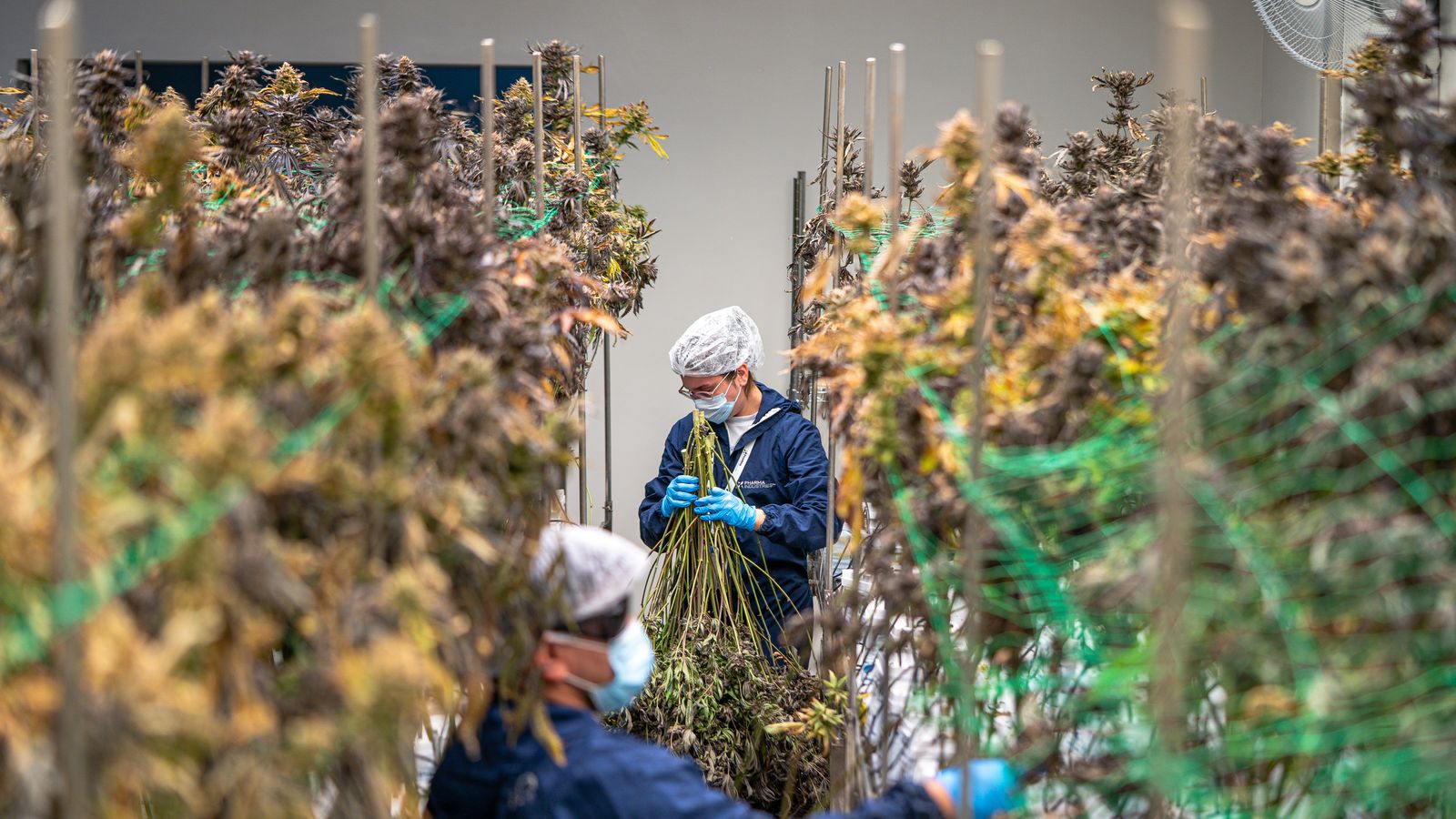
Phased cycles allow real-time calibration of irrigation, fertigation, and climate automation.
Irrigation system commissioning is the single largest source of first-year crop loss in new facilities, particularly in automated fertigation setups. Emitter clogging, pressure imbalances, and EC drift don't surface in bench tests. They emerge under sustained load with living root systems pulling nutrients in real time. A 25 percent ramp lets growers tune flow rates, runoff targets, and feed schedules on a manageable plant count before scaling to production density.
The same logic applies to climate automation. Most facility controllers ship with generic presets that assume average canopy density, average transpiration rates, and average air exchange. Those averages don't exist. A room running Wedding Cake at 60 plants per light transpires differently than a room running Gelato at 80 plants per light, and the only way to dial in VPD curves and CO₂ injection timing is to run actual plants under actual light cycles and measure actual vapor pressure differentials.
Growers who skip this step pay for it in trim labor. Larfy buds, stretched internodes, and inconsistent trichome development are all downstream symptoms of environmental parameters that weren't dialed in during the stretch phase. You can't fix those problems in week six. You fix them in the commissioning phase, before you've committed a full room to flower.
Multi-state operators adopt seasoning protocols as standard practice for new-build timelines.
Several MSOs now write facility seasoning into construction timelines and pro formas, treating the ramp period as a capital expense rather than lost revenue. The math works. A facility that loses 40 percent of its first harvest to mold or nutrient lockout burns $200,000 to $400,000 in a single cycle, depending on canopy size and market pricing. A three-month ramp-up delays full revenue by one quarter but avoids catastrophic write-offs and preserves the cultivation team's credibility with state regulators during initial inspections.
The regulatory angle matters more than operators admit. Most state cannabis agencies require new licensees to pass initial harvest inspections for pesticide residues, microbial contaminants, and potency before approving full-scale production. A facility that launches at full capacity and fails its first batch testing faces a stop-work order, a public compliance notice, and a six-month delay while it remediates. Facilities that ramp incrementally can course-correct between cycles and enter the compliance process with clean data.
For additional context on facility planning and compliance timelines, see the CannIntel topic hub on cannabis cultivation facility setup. We'll be watching how state regulators in Ohio, New York, and Maryland adjust initial-harvest inspection windows as new adult-use licenses come online in Q3 2026. Tighter timelines will force more operators to adopt formal seasoning protocols or risk missing their first revenue windows entirely.
Sources
The cannabis newsletter you forward to your team.
Federal policy, market data, grower alerts, and the one story that matters today. Sent every weekday at 7am. Free.
No spam. Unsubscribe with one click. 21+ only.
Related from Grow

Cannabis Light Burn: PPFD Limits and Hanging Distance
Light burn bleaches leaves and tanks yields. Here's the PPFD threshold where damage starts, how to measure it, and the hanging distances that work.
Tissue Culture in Cannabis: Lab Process Replacing Mother Rooms
TC delivers disease-free clones at scale, but the sterile technique, contamination risk, and capital cost mean it's not for every operation.

Living Soil Cannabis: The No-Till System That Gets Better Year Over Year
No-till living soil builds microbial density and nutrient cycling that bottled feeds can't match. Here's how to set up, maintain, and scale the system.
More from the newsroom

India Busts International Hydroponic Cannabis Ring Spanning 300 Couriers
Authorities dismantled a multi-state syndicate that moved product via 405 commercial flights using a network of mules.

MSOS ETF Inflows Surge as MSO Uplisting Speculation Intensifies
AdvisorShares' Dan Ahrens discusses record capital flows into cannabis ETFs and growing chatter around major-exchange listings.

New York Cannabis Industry Opposes Mandatory Wage Proposal
Industry groups cite thin margins and 280E tax burden as state weighs wage floor for cannabis workers.