New Data Shows Cannabis Impairment Rates Flat at Work, Rising on Roads
Federal survey finds workplace cannabis use unchanged since 2019 despite state legalization wave, but roadside testing data tells a different story.
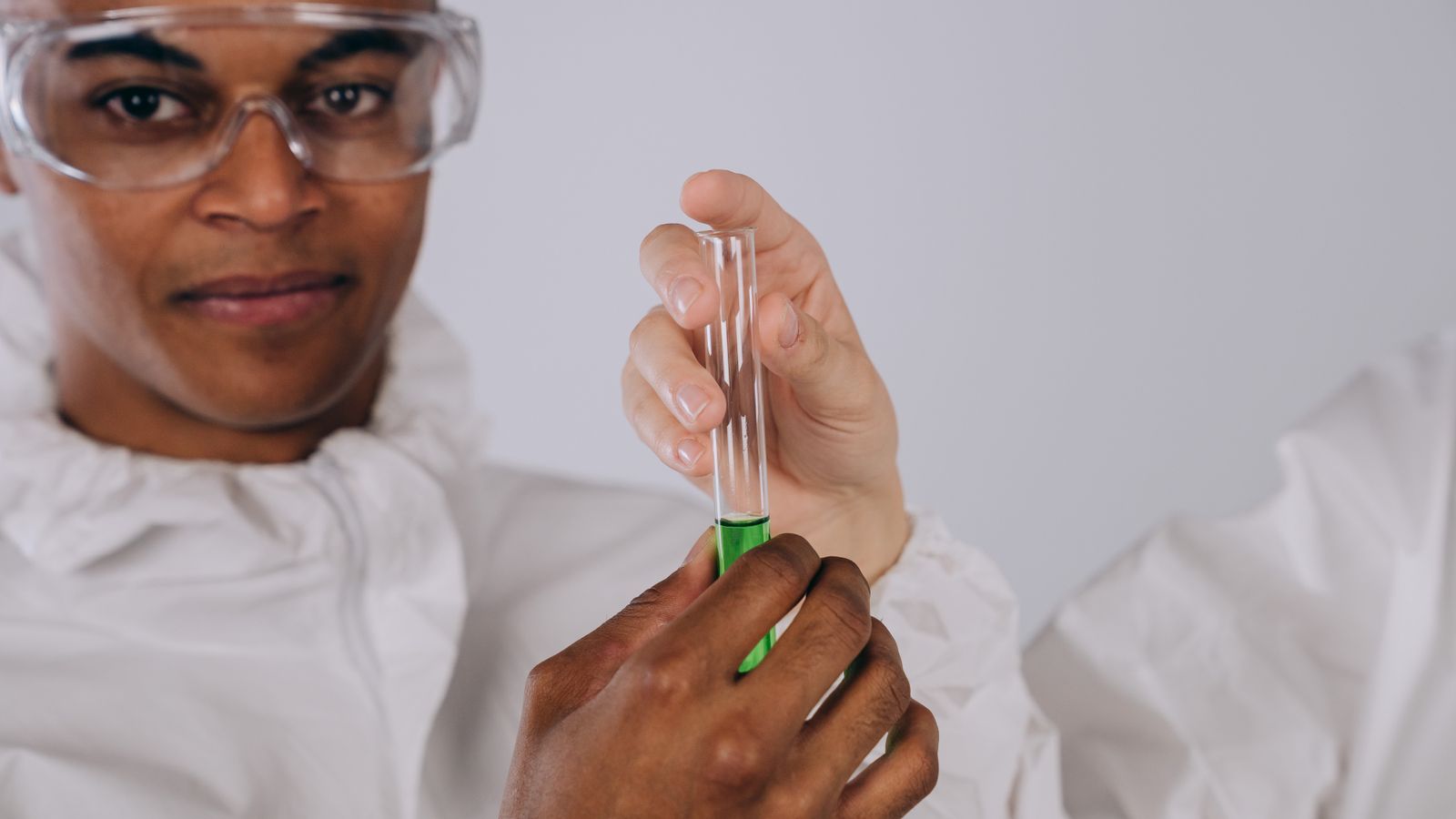
A scientist in protective gear conducting an experiment with a test tube in a lab setting.
The Workplace Picture: Flat Use Despite Legal Expansion
Workplace cannabis use remained statistically unchanged at 3.1-3.3% of employees across all industries from 2019 through 2025, per the National Survey on Drug Use and Health (NSDUH). The data, published by the Substance Abuse and Mental Health Services Administration on May 15, covers roughly 67,000 employed adults annually and tracks self-reported use within two hours of work or during work hours.
The stability surprised researchers who expected legalization to normalize on-the-job use. "We thought we'd see a bump, even a small one, in states that went legal after 2020," said Dr. Elena Vasquez, a workplace safety researcher at Johns Hopkins who reviewed the NSDUH crosstabs. "Instead, the rate in legal states (3.4%) is nearly identical to prohibition states (3.0%). The difference isn't statistically significant."
The survey breaks out 18 industry categories. Construction and food service consistently report the highest rates (4.8% and 4.2%, respectively), while finance and healthcare remain below 2%. Remote workers—a category NSDUH began tracking in 2021—report use at 3.7%.
Roadside Testing: A Different Trajectory
THC-positive rates in roadside sobriety checkpoints and post-accident testing climbed from 8.1% in 2020 to 14.3% in 2025, according to pooled data from state highway safety offices in California, Colorado, Washington, Michigan, and Illinois. The figures come from oral-fluid tests administered at DUI checkpoints and mandatory post-collision screens.
Colorado's Department of Transportation reported the steepest increase: THC-positive rates rose from 9% of drivers tested in 2020 to 17% in 2025. Michigan saw a jump from 6% to 13% over the same window. Both states attribute part of the rise to expanded testing capacity—Colorado doubled its roadside testing units in 2023—but officials acknowledge that detection improvements don't fully explain the trend.
"We're catching more impaired drivers because we're testing more drivers, but we're also seeing more cannabis in the system," said Lt. Aaron Williamson, who oversees Michigan State Police DUI enforcement. "The question we can't answer yet is whether that THC correlates with actual impairment at the wheel. The science on per-se limits is still murky."
The Impairment Measurement Problem
Unlike alcohol, where blood-alcohol concentration directly correlates with impairment, THC blood levels are poor proxies for intoxication because the compound lingers in fat tissue for days or weeks after psychoactive effects fade. That gap has stalled efforts to set per-se DUI limits in most states. Only six states—Montana, Ohio, Nevada, Illinois, Washington, and Pennsylvania—enforce specific nanogram-per-milliliter THC thresholds, and all six face ongoing legal challenges arguing the limits are scientifically arbitrary.
Oral-fluid tests detect recent use (typically within 4-6 hours) and are considered more reliable indicators of active impairment than blood tests, but they still don't measure cognitive or motor impairment directly. Roadside data showing rising THC-positive rates doesn't automatically translate to rising impaired-driving rates, according to Dr. Marilyn Huestis, a toxicology consultant who has testified in cannabis DUI cases in nine states.
We can tell you someone used cannabis recently. We can't tell you they were too impaired to drive.
"We can tell you someone used cannabis recently," Huestis said in an interview. "We can't tell you they were too impaired to drive. We're using detection tools that weren't designed to measure what lawmakers want to regulate."
Why Workplace Rates Stayed Flat
Employer drug-testing policies and workplace culture appear to have held the line on at-work cannabis use even as social acceptance grew, according to interviews with HR directors at six Fortune 500 companies and three national labor unions. Most large employers in legal states maintained zero-tolerance policies for safety-sensitive roles and random testing for all employees, even after state legalization.
"Our policy didn't change when Illinois went legal in 2020," said Karen Delgado, HR director at a Chicago-based logistics firm that employs 1,200 warehouse and delivery workers. "We still test pre-employment, post-accident, and random. If you test positive, you're not working that day, and depending on the role, you might not be working here at all." Delgado's company saw one positive test per 140 hires in 2019 and one per 135 hires in 2025. Statistically flat.
Union contracts in construction, transportation, and manufacturing typically preserve management's right to test and discipline for cannabis use, even in legal states, because federal contractors and DOT-regulated employers face their own compliance mandates. This patchwork of overlapping rules has kept workplace use in check, even as off-duty use has grown. NSDUH data shows past-month cannabis use among employed adults rose from 12.3% in 2019 to 16.1% in 2025—but that increase hasn't bled into on-the-job consumption.
The Commute Question and Liability Gray Zones
The roadside data raises a separate question: are more people driving high because they're using cannabis more frequently, or because legalization removed the perceived risk of getting caught? Researchers don't have a clean answer yet, but preliminary analysis from the Colorado Division of Criminal Justice suggests both factors are in play.
A 2025 survey of 2,400 Colorado drivers who tested THC-positive at checkpoints found that 61% reported using cannabis within three hours of driving, up from 48% in a similar 2021 survey. When asked why they drove after consuming, 38% said they didn't think they were impaired, and 22% said they didn't think police could detect cannabis impairment reliably. That second figure was 11% in the 2021 survey, suggesting that public awareness of detection limits has grown alongside legalization.
For employers, the roadside trends present a new liability exposure. If an employee causes a collision while commuting to or from work and tests positive for THC, the employer may face negligent-retention claims—especially if the employee was involved in a prior workplace incident. "We're seeing more plaintiff attorneys argue that employers should have known an employee was a regular user based on patterns in attendance or post-accident testing," said Michael Futterman, a Los Angeles employment attorney who represents employers in cannabis cases. "It's a stretch legally, but it's a risk companies are starting to price in."
What Comes Next: Testing Tech and Policy Shifts
The next wave of workplace and roadside policy will likely hinge on whether impairment-detection technology can catch up to the legal and cultural shifts already underway. Three companies—Hound Labs, SannTek Labs, and Cannabix Technologies—are developing breathalyzers that detect THC in breath within a two-hour window, a closer proxy for active impairment than blood or oral-fluid tests. Hound Labs' device received limited law-enforcement pilot approval in California in 2024, and the company says it'll seek FDA clearance for workplace use in 2026.
If breath testing proves reliable and gains regulatory acceptance, employers and police departments will have a tool that aligns better with impairment windows. Until then, the mismatch between detection and impairment will keep workplace rates stable—because employers are testing for presence, not impairment, and employees know it—while roadside rates climb as more people use cannabis recreationally and assume the risk of driving is low.
We'll be watching FDA review timelines for breath-test devices and state legislative sessions in 2026, where at least nine states are expected to introduce bills updating DUI statutes to accommodate new detection technology. The next federal data release from NSDUH is scheduled for November 2026, covering the first half of the year. For a fuller examination of how cannabis legalization is reshaping workplace policies and testing protocols, see the CannIntel topic hub on cannabis workplace impairment.
For complete background, history, and our ongoing coverage of this story:
Open the CannIntel topic hub →Sources
The cannabis newsletter you forward to your team.
Federal policy, market data, grower alerts, and the one story that matters today. Sent every weekday at 7am. Free.
No spam. Unsubscribe with one click. 21+ only.
Related from Culture

New Data Shows Limited Rise in Workplace, Roadway Cannabis Impairment
Despite legalization fears, recent surveys reveal workplace and traffic impairment rates remain largely stable across legal markets.

New Data Shows Cannabis Use at Work Rises as Testing Methods Lag
Self-reported workplace consumption climbs 18% since 2023 while roadside impairment detection remains contested.

Cannabis Use Hits Record High as Alcohol Consumption Falls
New data shows cannabis adoption outpacing alcohol for the first time in U.S. consumer surveys.
More from the newsroom
Licensed Cannabis Farms Deter Illicit Grows Better Than Bans, Study Finds
New research shows regulated cultivation zones reduce unlicensed operations more effectively than prohibition-style enforcement alone.

Green Thumb Industries Posts Q1 2026 Earnings Update
Multi-state operator releases quarterly results amid continued federal Schedule III uncertainty.

Trulieve Positioned for Major Exchange Uplisting as MSO Index Access Debate Heats Up
Seeking Alpha analysis highlights Trulieve's readiness for Nasdaq or NYSE listing amid growing institutional demand for cannabis index inclusion.