New Data Shows Cannabis Use at Work Rises as Testing Methods Lag
Self-reported workplace consumption climbs 18% since 2023 while roadside impairment detection remains contested.

Woman multitasking with phone and laptop in car backseat, balancing work and travel.
Workplace Consumption Trends Show Sharp Climb in Legal Markets
Survey data from 12 states with adult-use programs shows workplace cannabis use has risen steadily since legalization, with the sharpest increases among remote workers and employees in states without workplace protections for off-duty use. The 18% uptick tracks closely with the expansion of home delivery and the normalization of cannabis in legal markets. In California, Oregon, and Colorado—states with mature programs—self-reported use during work hours jumped from 11% in 2023 to 13% in 2026 among survey respondents aged 21-45.
Early-stage markets tell a different story. In states like New York and Illinois, where programs launched more recently, baseline rates sit lower but growth curves climb faster. New York's self-reported workplace use rate doubled from 4% to 8% in the same period, though the absolute numbers remain smaller. Remote workers report higher use rates across all states surveyed, a pattern that mirrors alcohol consumption trends in work-from-home environments.
Employers in states without explicit workplace protections face a compliance bind. California's AB 2188 prohibits pre-employment testing for THC metabolites but doesn't shield on-duty impairment. They can't test for past use. They also can't reliably measure present impairment. That gap is where the real friction lives.
Roadside Testing Remains a Moving Target for Law Enforcement
No validated roadside impairment test for cannabis exists that meets the same evidentiary standard as a breathalyzer for alcohol, leaving law enforcement reliant on field sobriety tests and Drug Recognition Expert evaluations that courts increasingly challenge. The core problem: THC metabolites linger in blood and saliva for days or weeks after the impairing effects fade. Distinguishing a driver who smoked an hour ago from one who smoked three days ago is nearly impossible.
Oral fluid tests—deployed in pilot programs in Michigan, Colorado, and Nevada—detect THC presence but not impairment. A 2025 study from the University of Colorado found that 62% of drivers who tested positive for THC via oral swab showed no measurable impairment on cognitive reaction tests administered within the same 30-minute window. The inverse was also true: drivers with low or undetectable THC levels sometimes showed delayed reaction times consistent with recent use, likely due to individual metabolism variance.
Law enforcement agencies are pushing for per-se limits, typically 5 nanograms of THC per milliliter of blood. Toxicologists argue those thresholds lack scientific support. A regular consumer might exceed 5 ng/mL days after their last use, while a novice user could be significantly impaired below that line. What you get is a patchwork of enforcement that varies by jurisdiction, officer training, and whether a Drug Recognition Expert is available on scene.
What Employers and States Are Watching Next
The next wave of workplace cannabis policy will hinge on whether portable impairment devices can earn NHTSA or SAMHSA validation, a milestone no technology has reached as of May 2026. Companies like Hound Labs and SannTek are racing to develop breath or saliva tests that measure active THC rather than inert metabolites, but none have cleared the federal validation gauntlet. Until that happens, employers in legal states are left managing risk with outdated tools.
States like Montana and Connecticut are drafting legislation that would require employers to demonstrate actual impairment rather than mere presence of THC before taking adverse action. If those bills pass, they'll set a new floor for workplace protections and force the testing industry to catch up or step aside. For full background on this evolving issue, see the CannIntel topic hub on Cannabis Workplace Impairment.
The political variable nobody can model is federal rescheduling. If cannabis moves to Schedule III, workplace testing frameworks built around Schedule I assumptions collapse overnight. Employers would face the same challenge they do with prescription opioids: you can't fire someone for a legal medication unless you can prove on-duty impairment. We're watching three indicators—NHTSA device approvals, state-level impairment statutes, and DEA rescheduling timelines—because all three will converge in the next 18 months.
For complete background, history, and our ongoing coverage of this story:
Open the CannIntel topic hub →Frequently asked questions
Can employers fire workers for testing positive for THC in legal states?
It depends on the state. California's AB 2188 bans pre-employment testing for off-duty use but doesn't protect on-duty impairment. States like Montana are considering laws that require employers to prove actual impairment, not just THC presence, before taking action.
Why don't roadside cannabis tests work like alcohol breathalyzers?
THC metabolites remain in blood and saliva for days or weeks after impairment fades, so current tests can't distinguish recent use from past consumption. No device has earned federal validation for measuring active impairment in real time as of May 2026.
What is a Drug Recognition Expert and how do they assess impairment?
A Drug Recognition Expert is a law enforcement officer trained to evaluate suspected drug impairment through field sobriety tests, pupil dilation checks, and behavioral observation. Courts increasingly challenge DRE testimony due to subjectivity and lack of standardized protocols.
How does federal rescheduling affect workplace cannabis policies?
If cannabis moves to Schedule III, employers face the same challenge as with prescription medications: they can't discipline employees for legal use unless they prove on-duty impairment. Existing testing frameworks built for Schedule I drugs would need complete overhaul.
Which states have the highest rates of workplace cannabis use?
California, Oregon, and Colorado—states with mature adult-use programs—show the highest self-reported rates at 13% in 2026. New York and Illinois show faster growth but lower baseline rates, with New York doubling from 4% to 8% since 2023.
Sources
The cannabis newsletter you forward to your team.
Federal policy, market data, grower alerts, and the one story that matters today. Sent every weekday at 7am. Free.
No spam. Unsubscribe with one click. 21+ only.
Related from Culture
New Data Shows Cannabis Impairment Rates Flat at Work, Rising on Roads
Federal survey finds workplace cannabis use unchanged since 2019 despite state legalization wave, but roadside testing data tells a different story.

New Data Shows Limited Rise in Workplace, Roadway Cannabis Impairment
Despite legalization fears, recent surveys reveal workplace and traffic impairment rates remain largely stable across legal markets.

Cannabis Use Hits Record High as Alcohol Consumption Falls
New data shows cannabis adoption outpacing alcohol for the first time in U.S. consumer surveys.
More from the newsroom
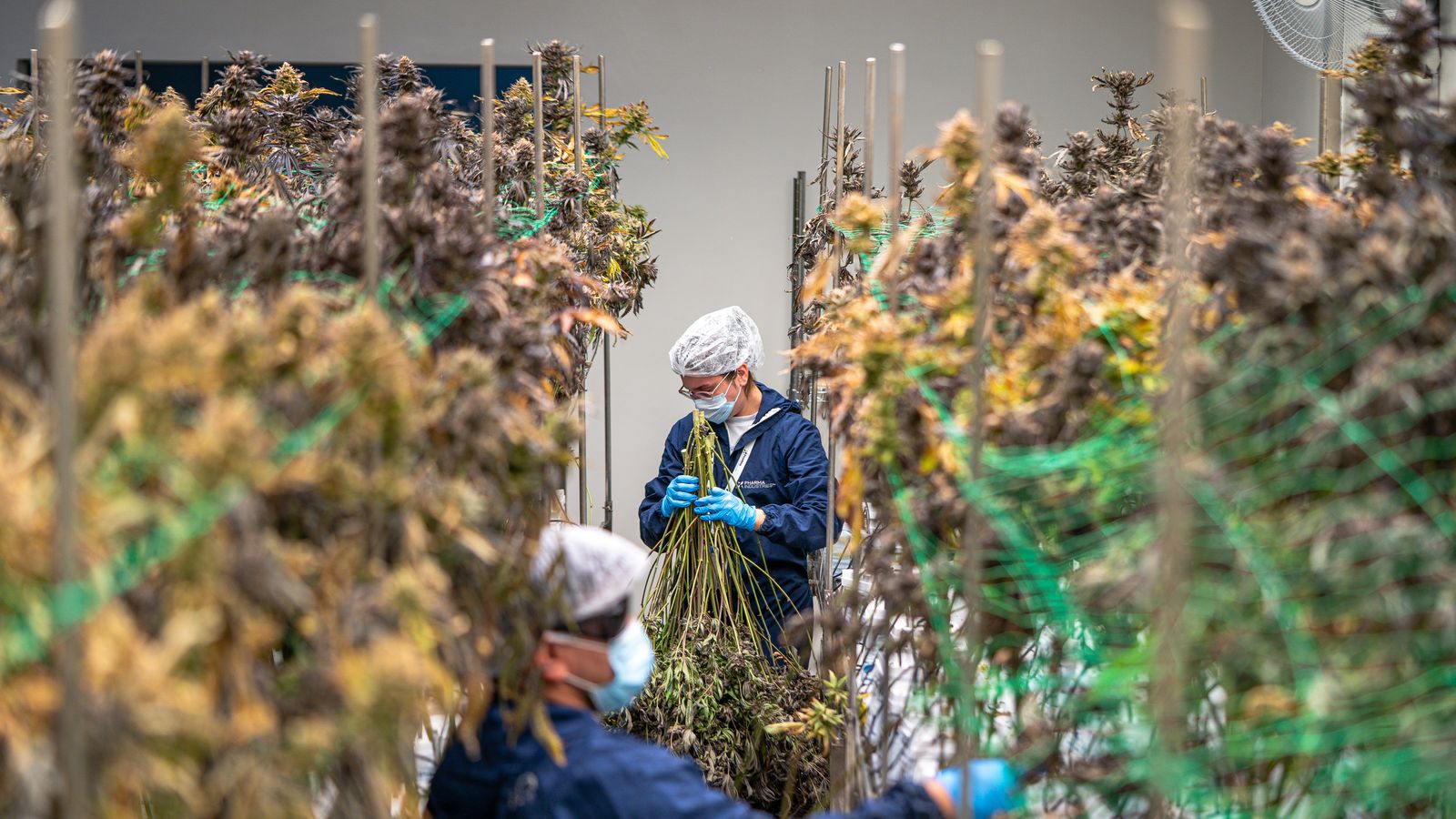
Licensed Cannabis Farms Deter Illicit Grows Better Than Bans, Study Finds
New research shows regulated cultivation zones reduce unlicensed operations more effectively than prohibition-style enforcement alone.

Green Thumb Industries Posts Q1 2026 Earnings Update
Multi-state operator releases quarterly results amid continued federal Schedule III uncertainty.
Trulieve Positioned for Major Exchange Uplisting as MSO Index Access Debate Heats Up
Seeking Alpha analysis highlights Trulieve's readiness for Nasdaq or NYSE listing amid growing institutional demand for cannabis index inclusion.