The Botanist Sales Reps Join UFCW Local 360 in Supply-Chain Expansion
The union push now reaches front-line retail workers at Acreage Holdings' flagship brand.
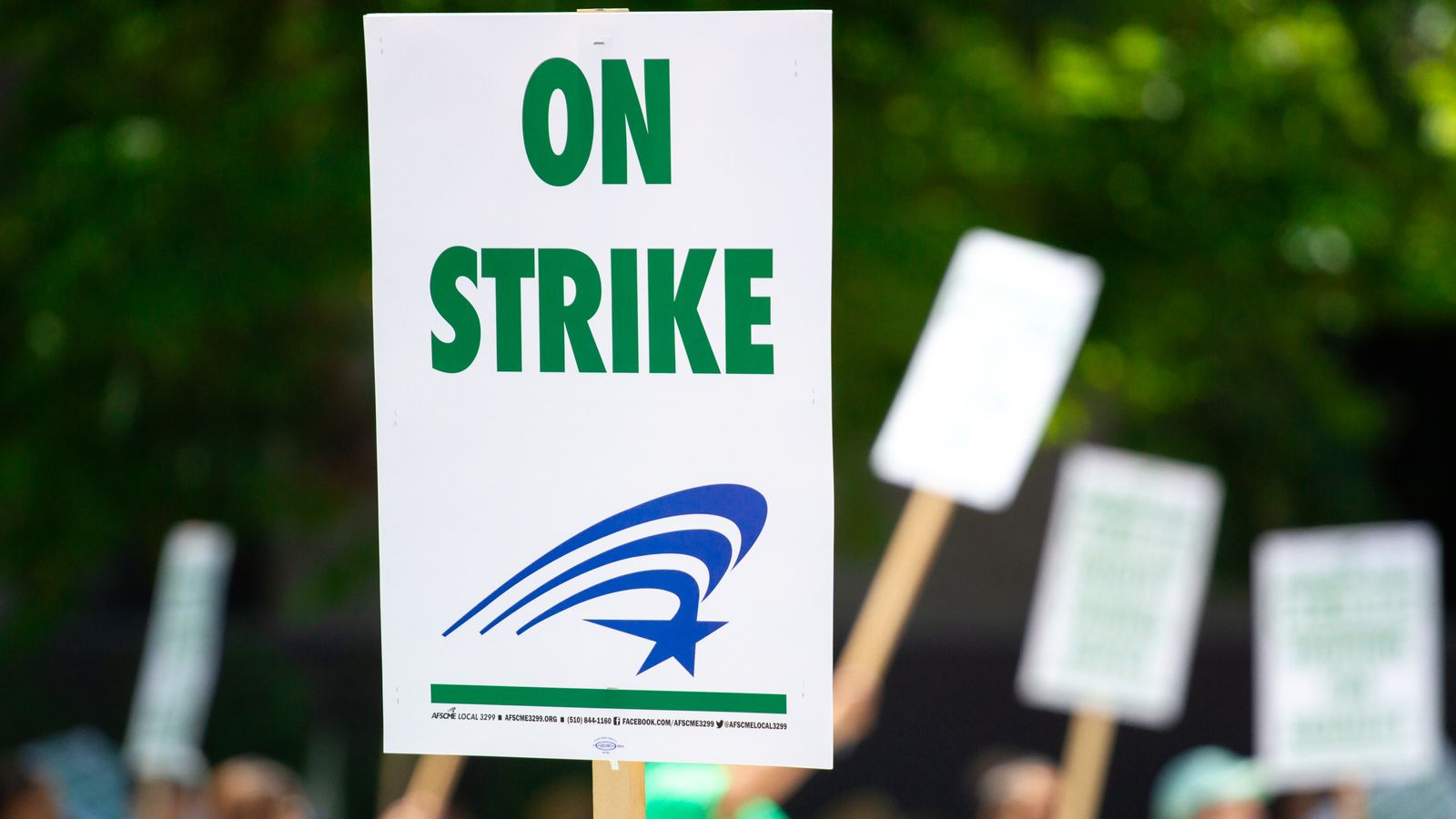
A protest sign with 'On Strike' text held during an outdoor demonstration, highlighting labor movements.
Retail Organizing Breakthrough
The Botanist sales reps' vote opens a new front in cannabis labor organizing, targeting revenue-generating employees who interact directly with customers. UFCW Local 360's Cannabis Workers Rising initiative, launched in 2023, had previously concentrated on cultivation technicians, extraction workers, and packaging staff—roles with less direct revenue attribution and, typically, lower base pay than commission-eligible sales positions.
The bull case for organizing retail staff: these workers often carry sales quotas, handle cash, and manage compliance documentation without the wage premiums or job security common in unionized manufacturing roles. The bear case? Sales employees with variable comp structures may resist union dues that eat into take-home pay, particularly if they outperform quota.
Acreage's Labor Cost Exposure
Acreage Holdings, which operates The Botanist dispensaries across eight states, now faces its first collective-bargaining obligation in the retail segment. The company reported $187 million in trailing-twelve-month revenue as of Q1 2026, with retail accounting for roughly 65% of top-line sales. Labor already represents 22-26% of cost of goods sold at most MSOs. A retail union contract could push that figure higher if wage floors or scheduling guarantees are negotiated.
Comparable retail unionization at Curaleaf's Massachusetts locations in 2024 resulted in a 12% increase in hourly wages and mandatory paid sick leave, according to that contract's public summary. If The Botanist's agreement tracks similarly, Acreage could see $2-3 million in incremental annual labor expense across its retail footprint, assuming 150-200 sales reps chainwide.
UFCW Local 360's Strategic Expansion
UFCW Local 360 has now organized workers at six cannabis companies in four states since 2023, with The Botanist sales reps representing the campaign's first retail victory. Prior wins include cultivation teams at Glass House Brands in California, extraction staff at Trulieve's Pennsylvania facilities, and packagers at Cresco Labs' Illinois operations. By moving into retail, UFCW Local 360 is replicating the supply-chain strategy it used in grocery, where it organized both warehouse workers and front-end cashiers.
Retail organizing differs from cultivation campaigns in one critical respect: sales employees are harder to replace quickly, given state-mandated background checks and cannabis-handling certifications that can take 60-90 days to process.
That dynamic gives retail unions more bargaining power during contract negotiations, particularly in high-volume markets like New York and New Jersey where staffing shortages already constrain MSO expansion plans.
Investor Implications and Margin Pressure
Multi-state operators with large retail footprints now face a two-front labor risk: state-mandated minimum-wage increases and union-negotiated wage floors. New York's $17/hour cannabis minimum wage, effective January 2026, already compressed margins for MSOs operating in the state. A union contract that sets base pay at $19-21/hour—the range UFCW Local 360 has secured in prior retail agreements—would layer additional cost on top of statutory minimums.
For context, Curaleaf's 2025 annual report cited labor inflation as the primary driver of a 340-basis-point decline in retail gross margin year-over-year. Trulieve and Green Thumb Industries have similarly flagged wage pressure in recent earnings calls. The Botanist's unionization won't move the needle for Acreage alone. But it establishes a template other MSO retail workers may follow.
What Retail Unionization Means for MSO Valuation
Retail labor contracts introduce fixed costs into a business model that relies on flexible scheduling to match staffing with customer traffic patterns. That's a headwind for MSOs trading on EBITDA multiples, since higher fixed costs reduce operating leverage. Acreage, which trades over-the-counter at roughly 4.5x forward EBITDA, is particularly exposed given its smaller scale relative to Curaleaf or Trulieve.
Consider the comp set: grocery retailers with unionized workforces trade at 6-8x EBITDA, but they operate at significantly higher revenue per square foot and benefit from decades of labor-relations infrastructure. Cannabis MSOs lack both advantages. If retail unionization spreads beyond The Botanist, expect analysts to model 50-100 basis points of EBITDA margin compression into 2027 estimates for the sector.
The Path Forward for Cannabis Labor
New York and New Jersey will likely be the next battleground, where UFCW Local 360 has active organizing drives at three unnamed MSOs, according to the union's public filings. New York's labor-friendly regulatory environment and New Jersey's 2025 statute granting cannabis workers the right to organize without employer interference create favorable conditions for union campaigns. If UFCW Local 360 replicates The Botanist win at a top-five MSO's retail chain, the labor-cost narrative will migrate from a footnote in earnings calls to a front-page risk factor.
For comprehensive background on cannabis labor organizing and state-by-state union activity, see the CannIntel topic hub on Cannabis Labor & Unionization.
We'll be watching three indicators: the wage floor negotiated in The Botanist's first contract, the pace of UFCW Local 360 retail wins in Q3 2026, and whether MSOs begin disclosing unionized headcount as a separate line item in 10-Q filings.
Frequently asked questions
What is UFCW Local 360's Cannabis Workers Rising campaign?
Cannabis Workers Rising is UFCW Local 360's organizing initiative targeting cannabis supply-chain workers across cultivation, manufacturing, and now retail. Launched in 2023, the campaign has unionized workers at six companies in four states, including Glass House Brands, Trulieve, Cresco Labs, and now Acreage Holdings' The Botanist retail brand.
How does retail unionization affect MSO profit margins?
Retail union contracts typically establish wage floors 10-15% above market rates and mandate fixed scheduling, reducing MSOs' ability to flex labor costs with customer traffic. Prior UFCW retail agreements in cannabis have added 50-100 basis points to operating expense ratios, compressing EBITDA margins for operators already facing state minimum-wage increases.
Which MSOs are most exposed to retail unionization risk?
MSOs with large retail footprints in labor-friendly states face the highest risk. Curaleaf, Trulieve, and Acreage Holdings operate significant retail chains in New York, New Jersey, and Massachusetts—states with active UFCW organizing and statutes protecting cannabis workers' right to unionize. Smaller MSOs trading at lower EBITDA multiples have less margin cushion to absorb wage increases.
What wage increases have prior cannabis retail union contracts delivered?
Curaleaf's 2024 Massachusetts union contract raised hourly wages 12% and added paid sick leave. UFCW Local 360's contracts at other cannabis retailers have set base pay at $19-21/hour, compared to state minimums of $15-17/hour. These agreements also typically include annual cost-of-living adjustments tied to CPI.
Why is retail harder to organize than cultivation in cannabis?
Retail workers are geographically dispersed across multiple storefronts, making union card-signing campaigns more logistically complex than organizing a single cultivation facility. However, retail employees face similar job-security concerns and often lack the commission structures that might otherwise reduce union appeal, making them viable organizing targets once a union establishes local presence.
Sources
The cannabis newsletter you forward to your team.
Federal policy, market data, grower alerts, and the one story that matters today. Sent every weekday at 7am. Free.
No spam. Unsubscribe with one click. 21+ only.
Related from Business

Illinois cannabis unit sales jump 14% in Q2 as prices slide
Volume growth nearly doubled year-over-year pace, but sliding wholesale prices signal margin compression for cultivators.

Trulieve Opens Marco Island Dispensary as Florida Market Share Slips
The MSO's 159th Florida location targets affluent coastal retirees while statewide revenue per store falls 11% year-over-year.
Cantourage Launches Branded Flower Line to Defend Wholesale Margins
German distributor shifts from white-label supply to proprietary cultivation as flower pricing compresses across EU medical markets.
More from the newsroom

Kansas GOP Gubernatorial Candidates Split on Cannabis Legalization
Republican primary contenders diverge on medical and recreational marijuana policy during televised debate.

Fetterman Reaffirms Support for Cannabis Legalization
Pennsylvania senator restates long-held position on marijuana reform amid ongoing federal rescheduling debate.
Fetterman Joins Democrats Pushing Federal Marijuana Legalization Bill
Pennsylvania senator adds support to renewed push for federal cannabis descheduling legislation.