Cantourage Launches Branded Flower Line to Defend Wholesale Margins
German distributor shifts from white-label supply to proprietary cultivation as flower pricing compresses across EU medical markets.
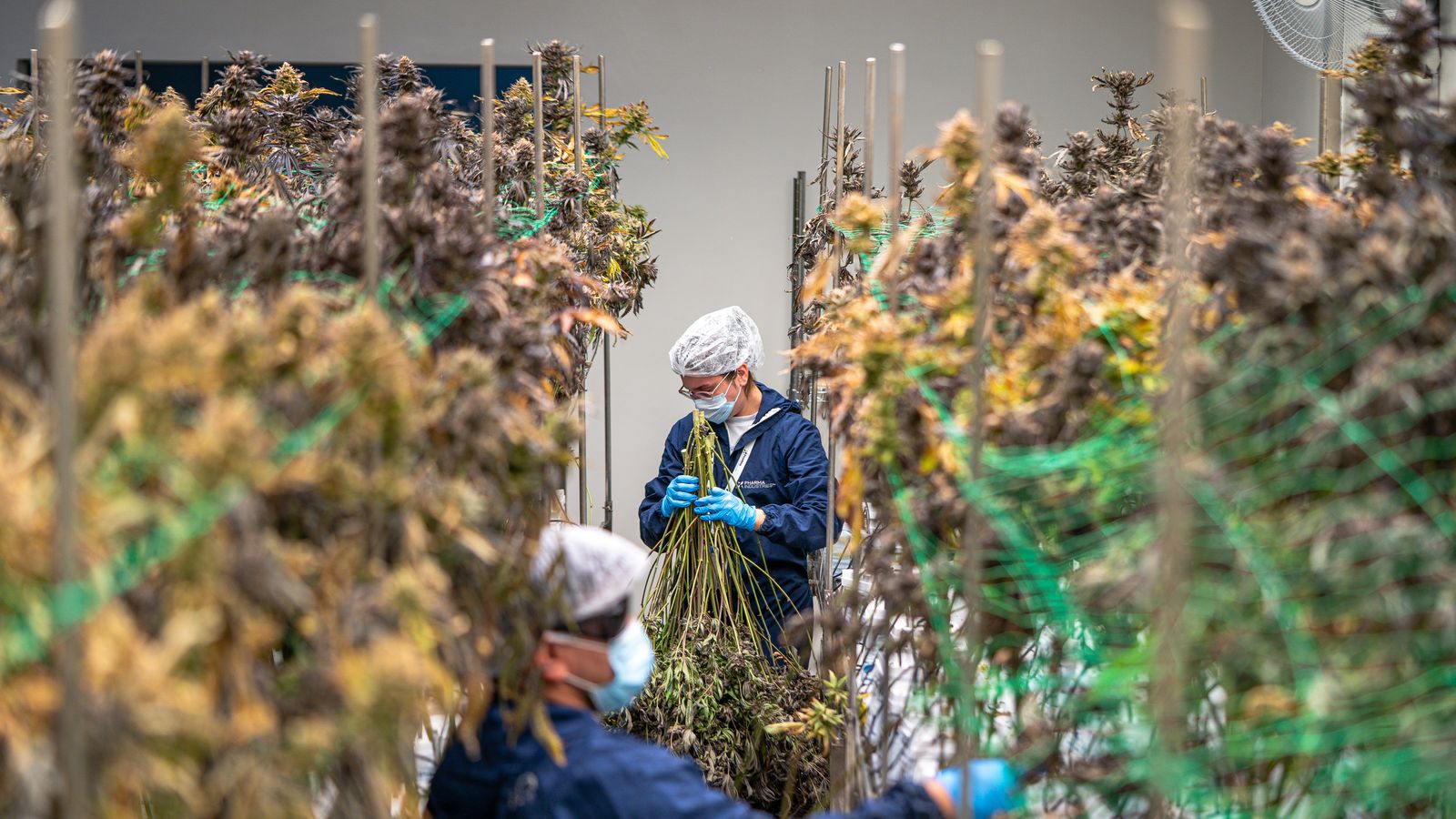
Workers in protective gear handling cannabis plants in an indoor facility.
Margin Defense Through Vertical Integration
Cantourage's branded flower line targets a 12–18 percentage-point gross-margin improvement over white-label distribution, according to the company's investor presentation. The distributor currently operates on wholesale margins of 8–14 percent for third-party flower, a band compressed by rising cultivation capacity in Portugal, Spain, and domestic German production under the April 2024 Medical Cannabis Act amendments.
The proprietary line will launch with four cultivars sourced from Cantourage's new contract-cultivation partnership in Portugal. Capital expenditure figures weren't disclosed. Neither was any equity stake in the cultivation facility.
EU Flower Pricing Pressure
Wholesale flower prices in Germany declined 22 percent year-over-year in Q2 2026, reaching €4.80 per gram for premium indoor flower. Cantourage cited oversupply from licensed Portuguese and Spanish growers, combined with the entry of six new German cultivation licensees under the expanded Medical Cannabis Act framework. The company distributed 11,200 kilograms of medical flower in the twelve months ending June 2026—a 19 percent volume increase that didn't translate to proportional revenue growth.
Competitors including Sanity Group and Demecan have operated branded flower lines since 2024. Cantourage's delay in vertical integration reflected its early strategy to remain asset-light and capital-efficient, a model that worked during the 2023–2024 supply-constrained environment but now faces structural headwinds.
German Regulatory Context
Germany's Medical Cannabis Act permits distributors to contract with EU-based cultivators without holding a domestic cultivation license, provided the flower meets Federal Institute for Drugs and Medical Devices quality standards. Cantourage's Portuguese supply route avoids the more stringent and capital-intensive German cultivation-license process, which requires €15–25 million in upfront facility investment and an 18-month approval cycle.
The company's branded launch will compete in a medical market of approximately 400,000 active prescription patients as of June 2026. That figure has grown 14 percent annually since partial legalization in April 2024. Adult-use legalization remains stalled in the Bundestag, leaving the medical channel as the sole regulated revenue stream for operators like Cantourage.
Revenue Composition and Risk
Flower distribution accounted for 68 percent of Cantourage's €47 million in trailing-twelve-month revenue through Q2 2026. Non-flower segments include CBD products, vaporizer hardware, and third-party logistics services for other EU distributors. Management stated in the July 21 release that branded flower margins must reach 20 percent or higher to offset the fixed costs of product development, regulatory compliance, and marketing.
The strategic risk: if branded flower underperforms in a crowded market, Cantourage will have added operational complexity without materially improving unit economics. Minimum-order commitments to its Portuguese cultivation partner weren't disclosed, leaving open the question of downside exposure if demand falls short.
Competitive Landscape
Sanity Group, Cantourage's largest competitor, reported 26 percent gross margins on its branded flower line in its May 2026 earnings. Demecan, which operates its own German cultivation facility, posted 31 percent gross margins but carries significantly higher capital intensity. Cantourage's contract model attempts to split the difference: higher margins than pure distribution, lower capital risk than owned cultivation.
The company's investor deck projects branded flower will represent 30 percent of total kilogram volume by the end of fiscal 2027. That target assumes stable or growing prescription volumes and no further price compression—assumptions that hinge on regulatory stability and patient-count growth.
Market Implications
Cantourage's pivot signals that pure-play distribution models face structural pressure in maturing EU medical markets. The move parallels U.S. wholesale dynamics in states like California and Oregon, where distributors with no upstream integration saw margins collapse as cultivation capacity outpaced demand growth. European operators are now importing that lesson two years into their own supply-expansion cycle.
For full background on this story, see the CannIntel topic hub on Cantourage's vertical integration strategy.
What to Watch
The Q4 2026 launch date and initial cultivar lineup remain unannounced. Investors will track whether Cantourage's branded line can command premium pricing or whether it simply cannibalizes existing white-label volume at similar realized prices. The company's next earnings call is scheduled for October 15, 2026. Management is expected to provide margin guidance and capital-allocation detail for the new brand.
Frequently asked questions
Why is Cantourage launching a branded flower line?
Cantourage is launching a proprietary flower brand to defend gross margins, which have compressed to 8–14 percent in its white-label distribution business due to oversupply from Portuguese, Spanish, and German cultivators. The company projects branded flower will deliver 12–18 percentage points higher margins.
Does Cantourage own its cultivation facility?
No. Cantourage is using a contract-cultivation model with a partner facility in Portugal. This avoids the €15–25 million capital requirement and 18-month approval cycle for a German cultivation license, while still allowing the company to sell branded product in the German medical market.
How much has German wholesale flower pricing declined?
Wholesale flower prices in Germany fell 22 percent year-over-year in Q2 2026, reaching €4.80 per gram for premium indoor flower. The decline reflects rising cultivation capacity across the EU and the entry of six new German licensed cultivators under the expanded Medical Cannabis Act.
What is Cantourage's current revenue mix?
Flower distribution accounted for 68 percent of Cantourage's €47 million in trailing-twelve-month revenue through Q2 2026. The remainder comes from CBD products, vaporizer hardware, and third-party logistics services for other EU distributors.
When will the branded flower line launch?
Cantourage announced a Q4 2026 launch date for its proprietary flower brand. The company has not disclosed the initial cultivar lineup or pricing. Management is expected to provide additional detail on the October 15, 2026 earnings call.
Sources
The cannabis newsletter you forward to your team.
Federal policy, market data, grower alerts, and the one story that matters today. Sent every weekday at 7am. Free.
No spam. Unsubscribe with one click. 21+ only.
Related from Business

Cannabist Co. Closes Denver Facility, Lays Off 50 Workers
The multi-state operator shuttered its Colorado cultivation site as part of ongoing operational restructuring.

Ayrloom Nearly Doubles Annual Sales in New York Cannabis Market
The New York-based cannabis brand reported 94% year-over-year revenue growth as adult-use retail expands statewide.

Cannabist Shuts Colorado Cultivation Facility Amid Bankruptcy
Multi-state operator closes grow operation as Chapter 11 restructuring advances in federal court.
More from the newsroom

Excessive Cannabis Taxes Drive Consumers to Illicit Markets, NORML Finds
New analysis links state tax increases to measurable shifts toward unregulated sellers.

Senate Democrats Reintroduce Cannabis Descheduling Bill
Legislation would remove marijuana from the Controlled Substances Act entirely and expunge federal convictions.

Oklahoma Medical Marijuana Packaging Rules Draw Industry Criticism
New child-safety packaging requirements took effect July 1, 2026, sparking pushback from licensed operators over compliance costs.