Maine Issues Safety Warning for Cannabis Concentrate with Unsafe Butane Levels
State regulators flagged a concentrate product for residual solvent contamination exceeding safety thresholds.
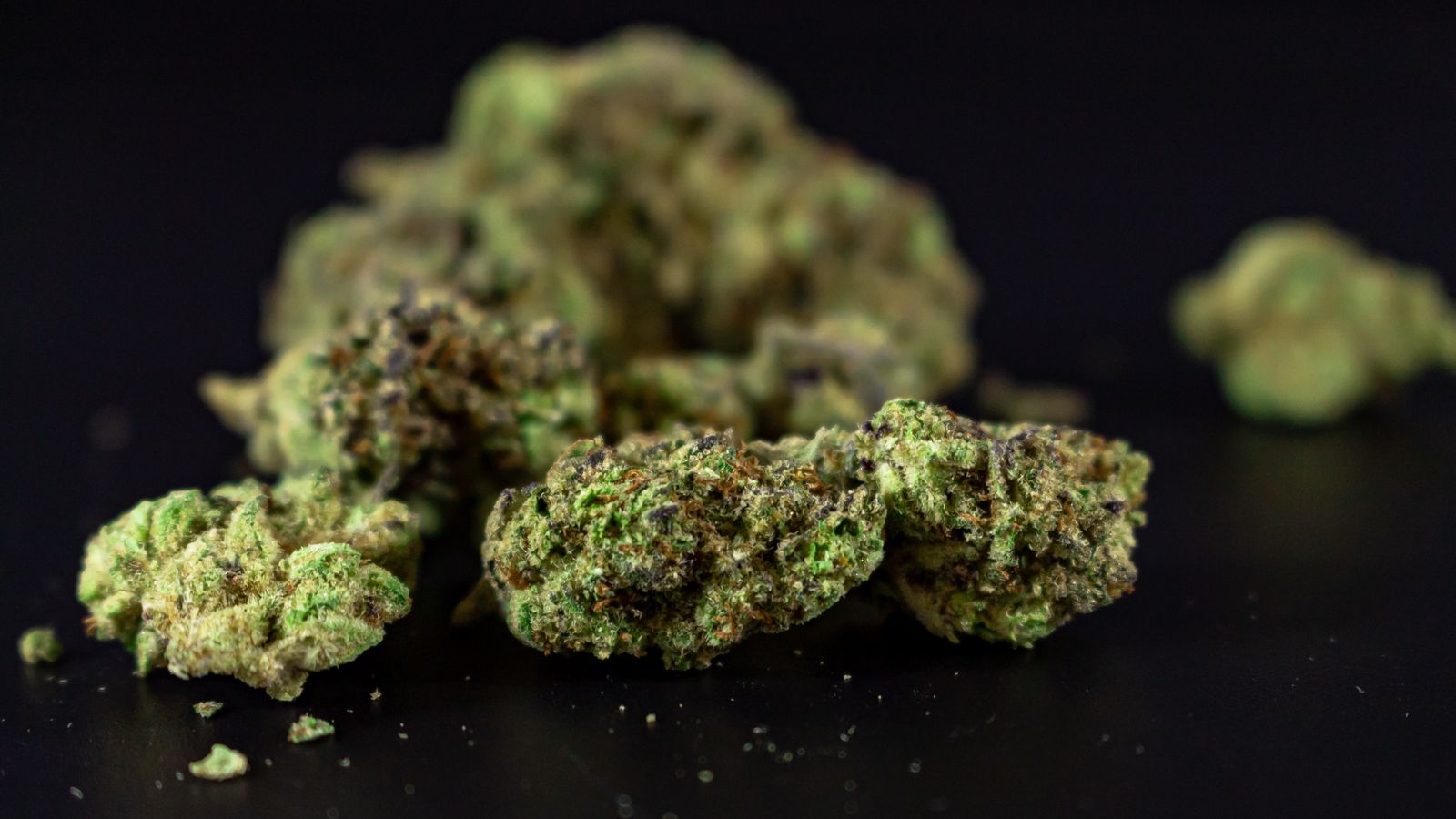
Detailed close-up of cannabis flowers, showcasing texture and color against a black backdrop.
The warning targets a specific concentrate batch distributed through Maine's adult-use market. The Office of Cannabis Policy didn't immediately disclose the product name, manufacturer, or licensed facility in its initial alert.
Residual solvent contamination poses inhalation risks when concentrate products are vaporized or dabbed. Butane is a hydrocarbon solvent commonly used in closed-loop extraction systems to produce cannabis concentrates including shatter, wax, and live resin.
Regulatory Threshold and Testing Protocol
Maine's cannabis testing rules set a 5,000 parts-per-million ceiling for total residual solvents in concentrate products. Butane falls under Class 3 solvents in the state's testing protocols, which mirror guidelines established by the American Herbal Products Association and USP
All cannabis concentrate products sold in Maine's adult-use program must clear mandatory third-party testing for potency, pesticides, heavy metals, microbial contaminants, mycotoxins, and residual solvents before reaching dispensary shelves. Testing laboratories use gas chromatography with flame ionization detection or mass spectrometry to quantify residual solvent levels.
The flagged product exceeded the 5,000 ppm threshold during post-market surveillance testing conducted by the Office of Cannabis Policy's compliance division. Random product pulls from licensed retailers help the agency verify testing accuracy and catch non-compliant batches that cleared initial certification.
Recall Authority and Operator Obligations
The Office of Cannabis Policy has authority under 28-B M.R.S. § 501 to order mandatory recalls when products fail safety standards or pose imminent health risks. Licensed operators must notify the agency within 24 hours of discovering a product defect. They have 72 hours to submit a corrective action plan.
The state's seed-to-sale tracking system allows regulators to trace contaminated batches to specific cultivation and manufacturing facilities within hours of a failed test.
Retailers holding inventory from the flagged batch must pull units from shelves and quarantine them pending disposal instructions from the Office of Cannabis Policy. Consumers who purchased the product can return it to the point of sale for a full refund under Maine's recall procedures.
This is the first residual-solvent warning issued by Maine regulators in 2026. Last year saw three contamination alerts—two for pesticide residues and one for yeast and mold counts exceeding action levels.
Extraction Safety and Market Implications
Residual solvent contamination typically stems from incomplete purging during the post-extraction process or equipment malfunctions in closed-loop systems. Operators use vacuum ovens to remove residual butane after extraction, with industry-standard protocols calling for purge cycles lasting 24 to 72 hours at controlled temperatures.
Maine licenses 47 active extraction facilities as of September 2026, according to Office of Cannabis Policy data. Extraction operators need a separate manufacturing endorsement and must maintain standard operating procedures for solvent handling, equipment maintenance, and batch purging.
The contamination alert comes as Maine's adult-use market enters its fifth year of operation. Sales hit $43.2 million during August 2026, with concentrate products accounting for approximately 28% of total revenue.
For ongoing updates on Maine's cannabis regulatory actions and safety alerts, see the CannIntel topic hub on Maine's cannabis program.
The Office of Cannabis Policy hasn't announced whether the contamination incident will trigger a facility inspection or enforcement action against the manufacturing licensee. Violations of residual solvent limits can result in administrative penalties ranging from $1,000 to $10,000 per incident under Maine's cannabis rules.
We'll be watching for the agency's full disclosure of the affected product and manufacturer, as well as any corrective actions required of the licensed facility.
For complete background, history, and our ongoing coverage of this story:
Open the CannIntel topic hub →Sources
The cannabis newsletter you forward to your team.
Federal policy, market data, grower alerts, and the one story that matters today. Sent every weekday at 7am. Free.
No spam. Unsubscribe with one click. 21+ only.
Related from News

Man Charged After 2,700-Plant Monroe Cannabis Grow Bust
A Monroe man faces charges after a 2,700-plant grow operation was shut down, per PNW Daily, though key details remain undisclosed.

Task force raids Monroe property, finds 2,700 cannabis plants
A complaint triggered a task force raid in Monroe, Washington, where KOMO reported 2,700 plants. Key details, including any THC testing, remain unreported.

Marijuana Moment Op-Ed Questions Industry's Election Night Bets
A Nov. 10 Marijuana Moment opinion piece says the cannabis industry backed 'false prophets' and that election night exposed the cost. Its details remain unverified.
More from the newsroom

Texas Lt. Gov.-elect Goodwin Puts Marijuana on 2027 Agenda
Vikki Goodwin, Texas's lieutenant governor-elect, listed marijuana alongside education, gambling and Medicaid as priorities ahead of the 2027 legislative session, according to KSAT.

Newswire Item Says DEA Restricts State Medical Marijuana Operators
A Nov. 11 headline describes DEA action against state medical programs, but names no state, rule or docket, so the claim awaits a primary document.

Peoria City Council votes to allow drive-through cannabis sales
Peoria's council approved drive-through and curbside cannabis sales, a local zoning move that still has to square with Illinois dispensary rules.