Alabama Medical Cannabis Reports First Week Sales, Reopens Lab Applications
The Alabama Medical Cannabis Commission disclosed early sales figures and announced a new application window for testing laboratories.
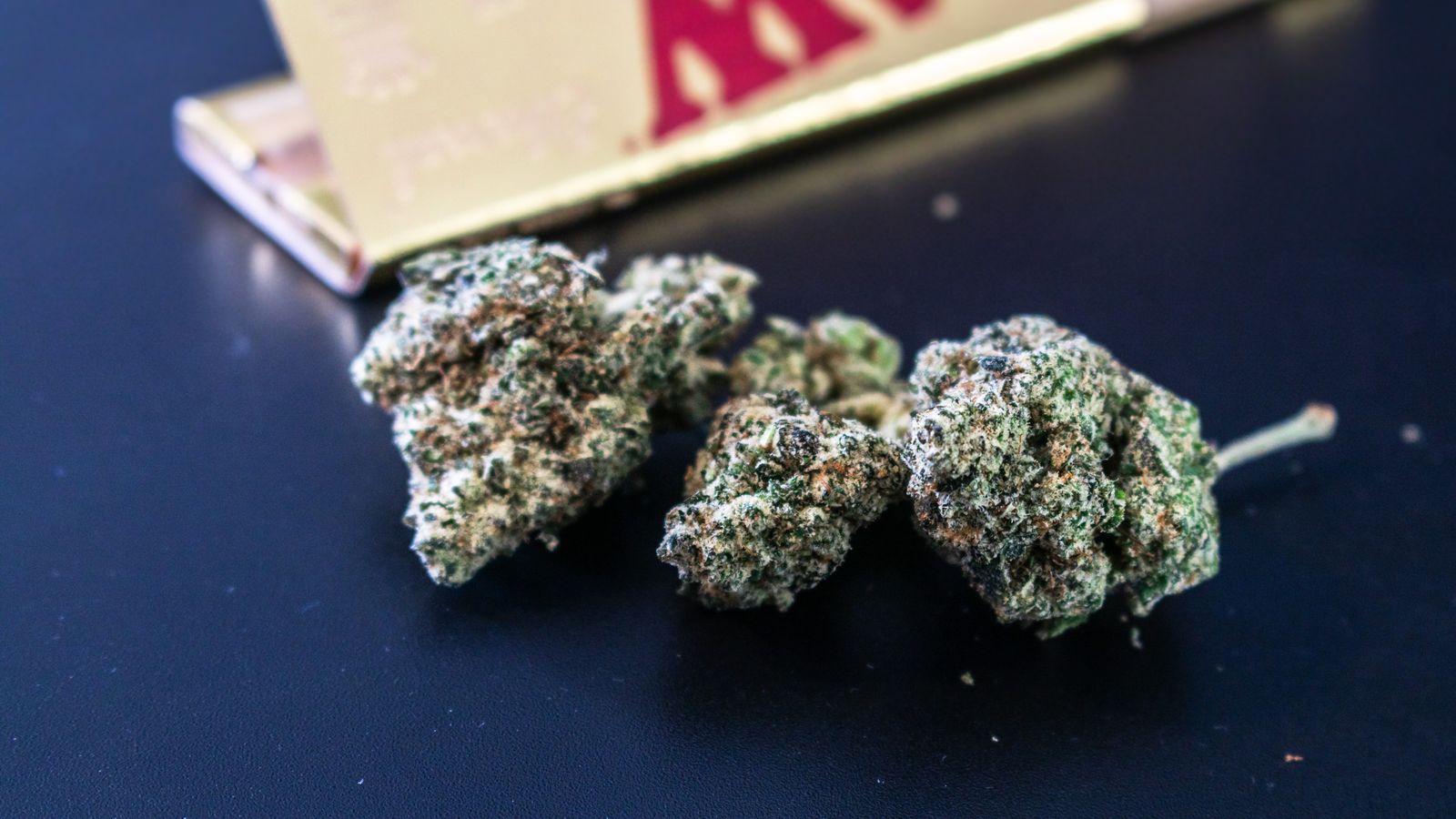
Macro image of cannabis buds accompanied by rolling paper on a dark surface.
Sales Begin Across Multiple Dispensaries
Alabama's medical cannabis dispensaries completed patient transactions during the program's inaugural week, though the commission withheld specific revenue totals. The board meeting confirmation marks the state's formal entry into the operational medical cannabis market after years of regulatory delays. Licensed dispensaries in Birmingham, Huntsville, and Mobile reported activity, according to commission statements.Operators and investors lack benchmarks for demand modeling—the commission released no granular sales data. Neighboring states typically release weekly or monthly sales totals within 30 days of launch. Alabama's withholding suggests either incomplete data aggregation or deliberate caution around publicizing early figures. That's common in early-stage programs, but it leaves the market flying blind.
Lab Application Window Reopens After Initial Shortage
The commission reopened the testing laboratory license application window, signaling that the state's initial cohort of approved labs can't meet supply-chain demands. Alabama's medical cannabis statute requires all products to pass potency and contaminant testing before retail sale. The original application round, closed in late 2025, yielded fewer than five approved labs statewide.This bottleneck was predictable. Testing capacity lags cultivation and processing in nearly every new medical program. Ohio, Pennsylvania, and Louisiana all faced similar lab shortages in their first 12 months. The difference? Those states reopened applications within 60 days of launch. Alabama waited six months.
The new application deadline wasn't disclosed at the June 12 meeting, but the commission indicated it would accept submissions "on a rolling basis" until further notice. That vague timeline will frustrate operators waiting on product releases.
Supply-Chain Pressure on Cultivators and Processors
Limited testing capacity directly constrains how much product cultivators can move to market, creating inventory backlogs and cash-flow risk. Alabama's licensed cultivators—fewer than a dozen statewide—have been harvesting since Q1 2026. Without sufficient lab throughput, cured flower and processed goods sit in quarantine, unsellable.Every week of delayed testing is a week of lost revenue for operators who've already sunk capital into buildouts, payroll, and compliance infrastructure.
Consider the math: a single cultivator producing 500 pounds per month needs at least two independent lab partners to maintain a 7-10 day testing turnaround. Alabama's current lab count likely can't support that cadence for more than three or four operators simultaneously. The reopened application window is an admission that the commission underestimated throughput requirements.
Patient Enrollment Remains Opaque
The commission didn't release patient enrollment figures, leaving the market's addressable population unclear. Alabama's qualifying conditions include cancer, chronic pain, PTSD, epilepsy, and terminal illness. Advocacy groups estimated 50,000 to 100,000 potential patients statewide when the program launched, but the commission hasn't confirmed how many have completed registration.Patient count is the single most important demand signal for investors and operators. Without it, dispensaries are flying blind on inventory planning. Illinois published weekly patient totals during its first year. New York released monthly enrollment data. Alabama's silence stands out.
Competitive analysis becomes impossible without enrollment data. If only 5,000 patients have enrolled, Alabama's market is subscale and unprofitable for most operators. If 50,000 have enrolled, the state is undersupplied and ripe for expansion. Operators deserve clarity.
Regulatory Gaps Still Unresolved
The June 12 meeting didn't address outstanding regulatory ambiguities around product limits, home delivery, or vertical integration rules. Alabama's statute permits dispensaries to deliver to homebound patients, but the commission hasn't finalized delivery protocols or vehicle-inspection requirements. That leaves a revenue channel—critical for rural patients—effectively closed.Vertical integration is another unresolved variable. Alabama allows cultivators to own processing licenses but prohibits cultivator ownership of dispensaries. That structure forces cultivators to negotiate wholesale agreements with independently owned retail operators, introducing margin compression and relationship risk. States with tighter vertical integration—like Ohio and Pennsylvania—saw faster market stabilization.
Competitive Landscape and Operator Outlook
Alabama's slow rollout and data opacity favor well-capitalized operators who can absorb early losses while smaller entrants struggle with cash-flow gaps. The state awarded licenses to a mix of in-state applicants and multistate operators with adjacent footholds in Florida and Louisiana. The latter group has the balance-sheet cushion to weather a 12-18 month ramp period. Local operators don't.This dynamic isn't unique to Alabama—it played out in Missouri, Oklahoma, and Maryland—but it's avoidable. Transparent sales reporting, faster lab approvals, and clear delivery rules would level the playing field. Instead, Alabama's commission is managing by opacity, which advantages incumbents.
For investors, Alabama remains a watch-and-wait market. First-week sales are a positive signal. But without patient counts, revenue totals, or a clear lab timeline, the risk-reward calculus is incomplete. Next data point to watch: whether the commission releases Q2 sales totals in July or continues the blackout.
What Comes Next for Alabama's Program
The commission's next scheduled meeting is July 10, when it's expected to address delivery regulations and potentially release aggregated Q2 sales data. The lab application window will remain open indefinitely, but approval timelines are unclear. Operators should expect at least 90 days from submission to licensure, based on the commission's historical processing speed.For full background on Alabama's medical cannabis rollout, see the CannIntel topic hub on the Alabama Medical Cannabis Program.
Two variables will determine the program's trajectory: how quickly new labs come online and whether the commission commits to transparent reporting. If both happen, Alabama could hit $50 million in annualized sales by Q4 2026. If neither happens, the state risks becoming another cautionary tale of regulatory overreach strangling a nascent market.
For complete background, history, and our ongoing coverage of this story:
Open the CannIntel topic hub →Sources
The cannabis newsletter you forward to your team.
Federal policy, market data, grower alerts, and the one story that matters today. Sent every weekday at 7am. Free.
No spam. Unsubscribe with one click. 21+ only.
Related from News

MSO Earnings, State Licensing, and Federal Signals: Week of June 13
Multistate operators reported mixed Q2 results while Ohio and Pennsylvania advanced adult-use timelines and DEA rescheduling commentary surfaced.

Maine Recalls Cannabis Strain Over Undisclosed Health Concerns
State regulators pulled a product from dispensary shelves, marking the latest safety action in Maine's adult-use market.
Garden River Dispensary Closes Amid Fatal Overdose Investigation
A cannabis dispensary in Garden River, Ontario has shut down during an investigation into a suspected fatal overdose potentially linked to products sold at the location.
More from the newsroom

Slate Feature Challenges Millennial Cannabis Narrative Amid Health Warnings
Opinion piece highlights gap between legalization-era messaging and emerging research on long-term use risks.

Curaleaf Launches Premium Flower in Germany as Market Matures
U.S. MSO debuts Select Elite brand in German pharmacies, signaling shift from medical-only access to premium consumer positioning.

Pre-Flower vs Week One: What's Actually Happening Inside
The flip doesn't start flowering. Here's the hormonal cascade, metabolic shift, and structural changes between photoperiod switch and true week one.