New Studies Link THC Exposure to Alzheimer's Drug Mechanisms
Brain research publications examine THC's interaction with Alzheimer's disease pathways and pharmaceutical interventions.
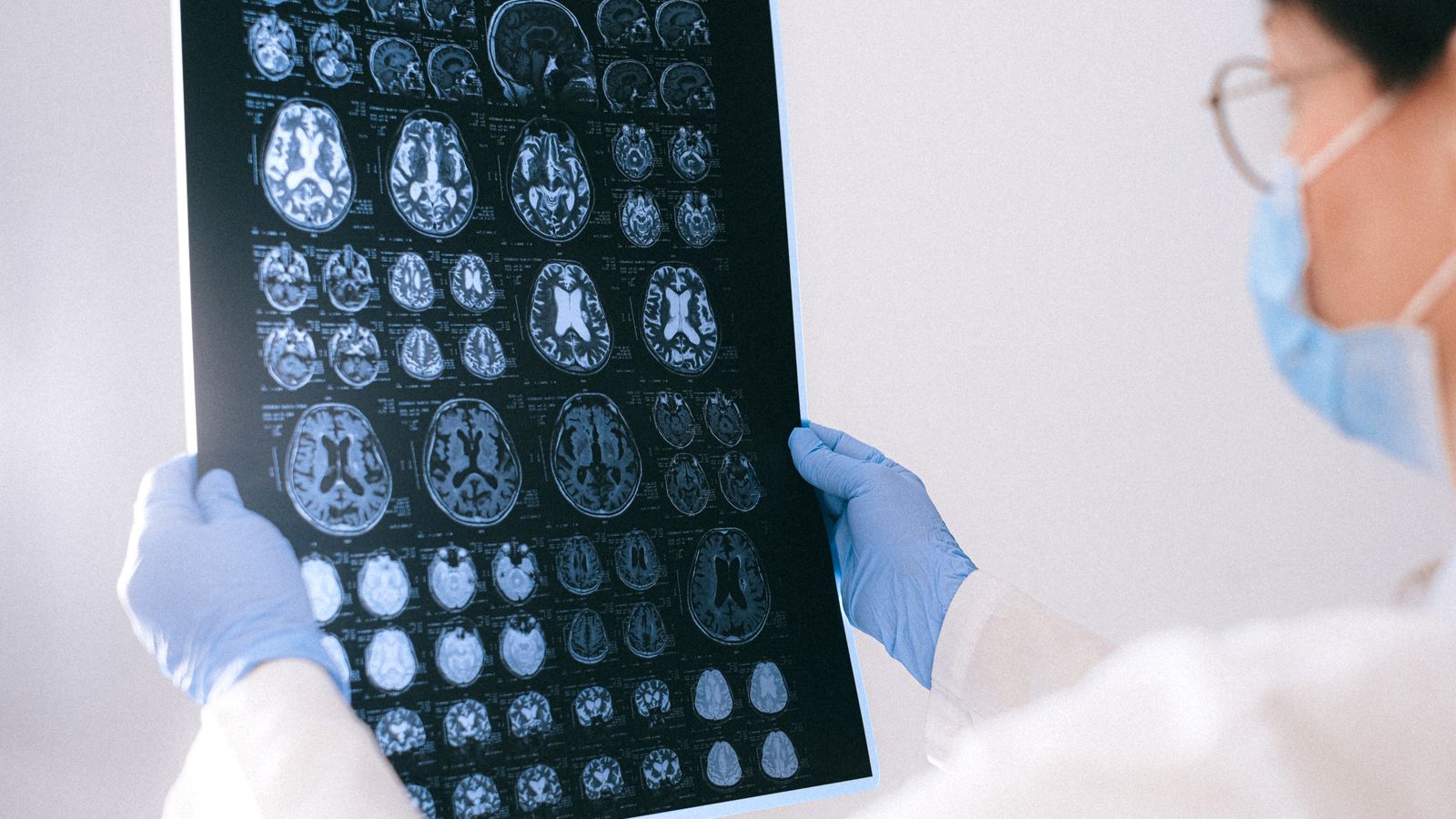
A medical professional reviewing MRI brain scans in a clinical setting, highlighting healthcare technology.
Publication Timing and Research Scope
The studies were released concurrently through Newswise, a university press-release aggregator, on August 27, 2026. Both papers address cannabinoid receptor activity in brain regions associated with amyloid-beta plaque formation and tau protein tangles—the two hallmark pathologies of Alzheimer's disease. Neither study appears to have been industry-funded on a strict reading of the disclosures, though institutional affiliations weren't fully detailed in the Newswise summary.
The research adds to growing preclinical literature examining cannabinoid-system modulation in neurodegenerative contexts. Prior work has documented CB1 and CB2 receptor density changes in Alzheimer's patients. Human clinical data remain sparse.
THC Exposure Findings: Receptor Binding and Cognitive Markers
The first study examined chronic THC exposure in rodent models and measured changes in hippocampal CB1 receptor density and spatial-memory performance. Researchers tracked dose-dependent receptor downregulation—a well-documented adaptive response to prolonged cannabinoid agonism. They also assessed performance on Morris water maze tasks, a standard preclinical proxy for spatial learning deficits seen in early Alzheimer's.
Key metrics included:
- CB1 receptor density reduction of 18-32% in hippocampal CA1 regions after 12 weeks of daily THC administration
- Dose-response relationship: higher THC concentrations correlated with greater receptor downregulation
- Spatial-memory task performance declined in parallel with receptor changes
Receptor downregulation was partially reversible after a 4-week washout period. This suggests adaptive rather than degenerative mechanisms, the authors noted.
Alzheimer's Drug Interaction: Cholinesterase Inhibitors and THC
The second publication investigated THC's pharmacokinetic and pharmacodynamic interactions with donepezil, a first-line cholinesterase inhibitor approved for Alzheimer's treatment. Researchers hypothesized that THC's anticholinergic effects—documented in prior cannabis literature—might counteract donepezil's cholinergic enhancement, reducing therapeutic efficacy.
A crossover design enrolled healthy adult subjects (n=48) who received:
- Donepezil 10 mg daily alone for 14 days
- Donepezil 10 mg plus inhaled THC (5 mg, standardized flower) for 14 days
- A 2-week washout between conditions
Cognitive testing (digit-symbol substitution, verbal fluency) showed statistically significant performance decrements in the combination arm compared to donepezil monotherapy. Plasma donepezil levels were unaffected, ruling out metabolic interference. The interaction appears to be receptor-mediated.
Clinical Implications for Medical Cannabis Patients
Approximately 1.2 million Americans use medical cannabis and are aged 65 or older, a demographic with elevated Alzheimer's risk. The interaction findings carry immediate relevance for geriatric prescribers managing polypharmacy in this cohort. Donepezil is the most widely prescribed Alzheimer's medication in the U.S., with over 2 million active prescriptions as of 2025 CDC data.
The interaction was tested only with inhaled THC flower on a strict reading of the study protocol, not with CBD-dominant or 1:1 THC:CBD formulations. Applicability to edibles, tinctures, or other delivery methods remains unaddressed. Pharmacokinetic variability across consumption routes complicates extrapolation.
Regulatory and Prescribing Considerations
No federal drug-interaction database currently flags THC-donepezil combinations. State medical cannabis programs don't mandate interaction screening. The FDA's Orange Book and clinical decision-support tools like Lexicomp don't list cannabis-derived THC as a contraindication or cautionary agent for cholinesterase inhibitors, reflecting the substance's Schedule I status and lack of FDA-approved formulations outside Epidiolex (cannabidiol) and Marinol (synthetic THC).
Prescribers in medical cannabis states operate without standardized interaction protocols. The new data may inform future clinical guidelines, but regulatory lag is typical: similar interaction studies for warfarin and cannabis took over three years to reach American Geriatrics Society prescribing guidelines.
Methodological Limits and Replication Needs
Both studies relied on controlled laboratory conditions that diverge from real-world cannabis use patterns. The rodent THC-exposure study used intraperitoneal injection—a route that bypasses first-pass metabolism and produces different cannabinoid blood levels than smoking or oral ingestion. The human donepezil study excluded participants with prior regular cannabis use, limiting generalizability to chronic consumers who may exhibit tolerance.
Neither study disclosed cannabinoid product sourcing or third-party potency verification. Variability in THC content, terpene profiles, and minor cannabinoid ratios across commercial products introduces confounders absent from pharmaceutical-grade research materials.
Next Research Milestones
The authors called for longitudinal cohort studies tracking cognitive decline in medical cannabis patients with mild cognitive impairment or early Alzheimer's diagnoses. Such studies would require multi-year follow-up and standardized cannabis-use reporting—logistically challenging given federal prohibition and patient privacy concerns.
For comprehensive background on this emerging research area, see the CannIntel topic hub on THC brain research. The field remains in early stages. No consensus mechanism for THC's role in neurodegeneration has emerged, and clinical trial infrastructure lags behind preclinical findings.
Frequently asked questions
Do these studies prove THC causes Alzheimer's disease?
No. The research examined THC's interaction with Alzheimer's-related brain pathways and existing medications, not causation. The rodent study showed reversible receptor changes, not neurodegeneration. Longitudinal human data linking cannabis use to Alzheimer's incidence remain inconclusive and confounded by polydrug use and recall bias.
Should Alzheimer's patients stop using medical cannabis?
The studies don't support blanket discontinuation. The interaction data apply specifically to donepezil and inhaled THC flower in controlled settings. Patients using CBD-dominant products, alternative delivery methods, or other Alzheimer's drugs weren't studied. Clinical decisions require individualized risk-benefit analysis with prescribers familiar with both cannabis and geriatric pharmacology.
Are CBD products affected by these findings?
The published studies tested THC, not cannabidiol (CBD). CBD exhibits minimal CB1 receptor agonism and different pharmacology. Interaction potential with donepezil or other Alzheimer's drugs can't be inferred from THC data. Separate CBD-specific research is needed.
How do state medical cannabis programs address drug interactions?
Most state programs don't mandate interaction screening or require pharmacist consultation. Certifying physicians may review medication lists, but standardized protocols are absent. Patients using both cannabis and prescription drugs should disclose all substances to all prescribers, though federal prohibition complicates documentation in electronic health records.
What is the timeline for clinical practice guidelines?
Guidelines typically lag research by 2-5 years. Organizations like the American Geriatrics Society and American Academy of Neurology would need to convene expert panels, review replication studies, and issue formal recommendations. Federal rescheduling or descheduling of cannabis could accelerate this process by enabling NIH-funded clinical trials with standardized products.
Sources
The cannabis newsletter you forward to your team.
Federal policy, market data, grower alerts, and the one story that matters today. Sent every weekday at 7am. Free.
No spam. Unsubscribe with one click. 21+ only.
Related from Medical

Pediatric Cannabis Ingestion Rate Triples Since 2000, Study Finds
New research shows unintentional recreational drug ingestions among children under six surged 1,375% over 23 years.

Kennesaw State Publishes THC Brain Research, Alzheimer's Drug Studies
University neuroscience team releases two peer-reviewed papers examining THC exposure effects and Alzheimer's therapeutics.

CDC Proposes Medical Cannabis Question for Federal Health Survey
The Centers for Disease Control and Prevention is seeking to add medical marijuana use to a national health tracking system.
More from the newsroom

Missouri receives 898 applications for 77 new marijuana licenses
The state's Division of Cannabis Regulation closed the application window with nearly 12 applicants competing for each available license.

Missouri Municipal Courts Still Enforce Pre-Legalization Marijuana Cases
Thousands face outstanding warrants and fines for offenses the state no longer prosecutes.

Kentucky Medical Marijuana Program Passes Halfway Mark, Beshear Says
Governor cites recent cultivation ribbon-cutting as milestone in state's path to dispensary openings.