Missouri receives 898 applications for 77 new marijuana licenses
The state's Division of Cannabis Regulation closed the application window with nearly 12 applicants competing for each available license.
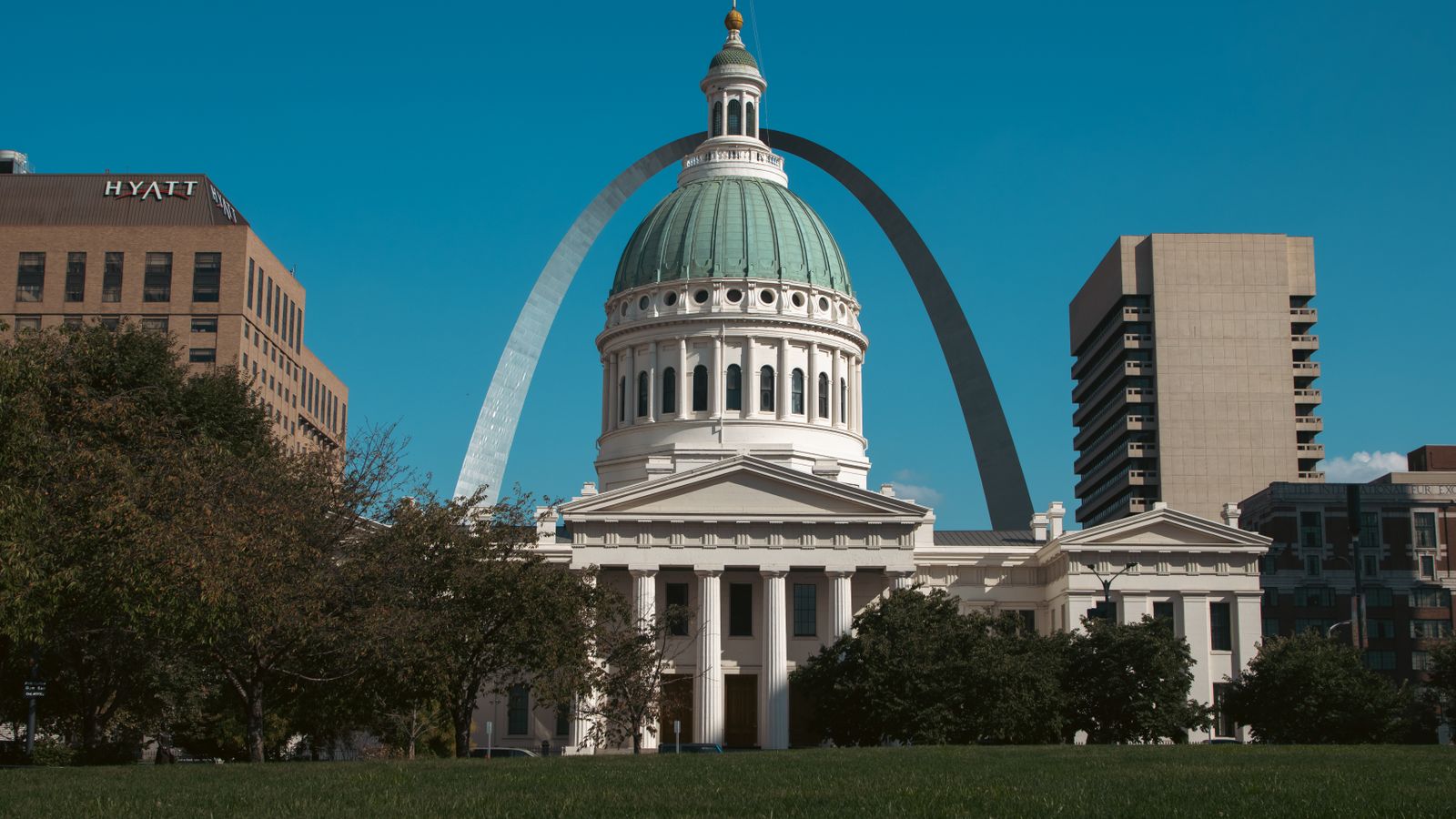
The old courthouse in St. Louis with the iconic Gateway Arch in the backdrop.
Application Window Closes with Record Volume
The Division of Cannabis Regulation closed the application period on August 26, 2026, with 898 submissions competing for 77 licenses across three categories. The breakdown:
- Microbusiness licenses: 612 applications for 50 permits
- Dispensary licenses: 198 applications for 20 permits
- Cultivation licenses: 88 applications for 7 permits
Microbusiness drew the highest volume, attracting more than 12 applicants per available license. These permits allow small-scale cultivation, processing, and retail operations under a single license structure introduced in Missouri's 2022 constitutional amendment legalizing adult-use cannabis.
Scoring Timeline and Selection Criteria
The Division will score applications through November 2026 using a 100-point rubric weighted toward social equity and operational readiness. According to the agency's published scoring matrix, applicants earn points across five categories: business plan quality (30 points), financial capacity (20 points), social equity qualifications (25 points), community impact plan (15 points), and facility readiness (10 points).
Social equity applicants—defined as Missouri residents from zip codes with marijuana arrest rates 1.5 times the state average or household income below 250% of the federal poverty line—receive an automatic 25-point boost. That advantage matters. In the 2020 medical licensing round, equity-boosted applicants won 62% of available permits despite representing 41% of the applicant pool.
License awards are expected in December 2026. A 30-day appeal window opens immediately after provisional winners are announced.
Market Implications for Incumbents
The 77 new licenses represent a 14% expansion of Missouri's current 550-license market, concentrated in microbusiness and dispensary categories where barriers to entry are lowest. For full background on Missouri's licensing framework and market structure, see the CannIntel topic hub on Missouri cannabis licensing.
Incumbent operators face modest but real margin pressure—Missouri's adult-use market generated $1.1 billion in sales during its first 18 months, but average dispensary revenue per location has declined 9% quarter-over-quarter since Q1 2026 as competition intensifies in metro St. Louis and Kansas City. The addition of 20 new dispensaries, if geographically dispersed, will further fragment market share in saturated zones.
Microbusiness licenses pose a different threat. Their vertically integrated structure lets operators bypass wholesale markups, potentially undercutting dispensary retail prices by 15-20% in local markets. We'll know by January whether the Division clusters these permits in underserved rural counties or spreads them across high-traffic urban corridors.
Sources
The cannabis newsletter you forward to your team.
Federal policy, market data, grower alerts, and the one story that matters today. Sent every weekday at 7am. Free.
No spam. Unsubscribe with one click. 21+ only.
Related from Business

Vireo Makes Latest $21M Florida Purchase, Deepening MSO Foothold
MJBizDaily reported the multistate operator's newest Florida deal, a $21 million purchase that extends a pattern of incremental buying in a license-capped medical market.
Nasdaq Offers Safe Harbor Financial 180-Day Compliance Extension
SHF Holdings, the Denver fintech behind Safe Harbor Financial, received written Nasdaq notice of a 180-day extension to a compliance deadline.
Kansas City Pitch Questions Who Owns Missouri's Marijuana Market
Missouri says its cannabis market is competitive. A Kansas City Pitch report asks who actually controls the licenses, and the answer matters to operators and investors.
More from the newsroom

BillsTax Indicted Again on Marijuana Charges in South Korea
Chosunbiz reported a second indictment of BillsTax on marijuana charges tied to legalization advocacy, though the charging details were not available.
Massachusetts Question 8 sets Nov. 3 vote on ending adult-use sales
Boston 25 News explainer confirms voters will decide whether to eliminate recreational marijuana sales, putting a licensed market that opened in 2018 on the ballot.

Rescheduling Opponents File Final Reply; DEA Judge Is Next
Opponents of moving marijuana to Schedule III filed their last reply under an expedited deadline, putting the record before a DEA administrative law judge.