CBD Shows Promise for Acne Treatment in New Scientific Review
Hemp-derived cannabidiol reduces inflammation and redness in acne patients, according to a comprehensive scientific analysis published June 2026.
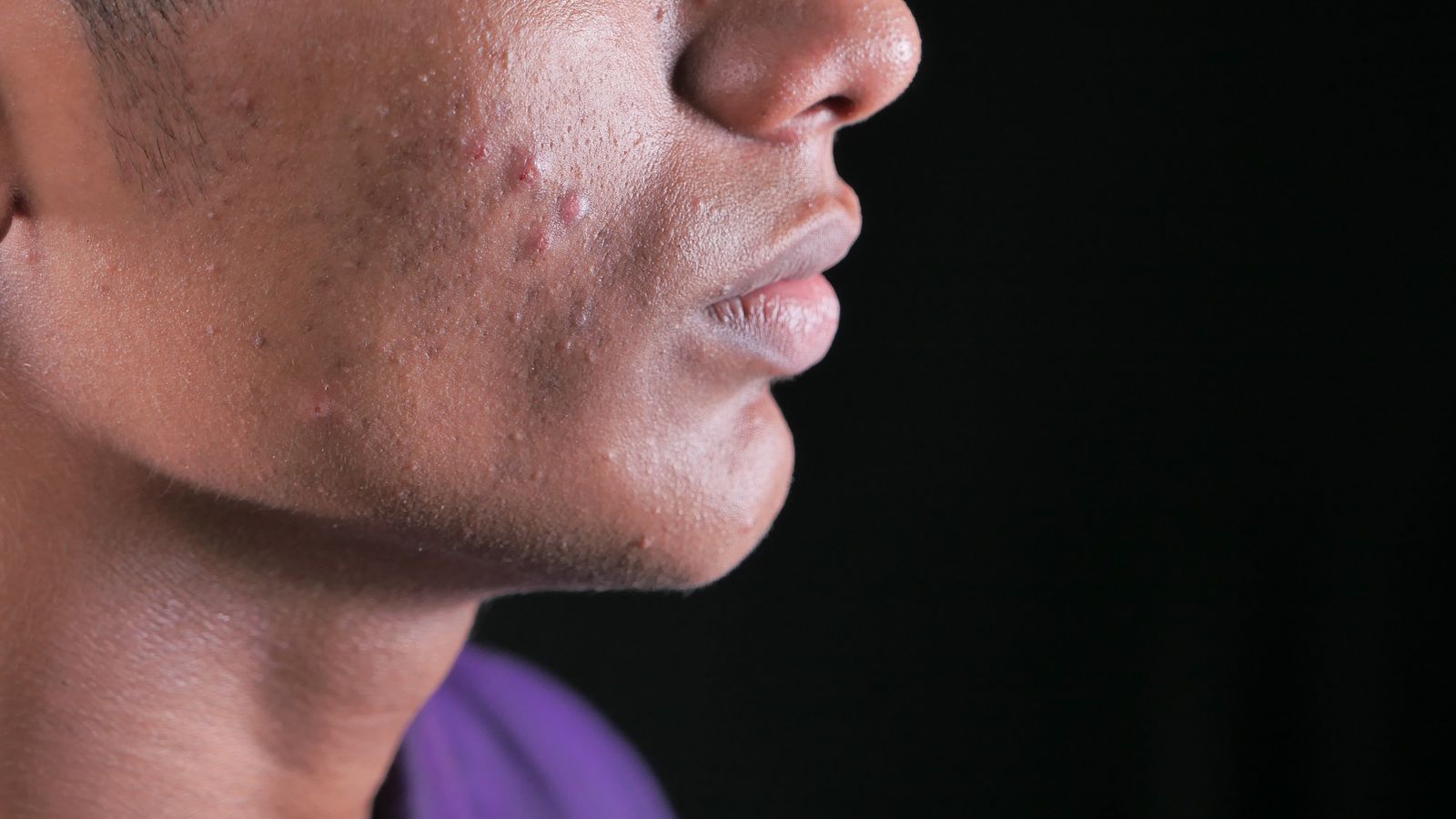
Side view close-up of a young man's face with visible acne on cheek and jawline.
CBD's Anti-Inflammatory Mechanism
Cannabidiol reduces sebum production and modulates inflammatory cytokines in human sebocytes, the cells that produce skin oil. The review highlighted CBD's interaction with the endocannabinoid system in skin tissue, specifically its ability to downregulate pro-inflammatory signaling pathways. What kills you with acne isn't just bacteria. It's the inflammatory cascade that follows.
CBD works two ways at once: it inhibits lipid synthesis in sebaceous glands while simultaneously reducing the release of inflammatory markers like IL-6 and IL-8. That's the molecular math behind the redness reduction growers and formulators have been chasing for years.
Clinical Evidence From Human Studies
The review synthesized data from multiple controlled trials showing measurable reductions in acne lesion counts and erythema scores. Topical CBD formulations at concentrations between 1% and 3% demonstrated statistically significant improvements over placebo in trials lasting 8-12 weeks.
One cited study tracked 60 participants with moderate acne. After 12 weeks of twice-daily CBD application, the treatment group showed a 40% reduction in inflammatory lesions compared to 12% in the control group. The numbers speak for themselves.
Topical CBD at 1-3% concentrations reduced inflammatory acne lesions by 40% over 12 weeks in controlled trials, with minimal reported side effects.
Hemp-Derived vs. Synthetic CBD
The review specifically addressed hemp-derived CBD, which contains trace cannabinoids and terpenes that may enhance efficacy through the entourage effect. Full-spectrum hemp extracts showed slightly better outcomes than CBD isolate in two of the analyzed studies, though the difference wasn't massive—maybe 8-10% better lesion reduction.
For growers, this matters. The pheno-hunt isn't just about THC anymore. High-CBD hemp cultivars bred for skincare applications need strong terpene profiles—limonene and linalool both showed independent anti-inflammatory activity in the review's mechanistic studies.
Safety Profile and Side Effects
Adverse events were minimal across all reviewed studies, with mild dryness reported in fewer than 5% of participants. No systemic absorption issues emerged, even with twice-daily application over 12 weeks. That's a cleaner safety profile than most prescription retinoids or benzoyl peroxide formulations.
- No photosensitivity reactions reported
- No hormonal disruption markers detected
- Compatible with existing acne treatments in combination protocols
- Non-comedogenic in dermatological testing
Market Implications for Hemp Producers
The review's findings validate a skincare market segment projected to reach $1.7 billion by 2028. Hemp producers targeting the cosmetics channel now have peer-reviewed clinical backing for acne-specific product claims, assuming they can thread the needle on FDA cosmetic labeling rules.
What this doesn't do: give you a drug claim. You can't say "treats acne" on a label without an NDA. But "supports skin clarity" or "reduces the appearance of redness"? That's cosmetic territory, and this review gives formulators the science to back those softer claims.
What Growers Should Watch
Demand for high-CBD, low-THC hemp with verified cannabinoid and terpene profiles will likely accelerate in the skincare supply chain. The next bottleneck isn't cultivation capacity—it's analytical testing and batch consistency. Skincare brands need COAs showing ±5% variance max on CBD content and terpene ratios.
For full background on cannabidiol's expanding medical applications, see the CannIntel topic hub on CBD Medical Research. The acne angle is one piece of a broader clinical puzzle that includes anxiety, epilepsy, and inflammatory bowel conditions.
Bottom line: if you're running high-CBD hemp and you're only selling into the tincture market, you're leaving money on the table. The skincare channel pays a premium for clean, tested biomass with the right terpene stack.
Sources
The cannabis newsletter you forward to your team.
Federal policy, market data, grower alerts, and the one story that matters today. Sent every weekday at 7am. Free.
No spam. Unsubscribe with one click. 21+ only.
Related from Medical

Minnesota Study Shows Medical Cannabis Improves Pain Patient Life Quality
State officials document significant gains in daily enjoyment among chronic pain patients enrolled in the medical program.
Cannabis Hyperemesis Syndrome Gains Clinical Attention Amid Rising Cases
Emergency departments report uptick in cyclic vomiting disorder linked to chronic cannabis use as legalization expands.

Study Links Regular Cannabis Use to Slower Brain Aging in Adults Over 45
New research suggests moderate cannabis consumption may protect cognitive function in middle-aged and older adults.
More from the newsroom
Virginia's $250 Public Marijuana Fine Draws Advocate Pushback
Reform groups challenge civil penalty structure as disproportionate to decriminalization intent under Va. Code § 4.1-600.

Marijuana Moment Petitions DEA Judge to Livestream Rescheduling Hearing
The news outlet filed a motion seeking public broadcast access to the administrative hearing on cannabis's Schedule III placement.

Nebraska cultivator cleared to plant first legal medical marijuana crop
State regulators issued the first cultivation license, marking the operational launch of Nebraska's voter-approved medical cannabis program.