Virginia Governor Vetoes Retail Cannabis Bill, Leaving Hemp Market Open
Glenn Youngkin's veto of SB 1698 blocks regulated adult-use sales while preserving the unregulated hemp-derived THC market.
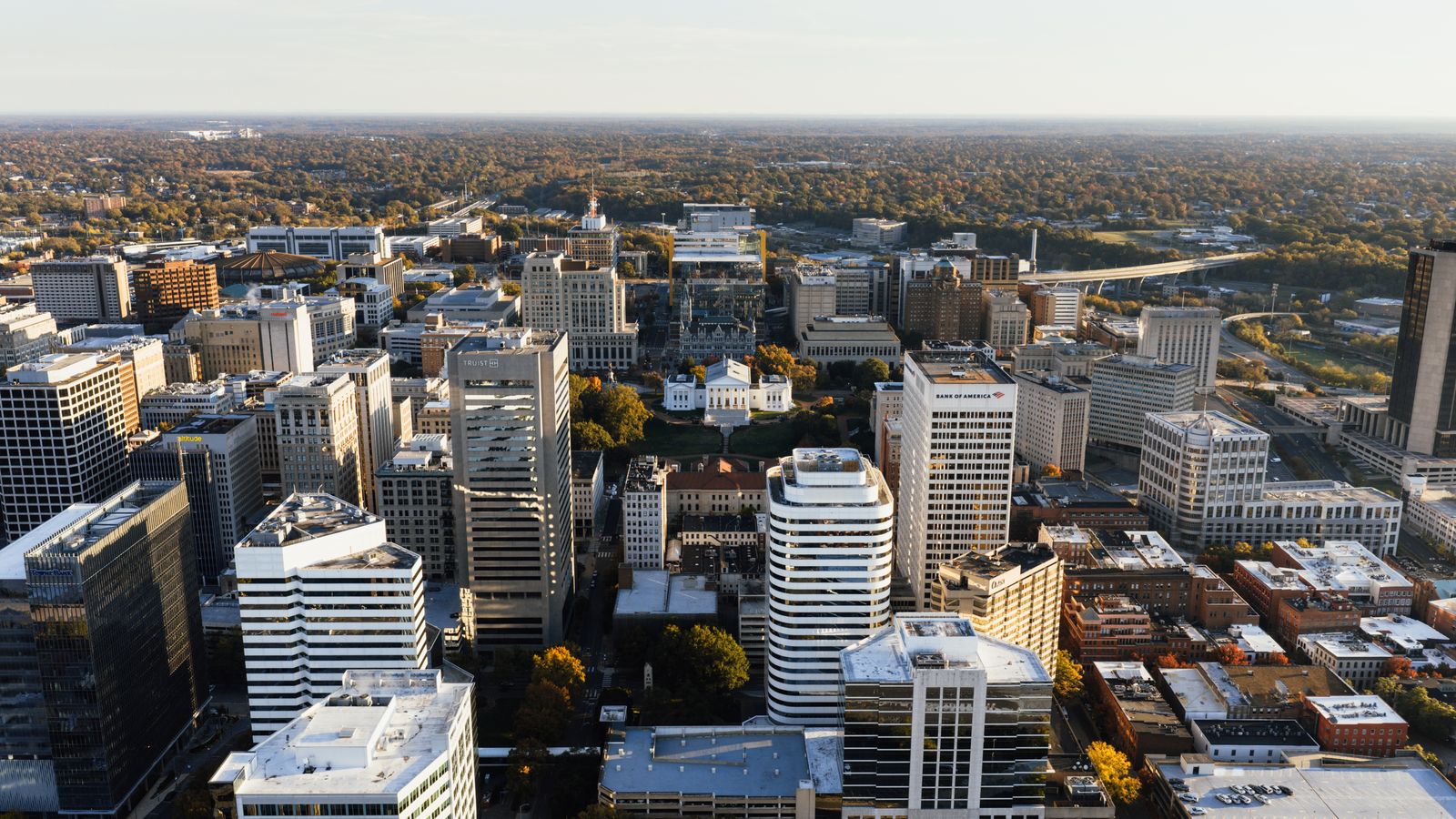
Aerial view of downtown Richmond, Virginia, capturing the city's skyline and architecture.
Veto Blocks Retail Framework After Three-Year Delay
Governor Youngkin rejected SB 1698 on May 28, citing public health concerns and enforcement challenges, according to his veto statement filed with the General Assembly. The bill had passed both chambers in April with bipartisan support. It would've authorized the Virginia Cannabis Control Authority to begin issuing retail licenses by January 2027.
Virginia legalized adult possession of up to one ounce in 2021 under a compromise bill that delayed commercial sales until a regulatory framework could be established. That framework has now been blocked for the third consecutive session.
Hemp-Derived THC Products Remain Unregulated
The veto leaves intact Virginia's unregulated market for hemp-derived delta-8 THC, delta-10 THC, and THCA products sold in gas stations, smoke shops, and online retailers. These products are legal under the 2018 Farm Bill's hemp provisions. They face no state-level testing, labeling, or age-verification requirements in Virginia.
Industry analysts estimate Virginia's hemp-derived THC market generates $150 million to $200 million in annual sales, according to data from the Hemp Industry Association. No state agency tracks these sales.
Regulated Operators Lose Market Access
The veto eliminates the planned licensing pathway for medical cannabis operators and social equity applicants who'd been preparing applications since 2024. SB 1698 reserved 40% of initial retail licenses for social equity applicants from communities disproportionately impacted by cannabis prohibition.
Five vertically integrated medical operators—Dharma Pharmaceuticals, Columbia Care, Green Leaf Medical, Dalitso, and Dharma—currently serve approximately 60,000 registered patients across eight dispensaries. Under the bill, they could've applied for adult-use conversion licenses starting in January 2027.
Revenue Projections Shelved
Virginia's Joint Legislative Audit and Review Commission projected regulated cannabis sales would generate $300 million in annual tax revenue by fiscal year 2029, with $120 million earmarked for public education and $80 million for substance abuse treatment. Those projections are now moot.
The fiscal impact statement attached to SB 1698 estimated startup costs of $18 million for the Cannabis Control Authority to build out licensing, testing, and enforcement infrastructure. The General Assembly had appropriated $12 million in the current budget cycle.
Neighboring States Move Forward
Virginia's veto leaves it surrounded by states with operational or imminent adult-use markets: Maryland launched sales in July 2023, and North Carolina's House passed a legalization bill in March 2026 that's pending Senate action. West Virginia and Kentucky have both introduced legalization bills in 2026 sessions.
Maryland's market generated $800 million in sales during its first 12 months, according to the Maryland Cannabis Administration. North Carolina's bill projects $400 million in annual revenue by year three.
Override Prospects Dim
A veto override requires a two-thirds majority in both chambers—67 votes in the House and 27 in the Senate—a threshold that appears out of reach given the original vote margins. SB 1698 passed the Senate 22-18. It cleared the House 54-44 in April.
Delegate Paul Krizek, the bill's House patron, told the Richmond Times-Dispatch he doesn't expect an override attempt when the General Assembly reconvenes in January 2027. The legislative calendar offers no special session window before then.
What Comes Next
Advocates are already drafting revised language for the 2027 session, with a narrower focus on enforcement of hemp-derived products and tighter age restrictions, according to Jenn Michelle Pedini, executive director of Virginia NORML. No draft text has been filed.
The next opportunity for floor action is January 2027. Until then, Virginia's legal possession without legal purchase paradox continues, and the hemp-derived THC market operates without state oversight. For background on Virginia's three-year effort to regulate cannabis sales, see the CannIntel topic hub on Virginia cannabis legalization.
For complete background, history, and our ongoing coverage of this story:
Open the CannIntel topic hub →Sources
The cannabis newsletter you forward to your team.
Federal policy, market data, grower alerts, and the one story that matters today. Sent every weekday at 7am. Free.
No spam. Unsubscribe with one click. 21+ only.
Related from Laws

Lawmakers Push IRS for Cannabis Tax Guidance After Rescheduling
Congressional members are calling on the IRS to issue immediate tax guidance for cannabis operators following the DEA's rescheduling decision.

ATF Revises Gun Form 4473, Opening Path for Medical Cannabis Patients
New ATF guidance removes blanket marijuana disqualification from federal firearms background check form.
Louisiana Joins Multi-State Lawsuit to Block DEA Marijuana Rescheduling
Attorney General Liz Murrill adds Louisiana to coalition challenging federal reclassification from Schedule I to Schedule III.
More from the newsroom

Foley Hoag Outlines Nasdaq, NYSE Listing Path Post-Schedule III Move
Law firm's guidance details compliance steps for cannabis operators seeking U.S. exchange listings after rescheduling.
Multimillion-Dollar Queenbury Cannabis Facility Breaks Ground
A major cultivation and processing project in upstate New York moves forward after years of regulatory delays.

Curaleaf Loses Challenge to New Jersey Labor-Peace Mandate
Federal court upholds state requirement forcing cannabis operators to sign neutrality pacts with unions.