US Records Over 200,000 Marijuana Possession Arrests in 2025
Federal data shows possession arrests remain above 200,000 despite state-level legalization gains across the country.
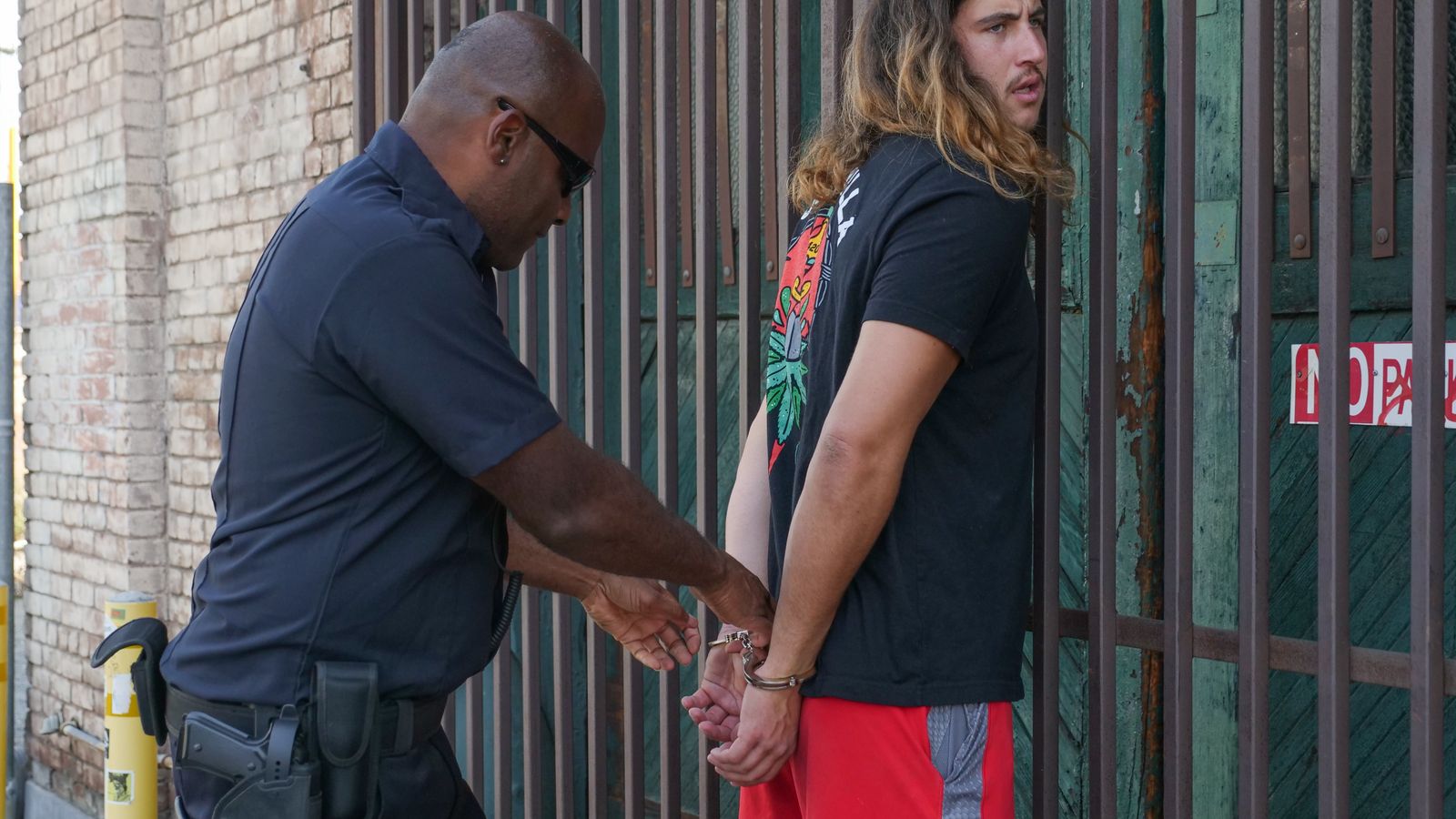
Police officer handcuffing a suspect during an arrest against an urban backdrop.
Arrest Totals Reflect Enforcement Disconnect
Federal statistics show marijuana possession arrests exceeded 200,000 in 2025, a figure that persists despite 24 states having enacted adult-use legalization statutes. The data, compiled from state and local law enforcement agencies, reflects arrests for simple possession offenses—typically defined as possession without intent to distribute under state criminal codes.
The arrest total represents a continuation of enforcement patterns that have held relatively stable over the past three years. Additional states have moved cannabis from Schedule I controlled-substance status under their own statutes to regulated-market frameworks. The numbers haven't budged.
State-by-State Variation in Enforcement
Possession arrest rates vary dramatically by jurisdiction, with non-legal states accounting for a disproportionate share of the national total. States without adult-use or medical frameworks continue to enforce possession as a criminal misdemeanor or felony, depending on quantity thresholds.
- Texas, Georgia, and North Carolina—three states without comprehensive legalization—collectively accounted for an estimated 35% of all possession arrests in 2025.
- Even in legal states, possession arrests persist for violations of possession-quantity limits, public-consumption ordinances, and age-restriction statutes.
- Federal arrest data doesn't disaggregate arrests by offense subtype, making it difficult to isolate arrests for possession above legal limits versus possession in prohibited states.
Demographic Disparities Persist in Arrest Data
Black Americans continue to be arrested for marijuana possession at rates three to four times higher than white Americans, despite comparable usage rates across demographic groups. This disparity has remained consistent across multiple years of federal data collection, including the 2025 figures.
The arrest-rate gap is particularly pronounced in states without legalization frameworks. It's also stark in jurisdictions that retain misdemeanor-possession statutes with mandatory arrest provisions. Civil-rights organizations have cited these figures as evidence that decriminalization and expungement reforms remain incomplete in most states.
Legal Framework: Possession Offenses Under State and Federal Law
Possession arrests are governed almost exclusively by state statutes, as federal prosecutors rarely charge simple possession absent aggravating factors. Under 21 U.S.C. § 844, federal simple possession of a controlled substance is a misdemeanor, but DEA enforcement priorities focus on trafficking and distribution rather than end-user possession.
State possession statutes vary widely:
- In California, possession of up to 28.5 grams is legal for adults 21 and over under Health and Safety Code § 11357.
- In Texas, possession of any usable quantity remains a Class B misdemeanor under Health and Safety Code § 481.121, carrying up to 180 days in jail and a $2,000 fine.
- In Ohio, possession of up to 100 grams was decriminalized in 2023 under H.B. 86, reducing the offense to a minor misdemeanor with a $150 fine.
This patchwork of state frameworks creates enforcement inconsistencies that contribute to the continued arrest totals.
Impact on Operators and Compliance Costs
High arrest totals in non-legal states suppress market development and increase compliance costs for multi-state operators seeking to expand into new jurisdictions. Operators face heightened due-diligence requirements when entering states with active criminal-enforcement regimes. Background checks for employees, enhanced security protocols to prevent diversion—the list grows.
In states with legal frameworks, possession arrests for violations of quantity limits or public-consumption bans create compliance headaches for retailers, who must educate consumers on possession limits and consumption restrictions. Retailers in California, Colorado, and Illinois have reported increased scrutiny from local law enforcement following high-profile possession arrests near dispensary locations.
What to Watch: Federal Rescheduling and State-Level Reform
The DEA's ongoing rescheduling review—if it results in a move to Schedule III under the Controlled Substances Act—wouldn't directly affect state possession statutes, but could accelerate state-level decriminalization efforts. Advocacy groups are tracking legislative sessions in Georgia, North Carolina, and South Carolina, where decriminalization bills have been introduced in previous sessions but failed to advance.
For a comprehensive look at arrest trends and state-by-state enforcement data, see the CannIntel topic hub on marijuana arrests in the United States.
The next federal data release is expected in Q1 2027. Watch for state-level legislative movement in the South and Midwest, where possession remains a criminal offense in most jurisdictions.
Frequently asked questions
How many marijuana possession arrests occurred in the US in 2025?
More than 200,000 marijuana possession arrests were recorded in the United States in 2025, according to federal data compiled from state and local law enforcement agencies. This total includes arrests for simple possession offenses across all 50 states.
Why do possession arrests remain high in states with legalization?
Even in legal states, possession arrests occur for violations of quantity limits, public-consumption ordinances, age restrictions, and possession in prohibited locations. The majority of arrests, however, occur in states without adult-use or medical legalization frameworks.
What are the penalties for marijuana possession in non-legal states?
Penalties vary by state. In Texas, possession of any amount is a Class B misdemeanor with up to 180 days in jail and a $2,000 fine. In Ohio, possession of up to 100 grams is a minor misdemeanor with a $150 fine. Federal law classifies simple possession as a misdemeanor under 21 U.S.C. § 844.
Do Black Americans face higher marijuana arrest rates than white Americans?
Yes. Black Americans are arrested for marijuana possession at rates three to four times higher than white Americans, despite similar usage rates. This disparity has persisted across multiple years of federal data and is most pronounced in states without legalization.
Would federal rescheduling eliminate state possession arrests?
No. Federal rescheduling under the Controlled Substances Act would not directly affect state possession statutes, which govern the vast majority of arrests. However, rescheduling could accelerate state-level decriminalization and expungement reforms.
Sources
The cannabis newsletter you forward to your team.
Federal policy, market data, grower alerts, and the one story that matters today. Sent every weekday at 7am. Free.
No spam. Unsubscribe with one click. 21+ only.
Related from Laws

North Carolina Advances HB 328 Hemp Reform Bill in 2026 Session
Legislation reshapes intoxicating hemp product rules and licensing framework statewide.

Texas Hemp and Cannabis Law Overview Series Launches Amid Legal Flux
Multi-part analysis examines legal, scientific, and political landscape as state grapples with hemp-derived THC products.

Federal Report Urgs States to Plan Now for Psychedelics FDA Approval
A new federal analysis warns states to prepare regulatory frameworks before psilocybin and MDMA reach market.
More from the newsroom

Cannabis Consolidation Will Leave 3-5 Players Per Market, Executive Warns
Capital alone won't determine survivors — repeatable systems and hard organizational decisions separate contenders from casualties.

Himachal Pradesh Eases Cannabis Cultivation Norms
The northern Indian state relaxes restrictions on hemp farming amid growing industrial demand.
Cannabis Companies Gain R&D Tax Credit Access Under Rescheduling
Federal rescheduling opens IRC §41 research credit eligibility for cannabis operators previously barred by §280E.