Himachal Pradesh Eases Cannabis Cultivation Norms
The northern Indian state relaxes restrictions on hemp farming amid growing industrial demand.
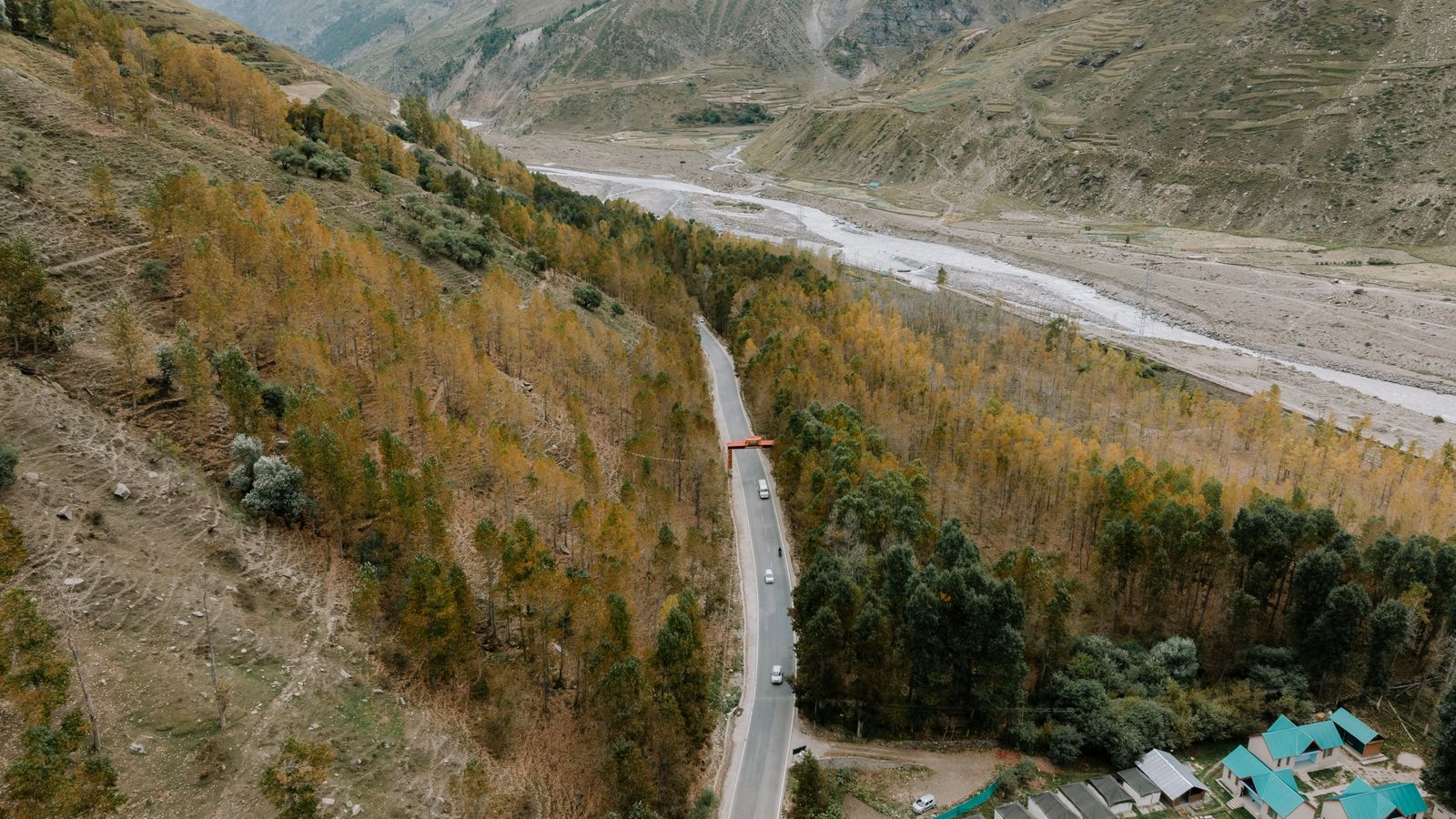
Aerial view of a winding road through a lush Himalayan valley with autumn foliage.
Policy Framework Shifts After Decades of Prohibition
Himachal Pradesh's government has revised cultivation norms that previously restricted hemp farming to narrow geographic zones and limited licensee categories. The state, located in India's northern Himalayan foothills, has maintained strict cannabis controls since the 1985 Narcotic Drugs and Psychotropic Substances Act effectively banned recreational cannabis nationwide while permitting industrial hemp under tightly controlled conditions.
The revised framework expands eligible cultivation areas and simplifies licensing procedures for farmers seeking to grow low-THC hemp varieties. Himachal Pradesh joins Uttarakhand, Madhya Pradesh, and Gujarat in liberalizing hemp policies over the past three years.
Geographic and Economic Context
Himachal Pradesh's mountainous terrain and traditional cannabis cultivation history make it a natural candidate for industrial hemp expansion. The state's economy relies heavily on agriculture and tourism, with cannabis historically grown in remote valleys before prohibition drove production underground.
India's hemp market has grown rapidly since 2022, when the central government clarified that states could authorize cultivation for fiber, seed, and CBD extraction. Domestic demand for hemp textiles, construction materials, and wellness products has accelerated policy changes across multiple states.
Licensing Requirements Under New Rules
The updated norms reduce bureaucratic barriers but maintain strict THC limits and tracking requirements. Farmers must obtain state licenses, cultivate only approved seed varieties with less than 0.3% THC, and submit to regular inspections by the State Excise Department.
Previous rules limited cultivation to government-designated zones. They required extensive documentation. The new framework allows applications from a broader range of agricultural landholders and shortens approval timelines, according to state officials.
The policy change reflects growing recognition that industrial hemp represents a viable cash crop for Himachal's hill farmers, who face limited high-value agricultural options.
National Context: India's Gradual Hemp Liberalization
India has moved incrementally toward hemp legalization since 2018, when Uttarakhand became the first state to permit commercial cultivation. The central government's 2022 clarification on NDPS Act interpretation removed a major legal ambiguity, prompting states to develop their own regulatory frameworks.
Madhya Pradesh authorized hemp farming in 2023, followed by Gujarat in 2024. Maharashtra and Rajasthan are currently drafting similar policies. India's total licensed hemp acreage remains under 5,000 hectares, far below China's estimated 50,000 hectares, but the sector is expanding rapidly.
For comprehensive background on India's evolving cannabis policy, see the CannIntel topic hub on India Cannabis Legalization.
Industry and Farmer Response
Hemp industry stakeholders have welcomed the policy shift but note that market infrastructure remains underdeveloped. Processing facilities, seed supply chains, and buyer networks are concentrated in a few states, creating logistical challenges for farmers in remote regions like Himachal Pradesh.
State officials haven't announced plans for processing infrastructure or technical assistance programs. Farmers will need access to certified seed varieties, which are currently imported or sourced from Uttarakhand-based suppliers.
What Comes Next
Implementation details, including application procedures and enforcement protocols, are expected within 60 days. The state's Excise Department will oversee licensing and compliance.
Success depends on whether Himachal Pradesh invests in supporting infrastructure and whether farmers can access markets beyond state borders. India's fragmented regulatory patchwork creates interstate commerce challenges that may limit near-term growth.
Frequently asked questions
What did Himachal Pradesh change in its cannabis cultivation rules?
Himachal Pradesh relaxed restrictions on industrial hemp farming by expanding eligible cultivation areas, simplifying licensing procedures, and reducing bureaucratic barriers. Farmers can now apply for licenses to grow low-THC hemp varieties (under 0.3% THC) with shorter approval timelines and fewer geographic restrictions.
Which other Indian states allow hemp cultivation?
Uttarakhand (since 2018), Madhya Pradesh (2023), and Gujarat (2024) currently permit licensed industrial hemp cultivation. Maharashtra and Rajasthan are drafting similar policies. Each state maintains its own licensing framework under the federal NDPS Act.
What are the main challenges for hemp farmers in Himachal Pradesh?
Farmers face limited access to certified low-THC seed varieties, underdeveloped processing infrastructure, and fragmented interstate markets. The state has not announced technical assistance programs or processing facility investments, creating logistical barriers for remote agricultural regions.
How does India's hemp policy compare to other countries?
India's total licensed hemp acreage remains under 5,000 hectares, far below China's estimated 50,000 hectares. The sector is expanding rapidly since 2022 federal clarification, but fragmented state-level regulations and infrastructure gaps slow growth compared to more centralized frameworks in North America and Europe.
Sources
The cannabis newsletter you forward to your team.
Federal policy, market data, grower alerts, and the one story that matters today. Sent every weekday at 7am. Free.
No spam. Unsubscribe with one click. 21+ only.
Related from Laws
AG Blanche Says DOJ Won't Interfere With State-Legal Cannabis
Attorney General Todd Blanche said the Justice Department isn't seeking to interfere with state-legal marijuana operators, but no written policy or rule change accompanied the reported remarks.

Blanche Says Lucas Charges Aren't Aimed at State Cannabis Laws
The attorney general framed the federal case against Virginia's Senate president pro tem as conduct-based, not a move against state marijuana policy.

DOJ indicts Virginia lawmaker, six others over hemp THC shop
Federal prosecutors charged a Virginia state lawmaker and six others over a hemp THC operation, testing where hemp ends and marijuana begins.
More from the newsroom

Virginia Senator Faces Federal Marijuana and Fraud Charges
Marijuana Moment reported Oct. 22 that a top Virginia senator faces federal marijuana and fraud charges; the counts, court and named defendant await confirmation.

New Jersey Bill Extending Hemp Drink Sales Advances
A bill to extend New Jersey hemp drink sales moved forward Oct. 22, but the public record behind the headline is thin.

Survey of 7,913 German Patients Finds Pharmacy Cannabis Preferred
A survey of 7,913 German medicinal cannabis patients, nearly 90% with experience of both channels, points to the illegal market as a major source of stress.