Senate Panel Proposes Extending Medical Marijuana Rider Without House Rescheduling Block
A Senate appropriations proposal would continue federal protections for state medical cannabis programs but omit a House provision aimed at stopping rescheduling.
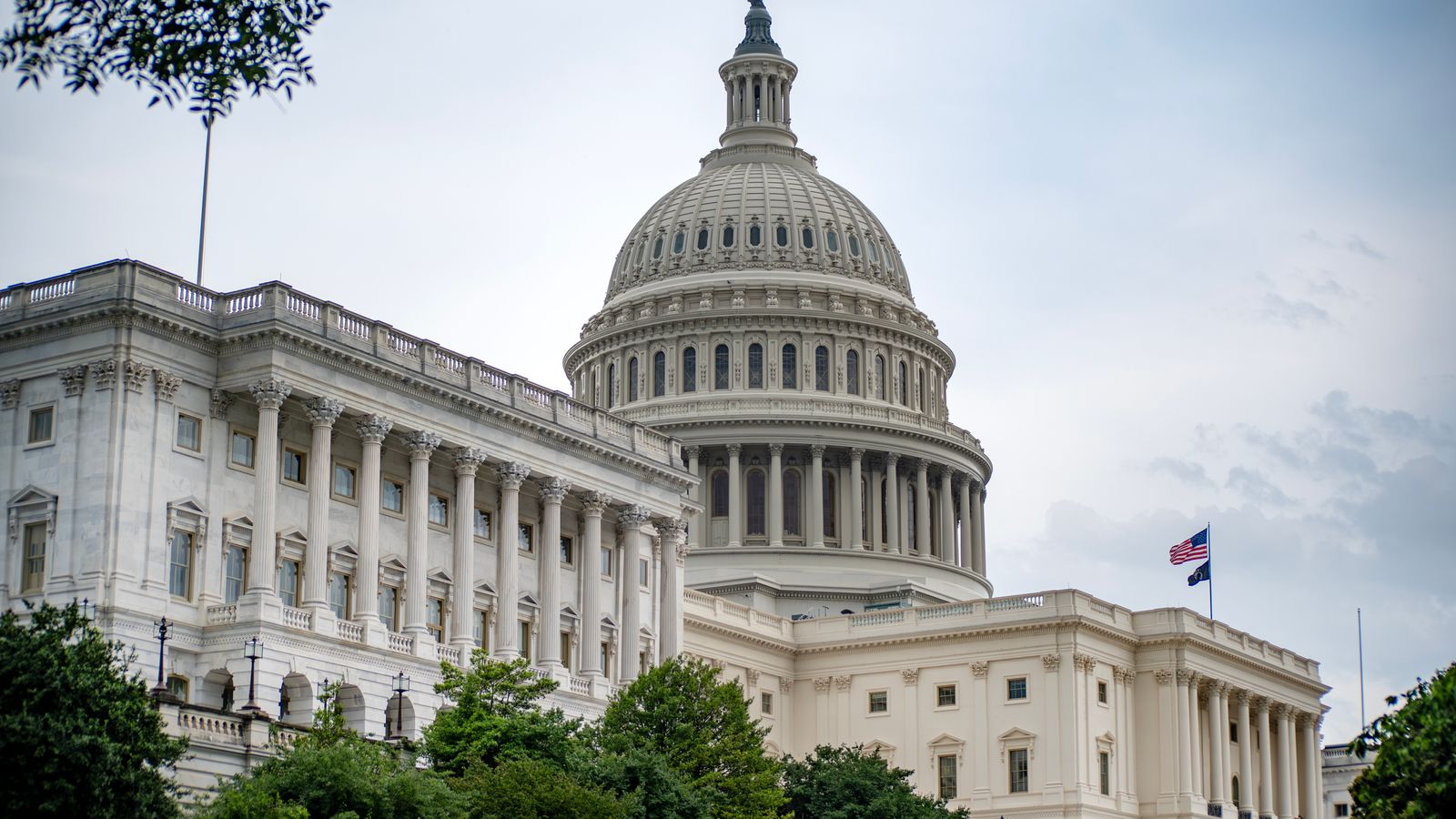
A scenic view of the iconic US Capitol Building symbolizing American democracy in Washington DC.
The Senate version keeps the rider and drops the House rescheduling language
The Senate proposal would extend the medical marijuana appropriations rider but would not carry the House's anti-rescheduling provision, according to a Nov. 13 report from The Hype Magazine.
That gap is the whole story. The rider itself is the long-running spending-bill language that has restricted the Justice Department from using funds to interfere with state medical cannabis programs. The House text, as described in the report, paired that continuity with language aimed at preventing rescheduling.
Not the same fight. Not the same stakes.
What the rider does, and what it doesn't
The rider limits Justice Department spending against state-compliant medical programs, but it's a temporary appropriations rule, not a change to the Controlled Substances Act.
It has to be renewed with each spending cycle, which is why every funding deadline doubles as a leverage point. Operators in medical states have treated it as a floor under their risk calculus, though it has never been a legal shield in the way a statute would be, and a new Congress or a lapse in the language would reopen exposure.
The report didn't supply bill numbers, section citations, or the panel's vote, and CannIntel hasn't independently reviewed the underlying text. Those details matter. Check them against the published committee documents before treating the characterization as final.
Why the anti-rescheduling provision is the real flashpoint
A rider that blocks rescheduling would sit atop a process that sits with DEA and the Justice Department, not with appropriators.
Rescheduling from Schedule I to Schedule III would change the tax picture for plant-touching operators, most visibly by taking 280E off the table for businesses whose products move to the lower schedule. Congress using the spending bill to freeze that outcome would reach well past medical programs, which is why the Senate's omission carries more weight than the rider extension everyone expects.
It's no surprise. Appropriations bills are where cannabis policy fights get fought when standalone bills stall.
The House-Senate gap has to close before funding lapses
The two chambers now hold different versions of a provision, and the final text will be settled in conference or a negotiated package.
The report frames the Senate move as a counter to the House approach rather than an agreement with it. Historically, riders that survive both chambers tend to carry into the final package, while contested add-ons are the first thing traded away. Whether the anti-rescheduling language gets treated as a bargaining chip or a hard red line is the open variable.
The Senate's version, as described, treats medical marijuana continuity and rescheduling as separable questions, a framing the House text did not adopt.
What operators and patients should read into it
For medical-market operators, the practical read is continuity of the status quo, with the rescheduling path left open rather than closed.
Multistate operators pricing in a Schedule III outcome get some relief from the Senate's omission. Patients in medical-only states keep the protection the rider has historically provided. The risk sits in the margins, since a conference outcome that adopts the House language would convert a procedural question into a policy lock, and nothing in the report suggests that outcome is off the table.
For the full history of the rider and prior renewal fights, see the CannIntel topic hub on the medical marijuana appropriations rider.
What we could not confirm
The signal is a single trade-press report, and key particulars remain unverified.
The report doesn't name the committee chair, the vote tally, the bill vehicle, or the effective dates of the extension. It also doesn't say how long the Senate would extend the rider. Those facts determine whether this is a routine rollover or a meaningful shift. We won't guess at them.
Primary documents will settle it quickly: the Senate committee report, the House bill text, and any joint explanatory statement.
The next signal
Conference text, not committee proposals, will decide whether the rescheduling block survives.
Watch for the published committee report language, any statement from House appropriators defending their provision, and the shape of the next funding vehicle. If the House holds firm, the cannabis fight rides on a spending deadline. If it folds, rescheduling proceeds on its own regulatory clock.
For complete background, history, and our ongoing coverage of this story:
Open the CannIntel topic hub →Frequently asked questions
What is the medical marijuana appropriations rider?
It is spending-bill language restricting the Justice Department from using funds to interfere with state medical cannabis programs. It must be renewed with each funding cycle and does not change federal law under the Controlled Substances Act.
What did the Senate panel propose?
According to a Nov. 13 report, the panel proposed extending the medical marijuana protections without including the House's provision aimed at blocking rescheduling. Specific bill language and vote details were not provided in the report.
Why does the anti-rescheduling provision matter?
Blocking rescheduling would freeze cannabis in Schedule I, keeping 280E tax treatment in place for plant-touching operators. Omitting it leaves the Schedule III path open through the regulatory process.
Does the rider legalize medical marijuana federally?
No. It limits certain Justice Department spending but is not a legal shield. It lapses if not renewed and does not alter cannabis's federal classification.
What happens next?
The House and Senate versions must be reconciled in conference or a negotiated funding package. The final text will show whether the anti-rescheduling language survives.
Sources
The cannabis newsletter you forward to your team.
Federal policy, market data, grower alerts, and the one story that matters today. Sent every weekday at 7am. Free.
No spam. Unsubscribe with one click. 21+ only.
Related from Laws

Nepal Supreme Court Orders Government to Regulate Cannabis Cultivation
A Ratopati report says the court directed regulation of medicinal and industrial cannabis cultivation, but the signal gives no ruling text, deadline or enforcement mechanism.

Iowa Medical Cannabis Board Backs Ending Patient Sales Tax
A unanimous board vote pairs a sales-tax repeal with six other program reforms, but nothing changes unless the legislature acts.

California Proposes Ending Random Cannabis Tests for Corrections Officers
A proposal would end random marijuana testing of state corrections officers and widen protections for off-duty use, according to The Marijuana Herald.
More from the newsroom

Trulieve Set to Join Russell 3000 Index, Report Says
A Marijuana Herald report says the Florida-based MSO will enter a flagship U.S. equity benchmark, a rare crossover for a plant-touching operator still barred from major exchanges.

Vanuatu Seeks To Establish An Official Cannabis Office
The Pacific nation is pursuing a dedicated cannabis office, a signal that its medicinal program is moving from enabling law toward administrative machinery.

CBN dismantles illicit cannabis cultivation in Himachal Pradesh
India's Central Bureau of Narcotics tied a Himachal Pradesh cannabis eradication push to the Nasha Mukt Bharat campaign, per a Press Information Bureau release; acreage figures were not in the available signal.