Netherlands Cannabis Policies Show Structural Gaps Despite Coffeeshop Model
Policy analysts highlight enforcement inconsistencies and supply-chain ambiguities in Dutch cannabis framework.
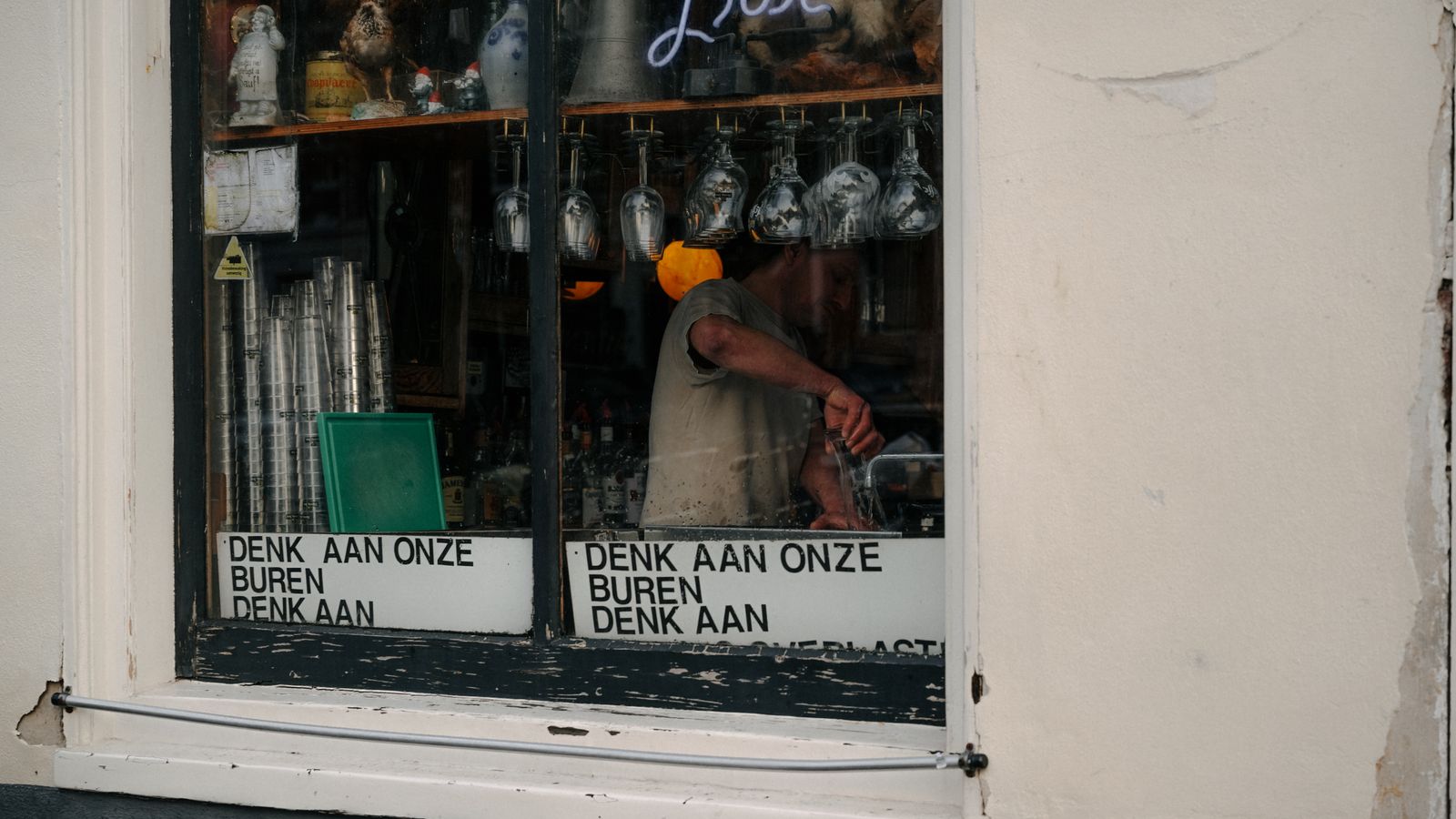
A bar window in Amsterdam showcases glasses and signage, reflecting urban charm.
The Back Door Problem Remains Unresolved
The Netherlands permits retail sale of cannabis through licensed coffeeshops but criminalizes wholesale cultivation and distribution, creating a regulatory paradox that's persisted since the 1976 Opium Act amendments. Under Article 3 of the Opium Act, possession of up to 5 grams and retail sale in licensed premises is tolerated under the "gedoogbeleid" (tolerance policy), but commercial cultivation remains a criminal offense punishable by up to four years' imprisonment.
Coffeeshops must source inventory from illegal growers. The Ministry of Justice and Security estimates that approximately 4,500 illegal grow operations supply the country's 570 licensed coffeeshops, generating an estimated €2.5 billion in untaxed revenue annually.
Experimental Closed-Supply-Chain Program Launched in 2024
Ten municipalities began a four-year pilot program in July 2024 to test a closed supply chain where licensed growers supply participating coffeeshops, but early data shows implementation challenges. The Experiment Closed Coffeeshop Chain (ECCC) permits up to 10 licensed cultivators to supply 79 coffeeshops in cities including Breda, Nijmegen, and Tilburg.
The pilot doesn't legalize cultivation. It creates a regulatory carve-out that exempts designated growers from prosecution under Article 3. Participants remain subject to strict THC caps (15% for flower, 5% for edibles), product testing, and inventory tracking requirements administered by the Bureau for Medicinal Cannabis (BMC).
The catch: the program's limited scope covers fewer than 15% of Dutch coffeeshops, which means the illegal supply chain will continue to operate in parallel for the majority of retail outlets.
Municipal Enforcement Varies Widely
Local enforcement of the 5-gram retail limit and 500-gram coffeeshop inventory cap differs significantly across municipalities, creating operational uncertainty for operators. Amsterdam permits 166 coffeeshops within city limits. Rotterdam caps licenses at 38 despite a larger population. The 500-gram inventory restriction, intended to prevent large-scale diversion, is enforced through unannounced inspections by the Voedsel en Waren Autoriteit (NVWA), but inspection frequency ranges from quarterly in Amsterdam to annually in smaller municipalities.
Penalties for exceeding inventory limits include:
- First offense: written warning and 30-day probationary period
- Second offense: €10,000 fine and 90-day suspension
- Third offense: permanent license revocation
This tiered system creates compliance risk for operators managing supply-chain volatility within the illegal sourcing framework.
Tax Treatment Remains Ambiguous
Coffeeshops pay standard VAT and corporate income tax on gross revenue despite sourcing inventory through illegal channels, but can't deduct cost of goods sold from taxable income. The Dutch Tax and Customs Administration (Belastingdienst) treats cannabis retail as a legitimate business for tax purposes under Article 37d of the General Tax Act, requiring operators to remit 21% VAT and file annual income tax returns.
Because wholesale cannabis remains illegal, coffeeshops can't claim deductions for inventory purchases, a provision analogous to IRC §280E in the United States. Effective tax rates on net income range from 45% to 60%, according to industry estimates.
The closed-supply-chain pilot doesn't resolve this ambiguity. Licensed growers in the ECCC program issue invoices to participating coffeeshops, but those invoices document transactions that remain illegal outside the pilot municipalities.
Cross-Border Enforcement Complicates Framework
Germany's partial legalization in April 2024 and Belgium's tolerance-policy expansion have increased enforcement coordination challenges along Dutch borders. The Schengen Agreement permits free movement across borders, but cannabis possession limits differ: 25 grams in Germany, 3 grams in Belgium, 5 grams in the Netherlands. Dutch police report a 40% increase in cross-border interdictions since Germany's law took effect, with most cases involving German residents purchasing in Maastricht or Venlo and transporting home.
The European Commission hasn't issued guidance on intra-EU cannabis transport, leaving enforcement to bilateral agreements. For full background on this story, see the CannIntel topic hub on Netherlands Cannabis Policy.
We'll be watching whether the ECCC pilot expands beyond its current 10-municipality scope when initial results are published in late 2026, and whether the European Commission issues transport guidance before Belgium's scheduled policy review in March 2027.
Frequently asked questions
What is the Netherlands' tolerance policy for cannabis?
The gedoogbeleid permits licensed coffeeshops to sell up to 5 grams per transaction and maintain 500 grams on premises, but wholesale cultivation and distribution remain criminal offenses under Article 3 of the Opium Act. This creates a legal paradox where retail is tolerated but supply is illegal.
How does the closed-supply-chain pilot program work?
The Experiment Closed Coffeeshop Chain (ECCC) allows 10 licensed growers to supply 79 coffeeshops in 10 municipalities. Products must meet THC caps (15% flower, 5% edibles) and pass BMC testing. The pilot runs through 2028 but covers fewer than 15% of Dutch coffeeshops.
Can coffeeshops deduct business expenses for tax purposes?
Coffeeshops must pay 21% VAT and corporate income tax on gross revenue but cannot deduct cost of goods sold because wholesale cannabis is illegal. This results in effective tax rates of 45-60% on net income, similar to IRC §280E treatment in the United States.
What are the penalties for exceeding the 500-gram inventory limit?
First offense results in a written warning and 30-day probation. Second offense triggers a €10,000 fine and 90-day suspension. Third offense leads to permanent license revocation. Enforcement frequency varies by municipality.
How does Germany's legalization affect Dutch cannabis policy?
Germany's April 2024 law permits 25-gram possession, compared to 5 grams in the Netherlands. Dutch police report a 40% increase in cross-border interdictions since the German law took effect, primarily involving transport from Dutch border towns to Germany.
Sources
The cannabis newsletter you forward to your team.
Federal policy, market data, grower alerts, and the one story that matters today. Sent every weekday at 7am. Free.
No spam. Unsubscribe with one click. 21+ only.
Related from Laws

Missouri sets 0.4mg THC threshold, pulls hemp products into adult-use market Nov. 12
Anything above 0.4 milligrams of THC per container becomes marijuana, sellable only through licensed dispensaries.

Vermont Lieutenant Governor Accused of Violating State Cannabis Laws
State official faces allegations of breaking Vermont's cannabis regulations, raising questions about enforcement and political accountability.

Massachusetts Recriminalization Campaign Outspends Cannabis Industry
National anti-cannabis group backing ballot measure to ban $1.65B industry outpaces operator defense spending.
More from the newsroom

French Quarter Opens First Cannabis Dispensary in New Orleans History
A medical marijuana pharmacy has opened in the historic French Quarter, marking a retail milestone for Louisiana's cannabis program.

New Review Challenges Evidence Behind Cannabis 'Entourage Effect'
A systematic review questions the scientific foundation of the widely marketed claim that minor cannabinoids enhance THC effects.

DC Circuit Declines To Halt DOJ's Cannabis Rescheduling
The D.C. Circuit Court of Appeals refused to block the Justice Department's ongoing administrative process to move cannabis from Schedule I to Schedule III.