Netherlands Cannabis Experiment Lowers Prices, Adds Variety Without Increasing Use
Government report finds regulated supply chain reduced coffeeshop prices by 25% while consumption rates held steady.
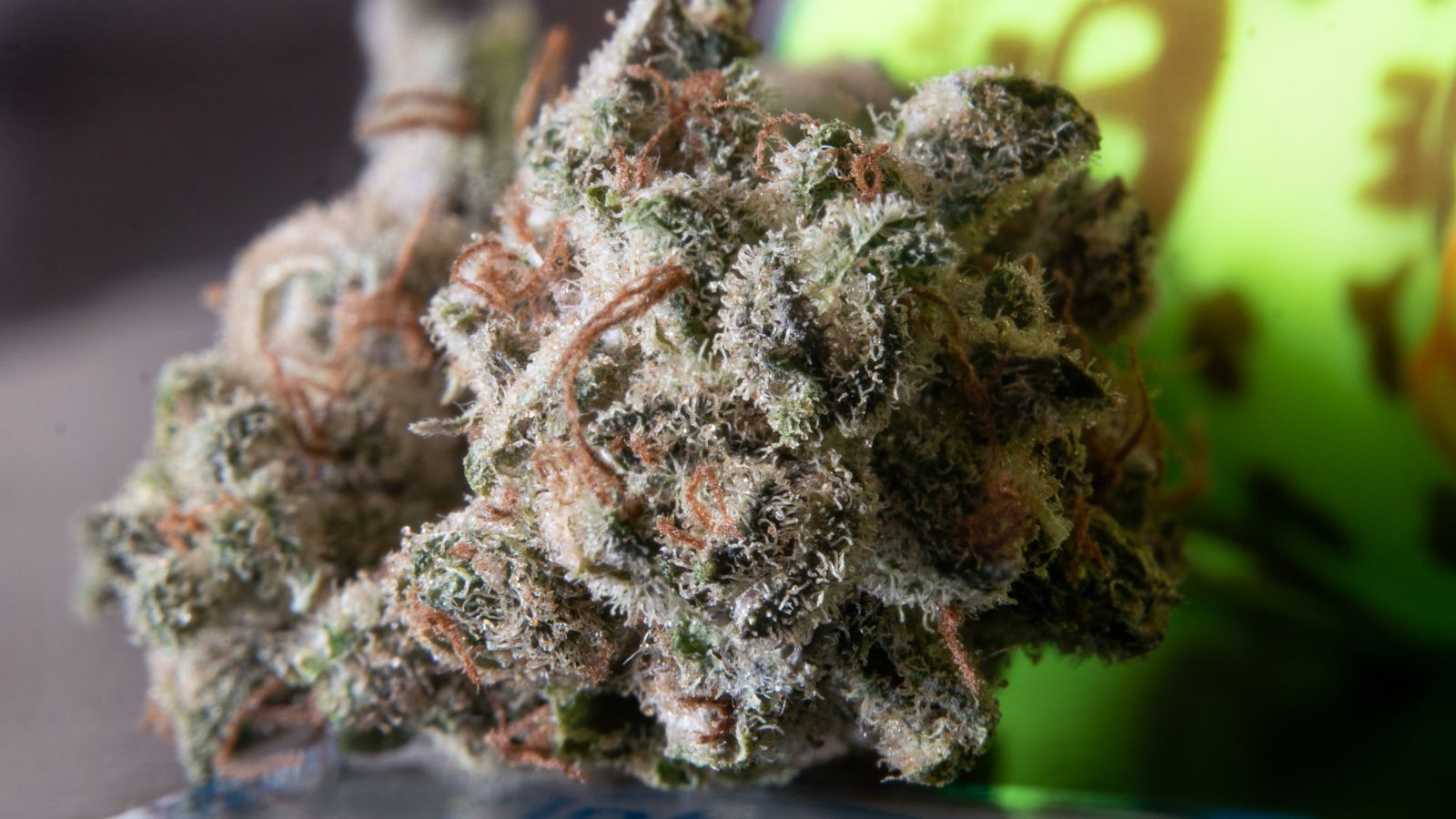
Macro photograph of a cannabis bud showcasing trichomes and detail.
Price Declines and Product Expansion Mark Experiment's Early Results
Retail cannabis prices in the ten trial municipalities dropped an average of 25 percent between 2022 and 2026, while participating coffeeshops reported access to 40 percent more distinct product varieties than they carried under the unregulated gray-market supply model. The evaluation, conducted by the Dutch Ministry of Health, Welfare and Sport, tracked pricing, product selection, and consumption patterns across Amsterdam, Arnhem, Breda, Groningen, Heerlen, Hellevoetsluis, Maastricht, Nijmegen, Tilburg, and Zaanstad.
Coffeeshop operators in the trial cities reported consistent supply from the ten licensed growers authorized under the experiment. Product testing requirements introduced quality standards previously absent in the illicit supply chain. Regulated growers provided lab-tested cannabis with verified THC and CBD content, addressing longstanding consumer-safety concerns in the Dutch market, the ministry's report noted.
Price reductions varied by municipality. Amsterdam saw the steepest decline at 31 percent, while smaller cities like Hellevoetsluis recorded drops closer to 18 percent. Local market conditions and the number of participating coffeeshops per capita drove the variance, according to the ministry.
Consumption Rates Remain Flat Across Trial Municipalities
Self-reported marijuana use among adults aged 18 to 64 in the trial cities held steady at 8.2 percent in 2026, unchanged from the 8.1 percent baseline recorded in 2021 before the experiment began. Youth consumption rates among 15- to 17-year-olds declined slightly from 6.4 percent to 6.1 percent over the same period, according to survey data collected by the Trimbos Institute, the Netherlands' national institute for mental health and addiction.
The findings counter concerns raised by opponents of the experiment, who argued that regulated supply would normalize cannabis use and drive consumption upward. Availability of legal, tested products didn't correlate with increased uptake in any age cohort tracked during the trial period, the ministry's report stated.
Tourism-related cannabis purchases in Amsterdam and Maastricht, both border cities with high visitor traffic, remained proportionally similar to pre-trial levels. The report found no evidence that the regulated model attracted measurably higher numbers of foreign cannabis consumers.
Licensed Growers Report Operational Challenges Under Regulatory Framework
The ten licensed cultivators operating under the experiment reported an average startup cost of €2.8 million per facility, with ongoing compliance expenses adding approximately €450,000 annually per grower. Security requirements, mandatory testing protocols, and inventory-tracking systems accounted for the majority of regulatory overhead, according to interviews conducted by the ministry's evaluation team.
Growers faced initial delays in obtaining local permits and meeting facility-security standards set by the national government. Three of the ten licensees experienced production delays exceeding six months during the trial's first year due to permitting bottlenecks at the municipal level. The ministry acknowledged these friction points. It recommended streamlined permit processes if the experiment expands nationwide.
Despite compliance costs, licensed growers reported stable profit margins. The regulated pricing structure allowed cultivators to compete with illicit suppliers while maintaining financial viability. Not one licensed grower exited the program during the trial period.
Coffeeshop Operators Report Mixed Financial Outcomes
Coffeeshops participating in the trial reported a median revenue decline of 12 percent in the experiment's first two years, followed by stabilization in years three and four as consumer acceptance of regulated products grew. Customer hesitancy to pay slightly higher prices for lab-tested cannabis compared to cheaper illicit alternatives still available in non-trial municipalities drove the initial revenue drop, according to the Dutch Association of Cannabis Retailers.
By 2025, however, consumer preference shifted toward regulated products. Coffeeshop operators cited product consistency, verified potency labeling, and absence of contaminants as factors driving the rebound. Sixty-eight percent of surveyed consumers in trial cities expressed willingness to pay a premium for tested cannabis by the end of year three, the ministry's report noted.
Operators in tourist-heavy cities like Amsterdam reported faster revenue recovery than those in smaller municipalities. International visitors showed stronger preference for regulated products, likely due to familiarity with legal cannabis markets in their home countries, the report suggested.
Illicit Market Activity Declines but Persists in Trial Cities
Law enforcement data from the ten trial municipalities showed a 34 percent reduction in cannabis-related arrests between 2022 and 2026, with the sharpest declines in small-scale street dealing and unlicensed coffeeshop supply violations. Organized criminal networks previously supplying coffeeshops shifted operations to non-trial cities or to export markets in neighboring countries, the Dutch National Police reported.
Illicit sales didn't disappear entirely. Unregulated cannabis still accounted for approximately 22 percent of total consumption in trial cities as of mid-2026, down from an estimated 100 percent before the experiment, the ministry estimated. Price-sensitive consumers and those outside the coffeeshop distribution network continued to purchase from illicit sources.
Cross-border smuggling from the Netherlands into Germany and Belgium remained a concern for European Union law enforcement agencies. Regulated Dutch production could indirectly supply illicit markets in neighboring countries, the report acknowledged, though it noted that this dynamic predated the trial and reflected broader EU policy fragmentation on cannabis.
Ministry Recommends Nationwide Expansion With Modifications
The Ministry of Health, Welfare and Sport recommended expanding the regulated cannabis model to all Dutch municipalities, contingent on reducing startup costs for growers and simplifying municipal permitting processes. The report proposed increasing the number of licensed cultivators to 25 and allowing coffeeshops nationwide to source exclusively from regulated suppliers by 2028.
Key modifications include a streamlined application process for grower licenses, standardized security requirements across municipalities, and a federal subsidy program to offset initial compliance costs for small-scale cultivators. These changes could reduce average startup costs by 30 percent, the ministry estimated.
The report also recommended maintaining current THC potency limits and mandatory testing protocols, citing consumer-safety benefits and public-health data showing no increase in cannabis-related emergency-room visits during the trial. Annual reviews of potency limits based on emerging research on high-THC products would continue under the proposal.
For full background on this story, see the CannIntel topic hub on the Netherlands Cannabis Experiment.
What Comes Next for Dutch Cannabis Policy
The Dutch cabinet will review the ministry's recommendations in the fourth quarter of 2026. Parliamentary debate on nationwide expansion is expected in early 2027, with potential implementation beginning in 2028 if legislation advances. The trial's success in stabilizing prices and maintaining flat consumption rates provides the strongest evidence to date that regulated cannabis supply can coexist with public-health objectives in the European context.
International observers, particularly policymakers in Germany and Switzerland considering their own regulatory models, will be watching whether the Netherlands proceeds with full-scale implementation. The next signal: a cabinet decision by December 2026.
For complete background, history, and our ongoing coverage of this story:
Open the CannIntel topic hub →Frequently asked questions
Did the Netherlands cannabis experiment increase marijuana use?
No. Adult use remained flat at 8.2 percent in trial cities, unchanged from the 8.1 percent baseline in 2021. Youth use among 15- to 17-year-olds declined slightly from 6.4 percent to 6.1 percent during the trial period.
How much did cannabis prices drop in the Netherlands trial?
Retail prices fell an average of 25 percent across the ten trial municipalities between 2022 and 2026. Amsterdam recorded the steepest decline at 31 percent, while smaller cities saw drops closer to 18 percent.
What did licensed cannabis growers in the Netherlands face in startup costs?
Licensed cultivators reported average startup costs of €2.8 million per facility, with ongoing compliance expenses adding approximately €450,000 annually. Security requirements, testing protocols, and inventory tracking accounted for most regulatory overhead.
Will the Netherlands expand regulated cannabis nationwide?
The Ministry of Health, Welfare and Sport recommended nationwide expansion by 2028, contingent on reducing grower startup costs and simplifying municipal permits. The Dutch cabinet will review the proposal in late 2026, with parliamentary debate expected in early 2027.
Did the regulated cannabis model eliminate the illicit market in the Netherlands?
No, but it reduced illicit market share significantly. Unregulated cannabis accounted for approximately 22 percent of consumption in trial cities as of mid-2026, down from an estimated 100 percent before the experiment. Cannabis-related arrests fell 34 percent during the trial.
Sources
The cannabis newsletter you forward to your team.
Federal policy, market data, grower alerts, and the one story that matters today. Sent every weekday at 7am. Free.
No spam. Unsubscribe with one click. 21+ only.
Related from Laws

Lagos food-safety agency partners with NDLEA on cannabis edibles
LASCOPA and Nigeria's narcotics bureau launch joint enforcement targeting THC-infused snacks and beverages.

Massachusetts Voters Face Cannabis Repeal Ballot Question in November
A citizen-led initiative to overturn the state's 2016 legalization law qualifies for the ballot, raising questions about banking compliance and federal exposure.

CMS Hemp CBD Program Faces Physician Certification Gap as MMJ Appeal Pends
Federal Medicare program for hemp-derived CBD lacks qualified physician pool while medical marijuana certification appeal remains unresolved.
More from the newsroom

Chicago Experts Push Limits on Teen Access to High-Potency THC Products
Medical professionals and advocates call for tighter controls on concentrated cannabis products amid rising youth exposure concerns.

Missouri Finalizes Hemp THC Restrictions Despite Federal Delay
State regulators advance intoxicating hemp rules while DEA postpones nationwide ban to 2027.
Alliance Group Loses Drug Test Dismissal Case Over Medical Cannabis
New Zealand's Employment Relations Authority ruled against the meat processor in a wrongful termination dispute involving a worker's medicinal cannabis use.