Nebraska Supreme Court Dismisses Federal Preemption Challenge to Medical Cannabis
State's high court tosses lawsuit seeking to block medical cannabis program on procedural grounds, leaving door open for future challenge.
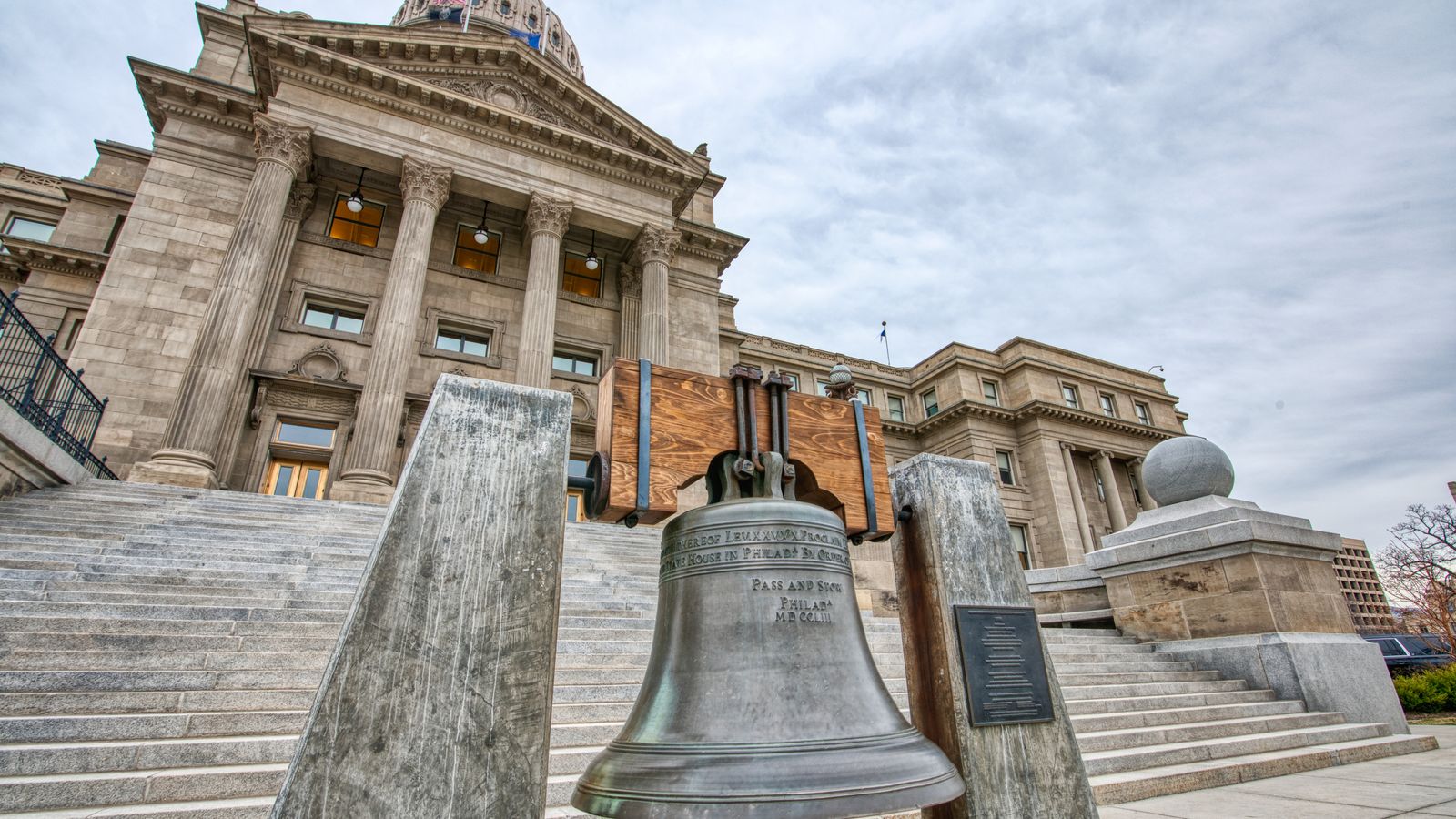
View of a large bell in front of a historic building with classic architectural design.
Procedural Dismissal Preserves Program Implementation Timeline
The court's dismissal on procedural grounds means Nebraska's medical cannabis program continues its regulatory buildout without immediate legal obstruction. The September 14 order didn't address the substantive federal preemption argument—that state cannabis programs violate the Controlled Substances Act's supremacy over state law. The court found the plaintiffs failed to meet threshold requirements for the case to proceed.
Nebraska voters approved medical cannabis legalization in November 2024 through two ballot measures: Initiative 437, which authorized medical use, and Initiative 438, which established the regulatory framework. Since passage, the state Department of Health and Human Services has been developing rules for cultivation, distribution, and patient access.
Federal Preemption Doctrine Remains Untested in Nebraska
The dismissed lawsuit invoked the Supremacy Clause, arguing that federal cannabis prohibition under the CSA preempts state authorization schemes. Every federal circuit that's considered this legal theory has rejected it. But no Nebraska court had ruled on the question until now—and this dismissal leaves it unresolved.
Federal courts have consistently held that state cannabis laws don't positively conflict with federal law because they don't compel anyone to violate the CSA. The Tenth Circuit articulated this standard in Walters v. Hickenlooper (2016). The Ninth Circuit followed in Washburn v. City of Federal Way (2018). Nebraska's Supreme Court didn't reach that analysis.
Plaintiffs' Standing and Timing Likely at Issue
While the court didn't specify which procedural defect triggered dismissal, standing and ripeness are the most common barriers in preemptive challenges to cannabis programs. Courts require plaintiffs to show concrete injury, not speculative harm. Challenges filed before a program is operational often fail the ripeness test.
Nebraska's program hasn't yet issued licenses or opened dispensaries. The Department of Health and Human Services published draft rules in June 2026 but hasn't finalized them. That timing gap may have undercut the plaintiffs' ability to demonstrate immediate harm sufficient for judicial review.
Door Open for Renewed Challenge Once Program Launches
The court's language—"for now"—signals that a future challenge with proper procedural footing could proceed. Once the state issues cultivation and dispensary licenses, opponents could refile with concrete facts. Named licensees. Operational facilities. Measurable impacts. That would cure the standing and ripeness defects that likely doomed this attempt.
The procedural dismissal preserves both the program's immediate trajectory and the opponents' ability to return to court with a stronger factual record once licenses are issued and dispensaries open.
Similar patterns have played out in other states. Oklahoma's medical cannabis program faced multiple preemption challenges that were dismissed on procedural grounds before the program launched, only to see no successful refiling once the market matured.
Nebraska's Regulatory Timeline Remains on Track
The Department of Health and Human Services has targeted a Q1 2027 launch for patient access, and this dismissal removes the most immediate legal obstacle. Key milestones include:
- Final rules publication: October 2026
- Cultivation license applications: November 2026
- Dispensary license applications: December 2026
- First patient cards issued: January 2027
- First dispensaries operational: March 2027
The state has allocated $4.8 million in FY 2027 for program administration, including 12 full-time regulatory staff and a seed-to-sale tracking system contract with Metrc.
Political and Legal Context in a Conservative State
Nebraska is one of the most conservative states to adopt medical cannabis, and the ballot victory margin—58% approval for Initiative 437—surprised political observers. The state's Republican-controlled legislature declined to refer a medical cannabis measure to voters in 2023, forcing advocates to pursue the initiative route.
Governor Jim Pillen opposed both initiatives during the campaign but has stated he'll implement the voter-approved program. The state attorney general's office hasn't signaled whether it'll defend the program against future federal preemption challenges or align with plaintiffs.
What Operators and Patients Should Watch
The dismissal is procedural, not a final victory for the program. License applicants should proceed with the understanding that a renewed legal challenge could emerge once the program is operational. The state's draft rules include a $5,000 non-refundable application fee for cultivation licenses and a $100,000 performance bond—both of which applicants risk if a court later invalidates the program.
For full background on Nebraska's medical cannabis program, see the CannIntel topic hub on Nebraska Medical Cannabis. The next procedural milestone is the October publication of final rules, which will trigger the 60-day license application window.
For complete background, history, and our ongoing coverage of this story:
Open the CannIntel topic hub →Frequently asked questions
What is federal preemption in the context of state cannabis laws?
Federal preemption is the legal doctrine that federal law—here, the Controlled Substances Act's prohibition of cannabis—overrides conflicting state law. Challengers argue state cannabis programs violate the Supremacy Clause. Federal courts have uniformly rejected this theory, holding that state laws don't compel federal-law violations and therefore don't conflict with the CSA.
Why did the Nebraska Supreme Court dismiss the case?
The court dismissed on procedural grounds without specifying the defect. Most likely, plaintiffs lacked standing (no concrete injury) or the case wasn't ripe (program not yet operational). The court didn't rule on whether federal law preempts Nebraska's medical cannabis program.
Can opponents refile the lawsuit later?
Yes. The dismissal is procedural, not on the merits. Once Nebraska issues licenses and dispensaries open, opponents could refile with concrete facts showing injury. The court's language—"for now"—signals this possibility.
When will Nebraska's medical cannabis program begin serving patients?
The state targets Q1 2027 for patient access. Final rules are due in October 2026, license applications open in November and December, and first dispensaries are expected to open in March 2027.
Has any state medical cannabis program been struck down on federal preemption grounds?
No. Every federal circuit that's considered the question has rejected preemption challenges. The Tenth and Ninth Circuits have held that state cannabis laws don't positively conflict with federal prohibition because they don't compel CSA violations.
Sources
The cannabis newsletter you forward to your team.
Federal policy, market data, grower alerts, and the one story that matters today. Sent every weekday at 7am. Free.
No spam. Unsubscribe with one click. 21+ only.
Related from Laws

New York vows hemp THC beverage crackdown amid illegal retail surge
State officials acknowledge widespread unlicensed sales despite prohibition outside licensed cannabis channels.

Vermont Lt. Gov. Rodgers Settles Cannabis Grow Violation With Reduced Fine
John Rodgers will pay a lower penalty after state regulators found violations at his cultivation business.

Antigua & Barbuda's Cannabis Framework Marks Eight-Year Evolution
The Caribbean nation's regulatory structure has progressed from decriminalization in 2018 to a licensing regime targeting economic diversification.
More from the newsroom
First Medical Cannabis Dispensary Opens in North Alabama
Operators launch the region's inaugural medical cannabis retail location as Alabama's program expands northward.

Ohio identifies Vapen cartridge in health complaints, store closure
Vext names product after state investigation triggers dispensary shutdown and patient reports.

Teen Cannabis Surveys Miss Rising Use Disorder, Kaiser Study Finds
Self-reported adolescent consumption data diverge from clinical diagnoses, masking treatment gaps in legalized states.