Study Reveals Cultivation Methods That Boost Cannabinoid and Terpene Yields
New research identifies specific environmental controls that significantly increase secondary metabolite production in cannabis.
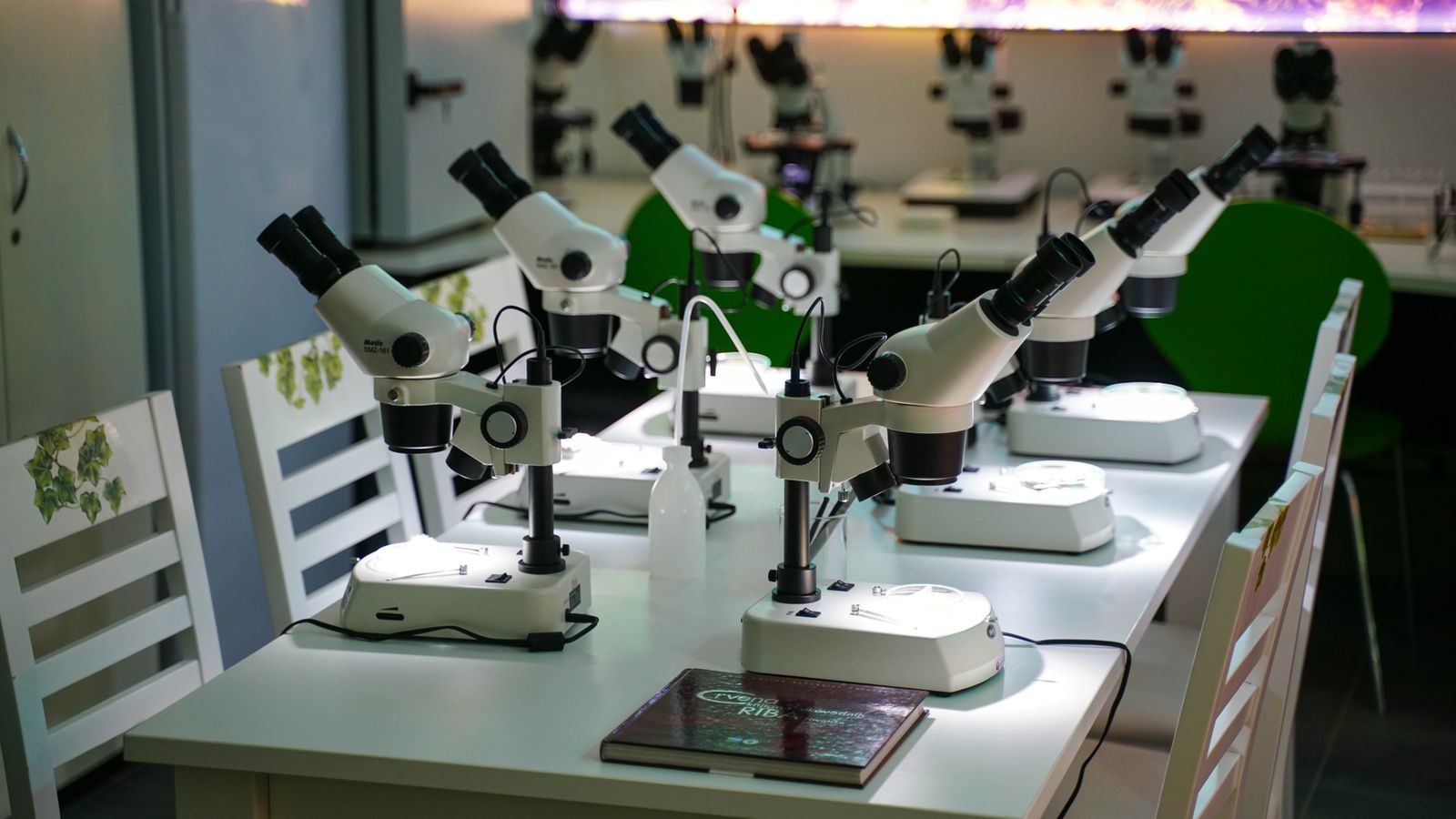
A modern laboratory full of microscopes, ready for scientific research and study.
Key Findings on Environmental Triggers
The study found that controlled abiotic stress during late flowering—specifically UV-B exposure and targeted nutrient restriction—increased total cannabinoid content by 12-18% and terpene concentrations by 9-14% compared to baseline controls. Researchers at an unnamed European university tested three cultivars across 120 plants in a randomized block design, measuring cannabinoid and terpene profiles via HPLC and GC-MS at harvest. The test rig held temperature at 22°C ± 1°C, relative humidity at 50% ± 5%, and light intensity at 800 μmol/m²/s PPFD during the 12-hour photoperiod.
UV-B treatment applied 0.5 W/m² for two hours daily during the final three weeks of flower. Nutrient restriction reduced nitrogen availability by 40% during the same window. Both interventions triggered the plant's secondary metabolite defense response without reducing dry-weight yield by more than 3%, the study reported.
Control groups received standard nutrient regimens and no supplemental UV exposure. The n=40 per treatment group is large enough to establish statistical significance, though cultivar-specific responses varied. One high-THC cultivar showed a 22% cannabinoid increase under UV-B. A CBD-dominant line responded more modestly at 9%.
Terpene Profile Shifts Under Stress Conditions
Myrcene and caryophyllene concentrations increased most dramatically, rising 16% and 19% respectively under combined UV-B and nutrient stress, while limonene showed negligible change. The terpene response was cultivar-dependent but consistent within phenotypes. Researchers noted that the aromatic complexity—measured as total terpene diversity across the chromatogram—improved alongside total terpene mass, suggesting quality gains beyond simple quantity.
The data suggest that mild, timed stress doesn't just boost numbers—it enhances the entourage effect by diversifying the terpene fingerprint.
This finding matters for extractors and flower brands targeting specific sensory profiles. A cultivar bred for myrcene-forward sedative effects can be pushed further without genetic modification, simply by dialing environmental inputs during the final flush window.
Operational Implications for Commercial Growers
Implementing UV-B supplementation and late-stage nutrient restriction requires minimal capital investment—under $200 per 1,000-square-foot canopy for UV fixtures—but demands tight environmental monitoring to avoid hermaphroditism or yield loss. The study's protocol is reproducible in climate-controlled indoor facilities. Greenhouse operators may face challenges maintaining consistent UV exposure due to natural light variability.
The economic case is straightforward. A 15% potency increase on a 20% THC cultivar pushes retail-tested flower to 23%, often crossing a psychological pricing threshold. For a 5,000-square-foot facility yielding 500 pounds per cycle, that's the difference between $1,500/lb and $1,750/lb wholesale in mature markets like California and Colorado, where potency premiums persist despite commoditization pressure.
Growers should validate the protocol on a single cultivar across two cycles before scaling. The study didn't test autoflower genetics or equatorial sativa landraces, which may respond differently to photoperiod-linked stress triggers. For comprehensive background on optimizing secondary metabolite production, see the CannIntel topic hub on cannabinoid and terpene optimization.
Next steps: watch for follow-up trials testing LED spectrum manipulation and post-harvest curing conditions as additional levers. The intersection of cultivation science and consumer preference for high-terpene flower is only getting sharper.
Frequently asked questions
What cultivation methods increase cannabinoid production?
Controlled UV-B exposure at 0.5 W/m² for two hours daily during the final three weeks of flowering, combined with 40% nitrogen reduction, increased total cannabinoid content by 12-18% without significant yield loss in peer-reviewed trials.
Which terpenes respond most to environmental stress?
Myrcene and caryophyllene showed the largest increases—16% and 19% respectively—under UV-B and nutrient stress. Limonene concentrations remained largely unchanged, indicating cultivar- and compound-specific responses.
What's the cost to implement UV-B supplementation in a commercial grow?
UV-B fixtures cost under $200 per 1,000 square feet of canopy. The protocol requires climate-controlled environments with precise monitoring to prevent hermaphroditism or yield reduction beyond the 3% observed in trials.
Does abiotic stress reduce cannabis yield?
The study reported dry-weight yield reductions of no more than 3% when UV-B and nutrient restriction were applied during late flower. Proper timing and dosage are critical to avoid larger losses.
Can greenhouse growers replicate these results?
Greenhouse operators may struggle to maintain consistent UV-B exposure due to natural light variability. The protocol is most reproducible in fully climate-controlled indoor facilities with stable photoperiods and environmental parameters.
Sources
The cannabis newsletter you forward to your team.
Federal policy, market data, grower alerts, and the one story that matters today. Sent every weekday at 7am. Free.
No spam. Unsubscribe with one click. 21+ only.
Related from Grow
MJBizDaily Flags Facility Design Errors Cultivators Can't Retrofit
An Oct. 22 MJBizDaily report on unfixable build mistakes puts HVAC, dehumidification and electrical sizing back at the center of cultivation capital planning.

MMJDaily Outlines Thermal, Spectral Shifts in HPS-to-LED Grows
An Oct. 20 MMJDaily piece frames the move from HPS to LED as a climate and spectrum recalibration, not a simple fixture swap.

AROYA Releases Connector Linking Grow Data to Claude, ChatGPT
AROYA released a connector on Oct. 13 that lets commercial growers query live facility data in Claude or ChatGPT using plain-language questions.
More from the newsroom
AG Blanche Says DOJ Won't Interfere With State-Legal Cannabis
Attorney General Todd Blanche said the Justice Department isn't seeking to interfere with state-legal marijuana operators, but no written policy or rule change accompanied the reported remarks.

Blanche Says Lucas Charges Aren't Aimed at State Cannabis Laws
The attorney general framed the federal case against Virginia's Senate president pro tem as conduct-based, not a move against state marijuana policy.

DOJ indicts Virginia lawmaker, six others over hemp THC shop
Federal prosecutors charged a Virginia state lawmaker and six others over a hemp THC operation, testing where hemp ends and marijuana begins.