CO2 Supplementation: When the Math Works and When It Doesn't
Running 1200-1500 ppm CO2 can add 20-30% yield, but only if your room is sealed, your light is dialed, and you can stomach the power bill.

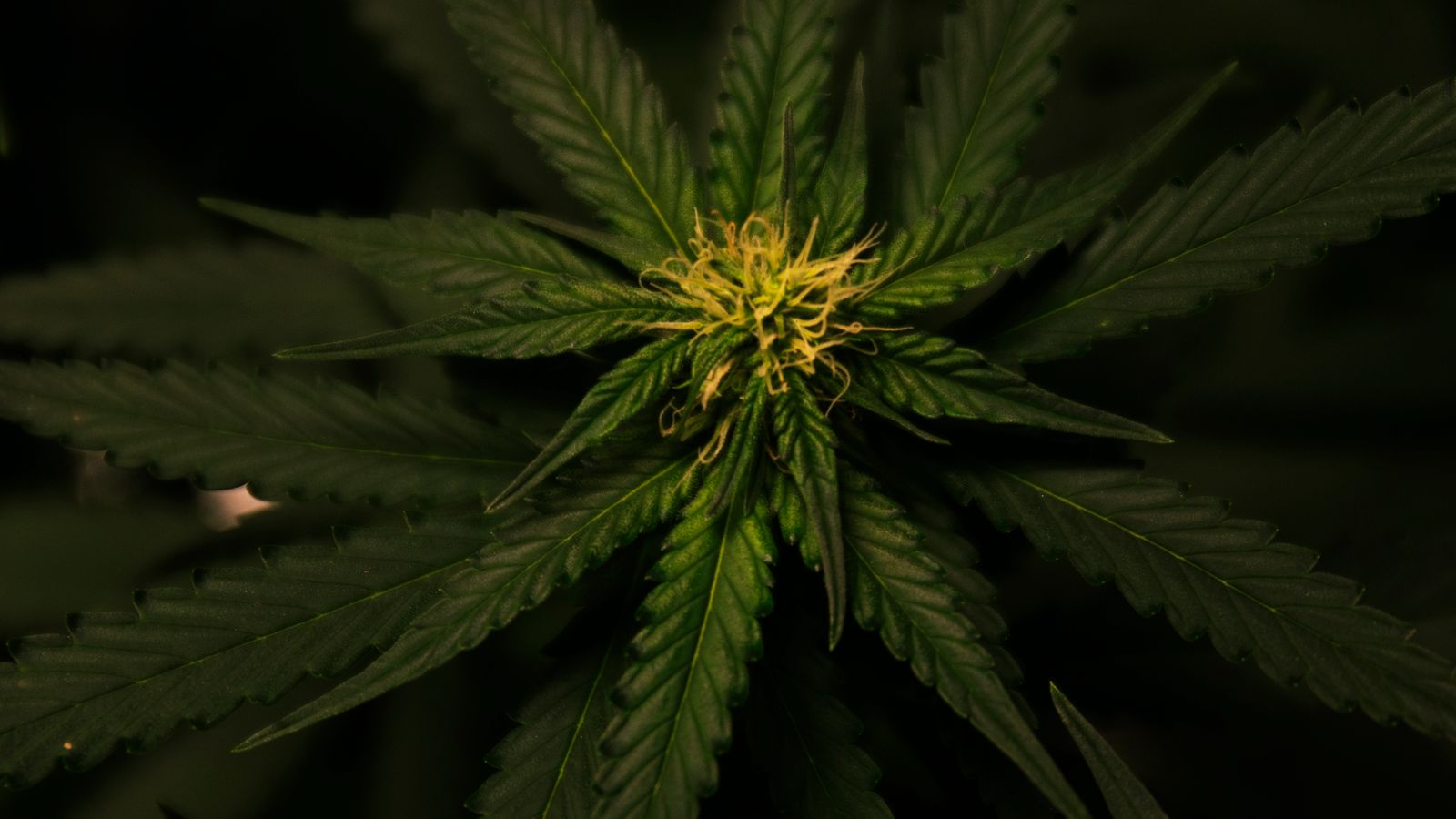
Macro photo of cannabis plant showing vibrant green leaves with delicate dew droplets.
Atmospheric CO2 sits around 420 ppm. Cannabis, like most C3 plants, can use more. The standard recommendation is 1200-1500 ppm during vegetative growth and the first two-thirds of flowering. The question is not whether elevated CO2 works in theory. It does. The question is whether it works in your room, with your light, your air exchange, and your budget.
This guide covers the conditions under which CO2 supplementation pays off, the systems that deliver it, the costs that come with it, and the mistakes that turn a yield booster into a monthly expense with no return.
The Photosynthesis Ceiling and Why More Light Requires More CO2
Photosynthesis is limited by whichever input is scarcest. At ambient CO2 and moderate light, adding more photons does little. At high light and ambient CO2, the plant runs out of carbon before it can use the energy. This is the CO2 ceiling, and it sits around 800-1000 PPFD for most cultivars at 420 ppm.
When you push PPFD above 1000, you need more CO2 to match. The relationship is not linear, but the rough guideline is that 1200-1500 ppm CO2 allows effective use of 1200-1500 PPFD without photoinhibition or wasted light. Below 800 PPFD, supplementation delivers minimal gains. You are not light-limited; you are not CO2-limited. You are limited by genetics, nutrition, or environment, and adding CO2 will not fix those.
Commercial growers running double-ended HPS at 1000-1200 watts per fixture or high-output LED bars pushing 2.7+ umol/J see the clearest benefit. Home growers running 600-watt HPS or mid-tier LED in a 4x4 tent with passive intake are spending money on gas that vents outdoors before the plant can use it.
Sealed Rooms vs. Vented Rooms
CO2 supplementation only makes sense in a sealed room. A sealed room has no passive intake, no exhaust fans running during lights-on, and no air exchange with the outside environment. Climate control comes from mini-split air conditioning, dehumidifiers, and circulation fans. CO2 is delivered by tank, burner, or bag, and it stays in the room because there is nowhere for it to go.
A vented room exchanges air constantly. You pull in fresh air to manage heat and humidity, and you exhaust stale air to prevent buildup. This is the default setup for most home grows and many small commercial operations. It works. It is cheap. It is also incompatible with CO2 supplementation, because every cubic foot of enriched air you vent is money leaving the room.
The math is straightforward. A 10x10x8 room holds 800 cubic feet. If you are running an exhaust fan at 400 CFM to manage heat, you are replacing the entire room volume every two minutes. At 1500 ppm CO2, you are venting roughly 1.2 cubic feet of pure CO2 per cycle. A 20-pound tank holds 10,000 liters, or about 350 cubic feet, of CO2. In a vented room, that tank is gone in under ten hours of lights-on time. You are paying $30-50 per tank every few days for no yield benefit.
Sealed rooms cost more upfront. A mini-split for a 10x10 room runs $1,200-2,000 installed. A dehumidifier capable of pulling 70-100 pints per day costs $300-600. Insulation, vapor barriers, and sealed ducting add another $500-1,000 depending on the build. But once the room is sealed, CO2 stays in, and the cost per pound of yield drops.
CO2 Delivery Systems
There are three practical ways to deliver CO2: compressed tanks with regulators, propane or natural gas burners, and fermentation or decomposition bags. Each has a use case.
Compressed CO2 Tanks
This is the cleanest method. A 20-pound or 50-pound tank connects to a regulator, a solenoid valve, and a timer or controller. The system releases CO2 on a schedule or in response to a sensor. There is no combustion, no heat, no water vapor, and no risk of incomplete burn producing carbon monoxide.
A 20-pound tank costs $30-50 to refill and lasts 3-4 weeks in a well-sealed 10x10 room running 12/12. A 50-pound tank lasts 8-10 weeks and costs $60-90 per fill. The regulator and solenoid run $150-300. A basic timer costs $20. A CO2 controller with a sensor costs $200-400 and maintains target ppm more precisely, reducing waste.
Tanks are ideal for small to mid-sized sealed rooms where heat and humidity are already managed. The main drawback is logistics. You need a supplier, a way to transport tanks, and a place to store empties. In some jurisdictions, CO2 tank refills require a business account or a food-grade certification.
CO2 Generators (Burners)
Burners combust propane or natural gas to produce CO2. Propane generators are common in larger commercial operations because propane is cheap, tanks are easy to source, and the output scales with room size. A typical unit burns 1-2 pounds of propane per hour and produces 10-12 cubic feet of CO2 per pound burned.
The problem is heat and water. Burning one pound of propane releases roughly 21,500 BTU and one gallon of water vapor. In a sealed room, that heat must be removed by air conditioning, and that water must be removed by dehumidification. A 10,000 BTU mini-split costs about $0.15 per hour to run at full load. A dehumidifier pulling 70 pints per day costs another $0.10-0.15 per hour. You are paying to create heat and humidity, then paying again to remove it.
Burners make sense in cold climates where the heat offsets heating costs, or in very large rooms (1000+ square feet) where the cost per cubic foot of CO2 is lower than tanks. They do not make sense in small rooms, hot climates, or any situation where cooling is already a limiting factor.
Natural gas burners are more efficient than propane and cheaper to operate if you have a gas line, but installation requires a licensed contractor and local code compliance. Incomplete combustion produces carbon monoxide, so a CO detector is not optional.
CO2 Bags and Fermentation Systems
These are marketed to home growers as a low-cost, low-maintenance option. A bag contains a mycelium culture that produces CO2 as it metabolizes substrate. Output is roughly 0.5-1.0 cubic feet per day, which is enough to raise CO2 in a small, sealed tent by 100-200 ppm if there is no air exchange.
In practice, these are a waste. The output is too low to matter in any room larger than a 2x2 tent, and most home tents are not sealed. The bags cost $20-30 and last 3-6 months, which sounds cheap until you calculate the cost per cubic foot of CO2. You are paying $0.10-0.20 per cubic foot, compared to $0.01-0.02 per cubic foot from a tank.
Fermentation buckets using sugar, yeast, and water are even worse. The output is unpredictable, the mess is constant, and the risk of contamination or off-gassing is real. These belong in high school science fairs, not commercial grows.
Target PPM and Timing
The standard target is 1200-1500 ppm during lights-on. Some growers push to 1800 ppm, but the yield gains above 1500 ppm are marginal and the risk of toxicity or nutrient lockout increases. At 5000 ppm, CO2 becomes toxic to plants. At 10,000 ppm, it becomes a safety hazard for humans.
CO2 supplementation only matters during lights-on. Plants do not photosynthesize in the dark, so there is no benefit to maintaining elevated CO2 during lights-off. In fact, high CO2 during dark periods can interfere with respiration and reduce growth. Set your controller or timer to stop injection 30 minutes before lights-off and resume 30 minutes after lights-on.
During the final two weeks of flowering, many growers drop CO2 back to ambient or stop supplementation entirely. The theory is that lower CO2 encourages resin production and terpene expression as the plant shifts from growth to defense. The evidence for this is thin, mostly anecdotal, but the cost of stopping early is low, so it is common practice.
The Numbers: When CO2 Pays Off
Let's model a 10x10x8 sealed room running 4,000 watts of LED at 2.7 umol/J, delivering 1200 PPFD across a 4x8 canopy. Baseline yield at ambient CO2 is 1.8 lb per 1000 watts, or 7.2 lb total. Wholesale price is $800 per pound. Gross revenue is $5,760 per cycle.
With CO2 supplementation at 1500 ppm, yield increases to 2.2 lb per 1000 watts, or 8.8 lb total. Gross revenue is $7,040. The gain is $1,280 per cycle.
Cost breakdown per cycle (8 weeks veg, 8 weeks flower): Two 50-pound CO2 tanks at $75 each, $150 total. Increased cooling load adds roughly 10% to AC runtime, or $40 per cycle. Increased dehumidification adds another $30. Total cost is $220. Net gain is $1,060 per cycle, or $530 per month.
Upfront equipment cost (regulator, solenoid, controller, mini-split, dehumidifier, room sealing) is roughly $3,500. Payback period is 6-7 cycles, or 12-14 months. After that, the system is profitable.
Now model the same room with a vented exhaust system. CO2 cost per cycle jumps to $600-800 because half the gas vents outdoors. Net gain drops to $480-680 per cycle. Payback period stretches to 18-24 months, and that assumes no additional costs for fans, ducting, or intake filtration. The math does not work.
Common Mistakes
The most common mistake is adding CO2 without sealing the room. You are paying for gas that leaves before the plant can use it. The second most common mistake is adding CO2 without increasing light. At 600-800 PPFD, the plant is not CO2-limited. You are not going to see a 20% yield increase by adding CO2 to a room that is already light-limited.
The third mistake is ignoring temperature. Elevated CO2 allows plants to tolerate higher temperatures, but it does not eliminate the need for climate control. The optimal leaf temperature at 1500 ppm CO2 is 82-86°F, compared to 75-80°F at ambient CO2. If your room is already running hot and you add CO2 without upgrading cooling, you will see stress, not growth.
The fourth mistake is over-supplementing. More is not better. At 2000 ppm, you are past the point of diminishing returns. At 3000 ppm, you are risking toxicity. At 5000 ppm, you are poisoning the plants. A good controller with a sensor prevents this, but many growers run timers without feedback and guess at injection rates. This leads to waste, inconsistency, and occasional disasters.
The fifth mistake is neglecting safety. CO2 is heavier than air and accumulates at floor level. In a sealed room with a leak or a malfunctioning burner, CO2 can displace oxygen and create an asphyxiation hazard. A CO2 monitor with an alarm is cheap insurance. If you are running a burner, a carbon monoxide detector is mandatory.
Strain-Specific Response
Not all cultivars respond equally to elevated CO2. High-yielding hybrids with strong vegetative growth and dense canopy structure tend to show the largest gains. Gorilla Glue, Wedding Cake, and Gelato are known to respond well. Landrace sativas and low-yielding heirlooms often show minimal response, because their growth is limited by genetics, not environment.
Autoflowers are a mixed bag. Because their vegetative period is short and genetically determined, the window for CO2 to drive vegetative growth is narrow. Some growers report 10-15% yield increases with autos under CO2, but the gains are smaller than with photoperiod plants, and the cost-benefit calculation is tighter.
Cannabinoid and Terpene Considerations
There is limited peer-reviewed data on how CO2 affects cannabinoid and terpene profiles. Anecdotal reports suggest that elevated CO2 increases total biomass without significantly altering THC or CBD percentages, meaning absolute cannabinoid yield increases in proportion to flower weight. Some growers report that high CO2 reduces terpene intensity, particularly myrcene and limonene, but this is confounded by temperature, humidity, and harvest timing.
If your market values terpene content and aromatic complexity over raw THC numbers, the trade-off may not be worth it. If you are selling by the pound to processors who care only about cannabinoid mass, CO2 is a straightforward win.
Alternatives to Full Supplementation
If a sealed room is not feasible, there are partial measures that deliver some benefit without the full cost. Running CO2 during early veg in a sealed propagation tent or clone dome can speed rooting and early growth. The space is small, the cost is low, and the plants are not yet light-limited.
Another option is to run a hybrid system: sealed during lights-on with CO2 supplementation, then vent during lights-off to manage humidity and temperature. This reduces CO2 waste and allows you to skip the dehumidifier or downsize the mini-split. The trade-off is complexity. You need timers, dampers, and controllers to coordinate the exhaust fans, CO2 injection, and HVAC. It works, but it is fussy.
Regulatory and Safety Considerations
CO2 itself is not regulated, but the equipment and methods used to generate or store it may be. Propane and natural gas burners are subject to fire codes and building codes. In some jurisdictions, installing a burner in a commercial grow requires a permit, an inspection, and a licensed contractor. Compressed CO2 tanks are generally exempt, but bulk storage of large tanks may trigger hazmat regulations.
From a safety perspective, the risks are asphyxiation from CO2 accumulation, carbon monoxide poisoning from incomplete combustion, and fire or explosion from propane leaks. A CO2 monitor, a CO detector, and a propane detector are not optional in a sealed room with a burner. The cost is $100-200 total, and the insurance savings alone justify it.
When to Skip CO2 Entirely
If your room is vented, skip CO2. If your light is below 800 PPFD, skip CO2. If you are growing low-yielding heirlooms or landraces for personal use, skip CO2. If your climate control is marginal and you are already struggling with heat or humidity, skip CO2. If you are running a small tent in a bedroom and your partner is already annoyed by the noise and the smell, skip CO2.
CO2 supplementation is a tool for growers who have already dialed in genetics, nutrition, light, and climate, and who are looking for the last 20-30% of yield. It is not a fix for poor fundamentals, and it is not a requirement for good cannabis. Plenty of commercial growers run ambient CO2 and hit 1.5-2.0 lb per light with tight environmental control and good genetics. If you are not there yet, spend your money on better lights, better sensors, or better genetics before you spend it on CO2.
The Bottom Line
CO2 supplementation works when the room is sealed, the light is strong, the climate is controlled, and the math is honest. It adds 20-30% to yield in the right conditions, and it pays for itself in 12-18 months if you are running at commercial scale. It does not work in vented rooms, under weak lights, or in environments where heat and humidity are already limiting factors.
The decision is not about whether CO2 is good or bad. It is about whether your operation is ready for it. If you are running 1000+ PPFD in a sealed room with a mini-split and a dehumidifier, and you are already hitting 1.5+ lb per light, CO2 is the next step. If you are running 600 PPFD in a tent with an exhaust fan, save your money.
Frequently asked questions
What CO2 level should I target during flowering?
Target 1200-1500 ppm during the first two-thirds of flowering, then drop to ambient or stop supplementation in the final two weeks. Higher levels offer diminishing returns and some growers believe lower CO2 late in flower improves terpene expression.
Can I use CO2 in a tent with an exhaust fan?
Technically yes, but it is a waste of money. Every time the exhaust fan runs, you vent enriched air outdoors. In a typical vented tent, a 20-pound CO2 tank is gone in days with no measurable yield benefit.
How much does a sealed room cost to set up for CO2?
For a 10x10 room, expect $3,000-4,500 including mini-split AC, dehumidifier, CO2 tank system with regulator and controller, insulation, and vapor barrier. Payback is typically 12-18 months at commercial scale.
Do I need CO2 supplementation to grow good cannabis?
No. Many commercial and home growers produce excellent cannabis at ambient CO2 with proper light, climate, and genetics. CO2 is an optimization for growers who have already dialed in the fundamentals and want to push yield higher.
Is a CO2 controller worth the extra cost over a timer?
Yes, if you are serious about supplementation. A controller with a sensor maintains target ppm precisely, reduces waste, and prevents over-supplementation. The $200-400 cost pays for itself in saved CO2 within a few cycles.
How long does a 20-pound CO2 tank last in a sealed room?
In a well-sealed 10x10 room running 12 hours of light per day, a 20-pound tank lasts 3-4 weeks. Larger tanks (50 pounds) last proportionally longer and cost less per pound of CO2.
Can high CO2 hurt plants or people?
Yes. Above 2000 ppm, yield gains drop off and stress increases. Above 5000 ppm, CO2 is toxic to plants. Above 10,000 ppm, it is a human safety hazard causing dizziness, headache, and asphyxiation. Always use a monitor.
Should I run CO2 during lights-off?
No. Plants do not photosynthesize in the dark, so elevated CO2 provides no benefit and may interfere with respiration. Stop injection 30 minutes before lights-off and resume 30 minutes after lights-on.
Sources
The cannabis newsletter you forward to your team.
Federal policy, market data, grower alerts, and the one story that matters today. Sent every weekday at 7am. Free.
No spam. Unsubscribe with one click. 21+ only.
Related from Grow

Corn Earworm Infestations Threaten U.S. Hemp Crops as Growers Deploy IPM
Helicoverpa zea populations surge across commercial hemp acreage, prompting growers to adopt integrated pest management protocols mid-season.
Yellow Fan Leaves on Cannabis: Five Causes, Ranked by Likelihood
Nitrogen deficiency tops the list, but light burn, pH lockout, overwatering, and natural senescence all produce yellowing. Here's how to diagnose each.

Trichome Harvest Timing: Reading Amber, Milky, Clear
A $20 microscope tells you when cannabinoid production peaks. Here's how to read trichome color, what the ratios mean, and where growers get it wrong.
More from the newsroom
Marc Shepard Built NECANN for the Locals. Now the Fight Comes Home
The Northeast cannabis expo founder reflects on regional markets, consolidation pressure, and why hyperlocal culture still beats MSO playbooks.

Minnesota merges medical and adult-use cannabis supply chains
State regulators unified the two markets effective May 28, 2026, ending separate inventory tracking.

DOJ Order Clarifies Tribal Cannabis Programs Under Schedule III
Justice Department guidance addresses how cannabis rescheduling affects tribal operators under existing federal frameworks.