Yellow Fan Leaves on Cannabis: Five Causes, Ranked by Likelihood
Nitrogen deficiency tops the list, but light burn, pH lockout, overwatering, and natural senescence all produce yellowing. Here's how to diagnose each.
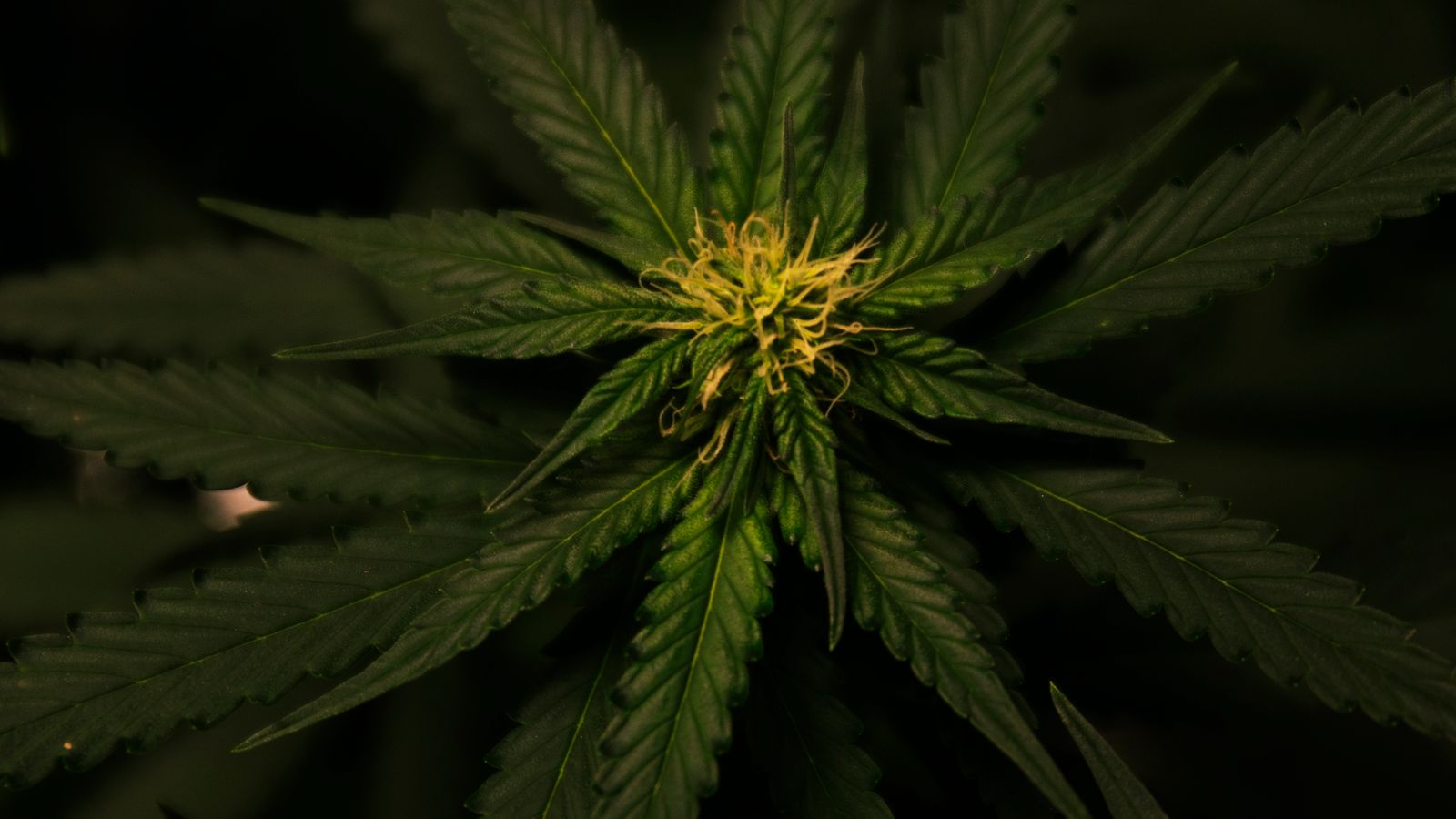
Detailed view of a cannabis plant with vibrant green foliage and intricate leaf patterns.
Yellowing cannabis foliage costs commercial operations thousands of dollars per cycle in lost yield, wasted corrective inputs, and labor hours chasing the wrong problem. Home growers fare no better, dumping CalMag into a light-burned canopy or flushing a plant that simply needs nitrogen. The diagnostic challenge is that five distinct causes produce similar symptoms, and the fix for one often worsens another.
This guide ranks those five causes by frequency in typical indoor and greenhouse environments, then walks through the specific visual markers, environmental data, and timeline clues that separate them. The percentages cited here come from aggregated cultivation facility audits and diagnostic logs, not controlled trials, so your operation's distribution will vary based on genetics, media, and management practices.
Cause One: Nitrogen Deficiency (Estimated 55-65% of Cases)
Nitrogen deficiency is the single most common reason cannabis fan leaves turn yellow, particularly in vegetative growth and early flower. The plant is a heavy nitrogen feeder during rapid cell division, and most base nutrient programs are calibrated for moderate demand. Push a fast vegetative cycle, run a high-density canopy, or use a light mix soil, and you'll outpace nitrogen availability within two to three weeks.
The visual signature is distinctive. Yellowing starts at the lowest, oldest fan leaves and progresses upward as the plant mobilizes nitrogen from mature tissue to feed new growth. The yellow is uniform, not splotchy, and the leaf remains structurally intact until late stages. Petioles stay green longer than the blade. In severe cases, lower leaves become pale yellow-white, then brown and crispy, but the upper canopy holds its green as long as the roots can pull nitrogen from somewhere.
Timing matters. Nitrogen deficiency in week two of veg is a media or feed issue. Nitrogen deficiency in week five of flower is often intentional, as many cultivators taper nitrogen post-stretch to avoid excess vegetative growth and improve resin-to-leaf ratio. Some genetics, particularly OG Kush and its descendants, are notorious for heavy nitrogen appetite in veg and will show deficiency on standard feed charts.
The fix is straightforward if caught early. In hydro or coco, increase base nutrient concentration by 10-15% or add a dedicated nitrogen supplement. Calcium nitrate works in veg; in flower, many growers avoid nitrate forms and use amino acid complexes or organic nitrogen sources to prevent late vegetative stretch. In soil, top-dress with a high-nitrogen amendment like blood meal or feather meal, or apply a liquid fish emulsion. Response time is 48-72 hours in hydro, five to seven days in soil.
The complication is that nitrogen toxicity produces dark, clawed leaves and delays flower maturation, so there's a narrow window between deficiency and excess. Target 150-200 ppm nitrogen in veg, 100-150 ppm in early flower, tapering to 50-80 ppm by week six. Tissue testing is the gold standard, but few small operations run it. Instead, watch new growth: if it's vibrant green and the yellowing halts at the lower third of the plant, you've dialed it.
Cause Two: Light Burn and Bleaching (Estimated 15-20% of Cases)
Light burn is underdiagnosed because growers associate it with heat stress, but modern LEDs deliver photon density that damages chlorophyll without raising leaf surface temperature. A canopy running 72°F can still bleach under 1400+ PPFD if the plant isn't acclimated or if spectrum includes excessive UV-A or far-red without compensatory green wavelengths.
The visual pattern is the inverse of nitrogen deficiency. Yellowing starts at the top of the canopy, directly under the fixture, and affects the youngest, most exposed leaves first. The yellow is often pale, almost white in severe cases, and may show interveinal chlorosis where the tissue between veins loses color but the veins stay green. Leaf edges may curl upward, a classic light-stress response. In extreme cases, the tissue becomes brittle and papery.
Environmental data confirms the diagnosis. If your PPFD at canopy level exceeds 1000 in veg or 1200 in flower, and you're running CO₂ below 800 ppm, you're in the danger zone. Measure with a quantum sensor, not the fixture's published output, because reflective walls and canopy geometry create hotspots. A 15% variance across the canopy is normal; 30% means you have localized burn risk.
Distance from the light is the most common error. Growers drop fixtures to maximize penetration, but cannabis has a photosynthetic ceiling. Most cultivars max out around 1000-1200 PPFD without supplemental CO₂. Above that, the plant can't process the photons, and reactive oxygen species accumulate, degrading chlorophyll. The leaf literally photobleaches. This is distinct from heat stress, where the damage is thermal and affects the entire leaf surface, not just the top-facing areas.
The fix is immediate: raise the fixture or dim the output. If you're running 1000W HPS at 12 inches, move to 18-24 inches. If you're running full-spectrum LED at 100%, dial back to 75-80% and monitor. Recovery takes longer than nitrogen correction because the damaged tissue won't re-green; you're waiting for new growth to emerge healthy. Expect seven to ten days before you see clean leaves.
One edge case: some growers intentionally stress the canopy with high PPFD in late flower to trigger anthocyanin production and color expression, particularly in purple genetics. That's a calculated trade-off, not a mistake, but it does produce yellowing and should be noted in your SOP so the next shift doesn't 'fix' it.
Distinguishing Light Burn from Nutrient Issues
The key diagnostic is spatial distribution. Nitrogen deficiency is bottom-up and uniform across the canopy. Light burn is top-down and often localized to the center or highest points. If you have yellowing on one side of the room but not the other, check your light height and PPFD map. If you have yellowing on the bottom half of every plant, check your nitrogen.
Cause Three: pH Lockout (Estimated 10-15% of Cases)
pH lockout is the invisible thief. Your nutrient solution contains adequate nitrogen, phosphorus, and micronutrients, but the root zone pH sits outside the range where those elements remain soluble and available. In soil, that range is 6.0-7.0; in hydro and coco, it's 5.5-6.5. Drift outside those windows, and you get deficiency symptoms even with a full feed.
Yellowing from pH lockout mimics nitrogen deficiency in early stages, but with a critical difference: it doesn't respond to increased feeding. You add nitrogen, the yellowing continues, you add more, and now you're overfeeding and creating salt buildup, which worsens the lockout. This is the spiral that kills plants in week three of flower.
The visual clue is inconsistency. pH lockout often affects multiple nutrients simultaneously, so you'll see yellowing plus interveinal chlorosis (magnesium), plus purple petioles (phosphorus), plus necrotic spots (calcium). The plant looks confused because it is. The root zone is a chemical mess, and different areas of the media have different pH, so some roots access some nutrients while others don't.
Diagnosis requires a slurry test or runoff measurement. In soil, mix one part media to two parts distilled water, let it sit for 15 minutes, then measure the pH of the liquid. In hydro or coco, measure runoff pH and compare it to input pH. A half-point drift is normal; a full point or more indicates either poor buffering (soil) or inadequate pH adjustment (hydro).
The fix depends on the media. In soil, pH drift is slow and usually corrected with time and proper watering practices. Avoid pH-adjusting every irrigation; let the soil's buffering capacity work. In hydro and coco, pH drift is fast and requires daily adjustment. If your runoff is 7.2 and you're feeding at 5.8, you have a buildup issue and need to flush with pH-balanced water, then resume feeding at the correct pH.
Chronic pH problems point to water quality. Municipal water with high alkalinity (200+ ppm bicarbonates) will constantly push pH upward. Reverse osmosis water with zero buffering capacity will swing wildly. The solution is either a water treatment system or a more aggressive pH management protocol, including pH-stable nutrient lines and regular monitoring.
Cause Four: Overwatering and Root Zone Saturation (Estimated 5-8% of Cases)
Overwatering doesn't mean too much water per event; it means too-frequent watering that keeps the root zone saturated and oxygen-starved. Cannabis roots need wet-dry cycles to function. Constant moisture suffocates the root tips, kills beneficial microbes, and creates anaerobic conditions where pathogens thrive. The first visible symptom is often yellowing lower leaves, which growers misread as nitrogen deficiency.
The visual signature is yellowing plus drooping. The leaves are yellow, but they're also heavy and limp, not crispy. The plant has a waterlogged look. In severe cases, you'll see root rot: brown, slimy roots with a sour smell. The yellowing is bottom-up, like nitrogen deficiency, but the plant doesn't respond to feeding because the roots can't absorb nutrients.
Environmental clues include high substrate moisture readings (over 70% volumetric water content in coco, constantly wet soil surface) and slow dry-down times. If you're watering every day in veg or every other day in early flower, and the pots still feel heavy, you're overwatering. The root mass isn't large enough to pull the water, or the media is too dense and holding too much.
The fix is to let the media dry. In soil, wait until the top two inches are dry and the pot feels light. In coco, allow the moisture content to drop to 40-50% before the next irrigation. This may mean skipping a day or two, which feels counterintuitive, but the plant will recover faster with dry roots than with continued saturation. If root rot has set in, you'll need a hydrogen peroxide drench or a beneficial microbe inoculant to outcompete the pathogens.
Prevention is about media choice and container size. Oversized pots relative to plant size are a common error in home grows. A seedling in a five-gallon pot will sit in wet media for a week because the root mass can't pull the water. Start small, transplant up, and match your irrigation frequency to the plant's actual water use, not a fixed schedule.
Cause Five: Natural Senescence in Late Flower (Estimated 5-10% of Cases)
In the final two weeks of flower, fan leaves yellow and drop as the plant reallocates resources to seed production (or, in our case, resin and flower development). This is natural senescence, not a deficiency, and it's often desirable. A plant that holds deep green foliage through harvest may have been overfed with nitrogen, which can mute terpene expression and extend dry time.
The visual pattern is bottom-up yellowing that accelerates after week six of flower. The leaves yellow evenly, fade to pale yellow or orange, then drop cleanly. The buds remain healthy and continue to swell. Trichome development is unaffected. This is the plant's endgame, and it's a sign of metabolic maturity.
The diagnostic key is timing and bud health. If you're in week seven of an eight-week strain, and the lower half of the plant is yellow but the colas are dense and frosty, you're watching senescence. If you're in week three and seeing the same pattern, you have a nitrogen or root issue. Context matters.
The correct response is to do nothing, or to slightly reduce nitrogen in your feed to encourage the process. Some cultivars, particularly Blue Dream and other long-flowering sativas, will hold green leaves through week ten, and that's fine too. Genetics dictate the senescence timeline. Forcing it with a hard nitrogen cut can stress the plant and reduce final yield; letting it happen naturally optimizes cannabinoid and terpene profiles.
One caution: if the upper canopy starts yellowing in late flower, that's not senescence. That's either light burn from a late-stage PPFD push or a micronutrient lockout from salt buildup. Flush with plain water, check your runoff EC, and adjust. Senescence is a bottom-up fade, not a top-down crash.
Diagnostic Workflow for Yellow Leaves
When you see yellowing, run this sequence. First, check the location. Bottom leaves yellow? Nitrogen, pH, or overwatering. Top leaves yellow? Light burn or late-stage micronutrient issue. Second, check the timeline. Week two of veg? Nitrogen or media. Week seven of flower? Likely senescence. Third, check the environment. PPFD over 1000? Measure your light. Runoff pH at 7.0? You have lockout. Soil constantly wet? Overwatering.
Fourth, check your feed. Are you running a complete base nutrient, or are you mixing your own and possibly missing a component? Are you in the right NPK ratio for the growth stage? Veg wants 3-1-2; flower wants 1-3-2. If you're running a veg formula in week four of flower, you'll see deficiencies.
Fifth, look at the whole plant. Is the yellowing isolated to one area, or is it systemic? Isolated yellowing suggests environmental factors (light, airflow). Systemic yellowing suggests nutrition or root health. A plant with yellow bottom leaves, green middle, and pale top is telling you three different things: nitrogen deficiency at the base, adequate nutrition in the middle, and light stress at the top.
When to Intervene and When to Wait
Not every yellow leaf requires action. In a 60-day flower cycle, you'll see some yellowing in the final 10-14 days, and that's fine. The plant is finishing. If you're running a tight nutrient program and the yellowing is confined to the lowest 10-15% of the canopy, you're in the optimal range. Those leaves are shaded, non-productive, and the plant is scavenging them for mobile nutrients. That's efficient metabolism.
Intervene when yellowing is rapid (more than 10% of the canopy per week), when it affects productive leaves in the light zone, or when it's accompanied by other symptoms like necrosis, curling, or stunted growth. A single yellow leaf on a 30-node plant is noise. Ten yellow leaves appearing overnight is a signal.
The cost of over-correction is higher than the cost of under-correction. Adding nitrogen to a light-burned plant pushes vegetative growth and delays flower. Flushing a plant with root rot spreads the pathogen. Raising lights on a nitrogen-deficient plant just reduces your photosynthetic capacity. Diagnose first, act second.
Strain-Specific Considerations
Some genetics are more prone to yellowing than others. OG Kush, Chemdog, and their derivatives are heavy nitrogen feeders and will show deficiency on standard feed charts. Boost nitrogen by 15-20% in veg and early flower. Conversely, many CBD-dominant strains and low-THC hemp cultivars are light feeders and will show toxicity at standard rates. Drop your EC by 0.2-0.4 and watch the response.
Autoflowers present a unique challenge because they transition from veg to flower without a light-cycle change, and that transition happens fast. A plant that looks healthy in week three can yellow in week four as it shifts to flower and nitrogen demand drops. The fix is to anticipate the transition and taper nitrogen starting in week three, rather than waiting for symptoms.
The Economics of Misdiagnosis
A 1,000-square-foot flower room running 60 lights and 480 plants can lose $5,000-$8,000 per cycle from yellowing-related yield loss. That's a conservative estimate assuming a 10% reduction in final weight and a $1,200-per-pound wholesale price. The loss comes from reduced photosynthetic capacity (fewer healthy leaves), delayed harvest (extra time correcting the problem), and lower-grade flower (stress-induced issues often affect trichome development).
Misdiagnosis compounds the loss. If you treat light burn as nitrogen deficiency and increase feed, you'll see salt buildup, pH drift, and potentially nutrient lockout. Now you're flushing, which resets the root zone and costs another week of growth. A $500 problem becomes a $2,000 problem because the first intervention was wrong.
The solution is systematic diagnosis and record-keeping. Log your feed schedule, environmental data, and any symptoms. When yellowing appears, cross-reference the logs. Did you raise the lights last week? Did you change nutrient brands? Did you skip a watering? Patterns emerge, and you'll start to see the early warning signs before the yellowing appears.
Frequently asked questions
Can yellow leaves turn green again after I fix the problem?
No. Once a leaf loses chlorophyll and turns yellow, that tissue won't recover. Your goal is to stop the progression and ensure new growth emerges healthy. In nitrogen deficiency cases, you should see improvement in 48-72 hours as new leaves come in dark green.
Should I remove yellow fan leaves or leave them on the plant?
Leave them until they're 75% yellow or beginning to brown. The plant is still pulling mobile nutrients from partially yellow leaves. Removing them early forces the plant to cannibalize the next tier of leaves. Once a leaf is fully yellow and no longer photosynthesizing, remove it to improve airflow.
How do I know if my PPFD is too high without a quantum sensor?
Watch for upward leaf curl (tacoing), pale or white new growth at the canopy top, and yellowing that starts directly under the fixture. If you're running LEDs at 100% and the canopy is within 12 inches, you're likely over 1200 PPFD. Dim to 75% or raise the fixture and monitor for a week.
What's the difference between nitrogen deficiency and magnesium deficiency yellowing?
Nitrogen deficiency produces uniform yellowing across the entire leaf blade, starting with the oldest leaves. Magnesium deficiency causes interveinal chlorosis where the tissue between the veins turns yellow but the veins stay green, and it often appears on mid-canopy leaves first, not the lowest ones.
Can I use the same nutrient solution throughout the entire grow, or do I need to change formulas?
You need different NPK ratios for veg and flower. Veg requires higher nitrogen (3-1-2 ratio), while flower needs higher phosphorus and potassium (1-3-2 ratio). Running a veg formula into week three of flower will cause deficiencies as the plant's nutrient demand shifts. Most nutrient lines offer separate veg and bloom formulas for this reason.
Is it normal for all the fan leaves to yellow and drop in the last week of flower?
Yes, if it happens gradually over the final 10-14 days and the buds remain healthy. This is natural senescence. If the entire canopy yellows in 48 hours or the upper leaves bleach white, that's light stress or a severe nutrient issue, not normal fade.
How often should I check runoff pH and EC in coco or hydro?
Daily for the first two weeks of any new cycle or after changing nutrient formulas, then every other day once the system is stable. Runoff pH that drifts more than 0.5 points from input pH indicates a problem. Runoff EC that's significantly higher than input EC means salt buildup and you need to flush.
Will yellow leaves reduce my final yield, and by how much?
It depends on timing and severity. Losing 20% of your fan leaves in weeks 2-4 of flower can reduce yield by 10-15% because those leaves drive photosynthesis during the critical bud-building phase. Losing the same percentage in weeks 7-8 has minimal impact because the plant is finishing and those leaves are naturally senescing.
Sources
The cannabis newsletter you forward to your team.
Federal policy, market data, grower alerts, and the one story that matters today. Sent every weekday at 7am. Free.
No spam. Unsubscribe with one click. 21+ only.
Related from Grow

Corn Earworm Infestations Threaten U.S. Hemp Crops as Growers Deploy IPM
Helicoverpa zea populations surge across commercial hemp acreage, prompting growers to adopt integrated pest management protocols mid-season.

Trichome Harvest Timing: Reading Amber, Milky, Clear
A $20 microscope tells you when cannabinoid production peaks. Here's how to read trichome color, what the ratios mean, and where growers get it wrong.

Clones vs Seeds in 2026: HpLVd Changes the Math
Speed and uniformity made clones the default. Now hop latent viroid is forcing growers to recalculate the real cost of mother plants and tissue culture.
More from the newsroom

Foley Hoag Outlines Nasdaq, NYSE Listing Path Post-Schedule III Move
Law firm's guidance details compliance steps for cannabis operators seeking U.S. exchange listings after rescheduling.

Lawmakers Push IRS for Cannabis Tax Guidance After Rescheduling
Congressional members are calling on the IRS to issue immediate tax guidance for cannabis operators following the DEA's rescheduling decision.

ATF Revises Gun Form 4473, Opening Path for Medical Cannabis Patients
New ATF guidance removes blanket marijuana disqualification from federal firearms background check form.