Federal Hemp Crackdown: DEA Regulations, Industry Impact & Legal Timeline
The federal hemp crackdown refers to proposed DEA regulations targeting intoxicating hemp-derived cannabinoids like delta-8 THC and THCA products that emerged after the 2018 Farm Bill legalized hemp. The Drug Enforcement Administration's efforts to reclassify certain hemp derivatives as controlled substances have sparked industry pushback, congressional intervention, and legal challenges. This hub covers the regulatory timeline, affected products, state-by-state responses, economic implications for the $28 billion hemp industry, and ongoing legislative efforts to delay or modify enforcement actions.
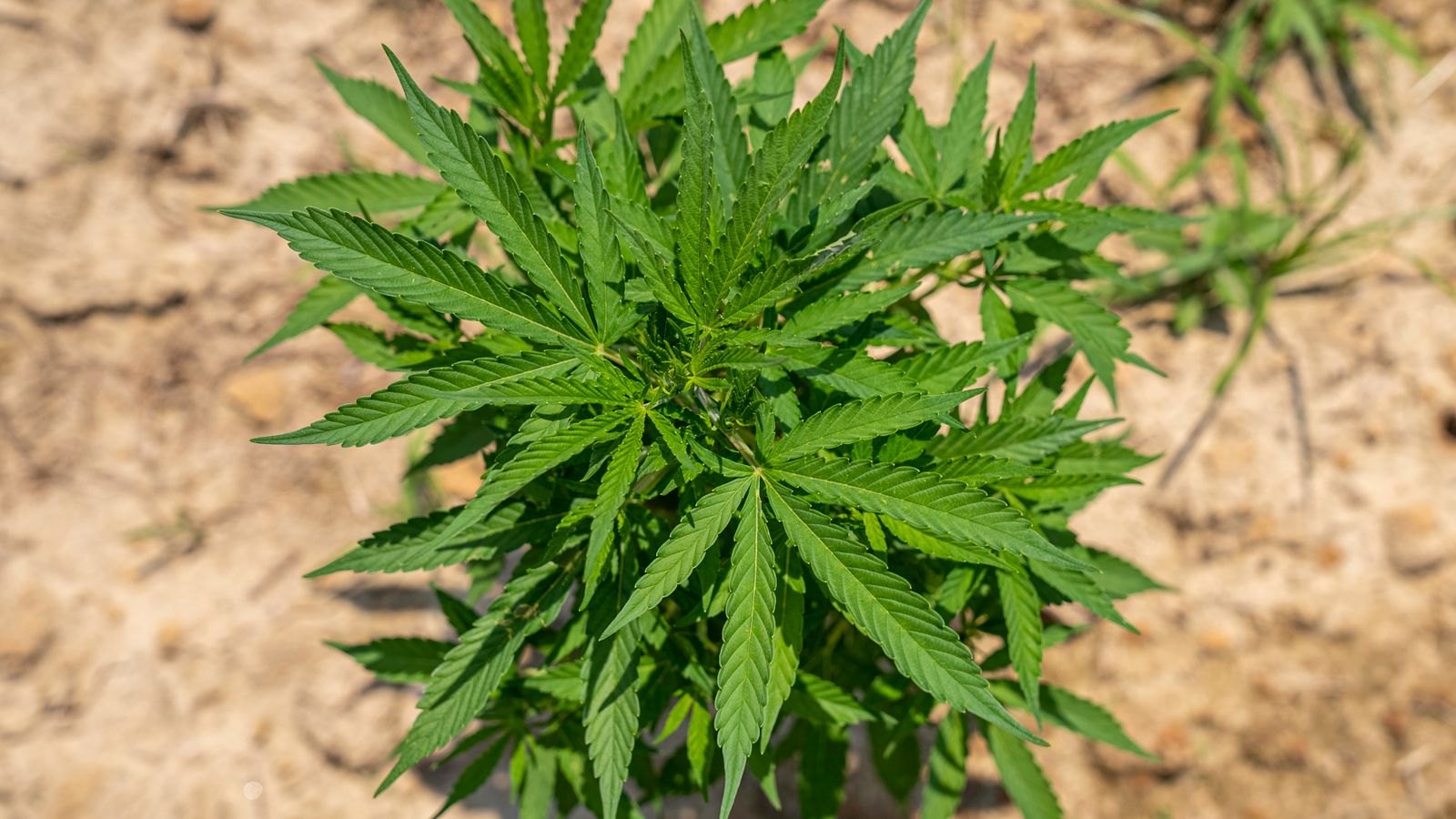
Executive Summary
A proposed Senate bill threatens to delay federal enforcement actions targeting intoxicating hemp-derived cannabinoids, offering temporary reprieve to an industry facing existential regulatory pressure. The legislation comes as the Drug Enforcement Administration prepares to implement stricter controls on delta-8 THC, THCA, and other hemp-derived intoxicants that proliferated following the 2018 Farm Bill's legalization of hemp. The crackdown represents the federal government's attempt to close what regulators characterize as loopholes in the Agricultural Improvement Act of 2018, which defined hemp as cannabis containing no more than 0.3% delta-9 THC by dry weight but left other cannabinoids largely unregulated. The Senate intervention reflects growing concern among lawmakers about the economic impact on hemp farmers, processors, and retailers who built businesses around these products, as well as questions about whether administrative rulemaking should supersede Congressional intent. With an estimated $28 billion hemp-derived cannabinoid market at stake and thousands of businesses facing potential closure, the delay bill has attracted bipartisan support while opponents argue it perpetuates access to unregulated intoxicants.Why This Matters
The federal hemp crackdown affects a multi-billion dollar industry, thousands of small businesses, millions of consumers, and the fundamental balance between state and federal cannabis regulation. The hemp-derived cannabinoid sector employs approximately 75,000 workers across cultivation, processing, distribution, and retail operations, according to industry trade groups. Unlike state-licensed cannabis businesses operating under comprehensive regulatory frameworks, hemp-derived product manufacturers have operated in a regulatory gray zone since 2018, selling delta-8 THC, delta-10 THC, THC-O, THCA flower, and HHC products through convenience stores, gas stations, online retailers, and dedicated hemp shops in states where adult-use cannabis remains illegal. For consumers in states like Texas, Georgia, and North Carolina, hemp-derived products represent the only legal access to intoxicating cannabinoids. An estimated 15 million Americans regularly purchase these products, many of them seeking alternatives to pharmaceutical medications for anxiety, chronic pain, and sleep disorders. The crackdown would eliminate this access overnight in non-legal states, forcing consumers back to illicit markets or pharmaceutical options. The financial stakes extend beyond direct sales to include commercial real estate leases, equipment financing, agricultural land values, and state tax revenue. States that legalized hemp cultivation following the 2018 Farm Bill—including Kentucky, Tennessee, and Montana—have seen significant agricultural investment in hemp production. Kentucky alone licensed over 1,000 hemp processors between 2019 and 2025, with many facilities specifically designed for cannabinoid extraction and conversion. The regulatory conflict also tests fundamental questions about administrative authority versus Congressional intent. The DEA argues its interim final rule merely clarifies existing Controlled Substances Act provisions, while industry advocates contend the agency is attempting to rewrite legislation through rulemaking. This tension mirrors broader debates about federal agency power that have reached the Supreme Court in recent terms.Background and History
The federal hemp crackdown traces its origins to the 2018 Farm Bill's hemp legalization, which created unintended pathways for intoxicating cannabinoid production.The 2018 Farm Bill and Hemp Legalization
On December 20, 2018, President Donald Trump signed the Agricultural Improvement Act of 2018 into law, removing hemp from Schedule I of the Controlled Substances Act. The legislation, championed by Senate Majority Leader Mitch McConnell of Kentucky, defined hemp as cannabis containing no more than 0.3% delta-9 tetrahydrocannabinol on a dry weight basis. This definition, borrowed from a 1976 Canadian research paper, focused exclusively on delta-9 THC—the primary intoxicating cannabinoid in traditional cannabis—while remaining silent on other cannabinoids. The Farm Bill authorized state and tribal hemp production programs subject to USDA approval, established interstate commerce protections for hemp products, and explicitly legalized hemp-derived CBD. Congress intended to create a legal framework for industrial hemp fiber, seed, and non-intoxicating CBD products, not to authorize intoxicating alternatives to state-regulated cannabis.The Delta-8 THC Boom (2019-2023)
Within months of hemp legalization, chemists and entrepreneurs identified a lucrative opportunity: converting abundant, inexpensive CBD extracted from legal hemp into delta-8 THC through chemical isomerization. Delta-8 THC, a minor cannabinoid that occurs naturally in cannabis at concentrations below 1%, produces intoxicating effects similar to delta-9 THC but with reportedly less anxiety and paranoia. By 2021, delta-8 THC products generated an estimated $2 billion in sales, sold openly in states where cannabis remained illegal. The products appeared in gas stations, smoke shops, and online retailers with minimal regulatory oversight, no testing requirements, and no age verification standards in most jurisdictions. Manufacturers marketed delta-8 vape cartridges, gummies, tinctures, and flower sprayed with delta-8 distillate, often using cartoon imagery and candy flavors that attracted regulatory scrutiny. The DEA issued an interim final rule in August 2020 stating that "all synthetically derived tetrahydrocannabinols remain schedule I controlled substances," but declined to take enforcement action against delta-8 THC products, creating regulatory uncertainty. Some states, including Alaska, Arizona, Arkansas, Colorado, Delaware, Idaho, Iowa, Mississippi, Montana, Rhode Island, and Utah, enacted state-level bans on delta-8 THC between 2021 and 2023.Expansion to THCA, THC-O, and Novel Cannabinoids (2022-2024)
As delta-8 THC faced increasing state restrictions, the hemp industry pivoted to new cannabinoids. THCA flower—raw cannabis containing high levels of tetrahydrocannabinolic acid that converts to delta-9 THC when heated—emerged as a particularly controversial product. Retailers argued that THCA flower complied with the Farm Bill's definition because THCA itself is non-intoxicating and the 0.3% threshold applies to delta-9 THC specifically. THCA flower sales reached an estimated $8 billion in 2024, with products virtually indistinguishable from state-licensed cannabis flower in appearance, potency, and effects. Popular strains like Wedding Cake, Gelato, and OG Kush appeared in hemp shops across non-legal states, marketed with identical strain names and terpene profiles as their cannabis counterparts. The industry also introduced THC-O acetate, HHC (hexahydrocannabinol), and THC-P (tetrahydrocannabiphorol), each claiming legal status under the Farm Bill despite requiring synthetic chemical processes. In February 2023, the DEA issued guidance stating that THC-O does not occur naturally in cannabis and therefore qualifies as a controlled substance, effectively banning the cannabinoid. However, enforcement remained inconsistent, and many retailers continued selling THC-O products.FDA Warning Letters and State Enforcement (2023-2025)
The Food and Drug Administration issued warning letters to dozens of hemp-derived cannabinoid companies between 2023 and 2025, citing violations including unapproved drug claims, products appealing to children, and lack of required safety data. The FDA maintained that adding CBD or other cannabinoids to food products violates the Federal Food, Drug, and Cosmetic Act, but the agency's limited enforcement resources prevented comprehensive market action. State attorneys general in California, New York, and Oregon filed lawsuits against hemp retailers selling intoxicating products, arguing they undermined state-regulated cannabis markets and posed public health risks. The California lawsuit, filed in March 2024, alleged that hemp-derived THCA products violated the state's cannabis licensing requirements and consumer protection laws. A Los Angeles County Superior Court judge issued a preliminary injunction in August 2024, prohibiting the sale of intoxicating hemp products through unlicensed retailers in California.The DEA's Interim Final Rule (January 2026)
On January 15, 2026, the DEA published an interim final rule in the Federal Register titled "Implementation of the Agriculture Improvement Act of 2018: Clarification of Tetrahydrocannabinol Definition." The rule established that the 0.3% delta-9 THC threshold applies to total potential THC, calculated as delta-9 THC plus 0.877 times THCA, consistent with testing methodologies used in state-licensed cannabis programs. The interim final rule effectively banned THCA flower and required hemp products to contain no more than 0.3% total THC, eliminating the distinction between THCA and delta-9 THC that the industry had exploited. The DEA provided a 60-day comment period and announced enforcement would begin on April 1, 2026, giving businesses approximately 75 days to comply or cease operations. The rule cited 21 U.S.C. § 802(16), which defines "marihuana" to exclude hemp as defined in 7 U.S.C. § 1639o, and argued that Congress intended to legalize non-intoxicating hemp products, not create an unregulated intoxicating cannabis market. The DEA received over 45,000 public comments during the comment period, with industry groups, consumer advocates, and hemp farmers overwhelmingly opposing the rule.Congressional Response and the Delay Bill (2026)
In June 2026, Senator Rand Paul of Kentucky and Senator Ron Wyden of Oregon introduced the Hemp Regulatory Certainty Act, a bipartisan bill to delay DEA enforcement of the interim final rule for 18 months while Congress studies the issue and considers comprehensive hemp legislation. The bill attracted 22 cosponsors from both parties, including senators from major hemp-producing states. The legislation would prohibit the DEA from using appropriated funds to enforce the interim final rule until January 1, 2028, and would require the Government Accountability Office to conduct a comprehensive study of the hemp-derived cannabinoid market, including economic impact, public health considerations, and regulatory options. Senator Paul argued that the DEA overstepped its authority by reinterpreting the Farm Bill through rulemaking rather than seeking Congressional action.Key Players
Drug Enforcement Administration
The DEA maintains that its interim final rule merely clarifies existing law and closes loopholes that allow intoxicating cannabis products to circumvent the Controlled Substances Act. DEA Administrator Anne Milgram testified before the Senate Judiciary Committee in May 2026 that hemp-derived THCA flower is chemically and pharmacologically identical to marijuana and that allowing its sale undermines decades of federal drug policy. The agency argues that Congress clearly intended to legalize industrial hemp and non-intoxicating CBD, not to create an unregulated market for intoxicating THC products sold to minors without testing or labeling requirements. The DEA's position reflects concern about product safety, youth access, and the proliferation of synthetic cannabinoids with unknown health effects. The agency has documented cases of contaminated hemp-derived products containing heavy metals, pesticides, and residual solvents from chemical conversion processes.Food and Drug Administration
The FDA has consistently maintained that CBD and other cannabinoids are excluded from the dietary supplement definition under 21 U.S.C. § 321(ff)(3)(B) because they were investigated as drugs before being marketed as supplements. The agency has called for Congressional action to establish a regulatory framework for CBD and hemp-derived cannabinoid products, noting that its existing authorities under the Federal Food, Drug, and Cosmetic Act are insufficient to address the market. FDA Commissioner Robert Califf stated in March 2026 testimony that the agency lacks resources to comprehensively regulate the hemp-derived cannabinoid market and that many products make unsubstantiated health claims or contain inaccurate labeling. The FDA supports the DEA's enforcement action but has not committed to using its own authorities to remove products from the market.U.S. Hemp Roundtable
The U.S. Hemp Roundtable, a coalition of hemp businesses and trade associations, has lobbied extensively against the DEA interim final rule while acknowledging the need for regulatory clarity. The organization supports federal legislation establishing testing standards, age restrictions, and labeling requirements for hemp-derived cannabinoid products, but opposes the DEA's total ban on intoxicating hemp products. Jonathan Miller, general counsel for the U.S. Hemp Roundtable, has argued that the DEA's interpretation contradicts the plain language of the Farm Bill and that Congress should address the issue legislatively rather than through administrative rulemaking. The organization commissioned economic studies projecting that the DEA rule would eliminate 60,000 jobs and $25 billion in economic activity.National Cannabis Industry Association
State-licensed cannabis operators have largely supported the federal hemp crackdown, arguing that unregulated hemp-derived products create unfair competition and undermine comprehensive cannabis regulation. The National Cannabis Industry Association submitted comments supporting the DEA interim final rule, noting that hemp-derived THCA flower is sold without the testing, packaging, labeling, and taxation requirements that state-licensed cannabis businesses must meet. Aaron Smith, chief executive of the National Cannabis Industry Association, has stated that allowing intoxicating hemp products to be sold through convenience stores and gas stations without age verification or testing undermines public health and makes comprehensive federal cannabis reform more difficult politically.State Regulators
State cannabis control boards in California, Colorado, Oregon, and Washington have supported federal enforcement action against intoxicating hemp products, arguing they undermine state regulatory frameworks. California's Department of Cannabis Control estimated that hemp-derived products captured 30% of the state's cannabis market by 2025, representing approximately $1.5 billion in sales that avoided state testing, taxation, and licensing requirements. Conversely, agriculture departments in Kentucky, Tennessee, and North Carolina have opposed the DEA rule, arguing it would devastate hemp farmers and processors who made significant investments based on the 2018 Farm Bill's legal framework.Legal and Regulatory Framework
The federal hemp crackdown centers on competing interpretations of the Agricultural Improvement Act of 2018 and the Controlled Substances Act.The Controlled Substances Act
The Controlled Substances Act, codified at 21 U.S.C. § 801 et seq., establishes five schedules of controlled substances based on medical use, abuse potential, and safety. Cannabis was placed in Schedule I in 1970, defined as having no accepted medical use and high abuse potential. The CSA defines "marihuana" at 21 U.S.C. § 802(16) as "all parts of the plant Cannabis sativa L." with specific exceptions. The 2018 Farm Bill amended the CSA definition of marijuana to exclude "hemp," defined as cannabis containing no more than 0.3% delta-9 THC on a dry weight basis. This amendment created the legal distinction between marijuana (Schedule I controlled substance) and hemp (legal agricultural commodity).The Agricultural Improvement Act of 2018
Section 10113 of the Agricultural Improvement Act of 2018, codified at 7 U.S.C. § 1639o, defines hemp as "the plant Cannabis sativa L. and any part of that plant, including the seeds thereof and all derivatives, extracts, cannabinoids, isomers, acids, salts, and salts of isomers, whether growing or not, with a delta-9 tetrahydrocannabinol concentration of not more than 0.3 percent on a dry weight basis." The statutory language specifies "delta-9 tetrahydrocannabinol" without mentioning THCA, delta-8 THC, or other cannabinoids. Industry advocates argue this silence means Congress intended to regulate only delta-9 THC, leaving other cannabinoids legal. The DEA counters that THCA is an "acid" of delta-9 THC explicitly included in the hemp definition and that the 0.3% threshold must account for total potential THC.DEA Interim Final Rule
The January 2026 interim final rule, published at 91 Fed. Reg. 3847, establishes that hemp testing must measure total THC using the formula: delta-9 THC + (THCA × 0.877). The 0.877 conversion factor accounts for the molecular weight difference between THCA and delta-9 THC after decarboxylation. This methodology aligns with USDA hemp testing requirements at 7 CFR § 990.3(a)(2) and state-licensed cannabis testing protocols. The rule also reaffirms that synthetically derived cannabinoids, including delta-8 THC produced through chemical isomerization of CBD, remain Schedule I controlled substances under 21 U.S.C. § 802(6). The DEA argues that chemical conversion processes create "synthetic" cannabinoids even when starting from natural hemp-derived CBD.Pending Litigation
Multiple hemp industry groups filed petitions for review in the U.S. Court of Appeals for the D.C. Circuit challenging the DEA interim final rule. The consolidated case, Hemp Industries Association v. DEA, argues that the rule exceeds the agency's statutory authority, contradicts the plain language of the Farm Bill, and violates the Administrative Procedure Act by imposing a legislative rule without proper notice-and-comment rulemaking. The petitioners argue that the DEA's interpretation would require Congress to have used the phrase "total THC" if it intended to include THCA in the 0.3% threshold, and that the agency cannot rewrite unambiguous statutory language through regulatory interpretation. The case is scheduled for oral argument in October 2026.State-by-State Breakdown
State responses to hemp-derived intoxicating cannabinoids vary dramatically, with some states banning all such products and others establishing regulatory frameworks.California
California prohibits the sale of intoxicating hemp-derived products through unlicensed retailers, treating THCA flower and delta-8 THC products as cannabis subject to state licensing requirements. Assembly Bill 45, enacted in September 2024, explicitly requires hemp-derived intoxicating cannabinoid products to be sold only through state-licensed cannabis retailers with testing, packaging, and taxation requirements identical to cannabis. Possession limits align with adult-use cannabis law: 28.5 grams of flower and 8 grams of concentrate for adults 21 and older.Texas
Texas has not banned hemp-derived cannabinoids at the state level, creating a thriving market for delta-8 THC, delta-9 THC edibles (containing less than 0.3% delta-9 THC by weight), and THCA flower. The Texas Department of State Health Services proposed rules in 2021 to ban delta-8 THC but withdrew them following industry opposition. An estimated 3,000 hemp retailers operate in Texas, with particularly strong markets in Austin, Dallas, Houston, and San Antonio. The federal crackdown would eliminate this market absent state legislation establishing an alternative regulatory framework.Florida
Florida allows hemp-derived cannabinoid sales under the state's hemp program, with products widely available in smoke shops, convenience stores, and dedicated hemp retailers. The state requires hemp products to contain no more than 0.3% delta-9 THC but does not restrict THCA or other cannabinoids. Florida's hemp market generated an estimated $3.2 billion in sales in 2025, making it the largest hemp-derived cannabinoid market in the nation. The state legislature considered but did not pass regulatory bills in 2024 and 2025.New York
New York enacted the Cannabinoid Hemp Law in November 2023, establishing a regulatory framework for hemp-derived cannabinoid products including delta-8 THC, delta-9 THC, and THCA. The law requires products to be sold through licensed retailers, limits serving sizes to 10 milligrams of THC per serving and 100 milligrams per package for edibles, and prohibits sales to individuals under 21. The Office of Cannabis Management began issuing cannabinoid hemp licenses in March 2024, with approximately 400 licensed retailers operating by mid-2026.Colorado
Colorado banned delta-8 THC and other intoxicating hemp-derived cannabinoids in 2022, treating them as marijuana subject to state licensing requirements. The state's Marijuana Enforcement Division issued guidance stating that any product containing total THC exceeding 0.3% qualifies as marijuana regardless of source. Colorado's approach reflects the state's mature cannabis market and concern that unregulated hemp products undermine comprehensive cannabis regulation.Kentucky
Kentucky, the leading hemp-producing state by acreage, has not restricted hemp-derived cannabinoids at the state level. The state's hemp program, administered by the Kentucky Department of Agriculture, focuses on cultivation and processing regulation but does not address retail sales of intoxicating products. Kentucky's hemp industry employs approximately 8,000 workers and generates $500 million in annual economic activity, with significant political influence reflected in Senator Rand Paul's leadership on the delay bill.Ohio
Ohio legalized adult-use cannabis through a ballot initiative in November 2023, with licensed sales beginning in August 2024. The state has not explicitly addressed hemp-derived cannabinoids, creating regulatory uncertainty. The Division of Cannabis Control has indicated that intoxicating hemp products may be subject to cannabis licensing requirements, but enforcement has been limited. Ohio's hemp market remains active with an estimated 1,200 retailers selling delta-8 THC and THCA products.North Carolina
North Carolina allows hemp-derived cannabinoid sales without state-level restrictions beyond the federal 0.3% delta-9 THC threshold. The state's hemp program, established following the 2018 Farm Bill, has licensed over 1,500 hemp growers and 300 processors. THCA flower sales are particularly strong in North Carolina, with products marketed using popular strain names like Northern Lights, Blue Dream, and Sour Diesel. The federal crackdown would significantly impact North Carolina's agricultural economy absent state legislative action.Market and Business Implications
The federal hemp crackdown threatens to eliminate a $28 billion market and force thousands of businesses to close or pivot to non-intoxicating products.Multi-State Operator Impact
Publicly traded cannabis companies including Curaleaf, Trulieve, and Green Thumb Industries have largely avoided the hemp-derived cannabinoid market, focusing instead on state-licensed cannabis operations. However, several MSOs have launched CBD brands and may view the hemp crackdown as an opportunity to capture market share from hemp retailers if federal cannabis reform creates pathways for interstate commerce. The crackdown could accelerate consolidation in the cannabis industry by eliminating competition from unregulated hemp products. State-licensed cannabis sales in California, Colorado, and Oregon declined 15-20% between 2022 and 2025, with industry analysts attributing much of the decline to hemp-derived product competition. Eliminating this competition could restore pricing power and market share to licensed operators.Hemp Cultivation Economics
Hemp farmers who cultivated high-THCA flower face complete loss of their market under the DEA rule. These farmers typically receive $300-$800 per pound for cannabinoid-rich hemp flower compared to $2-$5 per pound for fiber or grain hemp. Kentucky, Tennessee, Montana, and North Carolina have the highest concentrations of cannabinoid hemp cultivation, with an estimated 50,000 acres dedicated to high-THCA varieties in 2025. The economic impact extends to rural communities where hemp cultivation provided alternative agricultural income. In Appalachian Kentucky, hemp cultivation offered tobacco farmers a replacement crop with significantly higher per-acre revenue. The crackdown eliminates this option absent development of non-intoxicating cannabinoid markets.Retail and Distribution Disruption
An estimated 15,000 retail locations sell hemp-derived intoxicating cannabinoids as their primary business, with another 50,000 locations including convenience stores and smoke shops carrying these products as a secondary category. Dedicated hemp retailers face closure or complete business model pivots, while convenience stores and gas stations will lose a high-margin product category that generated an estimated $8-$12 per transaction. Online hemp retailers, which captured approximately 30% of the market, face immediate shutdown under the DEA rule. Major e-commerce platforms including Shopify and WooCommerce have already begun removing hemp-derived intoxicating cannabinoid products in anticipation of enforcement.Investment and Capital Markets
Hemp-derived cannabinoid companies raised an estimated $2.3 billion in venture capital and private equity investment between 2019 and 2025, with valuations based on projections of continued market growth. The DEA crackdown renders many of these investments worthless, with implications for investors, employees, and creditors. Several hemp companies had prepared for initial public offerings or SPAC mergers in 2026, but these plans have been abandoned following the interim final rule. Secondary market trading in hemp company equity has effectively ceased, with investors unable to find buyers.Tax Revenue Implications
Unlike state-licensed cannabis businesses, hemp-derived cannabinoid companies generally do not pay state excise taxes on sales, though they do pay standard sales taxes and federal income taxes. States collected an estimated $800 million in sales tax revenue from hemp-derived cannabinoid sales in 2025. The crackdown eliminates this revenue unless states establish alternative regulatory frameworks with excise taxes. The federal government collected income tax revenue from hemp businesses without the 280E restrictions that apply to cannabis companies under 26 U.S.C. § 280E, which prohibits businesses trafficking in Schedule I or II controlled substances from deducting ordinary business expenses. Hemp companies could deduct rent, salaries, and other expenses, providing a significant tax advantage over state-licensed cannabis operators.What Experts Say
Legal scholars, industry analysts, and public health experts offer divergent perspectives on the federal hemp crackdown's legality, necessity, and likely outcomes. Robert Mikos, professor at Vanderbilt Law School and cannabis law expert, has stated that the DEA's interpretation of the Farm Bill is legally defensible but represents a policy choice that Congress should address legislatively. According to Mikos, the statutory language is ambiguous enough to support either interpretation, making this a question of administrative deference rather than clear statutory violation. Shawn Hauser, partner at Vicente LLP and hemp industry attorney, has argued that the DEA exceeded its authority by reinterpreting the Farm Bill's unambiguous language through rulemaking. Hauser contends that if Congress intended to include THCA in the 0.3% threshold, it would have used the phrase "total THC" as it did in the USDA hemp regulations, and that the DEA cannot add language to a statute through regulatory interpretation. Beau Whitney, senior economist at New Frontier Data, projects that the hemp crackdown will eliminate 60,000 jobs and $25 billion in economic activity if fully implemented, with the greatest impact in states without legal cannabis markets. Whitney notes that the crackdown will likely drive consumers to illicit markets rather than eliminating demand for intoxicating cannabinoids. Dr. Ryan Vandrey, professor of psychiatry and behavioral sciences at Johns Hopkins University, has expressed concern about the lack of regulation in the hemp-derived cannabinoid market, noting that products often contain inaccurate labeling, contaminants, and unpredictable potency. According to Vandrey, the DEA crackdown addresses legitimate public health concerns but should be accompanied by establishment of a regulated market rather than complete prohibition. Steven Hoffman, adjunct professor at Columbia University and former FDA associate commissioner, has stated that the hemp-derived cannabinoid market demonstrates the need for comprehensive federal cannabis reform rather than piecemeal enforcement actions. Hoffman argues that the current approach creates regulatory whiplash and undermines business planning while failing to address underlying policy questions about cannabis access and regulation.What's Next
The federal hemp crackdown's implementation depends on Congressional action, judicial review, and DEA enforcement priorities over the next 18 months. The Senate Hemp Regulatory Certainty Act faces uncertain prospects in the House of Representatives, where leadership has not indicated support for delaying DEA enforcement. The bill would need to pass both chambers and receive presidential signature before the DEA's enforcement deadline, currently set for October 1, 2026, following the initial April 1 deadline extension due to industry compliance challenges. If the delay bill fails, the DEA has indicated it will begin enforcement actions targeting manufacturers and distributors of THCA flower and synthetic cannabinoids, with initial focus on large-scale operations rather than individual retailers. The agency's enforcement strategy will likely prioritize cases involving youth marketing, contaminated products, and interstate trafficking. The D.C. Circuit Court of Appeals is expected to issue a decision in Hemp Industries Association v. DEA by early 2027, potentially invalidating the interim final rule or requiring the DEA to conduct full notice-and-comment rulemaking. If the court invalidates the rule, the hemp-derived cannabinoid market could continue operating pending Congressional action or new DEA rulemaking. Several states, including Texas, Florida, and North Carolina, are considering legislation to establish state-level regulatory frameworks for hemp-derived intoxicating cannabinoids, potentially creating a patchwork of state regulations similar to the current cannabis landscape. These frameworks would likely include testing requirements, age restrictions, potency limits, and licensing systems, allowing continued sales under state supervision even if federal law prohibits interstate commerce. The hemp industry is also developing non-intoxicating product lines focusing on CBD, CBG, CBN, and other minor cannabinoids without psychoactive effects, attempting to pivot away from intoxicating products. However, these products generate significantly lower revenue per unit and face continued FDA regulatory uncertainty regarding health claims and dietary supplement status. Comprehensive federal cannabis reform, including the Cannabis Administration and Opportunity Act or similar legislation, could render the hemp crackdown moot by establishing a unified regulatory framework for all cannabis products regardless of THC content. However, such legislation faces significant political obstacles and is unlikely to pass before the 2026 midterm elections at the earliest.Further Reading
- Agricultural Improvement Act of 2018, Public Law 115-334, 132 Stat. 4490 (December 20, 2018) - https://www.congress.gov/bill/115th-congress/house-bill/2
- DEA Interim Final Rule, "Implementation of the Agriculture Improvement Act of 2018: Clarification of Tetrahydrocannabinol Definition," 91 Fed. Reg. 3847 (January 15, 2026) - https://www.federalregister.gov
- 21 U.S.C. § 802(16) - Definition of marijuana under the Controlled Substances Act - https://www.law.cornell.edu/uscode/text/21/802
- 7 U.S.C. § 1639o - Hemp production statutory framework - https://www.law.cornell.edu/uscode/text/7/1639o
- USDA Hemp Regulations, 7 CFR Part 990 - https://www.ecfr.gov/current/title-7/part-990
- U.S. Hemp Roundtable Economic Impact Study (2025) - https://www.hempsupporter.com
- FDA Statement on CBD and Cannabis Compounds (2024) - https://www.fda.gov/news-events/public-health-focus/fda-regulation-cannabis-and-cannabis-derived-products
- National Cannabis Industry Association Comments on DEA Interim Final Rule - https://thecannabisindustry.org
- Hemp Industries Association v. DEA, Case No. 26-1087 (D.C. Cir. filed March 2026) - https://www.cadc.uscourts.gov
- Government Accountability Office, "Hemp Production: USDA Should Enhance Its Oversight" (GAO-24-106536, March 2024) - https://www.gao.gov
Frequently asked questions
What is the federal hemp crackdown?
The federal hemp crackdown refers to DEA regulatory actions targeting intoxicating hemp-derived products like delta-8 THC, delta-10 THC, and THCA that became commercially available after the 2018 Farm Bill legalized hemp. The DEA argues these products, created through chemical conversion or sold as raw THCA flower, violate the Controlled Substances Act despite being derived from legal hemp. The crackdown includes proposed rules to reclassify these cannabinoids and enforcement actions against manufacturers and retailers.
Why is the DEA cracking down on hemp products?
The DEA contends that intoxicating hemp products exploit a legal loophole in the 2018 Farm Bill, which legalized hemp based solely on delta-9 THC content below 0.3%. The agency argues that synthetically derived cannabinoids like delta-8 THC, created through chemical isomerization of CBD, meet the legal definition of controlled substances. Additionally, THCA flower that converts to delta-9 THC when heated effectively functions as marijuana. The DEA maintains these products undermine state cannabis regulations and pose unregulated consumer safety risks.
Which hemp products are targeted by federal regulations?
Primary targets include delta-8 THC, delta-10 THC, THC-O, HHC (hexahydrocannabinol), and THCA products sold in states without legal cannabis markets. Delta-8 THC products, synthesized from CBD through chemical processes, represent the largest market segment. THCA flower, which contains non-intoxicating THCA that converts to delta-9 THC when smoked or vaped, has become particularly controversial. Edibles, vapes, tinctures, and concentrates containing these cannabinoids face potential reclassification regardless of their hemp origin if deemed synthetically derived or intoxicating.
What Senate bill could delay the hemp crackdown?
Senate legislation introduced in 2026 seeks to impose a moratorium on DEA enforcement actions against hemp-derived cannabinoid products while Congress works on comprehensive hemp reform. The bill would delay implementation of new DEA rules reclassifying hemp derivatives for 12-24 months, allowing time for stakeholder input and legislative clarification. Bipartisan sponsors argue the DEA overstepped its authority and that Congress must define intoxicating hemp products through legislation rather than agency rulemaking. The bill faces uncertain prospects but reflects growing congressional concern over regulatory overreach.
How does the crackdown affect the hemp industry economically?
The hemp industry, valued at approximately $28 billion annually, faces severe disruption from the crackdown. Delta-8 THC products alone generated an estimated $2-3 billion in sales in 2025. Thousands of small businesses, including CBD retailers, gas stations, and online vendors, depend on intoxicating hemp product sales. Industry groups warn that immediate enforcement without transition periods could force widespread business closures and eliminate tens of thousands of jobs. Hemp farmers also face uncertainty about market demand for biomass previously used in cannabinoid extraction and conversion.
What is the legal basis for the DEA's hemp regulations?
The DEA cites the Controlled Substances Act and its authority to regulate synthetic cannabinoids as the legal foundation for its hemp crackdown. The agency interprets the 2018 Farm Bill's hemp definition narrowly, arguing that chemically modified cannabinoids like delta-8 THC qualify as synthetic controlled substances even when derived from legal hemp. The DEA also references the Federal Analogue Act, which treats substances substantially similar to Schedule I drugs as controlled substances. Industry lawyers counter that the Farm Bill explicitly legalized all hemp derivatives, extracts, and cannabinoids, limiting DEA authority.
How are states responding to federal hemp regulations?
State responses vary widely. Some states like Colorado, Oregon, and New York preemptively banned or heavily regulated intoxicating hemp products before federal action. Others like Texas and Florida maintained permissive hemp markets while their cannabis programs remained restricted. Several states passed emergency regulations in 2025-2026 to align with anticipated federal rules, creating patchwork compliance requirements. State hemp programs authorized under the 2018 Farm Bill face uncertainty about whether they must enforce DEA cannabinoid restrictions or can maintain separate standards for intrastate commerce.
What happens to existing hemp product inventory during the crackdown?
The treatment of existing inventory remains a major uncertainty. If DEA rules take immediate effect without grandfathering provisions, retailers could face criminal liability for possessing now-controlled substances. Industry advocates push for extended transition periods allowing businesses to sell through existing stock or reformulate products. Some proposals suggest a 6-12 month compliance window. Without clear guidance, businesses face difficult decisions about whether to continue sales risking enforcement, destroy inventory at significant financial loss, or store products pending legal clarity. Insurance and banking complications further complicate inventory management.
Can Congress override the DEA hemp crackdown?
Congress possesses constitutional authority to override DEA regulations through new legislation clarifying the 2018 Farm Bill's scope. Proposed bills would explicitly define intoxicating hemp products, establish regulatory frameworks separate from the Controlled Substances Act, or mandate multi-year delays in enforcement. However, passage requires navigating complex politics around cannabis policy, with some members supporting stricter hemp controls while others favor market preservation. The Congressional Review Act provides another mechanism to nullify specific DEA rules within 60 legislative days of publication, requiring simple majority votes but facing potential presidential veto.
What consumer safety issues drive the hemp crackdown?
Federal regulators cite numerous safety concerns including lack of product testing requirements, inaccurate labeling, contamination with heavy metals and solvents from chemical conversion processes, and accessibility to minors through gas stations and online sales. Unlike state-regulated cannabis, intoxicating hemp products face no federal potency limits, packaging standards, or age verification mandates. Reports of adverse events, including hospitalizations from high-potency products, have increased. The FDA has issued warning letters to companies making therapeutic claims. However, industry advocates argue these issues warrant sensible regulation rather than prohibition.
How does the crackdown affect medical hemp patients?
Patients in states without medical cannabis programs who rely on hemp-derived THCA or delta-8 THC for symptom management face potential loss of access. While these products lack FDA approval and clinical evidence, anecdotal reports suggest some patients use them for pain, anxiety, and sleep disorders. The crackdown could force patients toward black markets, more expensive state cannabis programs requiring relocation, or pharmaceutical alternatives. Advocacy groups argue for medical exemptions or patient registries, but the DEA maintains that unregulated intoxicating products pose unacceptable risks regardless of purported therapeutic use.
What is the timeline for federal hemp enforcement actions?
The DEA published interim final rules on hemp-derived cannabinoids in early 2026, with initial enforcement expected in late 2026 or early 2027 pending public comment periods and potential legal challenges. However, Senate legislation could impose statutory delays. Federal courts may also issue preliminary injunctions if industry groups successfully argue the DEA exceeded its authority. The timeline remains fluid depending on congressional action, judicial review, and agency rulemaking procedures. Some enforcement actions against large manufacturers have already occurred, while broader retail-level enforcement awaits final rule publication and effective dates.
The cannabis newsletter you forward to your team.
Federal policy, market data, grower alerts, and the one story that matters today. Sent every weekday at 7am. Free.
No spam. Unsubscribe with one click. 21+ only.