Colorado Wholesale Price Collapse: Causes, Impact, and Market Recovery
Colorado's cannabis wholesale market has experienced dramatic price declines since recreational legalization, with flower prices dropping from over $2,000 per pound in 2014 to under $800 by 2024. Oversupply from unlimited cultivation licenses, market saturation, and interstate competition have driven established cultivators out of business. This hub examines the economic forces behind Colorado's wholesale collapse, its impact on cultivators and the broader supply chain, consolidation trends, and strategies operators use to survive in a commoditized market. Understanding Colorado's experience provides critical lessons for other mature cannabis markets facing similar pressures.
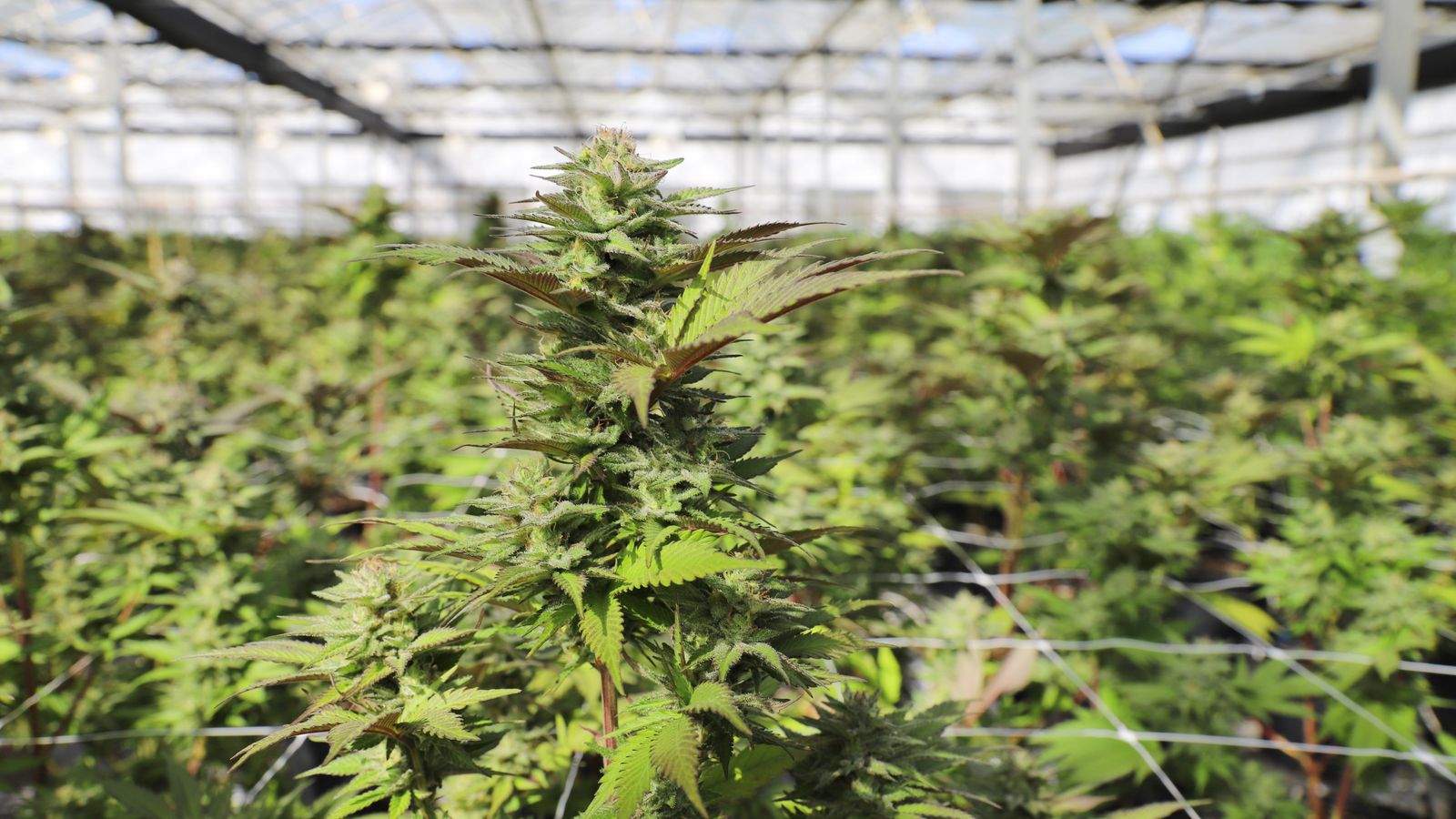
Executive Summary
Colorado's cannabis wholesale market has experienced a dramatic price collapse since 2014, with per-pound flower prices plummeting from $2,000-$2,400 to as low as $300-$500 by 2026, forcing dozens of longtime cultivators out of business. The state's mature recreational market, launched in January 2014 as the first adult-use program in the United States, has become a cautionary tale of oversupply, regulatory burden, and market saturation. In May 2026, a longtime Colorado cultivator announced closure, citing unsustainable wholesale pricing that no longer covers production costs. The collapse reflects structural challenges facing early-adopter states: unlimited cultivation licenses, vertical integration incentives that reduce wholesale demand, a federal tax code (26 U.S.C. § 280E) that prohibits standard business deductions, and interstate commerce restrictions that prevent export to undersupplied markets. Colorado's experience now serves as a critical case study for operators, investors, and policymakers nationwide as more states launch adult-use programs and grapple with supply-demand equilibrium.Why This Matters
The Colorado wholesale price collapse directly impacts thousands of cultivation jobs, billions in state tax revenue, patient access to affordable medicine, and investment decisions across the national cannabis industry. Colorado's Marijuana Enforcement Division reported 1,447 active cultivation licenses as of April 2026, down from a peak of approximately 1,600 in 2021. Each facility closure represents an average of 15-40 jobs lost, affecting cultivation technicians, trimmers, packagers, and facility managers. The state collected $423.4 million in cannabis tax revenue in fiscal year 2025, a 12% decline from the prior year, according to the Colorado Department of Revenue. Wholesale price erosion directly reduces tax collection under the state's 15% retail excise tax and 15% retail sales tax structure, as lower wholesale costs compress retail margins and total transaction values. For medical patients, the price collapse has created a paradox: while retail prices have declined modestly (from an average $220 per ounce in 2020 to $180 per ounce in 2026 according to the Colorado Department of Revenue), the closure of small-batch cultivators has reduced strain diversity and product quality at the lower price tiers. Patients seeking specific terpene profiles or cannabinoid ratios report fewer options as craft cultivators exit and large-scale operations focus on high-yield, commodity-grade flower. Investors and multi-state operators (MSOs) closely monitor Colorado as a leading indicator. The state's wholesale dynamics foreshadow challenges in Illinois, Michigan, and other markets where unlimited licensing and vertical integration dominate. MSOs with vertically integrated operations in Colorado—including Schwazze (formerly Medicine Man Technologies), Trulieve, and Curaleaf—have weathered the collapse better than wholesale-dependent independents, but even these operators report compressed EBITDA margins in their Colorado segments during quarterly earnings calls.Background and History: From Gold Rush to Oversupply
Colorado's wholesale price trajectory reflects a 12-year evolution from scarcity-driven premiums to commodity-market oversupply, shaped by policy decisions made during the state's pioneering recreational rollout.2012-2014: Amendment 64 and the Launch
Colorado voters approved Amendment 64 in November 2012, legalizing adult-use cannabis possession and sales. The measure amended the Colorado Constitution to permit adults 21 and older to possess up to one ounce of flower and cultivate up to six plants (three mature). The Colorado General Assembly enacted House Bill 13-1317 and Senate Bill 13-283 in 2013, establishing the regulatory framework administered by the Marijuana Enforcement Division within the Department of Revenue. Recreational sales commenced January 1, 2014. Initial wholesale prices ranged from $2,000 to $2,400 per pound for premium indoor flower, according to Cannabis Benchmarks (now part of New Frontier Data). Supply constraints were severe: only 136 retail licenses were active in the first quarter, and cultivation capacity lagged demand. Retailers paid premiums for consistent supply, and cultivators enjoyed seller's-market conditions.2015-2017: Rapid License Expansion
The Marijuana Enforcement Division adopted an open-licensing approach, issuing cultivation licenses to any applicant meeting background checks, facility standards, and local approval. By December 2015, active cultivation licenses reached 503. By December 2017, the count exceeded 900. Wholesale prices began declining in late 2015, falling to $1,600-$1,800 per pound by mid-2016 as new canopy came online. The state imposed no cultivation caps, no market-share limits, and no supply-demand modeling requirements. Vertical integration was incentivized: regulations required retailers to source 70% of inventory from their own cultivation or affiliated entities until October 2014, when the rule was relaxed. Even after relaxation, vertical integration remained economically attractive due to wholesale margin capture and 280E tax optimization.2018-2019: The Tipping Point
Wholesale prices fell below $1,000 per pound in early 2018 for mid-tier flower. By late 2019, average wholesale prices reached $600-$800 per pound, according to data from the Colorado Department of Revenue's Market Size and Demand Study. Outdoor and greenhouse flower traded as low as $400 per pound. Several factors converged: cultivation license count peaked near 1,100, total canopy exceeded 9 million square feet, and retail license growth stagnated at approximately 500 stores. Demand growth slowed as the novelty effect faded and tourist purchases plateaued. The state's population of 5.8 million could not absorb the supply, and federal prohibition under the Controlled Substances Act (21 U.S.C. § 812, Schedule I) barred interstate commerce.2020-2021: Pandemic Volatility
The COVID-19 pandemic created temporary price stabilization in spring 2020 as consumers stockpiled and supply chains disrupted. Wholesale prices briefly rebounded to $700-$900 per pound. However, by late 2020, oversupply reasserted itself. Cultivation facilities deemed essential under Colorado's public health orders continued full production while retail demand normalized. The Colorado General Assembly passed House Bill 21-1317 in 2021, establishing a legislative task force to study market saturation. The task force's December 2021 report recommended cultivation license caps, canopy limits, and supply-demand modeling, but the legislature declined to implement caps, citing concerns about limiting market access and favoring incumbents.2022-2026: Structural Collapse
Wholesale prices fell below $500 per pound for mid-tier flower in 2022 and continued declining. By 2024, average wholesale prices reached $400-$450 per pound, according to LeafLink wholesale transaction data. In 2026, bottom-tier flower trades at $300-$350 per pound, while premium indoor strains command $600-$800 per pound—still below 2018 mid-tier prices. Cultivation closures accelerated. The Marijuana Enforcement Division reported 127 cultivation license surrenders or revocations in 2024, 143 in 2025, and 68 in the first four months of 2026. Operators cite inability to cover costs: electricity, labor, rent, and compliance expenses total $250-$400 per pound for indoor cultivation, leaving minimal or negative margins at current wholesale prices.Key Players
Colorado Marijuana Enforcement Division
The Marijuana Enforcement Division (MED), housed within the Colorado Department of Revenue, administers licensing, compliance, and enforcement for the state's cannabis industry. The division oversees approximately 2,800 active licenses across cultivation, manufacturing, retail, and testing sectors as of May 2026. Director Shannon Gray, appointed in 2024, has advocated for legislative action on market saturation but lacks unilateral authority to impose cultivation caps. The MED collects wholesale transaction data through the state's seed-to-sale tracking system (METRC), providing transparency into pricing trends that confirm the collapse.Colorado Department of Revenue
The Department of Revenue publishes monthly tax collection data and periodic market studies. Its February 2026 Market Size and Demand Study projected continued oversupply through 2028 absent policy intervention, estimating that Colorado's cultivation capacity could serve a population three times the state's size. The department administers the 15% retail excise tax on wholesale transfers and the 15% retail sales tax, generating $1.76 billion cumulatively from 2014 through 2025.Wholesale-Dependent Cultivators
Dozens of independent cultivators have closed since 2022. The May 2026 closure highlighted in Cannabis Business Times involved a cultivator operating since 2014, which cited wholesale prices falling below $400 per pound for strains that cost $350-$450 per pound to produce. The operator, who requested anonymity, said in a public statement: "We held on as long as we could, but the math doesn't work anymore." Similar closures have affected facilities in Denver, Pueblo, and rural counties where lower real estate costs once provided competitive advantage.Multi-State Operators and Vertically Integrated Chains
Schwazze, a Denver-based MSO operating 21 retail stores and affiliated cultivation in Colorado, reported in its Q1 2026 earnings call that Colorado segment revenue declined 8% year-over-year due to pricing pressure, but the company maintained profitability through vertical integration and cost discipline. Trulieve and Curaleaf, which entered Colorado through acquisitions, have similarly emphasized vertical integration to insulate against wholesale volatility. These operators benefit from captive retail demand and avoid wholesale market exposure.Industry Advocacy Groups
The Cannabis Business Alliance, a Colorado trade association, has lobbied for cultivation license caps since 2020. Executive Director Mike Elliott said in March 2026 testimony before the Colorado General Assembly that "the wholesale market is in crisis, and without intervention, we'll lose the diversity and quality that made Colorado a model." The Marijuana Industry Group, representing larger operators, has opposed caps, arguing that market forces should determine capacity and that caps would entrench dominant players.Legal and Regulatory Framework
Colorado's cannabis regulatory structure, established under Article 18, Section 16 of the Colorado Constitution and implemented through Title 44, Article 12 of the Colorado Revised Statutes, created an open-licensing system with minimal supply controls. Amendment 64, codified as Colo. Const. art. XVIII, § 16, directs the General Assembly to enact legislation governing cultivation, manufacturing, testing, and retail sales. The implementing statutes, C.R.S. § 44-12-101 et seq., delegate rulemaking authority to the Marijuana Enforcement Division. Key regulatory provisions affecting wholesale markets include: Licensing: The MED issues cultivation licenses in three tiers—Tier 1 (up to 3,600 plants), Tier 2 (up to 6,600 plants), and Tier 3 (unlimited plants)—with no statewide caps. Local jurisdictions may impose caps or bans, but 237 of Colorado's 272 municipalities permit cannabis businesses as of 2026. Vertical Integration: No restrictions prevent vertical integration. A single entity may hold cultivation, manufacturing, and retail licenses. Regulations formerly required retailers to source 70% of inventory from affiliated cultivation, but this rule was eliminated in October 2014. Vertical integration remains economically incentivized due to margin capture and 280E optimization. Interstate Commerce: Federal prohibition under 21 U.S.C. § 812 (Schedule I classification) bars interstate transport. Colorado cultivators cannot export surplus to undersupplied markets in other states, creating a closed-loop supply glut. Taxation: Colorado imposes a 15% excise tax on wholesale transfers (the first sale from cultivation to retail or manufacturing) and a 15% retail sales tax. The excise tax is calculated on the wholesale price, so price erosion directly reduces revenue. Additionally, federal 26 U.S.C. § 280E prohibits cannabis businesses from deducting ordinary business expenses (rent, salaries, marketing) for federal tax purposes, compressing margins further. Seed-to-Sale Tracking: The state contracts with METRC (Marijuana Enforcement Tracking Reporting Compliance) to track all plants and products from cultivation through retail sale. METRC data provides transparency into wholesale transaction volumes and prices, confirming the collapse documented by private data providers. No Colorado statute or regulation currently authorizes the MED to impose cultivation license caps, canopy limits, or supply quotas. Legislative proposals to grant such authority (House Bill 23-1094 in 2023, Senate Bill 25-187 in 2025) failed to advance past committee.State-by-State Breakdown: Wholesale Price Comparisons
Colorado's wholesale price collapse is the most severe among mature adult-use states, but similar dynamics are emerging in Oregon, Michigan, and Oklahoma.Colorado
Average wholesale price (mid-tier indoor flower): $400-$450 per pound as of May 2026. Cultivation licenses: 1,447 active. Market status: severe oversupply, accelerating closures. Regulatory response: none enacted; legislative proposals for caps have failed.Oregon
Average wholesale price: $350-$400 per pound as of May 2026, the lowest in the nation. Oregon issued over 2,000 cultivation licenses under its open-licensing system, creating even more severe oversupply than Colorado relative to population (4.2 million). The Oregon Liquor and Cannabis Commission imposed a temporary moratorium on new cultivation licenses in 2018, but existing capacity remains excessive. Wholesale prices fell below $300 per pound in 2024 for outdoor flower.Michigan
Average wholesale price: $800-$1,000 per pound as of May 2026, declining from $1,400-$1,600 in 2022. Michigan's adult-use market launched in December 2019 and initially experienced supply shortages. Rapid licensing expansion in 2021-2023 (over 1,100 cultivation licenses issued) has created emerging oversupply. Prices are falling but remain above Colorado and Oregon due to stronger retail demand from Michigan's 10 million population and proximity to Illinois and Ohio consumers (though interstate sales remain illegal).California
Average wholesale price: $900-$1,100 per pound as of May 2026. California's market, the nation's largest, has experienced price declines from $1,400-$1,600 in 2020 but remains more stable than Colorado due to higher retail demand (39 million population) and significant illicit market competition that absorbs some surplus. The state's complex regulatory environment and higher barriers to entry have limited licensed cultivation growth relative to demand.Washington
Average wholesale price: $700-$850 per pound as of May 2026. Washington's market, launched in July 2014 alongside Colorado, initially experienced similar price declines but stabilized after the Washington State Liquor and Cannabis Board imposed a de facto cap on cultivation licenses in 2018 by limiting new application windows. Wholesale prices have remained relatively stable since 2020.Illinois
Average wholesale price: $2,200-$2,600 per pound as of May 2026. Illinois maintains strict cultivation license caps (22 craft growers, 21 large-scale cultivators as of 2026) and high barriers to entry, creating supply constraints and premium pricing. The state's model represents the opposite approach from Colorado's open licensing, resulting in higher wholesale prices but limited market access and higher retail prices for consumers.Oklahoma (Medical)
Average wholesale price: $500-$600 per pound as of May 2026. Oklahoma's medical market, launched in 2018, issued over 8,000 cultivation licenses under a minimal-barrier system, creating the most extreme per-capita oversupply in the nation. Wholesale prices collapsed from $2,000+ per pound in 2019 to below $400 per pound in 2023. The state has since tightened licensing requirements, and prices have modestly recovered as marginal operators exited.Market and Business Implications
The Colorado wholesale price collapse has accelerated industry consolidation, shifted competitive advantage to vertically integrated operators, and created a cautionary template for market structure in emerging adult-use states.Consolidation and Market Exit
Over 300 cultivation licenses have been surrendered or revoked in Colorado since 2022, representing a 17% contraction from the peak. Small and mid-sized wholesale-dependent cultivators have been disproportionately affected. Facilities under 10,000 square feet, which lack economies of scale, face per-pound production costs of $400-$500, making profitability impossible at current wholesale prices. Larger facilities (50,000+ square feet) achieve costs of $250-$350 per pound through automation, bulk purchasing, and labor efficiency, allowing survival at compressed margins. Private equity and MSO buyers have acquired distressed assets at steep discounts. In 2025, Schwazze acquired two cultivation facilities in Pueblo for a combined $3.2 million, approximately 40% of replacement cost, according to public filings. Such acquisitions allow vertically integrated operators to expand captive supply at below-market capital costs.Vertical Integration as Competitive Moat
Vertically integrated operators capture wholesale margins internally and optimize tax efficiency under 280E. A vertically integrated operator selling flower at $180 per ounce retail effectively realizes a $1,440 per-pound wholesale equivalent internally, far above the $400-$450 market rate. This structure allows profitability even as external wholesale prices collapse. 280E optimization is significant: because cannabis businesses cannot deduct operating expenses under federal tax law, minimizing taxable income is critical. Vertical integration allows operators to allocate costs to cultivation (where cost of goods sold is deductible under 280E) rather than retail (where it is not), reducing federal tax liability. This advantage compounds as wholesale prices fall, making external wholesale transactions increasingly uneconomical.Capital Markets and Investor Sentiment
Colorado's wholesale collapse has chilled cultivation-focused investment nationwide. Venture capital and private equity investors increasingly favor vertically integrated, retail-focused operators or ancillary service providers (software, genetics, equipment) over wholesale cultivation plays. Cultivation-only businesses are viewed as commodity producers in a structurally oversupplied market with no pricing power. Public cannabis companies with Colorado exposure have underperformed. Schwazze's stock price declined 34% in 2025, partly attributed to Colorado margin compression. Analyst reports from Stifel and Canaccord Genuity cite Colorado as a "cautionary tale" and recommend investors favor MSOs with geographic diversification and limited Colorado exposure.Impact on Product Quality and Diversity
The closure of craft cultivators has reduced strain diversity and small-batch, terpene-focused production. Surviving large-scale operators prioritize high-yield, fast-flowering strains like Blue Dream, Gelato, and Wedding Cake that maximize revenue per square foot. Niche strains with lower yields but distinctive terpene profiles (e.g., Durban Poison, Tangie, Strawberry Cough) have become harder to source at wholesale. Retail buyers report declining flower quality in the $100-$150 per ounce retail tier, as large-scale cultivators optimize for speed and volume over trichome density, terpene preservation, and hand-trimming. Premium flower ($200+ per ounce retail) remains available but represents a shrinking market segment as price-sensitive consumers dominate demand.What Experts Say
Industry analysts, economists, and operators attribute the Colorado wholesale collapse to structural oversupply, regulatory design flaws, and federal prohibition preventing interstate commerce. Beau Whitney, senior economist at New Frontier Data, said in an April 2026 interview with MJBizDaily that Colorado's open-licensing system "created a textbook oversupply scenario with no market-clearing mechanism." Whitney noted that cultivation capacity exceeds demand by an estimated 200-300%, and absent interstate commerce or significant license attrition, prices will remain depressed through 2028. Andrew Livingston, director of economics and research at Vicente LLP, a Denver-based cannabis law firm, testified before the Colorado General Assembly in March 2026 that "the wholesale market is experiencing a structural failure. Prices are below the cost of production for most operators, and the market cannot self-correct because federal law prevents export and state law prevents supply reduction." Livingston recommended cultivation license caps tied to demand modeling, similar to Washington's approach. Truman Bradley, executive director of the Marijuana Industry Group, opposed cultivation caps in the same hearing, stating that "caps would entrench large operators and prevent new entrants, reducing competition and innovation." Bradley argued that market forces would eventually reduce supply as unprofitable operators exit, and that regulatory intervention would create unintended consequences. Chris Woods, founder of Terrapin Care Station, a Colorado-based vertically integrated operator, said in a February 2026 podcast interview that "wholesale-only cultivation is no longer viable in Colorado. If you're not vertically integrated or serving a niche market with premium pricing, you can't survive." Woods noted that Terrapin's cultivation operations remain profitable only because 100% of output supplies the company's retail stores.What's Next
Colorado's wholesale market faces continued price pressure through 2027, with potential stabilization dependent on further license attrition, legislative intervention, or federal rescheduling enabling interstate commerce.Near-Term Outlook (2026-2027)
Wholesale prices are projected to remain in the $350-$500 per pound range through 2027, according to New Frontier Data's May 2026 forecast. An additional 100-150 cultivation licenses are expected to close or be surrendered as operators exhaust capital reserves. The Marijuana Enforcement Division has not signaled plans to impose emergency supply restrictions, and legislative appetite for cultivation caps remains limited given political opposition from free-market advocates and concerns about favoring incumbents.Legislative Scenarios
The Colorado General Assembly will consider Senate Bill 27-203 in the 2027 session, which would authorize the MED to impose cultivation license caps and canopy limits based on demand modeling. The bill faces uncertain prospects: it has support from small cultivator advocates and some Democrats but opposition from the Marijuana Industry Group and Republican legislators who view caps as anti-competitive. If enacted, caps would likely be set at 1,200-1,300 licenses (approximately current levels), preventing new entry but not reducing existing supply.Federal Rescheduling Impact
The DEA's proposed rescheduling of cannabis from Schedule I to Schedule III under the Controlled Substances Act, currently under administrative review as of May 2026, could indirectly affect Colorado wholesale prices. Rescheduling would eliminate 280E tax burdens, improving operator profitability and potentially allowing marginal cultivators to survive at current prices. However, rescheduling would not legalize interstate commerce, which requires congressional action to amend 21 U.S.C. § 812 or enact affirmative interstate commerce protections.Interstate Commerce Potential
If Congress were to legalize interstate cannabis commerce—a scenario considered unlikely before 2028 given current political dynamics—Colorado cultivators could export surplus to undersupplied markets like New York, New Jersey, and Illinois. This would provide a market-clearing mechanism and likely stabilize wholesale prices at $800-$1,000 per pound (the approximate national average). However, interstate commerce would also expose Colorado cultivators to competition from lower-cost producers in California and Oklahoma, creating uncertain net effects.Market Stabilization Indicators
Stabilization will require cultivation capacity to contract to approximately 6-7 million square feet (from current 9+ million), aligning supply with Colorado's in-state demand. At current closure rates (120-150 licenses per year), this equilibrium could be reached by late 2027 or early 2028. Leading indicators to monitor include: monthly cultivation license counts from the MED, wholesale transaction volumes in METRC data, and retail price trends (stable or rising retail prices would signal supply-demand balance).Further Reading
- Colorado Marijuana Enforcement Division: Licensing Data and Market Reports — https://sbg.colorado.gov/med
- Colorado Department of Revenue: Cannabis Tax Data and Market Studies — https://cdor.colorado.gov/data-and-reports
- Colorado Revised Statutes, Title 44, Article 12 (Colorado Marijuana Code) — https://leg.colorado.gov/sites/default/files/images/olls/crs-title-44.pdf
- Amendment 64, Colorado Constitution, Article XVIII, Section 16 — https://www.colorado.gov/pacific/marijuana/amendment-64
- New Frontier Data: U.S. Cannabis Market Reports and Wholesale Price Tracking — https://newfrontierdata.com
- METRC (Marijuana Enforcement Tracking Reporting Compliance): Colorado Seed-to-Sale System — https://www.metrc.com/colorado
- Cannabis Benchmarks (New Frontier Data): Wholesale Spot Index — https://www.cannabisbenchmarks.com
- U.S. Code, Title 21, Chapter 13 (Controlled Substances Act) — https://www.govinfo.gov/content/pkg/USCODE-2021-title21/pdf/USCODE-2021-title21-chap13.pdf
- U.S. Code, Title 26, Section 280E (Disallowance of Deductions for Illegal Businesses) — https://www.law.cornell.edu/uscode/text/26/280E
- Vicente LLP: Colorado Cannabis Market Analysis and Policy Recommendations — https://www.vicentellp.com
- Marijuana Industry Group: Colorado Industry Advocacy and Data — https://www.marijuanaindustrygroup.org
- Cannabis Business Alliance: Market Saturation Reports — https://cannabusiness.org
Frequently asked questions
What caused Colorado's cannabis wholesale price collapse?
Colorado's wholesale collapse resulted from regulatory decisions allowing unlimited cultivation licenses without market caps. The state issued thousands of licenses after 2014 recreational legalization, creating massive oversupply. Retail competition drove consumer prices down, compressing wholesale margins. Mid-sized cultivators lacked economies of scale to compete with large operators who could produce at $200-300 per pound. Market maturation eliminated the price premium Colorado once commanded, while neighboring states developed their own supply chains.
How much have Colorado wholesale cannabis prices fallen?
Colorado wholesale flower prices dropped approximately 60-70% from peak levels. Premium flower sold for $2,000-2,500 per pound in 2014-2015, falling to $1,200-1,500 by 2018, then to $800-1,000 by 2022, and under $800 for most flower by 2024. Trim and lower-grade material fell even more dramatically, often selling below $100 per pound. Some cultivators reported selling flower for $400-600 per pound just to cover immediate costs and avoid total loss.
Which Colorado cannabis businesses have closed due to price collapse?
Hundreds of Colorado cultivators have closed since 2018, though specific company data is limited. Industry reports indicate 15-20% of cultivation licenses became inactive between 2019-2024. Mid-sized operations with 5,000-20,000 square feet faced the highest closure rates, unable to achieve large-scale efficiencies or boutique premiums. Many longtime operators who launched during medical-only or early recreational periods exited after years of declining margins made operations unsustainable despite brand recognition and established distribution.
How does Colorado's wholesale collapse compare to other states?
Colorado's collapse preceded similar patterns in Oregon, Oklahoma, and Michigan. Oregon experienced even steeper declines, with wholesale prices falling to $300-500 per pound by 2020 due to extreme oversupply. California saw similar but slower declines due to larger market size. Washington maintained somewhat higher prices through stricter license caps. Colorado's experience became a cautionary model, prompting states like Illinois and New Jersey to implement tighter supply controls and license limitations from the start of their recreational programs.
What strategies help Colorado cultivators survive low wholesale prices?
Surviving cultivators focus on vertical integration, controlling retail outlets to capture full margin. Others pursue ultra-premium positioning with craft cultivation commanding $1,200+ per pound from specialty retailers. Large operators achieve profitability through massive scale, automation, and costs under $300 per pound. Some pivot to extraction and concentrate production where margins remain higher. Contract growing for established brands provides stability. Diversification into hemp, consulting, or equipment sales supplements cannabis revenue for operators with expertise and infrastructure.
How has price collapse affected Colorado's cannabis job market?
Colorado cannabis employment peaked around 2019-2020 then declined as cultivation operations consolidated and closed. Trimming and cultivation jobs saw the largest losses as automation increased and production concentrated in fewer, more efficient facilities. Industry estimates suggest 10-15% employment reduction in cultivation sectors between 2020-2024. However, retail and manufacturing jobs remained more stable. Wages for cultivation workers also stagnated or declined as commodity economics reduced profit margins available for labor costs.
What role does interstate commerce play in Colorado's wholesale market?
Federal prohibition prevents legal interstate commerce, but neighboring state markets indirectly impact Colorado prices. As New Mexico, Arizona, and other nearby states built local supply, they stopped being potential export markets Colorado operators anticipated. This trapped Colorado production within state borders, intensifying oversupply. Illegal interstate diversion historically provided a pressure valve, but increased enforcement and declining price differentials between states reduced this outlet. Industry advocates argue federal legalization enabling interstate commerce could help stabilize Colorado's market.
Will Colorado wholesale cannabis prices recover?
Most analysts expect Colorado wholesale prices to remain low with modest stabilization rather than significant recovery. Market consolidation may reduce oversupply as marginal producers exit, potentially stabilizing prices at $600-900 per pound for quality flower. However, continued improvements in cultivation efficiency, automation, and genetics will keep downward pressure on prices. Federal legalization could enable interstate commerce, potentially helping Colorado premium products access new markets, but would also introduce competition from lower-cost producing regions. Commodity pricing appears to be the long-term reality.
How does Colorado's wholesale collapse affect consumers?
Consumers benefit from wholesale price collapse through lower retail prices. Colorado retail flower prices fell from $12-18 per gram in 2014 to $5-8 per gram by 2024 at many dispensaries. Concentrate and edible prices also declined significantly. However, some consumers worry about quality degradation as producers cut costs to survive. The collapse also reduced product diversity as smaller craft cultivators exited, concentrating market share among larger operators with more standardized offerings. Tax revenue growth slowed as per-unit prices declined despite stable or growing consumption volumes.
What lessons does Colorado's experience offer other cannabis markets?
Colorado demonstrates the risks of unlimited licensing without supply controls. States launching recreational programs increasingly implement license caps, phased rollouts, and market analysis to prevent oversupply. Colorado shows vertical integration advantages in commoditized markets, influencing regulatory approaches to ownership limits. The collapse highlights the importance of product differentiation and brand value in mature markets. It also reveals how quickly cannabis transitions from high-margin specialty product to low-margin commodity, affecting business planning, investment strategies, and regulatory policy in emerging markets nationwide.
The cannabis newsletter you forward to your team.
Federal policy, market data, grower alerts, and the one story that matters today. Sent every weekday at 7am. Free.
No spam. Unsubscribe with one click. 21+ only.