Customs Flags N3.67B Cannabis Load at Tin Can, Hands It to NDLEA
Nigeria Customs uncovered a cannabis consignment valued at N3.67 billion at Tin Can Island Port and transferred the case to NDLEA, The Guardian Nigeria reported.
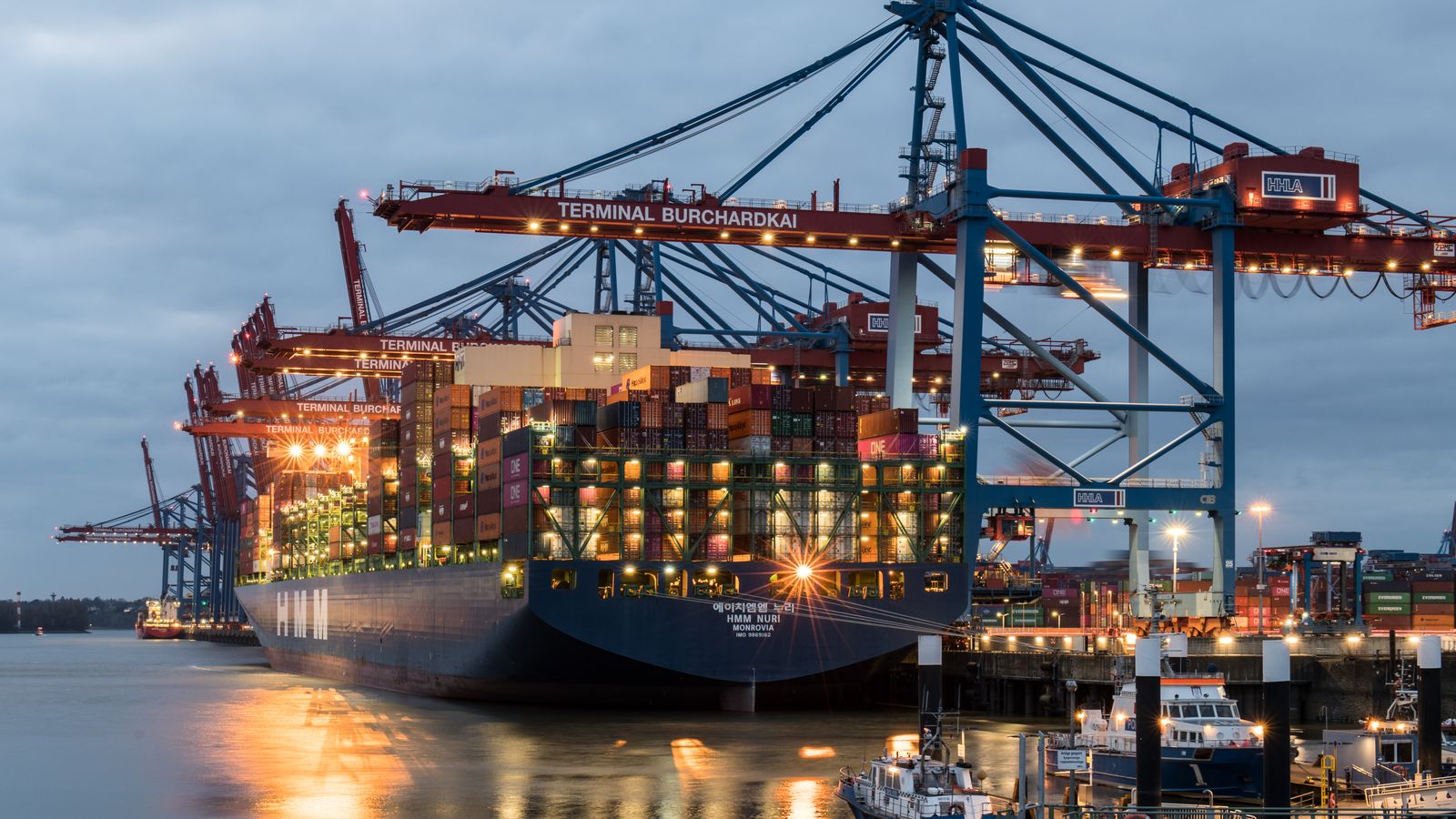
Container ships moored at Terminal Burchardkai in Hamburg, Germany during evening hours.
Customs flagged the load and passed it to drug agents
The Nigeria Customs Service uncovered the consignment at Tin Can Island Port and turned it over to the National Drug Law Enforcement Agency (NDLEA), according to The Guardian Nigeria.
N3.67 billion is the number attached to the load. The report, as it surfaced Saturday through Google News, didn't carry the weight, packaging, concealment method, origin or consignee in the material available to us. We aren't guessing at them.
Short version: seizure, valuation, handover. Everything else is pending.
Read N3.67 billion as an agency estimate, not a market price
A seizure valuation reflects an enforcement agency's assumptions about quantity and street price, not a traded benchmark.
In equity-analyst terms, it's a mark-to-model figure with undisclosed inputs. Illicit cannabis doesn't clear on an exchange, so there's no comp set, no multiple and no bid-ask spread to test the claim against. Whether the figure uses wholesale or retail pricing changes the answer by a wide margin. The report we reviewed doesn't say which.
A seizure valuation tells you how much the agency says the cargo was worth. It doesn't tell you how much product moved through the port undetected.
Without the weight, nobody outside Customs and the NDLEA can back into a per-kilogram price. That's the first number to ask for.
The handover shifts the case from interdiction to prosecution
Customs controls the port and the cargo, while the NDLEA is the agency that investigates and prosecutes narcotics offenses in Nigeria.
Cannabis remains illegal under Nigerian federal drug law, so a seizure of this kind runs through the NDLEA's casework rather than through any licensing channel. Once the agency takes custody, the evidence trail and any suspects become its responsibility.
Whether arrests were made hasn't been reported in the material we have. That gap matters more than the headline figure, because a seizure without a charge is an inventory event, not a deterrent.
Why port operators and cargo insurers should care
A multibillion-naira find at a major Lagos gateway is a reminder that clean-cargo documentation is a cost center for everyone who touches containers.
Freight forwarders, terminal operators and shipping lines carry the reputational and compliance exposure when contraband surfaces in a container, even when they're not the target. Insurers price that exposure. Importers with spotless records still absorb delays when a port tightens inspection after a high-profile catch.
No listed stock is going to move on this. That's a cost line, not a catastrophe. But the cumulative drag of enforcement-driven inspection is real, and it lands on the people who can least pass it along.
The bull case and bear case for Nigeria's interdiction effort
The bull case rests on detection at the gate; the bear case rests on what happens after the seizure.
Bulls will point out that a load this size was caught at a container port, which suggests screening at Tin Can is working. A catch of that scale also gives Customs and the NDLEA a public win that supports their budget arguments.
Bears will say seizures measure what's caught, not what passes. One valuation says nothing about conviction rates, supply-chain disruption or whether the network behind the load stays intact. Both readings can be true at once.
What to watch next
The disclosures that would turn this headline into a usable data point are the NDLEA's own statement, any charges filed, and the quantity behind the valuation.
Customs and NDLEA have both historically published seizure details through their own channels, so a fuller account of origin, routing and suspects could follow. For full background on this story, see the CannIntel topic hub on Nigeria cannabis enforcement.
The next signal: an NDLEA statement confirming weight, suspects and charging status. Until then, N3.67 billion is a number without a denominator.
Frequently asked questions
What did Nigeria Customs seize at Tin Can port?
According to The Guardian Nigeria, Customs uncovered a cannabis shipment valued at N3.67 billion at Tin Can Island Port in Lagos. The available report did not specify weight, packaging, origin or consignee.
Why was the cannabis handed to the NDLEA?
The NDLEA is Nigeria's federal agency for investigating and prosecuting narcotics offenses. Customs intercepts cargo at the port, then transfers drug cases to the NDLEA for custody of evidence and any prosecution.
Is cannabis legal in Nigeria?
No. Cannabis remains illegal under Nigerian federal drug law, and the NDLEA enforces it. A seizure like this one proceeds as a criminal enforcement matter, not through any licensed channel.
Is N3.67 billion the market value of the shipment?
Not in a verifiable sense. It is a seizure valuation attached by the agency. Illicit cannabis has no exchange price, so the figure depends on undisclosed assumptions about quantity and pricing.
Sources
The cannabis newsletter you forward to your team.
Federal policy, market data, grower alerts, and the one story that matters today. Sent every weekday at 7am. Free.
No spam. Unsubscribe with one click. 21+ only.
Related from News
Trump Complains Democratic-Run Cities Smell Like Marijuana
The president's reported remark carries no policy change, but it lands as federal rescheduling and state-level legalization both remain unsettled.

Authorities raid illegal pot shops, Orange County Tribune reports
The Orange County Tribune reported raids on unlicensed cannabis storefronts on Oct. 9, 2026, but the headline is the only confirmed detail so far.

LA Progressive Pushes 'Fewer Teen Users' Thesis Investors Should Test
An Oct. 8 LA Progressive piece frames legalization and falling teen use as a paradox, and the claim cuts straight through MSO valuations and rescheduling politics.
More from the newsroom

Report Says CBD Study Cut Alzheimer's Damage; Details Unverified
The Marijuana Herald reported a study linking CBD to better memory and less Alzheimer's-related brain damage, but the underlying research hasn't been identified.

Safe Harbor Marijuana Banking Deposits Hit $119.3M, Up 7.4%
Deposits tied to Safe Harbor's cannabis banking business rose 7.4% year over year, a steady gain that leaves the larger access question open.

New Study Links Cannabis to Sudden Panic, StudyFinds Reports
StudyFinds reported Oct. 11 that new research shows cannabis can trigger sudden panic in a calm brain. The underlying paper is not yet verified.