Report Says CBD Study Cut Alzheimer's Damage; Details Unverified
The Marijuana Herald reported a study linking CBD to better memory and less Alzheimer's-related brain damage, but the underlying research hasn't been identified.
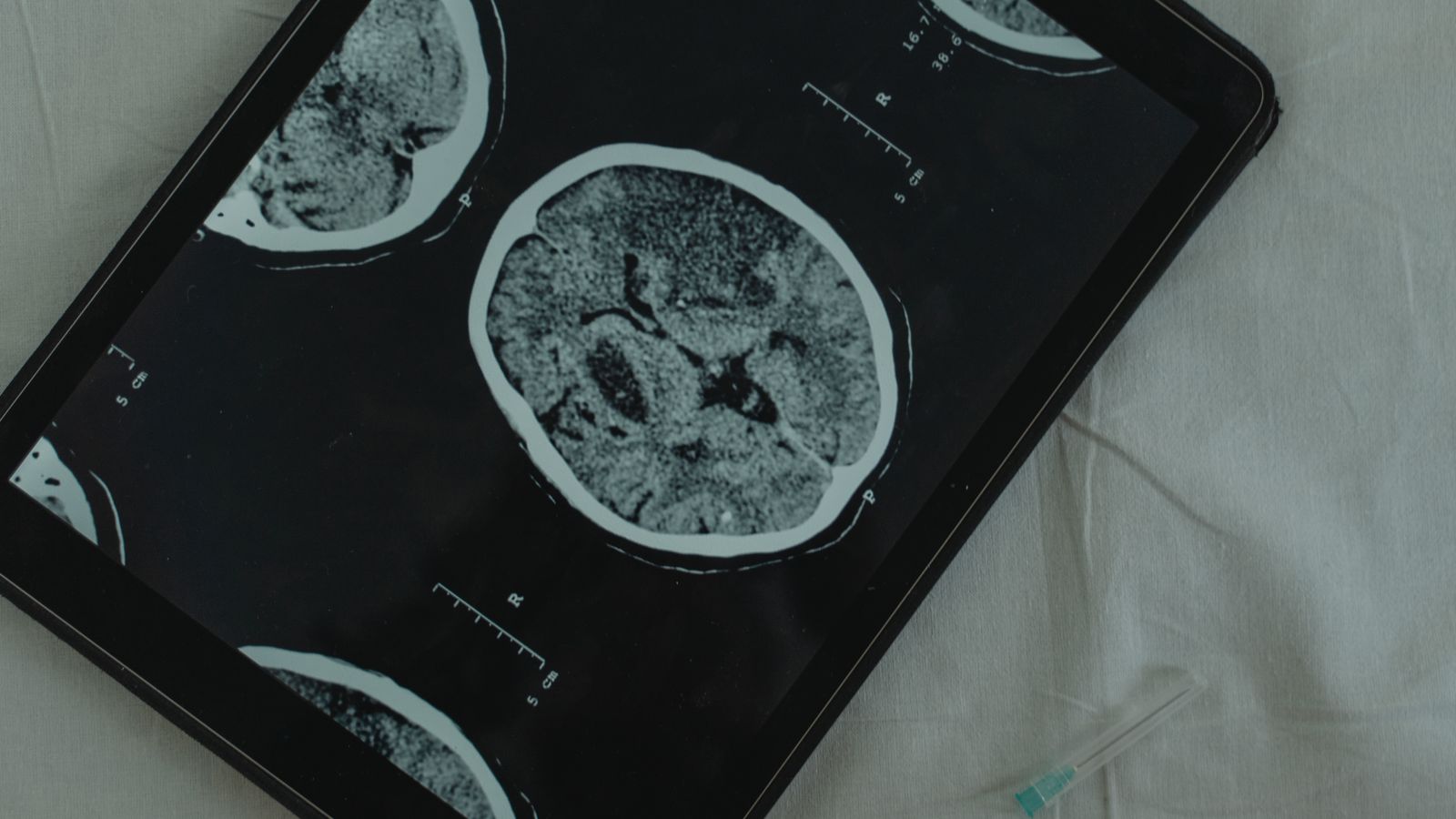
Close-up view of a brain CT scan displayed on a digital tablet with a medical needle beside it.
The only verifiable fact is the headline
The Marijuana Herald reported on Oct. 11, 2026 that a study tied CBD to better memory and less Alzheimer's-related brain damage, but CannIntel couldn't confirm the research behind it.
On our desk, the signal is a headline and a publisher name. No journal. No authors. No institution, sample size or dose.
That gap matters because "study" covers a wide range of evidence. It can mean a randomized human trial, an observational survey, or a lab experiment in cells or animals. The phrasing, improves memory and reduces brain damage, fits animal work as comfortably as human work. We don't know which this is, and we won't guess.
What follows is what can be said responsibly: what the claim would need to show, why it matters, and where the regulatory line sits.
Five details decide whether this is a lead or a footnote
Species, study design, dose, endpoints and funding determine whether the finding has any bearing on people with Alzheimer's disease.
Start with the subject. Results in animal models of Alzheimer's have a long record of failing to carry over to patients, a pattern that extends well beyond cannabinoid research. A controlled human trial would carry far more weight than any rodent result.
Then come the endpoints. "Brain damage" could mean amyloid-beta plaques, tau tangles, inflammation markers or imaging changes. Each measures something different, and none is the same as a patient remembering more. "Memory" could be a maze test or a validated cognitive scale, and the distinction is the whole story.
Dose and formulation come next. Purified cannabidiol, a full-spectrum extract and a product containing THC aren't interchangeable, and results from one say little about the others. Funding matters too, particularly if a manufacturer paid for the work and chose which outcomes to report.
A result that improves memory under controlled conditions and a product that treats Alzheimer's are separated by years of trials, and a headline erases that distance in a single line.
Why operators and patients should care now
An unverified headline can still drive purchases, and the FDA hasn't approved any CBD product to treat Alzheimer's disease.
Alzheimer's patients and their caregivers are a vulnerable audience, and a headline travels faster than its methodology. Retailers and brands will be tempted to cite it in product copy, newsletters and social posts. Don't.
The only CBD medicine the FDA has approved is Epidiolex, and that approval covers certain seizure disorders, not dementia. The agency has previously sent warning letters to CBD sellers over disease-treatment claims, and it treats a product marketed to treat a disease as an unapproved drug. A brand that repeats this headline as a health claim invites that exposure for no commercial upside. That math isn't hard.
Investors face a quieter version of the same problem. Early-stage cannabinoid research can lift sentiment on small-cap names long before any trial data exists to support it. For full background on how the evidence has developed, see the CannIntel topic hub on CBD and Alzheimer's research.
What would change this assessment
CannIntel will update this report once the study's journal, authors and data are identified and the claims can be checked against the paper.
The decisive document is the primary paper or preprint, not a secondary write-up. A named journal, a registered protocol and disclosed conflicts would let readers judge the work on its merits, and until those appear, the Marijuana Herald headline stands as a claim, not a finding.
Nothing here suggests CBD research on neurodegeneration is a dead end. The question is narrower: whether this particular result survives scrutiny. Strong evidence earns a conclusive headline. This doesn't yet qualify.
Watch for a citation, a DOI or a university press release tied to this study. If none surfaces, that absence is itself the story.
Frequently asked questions
Does CBD treat Alzheimer's disease?
No approved evidence supports that. The FDA has not approved any CBD product to treat Alzheimer's. The only FDA-approved CBD medicine, Epidiolex, is indicated for certain seizure disorders. Research continues, but a single reported study doesn't establish treatment efficacy.
What did the Marijuana Herald report?
The Marijuana Herald published a headline on Oct. 11, 2026 saying a study found CBD improves memory and reduces Alzheimer's-related brain damage. CannIntel could not identify the journal, authors, design or dose from the available material.
Was the study done in humans?
That's unconfirmed. The headline doesn't say whether the subjects were people, animals or cells. Animal results often fail to carry over to human patients, so the species is the first detail to check.
Can CBD brands cite this study in marketing?
It's risky. The FDA has sent warning letters to CBD sellers over disease-treatment claims. Citing an unverified study to imply a product helps with Alzheimer's could expose a brand to regulatory action.
Sources
The cannabis newsletter you forward to your team.
Federal policy, market data, grower alerts, and the one story that matters today. Sent every weekday at 7am. Free.
No spam. Unsubscribe with one click. 21+ only.
Related from Medical
New Study Links Cannabis to Sudden Panic, StudyFinds Reports
StudyFinds reported Oct. 11 that new research shows cannabis can trigger sudden panic in a calm brain. The underlying paper is not yet verified.
Trial Reports THC-CBD-Terpene Blend Cut Morphine Use Nearly 50%
A clinical trial of a THC, CBD and terpene formulation reported a near-50% drop in morphine use among acute nerve pain patients.

Study: CBG Cut Blood Pressure 18% in Rats, Slowed Human Blood Clotting
A preclinical study reported by The Marijuana Herald links the minor cannabinoid to cardiovascular effects, but the data comes from rats and lab blood samples, not patients.
More from the newsroom

Safe Harbor Marijuana Banking Deposits Hit $119.3M, Up 7.4%
Deposits tied to Safe Harbor's cannabis banking business rose 7.4% year over year, a steady gain that leaves the larger access question open.
Illinois Cannabis Sales Climb, Raising Excise Tax and 280E Stakes
An AOL.com report says Illinois cannabis sales are rising, but the tax tiers under the state's 2020 legalization law decide who actually benefits.

NZ Herald: Charge Rate for Personal Cannabis Use Triples
New Zealand's charge rate for personal cannabis use has tripled, NZ Herald reported, raising hard questions about police discretion and drug policy.