VA Secretary Cites 'Massive Progress' on Psychedelic PTSD Treatments
Veterans Affairs moves toward psychedelic-assisted therapy for PTSD following Trump's April executive order.
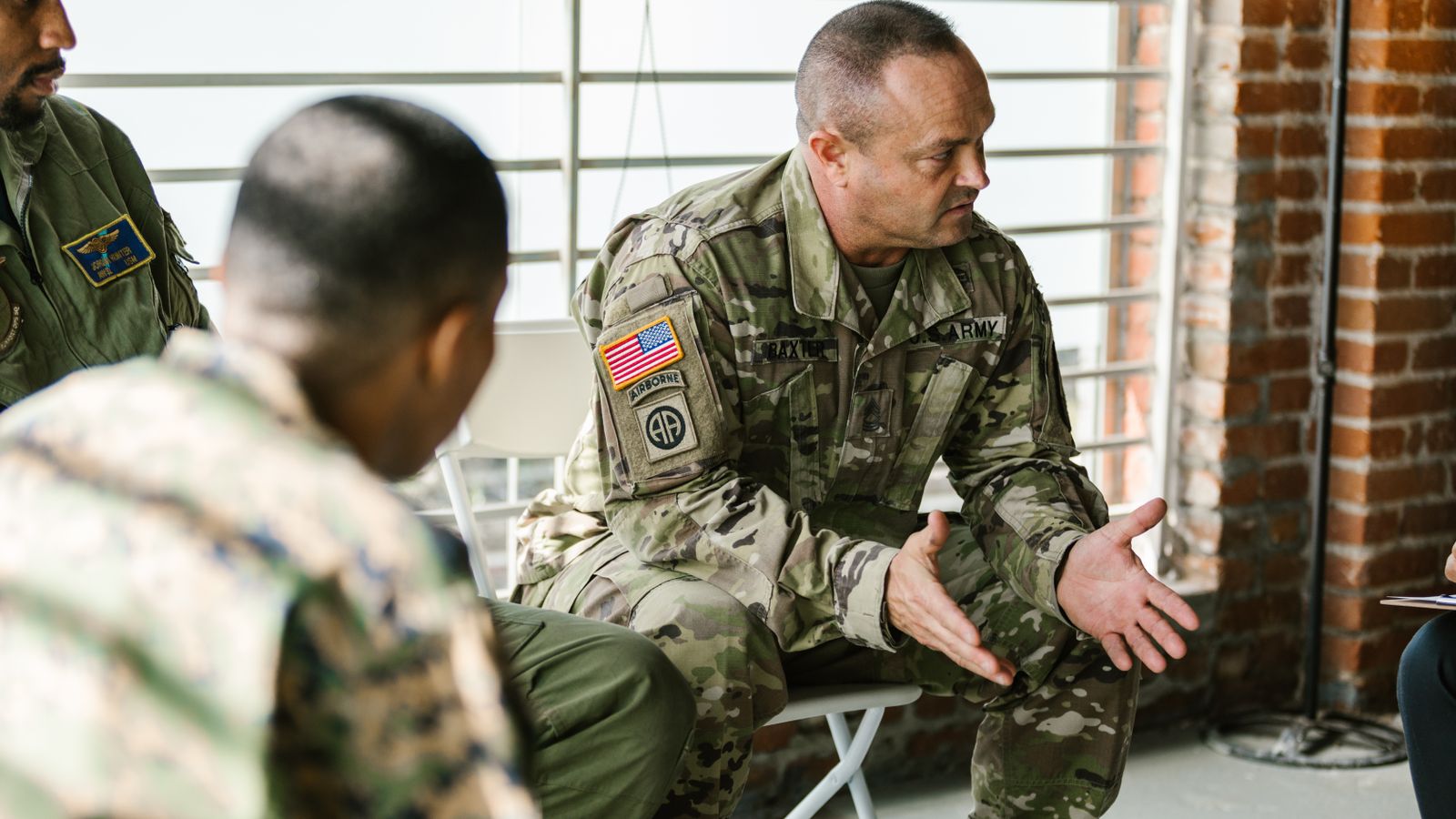
Military veterans engaging in a supportive group therapy session indoors.
Executive Order Set Research Timeline in April
Trump's April 2026 executive order tasked the VA, HHS, and DOD with launching clinical trials and regulatory pathways for psychedelic-assisted therapy within 180 days. The order specifically named psilocybin and MDMA as priority compounds for PTSD treatment, citing Phase 3 trial data showing remission rates above 60% in veteran cohorts when paired with structured therapy protocols.
The 180-day deadline falls in October 2026. Collins' remarks suggest the VA is on track to meet that window.
VA Cites Diagnostic and Treatment Breakthroughs
Collins told reporters the department is advancing both diagnostic tools and novel treatment modalities for mental health conditions prevalent in veteran populations. "I think we're making massive progress in how we diagnose things, but also how we do new treatments," he said, according to the Florida Phoenix.
The VA didn't specify which psychedelic compounds are furthest along in internal review. Psilocybin and MDMA remain Schedule I under the Controlled Substances Act, requiring DEA research registrations and FDA Investigational New Drug applications for any federally funded trial.
PTSD Prevalence Drives Policy Shift
An estimated 13% of post-9/11 veterans meet diagnostic criteria for PTSD, a rate roughly triple that of the general U.S. population. The VA's 2025 National Veteran Suicide Prevention Annual Report logged 6,392 veteran suicides in 2023. PTSD and major depressive disorder were cited as the two leading co-morbidities.
Traditional SSRI-based protocols show response rates below 40% in veteran PTSD cohorts, a gap that's fueled bipartisan congressional pressure for alternative therapies, including psychedelic-assisted models that pair single or multi-dose psilocybin or MDMA sessions with intensive psychotherapy.
Phase 3 Data Cleared Path for Federal Action
MAPS Public Benefit Corporation completed two Phase 3 trials of MDMA-assisted therapy for PTSD in 2023, reporting 71% of participants no longer met PTSD diagnostic criteria after three MDMA sessions paired with talk therapy. The FDA granted Breakthrough Therapy designation in 2017 but hasn't yet issued a final approval for prescription use.
Usona Institute's psilocybin program for major depressive disorder completed Phase 2 trials in 2024, with results published in JAMA Psychiatry showing sustained remission in 58% of participants at 12-month follow-up. Neither compound is approved for medical use outside of clinical trials.
Regulatory Roadblocks Remain Despite Executive Push
Federal trials require DEA Schedule I research registration, a process that historically takes 12-18 months and limits the number of authorized facilities to fewer than 50 nationwide. The VA operates 171 medical centers. Scaling psychedelic therapy across that footprint will require either expanded DEA registrations or statutory rescheduling.
Here's the catch: the executive order doesn't grant the VA authority to prescribe or dispense psychedelics outside of approved trials. Any post-trial access would require FDA approval and a change in DEA scheduling—either administrative rescheduling by the Attorney General or congressional action via the Controlled Substances Act.
Veteran Advocacy Groups Press for Faster Timelines
Veterans of War, a nonprofit advocating for psychedelic access, has called for the VA to open enrollment in psilocybin and MDMA trials by the end of 2026. The group estimates 400,000 veterans could benefit from psychedelic-assisted therapy if regulatory barriers were removed.
Heroic Hearts Project, which has facilitated over 500 veteran participation slots in international psilocybin retreats in Jamaica and the Netherlands, said federal trials are essential to establishing insurance reimbursement pathways. Without FDA approval and a CPT billing code, psychedelic therapy will remain out-of-pocket. Session costs range from $2,000 to $15,000 depending on protocol length.
What to Watch Through October
The VA is expected to publish a preliminary implementation roadmap by the executive order's 180-day deadline in mid-October. That document will clarify which compounds are prioritized, how many trial sites the department plans to activate, and whether the VA will seek expedited DEA research registrations or push for broader statutory reform.
For full background on federal psychedelic policy and veteran access initiatives, see the CannIntel topic hub on Veterans Psychedelic Therapy. The next hard deadline: October 2026, when the executive order's directive comes due.
Frequently asked questions
What psychedelics is the VA researching for PTSD treatment?
The VA is prioritizing psilocybin and MDMA under the April 2026 executive order. Both remain Schedule I controlled substances, requiring DEA research registrations and FDA Investigational New Drug applications for any federally funded clinical trial.
When will veterans be able to access psychedelic therapy through the VA?
The executive order set a 180-day deadline (mid-October 2026) for the VA to launch clinical trials. Any prescription access outside of trials requires FDA approval and DEA rescheduling, timelines for which remain unclear.
How effective are psychedelics for veteran PTSD compared to traditional treatments?
Phase 3 trials of MDMA-assisted therapy showed 71% of participants no longer met PTSD diagnostic criteria after treatment, compared to response rates below 40% for SSRI-based protocols in veteran populations.
What regulatory barriers remain for psychedelic therapy in the VA system?
Psilocybin and MDMA are Schedule I controlled substances. Federal trials require DEA research registration, a 12-18 month process. Scaling across the VA's 171 medical centers requires either expanded DEA registrations or statutory rescheduling by Congress or the Attorney General.
How many veterans could benefit from psychedelic-assisted therapy?
Veterans of War estimates 400,000 veterans could benefit if regulatory barriers were removed. An estimated 13% of post-9/11 veterans meet PTSD diagnostic criteria, a rate triple that of the general U.S. population.
Sources
The cannabis newsletter you forward to your team.
Federal policy, market data, grower alerts, and the one story that matters today. Sent every weekday at 7am. Free.
No spam. Unsubscribe with one click. 21+ only.
Related from Medical

Jefferson County Cannabis ER Visits Exceed State Average, Report Shows
New York county's cannabis-related emergency department visits outpace statewide rate in latest public health data.

Nature Study Maps How Aging Brain Recalibrates Cannabinoid Risk-Benefit
New neuropharmacology review shows cannabinoid receptor density and metabolic clearance shift dramatically across lifespan, challenging one-size-fits-all dosing.

Colorado Study Finds Medical Cannabis Coverage Reduces Opioid Use
State workers' compensation pilot shows cannabis-covered claimants reported better outcomes and lower opioid reliance than control group.
More from the newsroom
Ghana Approves Two Licensed Medical Cannabis Producers
NACOC grants cultivation licenses to two operators under strict medicinal-use framework.

Amsterdam-Style Cannabis Café Eyes Valencia Street for Summer 2027
A San Francisco operator is planning the Mission's first on-site consumption lounge, targeting a mid-2027 launch on Valencia.

Texas Bans Certain THC Products, Businesses Face Compliance Crisis
New Texas law prohibits delta-8 and other hemp-derived THC products, leaving retailers scrambling to clear inventory.