Mouse Study Finds Endocannabinoid Boost Reverses PTSD-Like Behavior
A Marijuana Herald report says activating the brain's cannabinoid system reversed PTSD-like behaviors in mice. The paper behind it isn't identified, and human proof is absent.
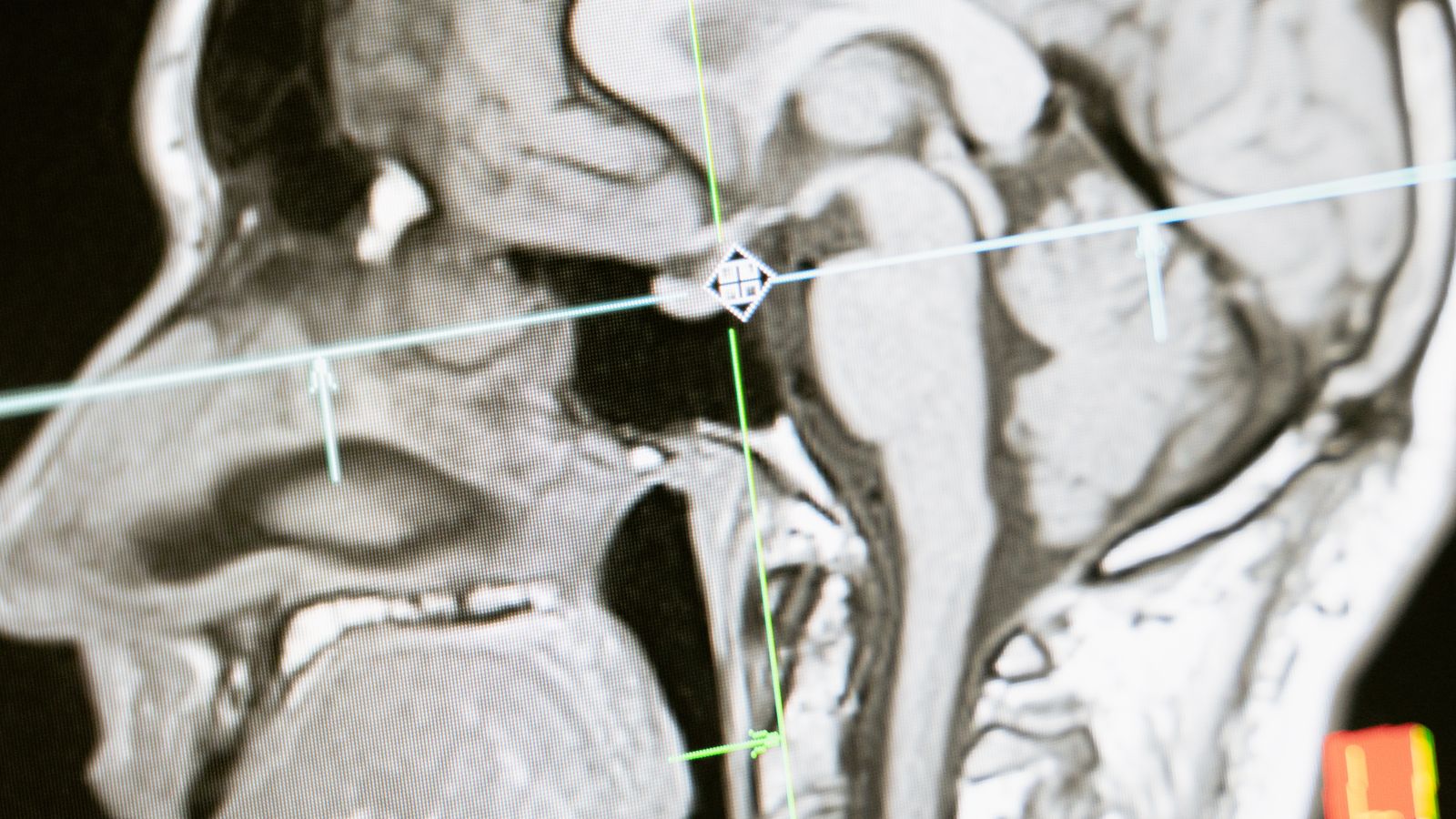
Close-up of an MRI scan showing a sagittal view of the human brain for analysis.
What the report says, and what it doesn't
The Marijuana Herald reported Oct. 11 that activating the brain's endocannabinoid system reversed PTSD-like behaviors in mice, but the report as indexed carries no methods, sample size or named investigators.
That's the full extent of what CannIntel could verify. The signal is a headline and a publisher name. There's no journal, no institution, no principal investigator, no dosing data, and no effect size.
So the article you're reading is built on a claim, not a dataset. We aren't going to dress it up as more.
Still, the stakes justify a look. PTSD treatment options are thin, and any credible mechanism that works on fear memory draws attention from operators, patients and investors. The CannIntel topic hub on cannabinoids and PTSD research tracks how that evidence has developed.
Why a mouse result isn't a treatment
"PTSD-like behavior" in mice is a proxy built from fear-conditioning tests, and proxies fail often when drugs move into people.
Researchers typically score freezing, avoidance and startle responses after a stressor, then test whether an intervention extinguishes them. Those readouts are useful. They aren't a diagnosis.
The biology underneath is real, and it's the reason the finding is plausible. The endocannabinoid system, which runs on CB1 and CB2 receptors and on the lipids anandamide and 2-AG, has long been tied in preclinical work to how the amygdala and prefrontal cortex handle fear extinction. A result pointing that way wouldn't be a surprise.
Plausible isn't proven. The word "activating" also carries a lot of weight here, and the report doesn't say how the system was activated. A direct CB1 agonist such as THC, an enzyme inhibitor that raises anandamide, and a CBD-based approach are three different pharmacological bets with different risk profiles.
A reversal in mice says the pathway is worth pursuing. It says nothing yet about dose, durability, or whether the effect survives contact with a human clinical population.
Human PTSD isn't one condition, either. Trauma type, comorbid substance use and sleep disruption all shift outcomes. A mouse cage controls for almost none of that.
What to demand before this moves a market or a patient
No operator, investor or patient should act on this finding until the underlying paper, its controls and its replication status are public.
FDA has not approved a cannabis-derived drug for PTSD. Any path from this result to a labeled indication runs through human trials, and most compounds that look clean in rodents don't make it through. That's a base rate, not pessimism.
A headline isn't a paper. When the paper surfaces, these are the questions that decide whether it matters:
- Which compound or mechanism was used, at what dose, and by what route?
- Were both male and female mice tested, and were the experimenters blinded?
- Did the effect persist after dosing stopped, or did the behaviors return?
- Was there an anxiety or memory cost, since CB1 activation can impair some cognitive functions?
- Has any independent lab reproduced it?
Durability is the one that matters most. A treatment that suppresses fear responses only while on board is a very different product from one that changes how the memory is stored.
For patients, the practical read is narrow. Veterans and others self-medicating with THC-dominant products shouldn't take this as validation. Rodent data on a targeted mechanism doesn't translate to dispensary flower.
Investors get the same read: no listed company is named in the signal, and no pipeline claim can be tied to it.
Watch for the paper itself. A named journal, a DOI and a sample size would convert this from a headline into something that can be graded. Until then, treat it as a lead worth chasing and not as a result.
Sources
The cannabis newsletter you forward to your team.
Federal policy, market data, grower alerts, and the one story that matters today. Sent every weekday at 7am. Free.
No spam. Unsubscribe with one click. 21+ only.
Related from Medical

Study Finds Cannabis Hospitalisations Up 49% in a Decade
A study reported by Mirage News puts the ten-year rise at 49%. The paper's geography, definitions and denominators will decide what that number means.
Study Finds No Cognitive Gap in Epilepsy Patients Using Marijuana
A report published Oct. 12 found no significant cognitive differences between epilepsy patients with and without recent marijuana use, but the full methodology isn't yet verified.
Victoria Cannabis Psychosis Hospitalizations Rise, Report Says
Medical Xpress reported rising cannabis-related psychosis hospitalizations in Victoria, but the case counts are missing. Potency, coding and demand are the variables that matter.
More from the newsroom

Virginia releases draft rules for recreational cannabis sales
Virginia's draft sales rules, released Oct. 12, 2026, give operators their first look at the regulatory text behind a retail launch slated for 2027.

Illinois Report Shows Cannabis Sales and Taxes Fell as Prices Dropped
A new state report shows Illinois shoppers bought more cannabis at lower prices, but total sales revenue and tax collections still declined.
Tilray Beverage Growth vs. Cannabis Weakness: The Tax Read
Kalkine Media asks whether Tilray's beverage business can offset cannabis softness; a tax and segment-level reading shows what the answer depends on.