Study Finds No Cognitive Gap in Epilepsy Patients Using Marijuana
A report published Oct. 12 found no significant cognitive differences between epilepsy patients with and without recent marijuana use, but the full methodology isn't yet verified.
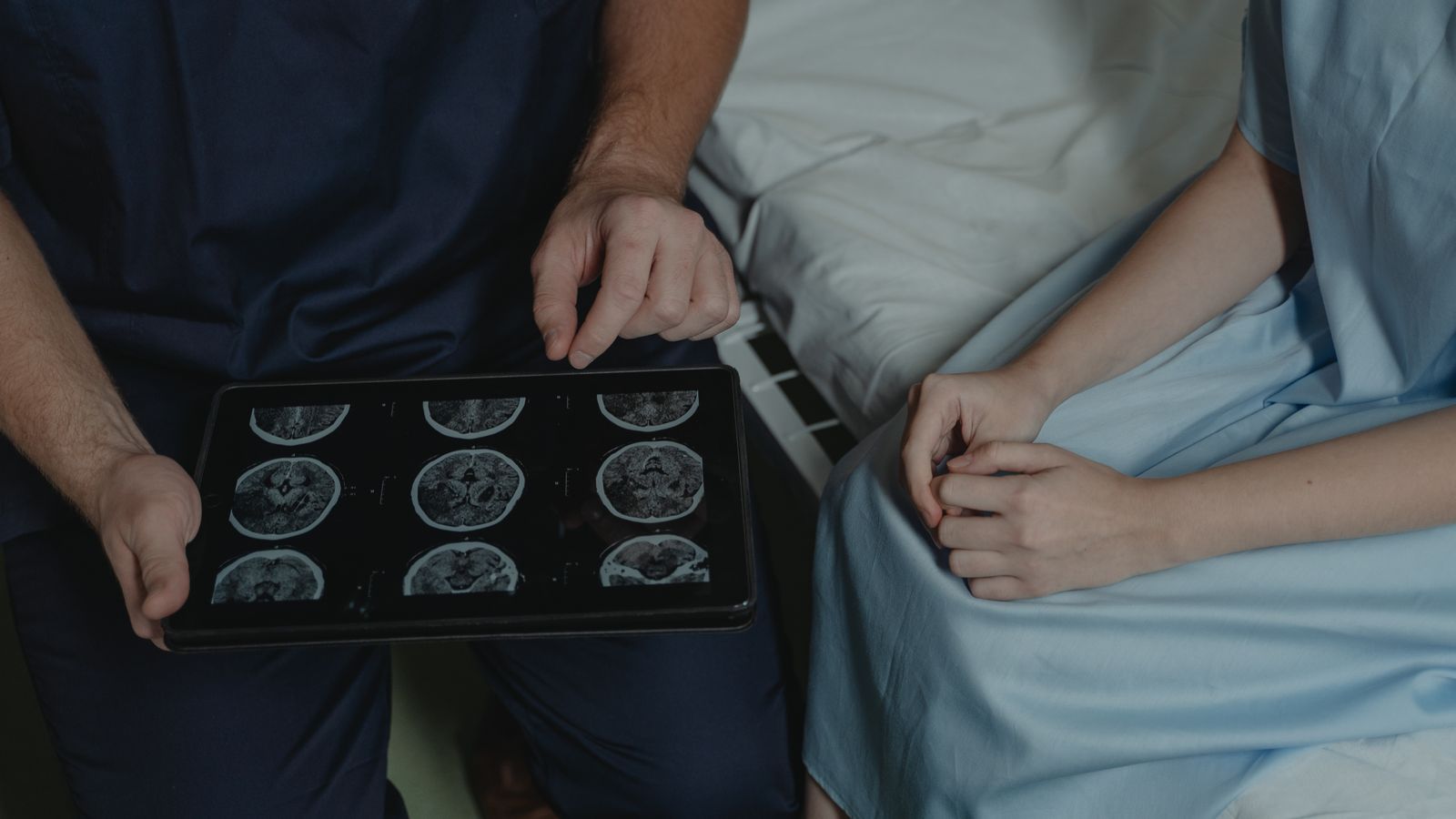
A doctor shows and explains brain scan images to a patient in a medical setting.
What the study reported
The one verifiable finding is the headline result: no significant cognitive differences between epilepsy patients with recent marijuana use and those without.
On Oct. 12, 2026, The Marijuana Herald published the report. CannIntel reviewed the item's headline and metadata. The underlying paper wasn't part of the material available to us.
That gap matters. We can't confirm the journal, the authors, the enrollment figures, or the statistical threshold behind the word "significant." Not yet. Those details will be added once the paper is in hand.
What a null result does and doesn't establish
A finding of no significant difference means the study didn't detect a gap, which is a narrower claim than showing cannabis is cognitively safe for people with epilepsy.
On a strict reading, "no significant differences" is a statement about statistical detection in one sample at one point in time. Small studies produce null results routinely, because they lack the power to see modest effects. The math is brutal.
A comparison of recent users against non-users also says nothing, by itself, about long-term or heavy use. Or dose-response.
The design questions that decide how much weight this carries
Five design details in the full paper will determine whether the result is informative or merely suggestive.
- How "recent use" was defined, and how it was verified (self-report versus toxicology).
- Whether participants used THC-dominant products, CBD-dominant products, or both.
- Sample size and whether the study was powered to detect a clinically meaningful difference.
- Which cognitive tests were used, and how long after last use they were administered.
- Seizure type, seizure frequency, and concurrent antiseizure medications.
Why epilepsy is a hard population to study
Cognition in epilepsy is shaped by seizures and by antiseizure drugs, so isolating the effect of cannabis is methodologically difficult.
Both seizures and many antiseizure medications can affect attention, memory and processing speed. A group that uses marijuana may differ from a group that doesn't in ways unrelated to the plant, such as severity of disease or treatment history, and observational designs struggle to untangle that.
Cannabinoid therapy for epilepsy already has a regulatory anchor. The FDA approved Epidiolex, a purified cannabidiol (CBD) product, in June 2018. That approval concerned seizure control in specific syndromes. It wasn't a ruling on whole-plant marijuana or on THC.
The tax and compliance read
A cognition study doesn't alter how a state-licensed dispensary is taxed, but it feeds the medical-necessity record that surrounds scheduling debates.
IRC §280E bars deductions and credits for businesses that traffic in Schedule I or II controlled substances. The provision turns on federal scheduling status. Clinical findings don't appear anywhere in its text.
Evidence like this matters indirectly. It informs rescheduling arguments, and it informs the qualifying-condition lists that state medical programs maintain. Epilepsy and seizure disorders appear on those lists in numerous states.
What operators and patients should do with it
Operators shouldn't build product claims on a headline, and patients shouldn't change treatment based on one unverified null result.
Most state regulators restrict unsubstantiated health claims in cannabis advertising. A retailer that cites "no cognitive differences in epilepsy" without the paper's design in front of it invites compliance risk. Don't treat a null result as a green light.
Patients on antiseizure regimens have a separate concern. Cannabinoids can interact with some of those medications, a question this study's headline doesn't address. That conversation belongs with a neurologist.
What comes next
The finding's value depends on the full paper, and replication in larger, prospective samples would matter more than any single result.
For full background on this story, see the CannIntel topic hub on cannabis and epilepsy cognition research. We'll update this report with the journal, sample size and methods as soon as they're confirmed.
The next signal: the paper's own limitations section, and whether its authors frame the result as reassurance or as a prompt for longer-term follow-up. That framing, not the headline, will tell regulators and operators how far the finding can travel.
Sources
The cannabis newsletter you forward to your team.
Federal policy, market data, grower alerts, and the one story that matters today. Sent every weekday at 7am. Free.
No spam. Unsubscribe with one click. 21+ only.
Related from Medical

Study Finds Cannabis Hospitalisations Up 49% in a Decade
A study reported by Mirage News puts the ten-year rise at 49%. The paper's geography, definitions and denominators will decide what that number means.
Victoria Cannabis Psychosis Hospitalizations Rise, Report Says
Medical Xpress reported rising cannabis-related psychosis hospitalizations in Victoria, but the case counts are missing. Potency, coding and demand are the variables that matter.

NZ Prescriber Questions Jobseeker Drug Tests for Cannabis Patients
A New Zealand prescriber is asking how jobseeker drug-testing rules would treat patients with legal medicinal cannabis prescriptions, a gap testing policy rarely addresses.
More from the newsroom

Illinois Report Shows Cannabis Sales and Taxes Fell as Prices Dropped
A new state report shows Illinois shoppers bought more cannabis at lower prices, but total sales revenue and tax collections still declined.
Tilray Beverage Growth vs. Cannabis Weakness: The Tax Read
Kalkine Media asks whether Tilray's beverage business can offset cannabis softness; a tax and segment-level reading shows what the answer depends on.

Idaho Sets Nov. 3 Vote on Legislature's Sole Power to Legalize Marijuana
A ballot question would decide whether only lawmakers, not voters, can legalize marijuana in Idaho, a state with no adult-use or medical market.