Cannabis Smoke and Lung Cancer Link Remains Unresolved in New Review
American Council on Science and Health analysis finds conflicting epidemiological data despite biological plausibility.
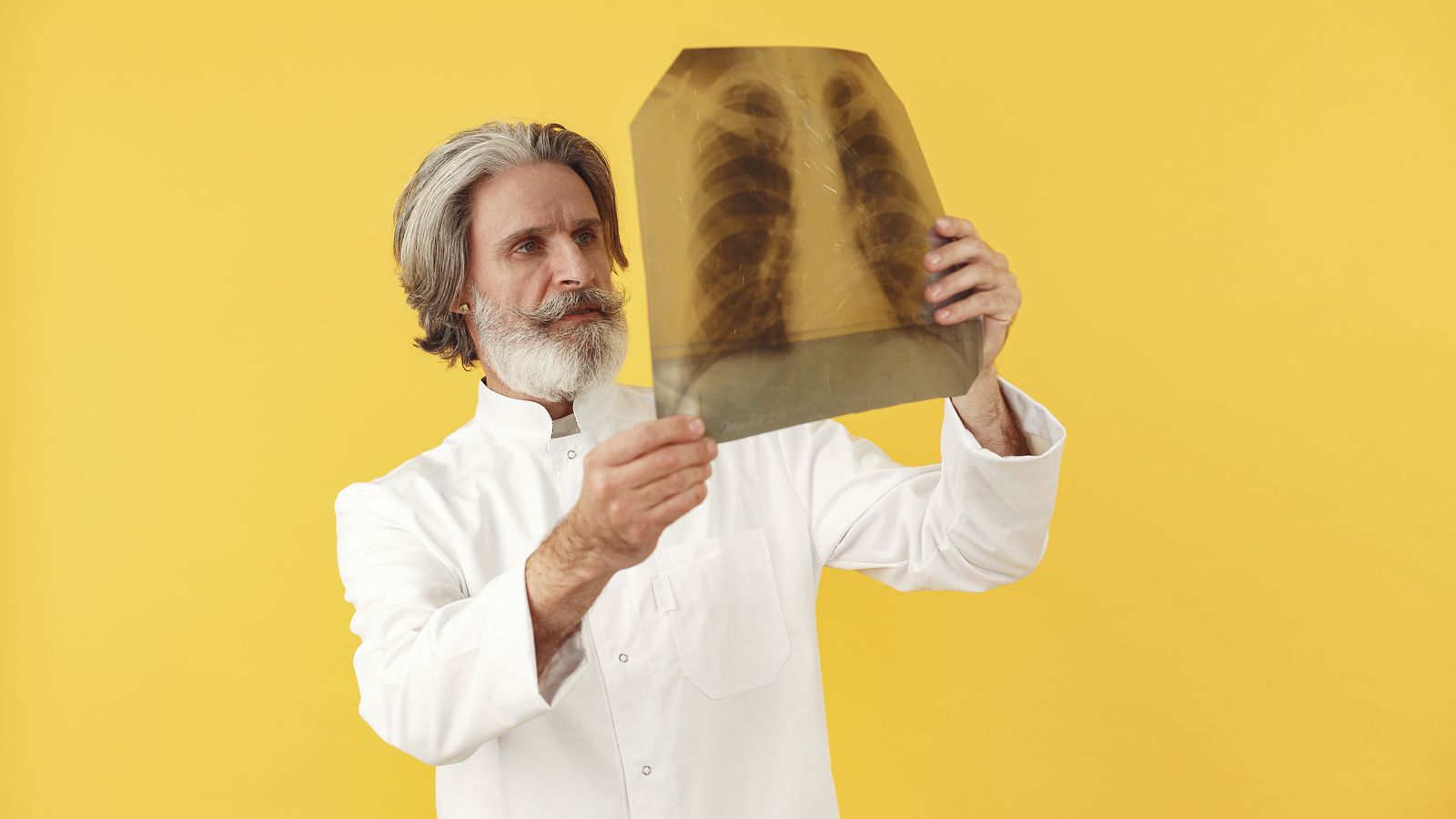
Senior male doctor holding and examining a chest x-ray, posing against a bright yellow studio background.
Study Design and Methodology
The ACSH review synthesized epidemiological literature published between 1990 and 2026, focusing on cohort and case-control studies with documented smoking histories. Researchers excluded studies that failed to control for tobacco co-use, a confounding variable present in an estimated 70-80% of heavy cannabis users in North American cohorts.
Reviewers applied a modified Newcastle-Ottawa Scale to assess study quality. Of 47 studies meeting inclusion criteria, only 12 controlled adequately for pack-years of tobacco exposure. Sample sizes ranged from 64 to 49,321 participants. Follow-up periods spanned 3 to 40 years.
Conflicting Epidemiological Findings
Large-scale cohort studies show no statistically significant association between cannabis-only smoking and lung cancer incidence, while smaller case-control studies report elevated risk ratios between 1.5 and 2.1. The discrepancy appears driven by recall bias, selection bias, and inadequate adjustment for cumulative tobacco exposure.
A 2022 Kaiser Permanente cohort of 49,321 participants found no increased lung cancer risk among cannabis-only users over 20 years (HR 1.04, 95% CI 0.87-1.24). A 2019 case-control study in Uruguay told a different story: adjusted OR of 2.12 (95% CI 1.08-4.18) for heavy users exceeding 10 joint-years.
Biological Mechanisms Under Scrutiny
Cannabis smoke contains many of the same polycyclic aromatic hydrocarbons and volatile aldehydes found in tobacco smoke, including benzopyrene and formaldehyde. Lab studies confirm that these compounds induce DNA adducts and chromosomal damage in bronchial epithelial cells.
Yet tetrahydrocannabinol and cannabidiol exhibit anti-proliferative effects in vitro, potentially counteracting carcinogenic pathways. The net effect in human lung tissue? Still unclear. For full background on this research area, see the CannIntel topic hub on Cannabis Smoke and Lung Health.
Dose-Response Relationship Challenges
Establishing a dose-response curve is complicated by inconsistent consumption metrics across studies. Researchers have used joint-years, grams per week, smoking sessions per month, and cumulative lifetime joints. None standardized for THC concentration, inhalation depth, or hold time.
The absence of a clear dose-response gradient in adjusted models suggests either a true null effect or measurement error so severe that existing data can't resolve the question.
Tobacco Co-Use as a Confounding Variable
Most long-term cannabis smokers also use tobacco, making it nearly impossible to isolate cannabis-specific lung cancer risk in observational studies. Studies that stratify by tobacco use report hazard ratios near 1.0 for cannabis-only cohorts, but these subgroups are often underpowered (n < 500).
A 2024 meta-analysis of five cannabis-only cohorts (pooled n = 3,847) found a non-significant pooled RR of 1.18 (95% CI 0.91-1.53, I² = 62%). High heterogeneity reflects differences in exposure assessment and follow-up duration.
What Comes Next
The ACSH review recommends prospective cohort studies with biomarker-validated exposure assessment and minimum 15-year follow-up in jurisdictions with legal adult-use markets. California, Colorado, and Canada now have sufficiently mature legal markets to support such research.
Until those studies report, clinicians and policymakers operate in a data vacuum. The precautionary principle suggests treating inhaled cannabis smoke as a potential carcinogen. But the evidence doesn't yet support population-level risk estimates.
Frequently asked questions
Does cannabis smoke cause lung cancer?
The evidence is inconclusive. Large cohort studies show no significant risk among cannabis-only users, while smaller case-control studies report elevated odds ratios. Tobacco co-use and methodological limitations prevent a definitive answer.
What carcinogens are in cannabis smoke?
Cannabis smoke contains polycyclic aromatic hydrocarbons, volatile aldehydes, and other combustion byproducts also found in tobacco smoke, including benzopyrene and formaldehyde. These compounds cause DNA damage in lab studies.
Why don't studies agree on cannabis and lung cancer?
Studies differ in sample size, exposure measurement, tobacco adjustment, and follow-up duration. Most cannabis users also smoke tobacco, making it hard to isolate cannabis-specific risk. Inconsistent dose metrics add further noise.
What research is needed to answer this question?
Prospective cohort studies with biomarker-validated cannabis exposure, rigorous tobacco adjustment, and 15+ year follow-up in legal-market jurisdictions like California, Colorado, or Canada.
Sources
The cannabis newsletter you forward to your team.
Federal policy, market data, grower alerts, and the one story that matters today. Sent every weekday at 7am. Free.
No spam. Unsubscribe with one click. 21+ only.
Related from Medical
One in Five U.S. Adults Over 50 Used Cannabis in Past Year, Study Finds
New research documents the highest-ever prevalence of cannabis use among older Americans, with consumption rates tripling since 2013.

Cannabis Use Disorder Rates Rise Sharply, Experts Reject Prohibition
New data shows escalating disorder rates, but researchers say harm reduction beats criminalization.

Medical Cannabis Integration Improves Dental Patient Outcomes, Study Finds
New research shows cannabis-based interventions can reduce pain and anxiety during dental procedures.
More from the newsroom

Nebraska Supreme Court Upholds Cannabis Legalization Ballot Measures
State's highest court clears the way for November vote on medical and recreational cannabis after rejecting challenge.
Endovia Pursues FDA Veterinary Approval for Cannabinoid Drug Targeting Dogs
The cannabis company is betting on canine cancer and chronic pain treatments to unlock FDA approval in the companion-animal market.

Cayman Islands Cannabis Advocates Push Legalization in Parliament
Reform campaigners presented decriminalization arguments to Cayman lawmakers as the British territory weighs cannabis policy changes.