Off-Duty Cannabis Use Sparks Employer Testing Debate in Legal States
Employers face mounting legal and practical questions over testing workers for marijuana consumed outside work hours.
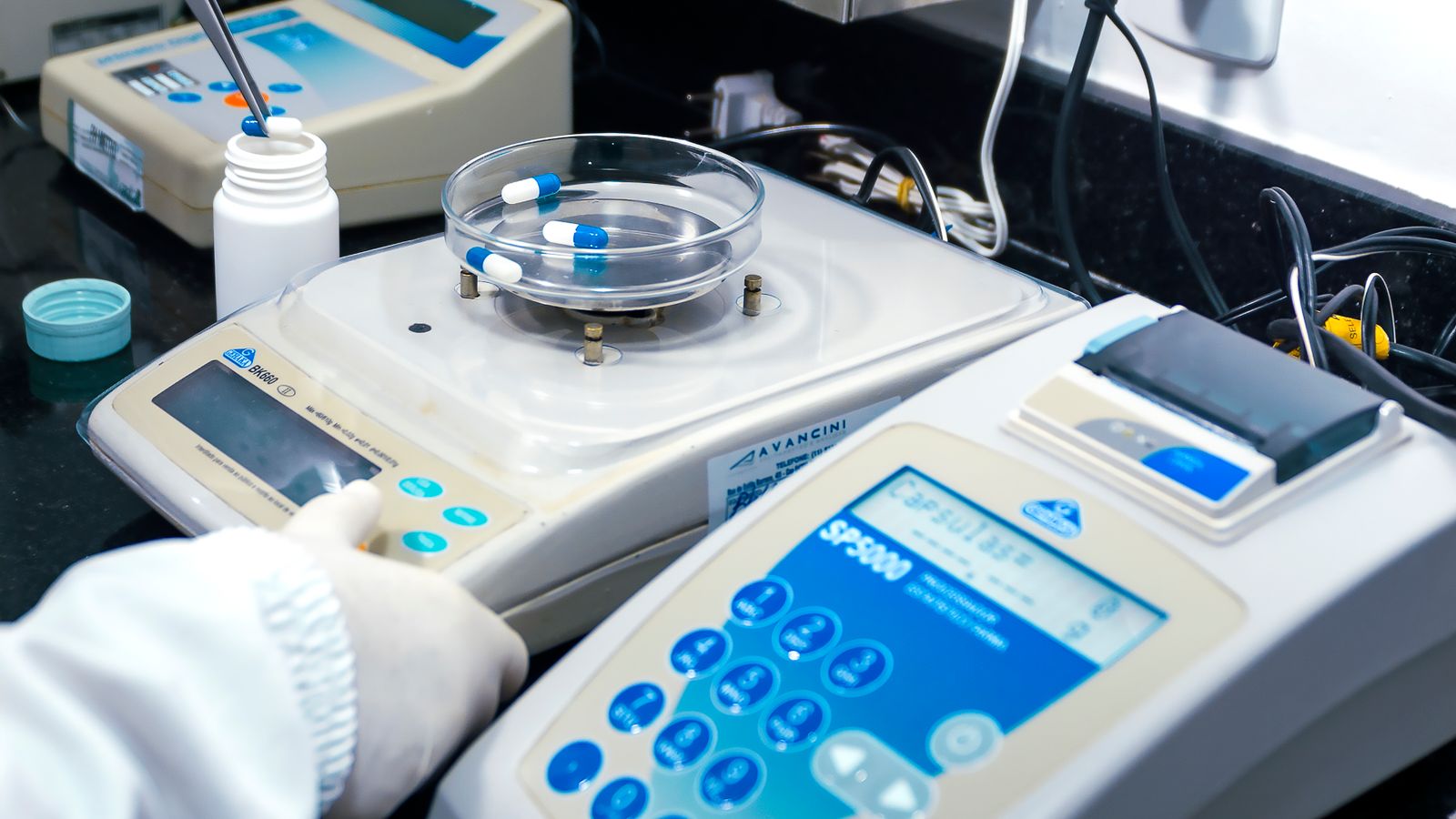
Close-up of laboratory equipment with capsules, capturing pharmaceutical analysis.
State Lawful-Activity Protections Expand
At least 19 states now prohibit employers from penalizing workers solely for lawful off-duty cannabis use, up from 14 at the start of 2025. California, New York, New Jersey, Connecticut, Montana, Nevada, and Rhode Island enacted employment protections alongside adult-use legalization. Illinois amended its Cannabis Regulation and Tax Act in 2020 to bar pre-employment testing for THC except in safety-sensitive roles. Minnesota's 2023 adult-use law included similar guardrails.
These statutes typically carve out exceptions for safety-sensitive positions—commercial drivers, heavy-equipment operators, health-care workers with patient-care duties. They also preserve employers' right to maintain drug-free workplace policies under federal contracts. The Federal Drug-Free Workplace Act of 1988 still requires certain federal contractors and grantees to certify drug-free environments, creating a compliance conflict in legal states.
New York's Cannabis Law § 201-d, effective March 2021, explicitly prohibits discrimination against employees or applicants for lawful off-duty cannabis use. The statute doesn't require employers to accommodate on-the-job impairment or permit consumption during work hours. New Jersey's Cannabis Regulatory, Enforcement Assistance, and Marketplace Modernization Act (N.J.S.A. 24:6I-1 et seq.) took effect in February 2021 with parallel protections.
Impairment Testing Remains Unsolved
No scientifically validated field test exists to measure real-time cannabis impairment. Employers are left with blunt instruments. Standard urine immunoassays detect THC metabolites for weeks after use, long past any psychoactive window. Blood tests measure active THC but require laboratory analysis. Oral-fluid tests offer a narrower detection window—roughly 12 to 24 hours—but can't pinpoint impairment at the moment of testing.
Employers in safety-sensitive industries face an impossible choice: rely on outdated metabolite tests that penalize legal off-duty use, or abandon testing and accept liability for on-the-job incidents.
The National Institute on Drug Abuse has funded research into pupillometry and cognitive-performance benchmarks, but no commercial product has achieved regulatory approval for workplace use. Colorado and Washington, the first adult-use states, have wrestled with this gap since 2012. Colorado's Lawful Off-Duty Activities Statute (C.R.S. § 24-34-402.5) doesn't protect cannabis use because marijuana remains federally illegal, but employers there increasingly face wrongful-termination claims when disciplining workers solely for positive tests without evidence of on-the-job impairment.
Federal Contractor Carve-Out Creates Patchwork
Employers holding federal contracts worth $100,000 or more must comply with the Drug-Free Workplace Act, which predates state legalization and doesn't exempt cannabis. The U.S. Department of Labor has issued no updated guidance reconciling the 1988 statute with state employment protections. Companies with both federal contracts and state-law obligations navigate conflicting mandates by maintaining tiered policies: zero-tolerance for contract-covered employees, reasonable-suspicion testing for others.
Safety-sensitive roles defined by U.S. Department of Transportation regulations—commercial motor-vehicle operators under 49 C.F.R. Part 382, pipeline workers under Part 199, aviation personnel under Part 120—remain subject to federal random and post-accident testing regardless of state law. The Federal Motor Carrier Safety Administration hasn't revised its drug-testing protocols since the Omnibus Transportation Employee Testing Act of 1991. Employers in these sectors face no legal ambiguity. Federal rules preempt state protections.
What Employers Should Watch
Three variables will shape workplace cannabis policy through 2027: DEA rescheduling, state legislative activity, and tort liability. If the Drug Enforcement Administration finalizes its proposed rule moving cannabis from Schedule I to Schedule III under the Controlled Substances Act (21 U.S.C. § 812), the drug remains federally controlled but the Drug-Free Workplace Act's applicability becomes murkier. Schedule III substances—anabolic steroids, ketamine, some barbiturates—don't trigger automatic contractor prohibitions.
State legislatures in Pennsylvania, Ohio, and Maryland are considering employment-protection bills for 2026 sessions. Pennsylvania's Senate Bill 846, introduced in May 2025, would bar adverse actions for lawful medical cannabis use outside work hours. Ohio's adult-use law, effective December 2023, included no employment protections; a correction bill is pending.
Employers also face rising wrongful-termination and disability-discrimination claims. Workers using medical cannabis to treat qualifying conditions under state law increasingly invoke the Americans with Disabilities Act, arguing that off-duty use constitutes a reasonable accommodation. Federal courts have largely rejected these claims—see Barbuto v. Advantage Sales & Marketing (Mass. 2017) for a state-law exception—but the legal terrain is shifting as more states codify protections.
For comprehensive background on state-by-state employment protections and testing standards, see the CannIntel topic hub on Workplace Cannabis Testing and Employment Rights.
The Road Ahead
Employers in legal states should audit policies annually, consult counsel familiar with both state employment law and federal contractor obligations, and consider reasonable-suspicion protocols over blanket pre-employment screening. The impairment-testing gap won't close quickly. Until then, the patchwork persists.
Frequently asked questions
Can an employer fire me for testing positive for cannabis in a legal state?
It depends on your state and job. Nineteen states prohibit adverse actions for lawful off-duty use, but safety-sensitive roles and federal contractors are typically exempt. Employers may still discipline for on-the-job impairment or policy violations during work hours.
Do cannabis employment protections apply to medical users only?
No. Most recent state laws protect both medical and adult-use consumers. New York, New Jersey, Connecticut, Montana, and Nevada extend protections to recreational users. Earlier medical-only states like Arizona and Illinois have narrower coverage.
What is a safety-sensitive position under cannabis employment law?
Definitions vary by state, but typically include roles requiring a commercial driver's license, operating heavy machinery, patient care, law enforcement, or positions subject to DOT drug-testing regulations under 49 C.F.R. Parts 40, 382, 199, and 120.
Can employers test for cannabis impairment at work?
Not reliably. Standard urine and blood tests detect past use, not current impairment. Oral-fluid tests narrow the window to 12-24 hours but cannot confirm impairment at the moment of testing. No scientifically validated field sobriety test for cannabis exists.
Does federal rescheduling change employer drug-testing rules?
Potentially. If DEA moves cannabis to Schedule III, it remains federally controlled but the Drug-Free Workplace Act's application becomes less clear. Schedule III drugs don't automatically trigger contractor prohibitions, but DOT testing rules would likely remain unchanged.
Sources
The cannabis newsletter you forward to your team.
Federal policy, market data, grower alerts, and the one story that matters today. Sent every weekday at 7am. Free.
No spam. Unsubscribe with one click. 21+ only.
Related from Laws

Massachusetts Voters Face Nine Ballot Questions in November 2026
Cannabis reform, gun control, and seven other measures could appear on Massachusetts ballots this fall.

THC Beverages Sold Alongside Soft Drinks Violate State Laws Nationwide
Hemp-derived THC drinks are appearing in mainstream retail coolers next to sodas and chocolate milk, often breaching state packaging and placement rules.

California CHP Allocates $41M in Cannabis Tax Revenue to Anti-Impaired Driving Grants
The California Highway Patrol announced statewide grant awards funded entirely by cannabis excise tax collections.
More from the newsroom

TSA cannabis discovery can trigger 10-year federal sentence, $15K fine
Federal prosecution remains possible despite state legalization when cannabis crosses airport security checkpoints.

Texas hemp retailers scramble to comply as THC cap takes effect July 31
Central Texas shops face a 10-day deadline to pull or reformulate products exceeding the state's new 0.3% total THC limit.

Nebraska Medical Cannabis Commission Sets Application, Licensing Fees
The commission advanced a fee structure for cultivators, processors, and dispensaries as the state prepares to launch its medical program.