UFCW Endorses Cannabis Administration and Opportunity Act
The United Food and Commercial Workers union backs federal legalization legislation targeting worker protections and expungement.
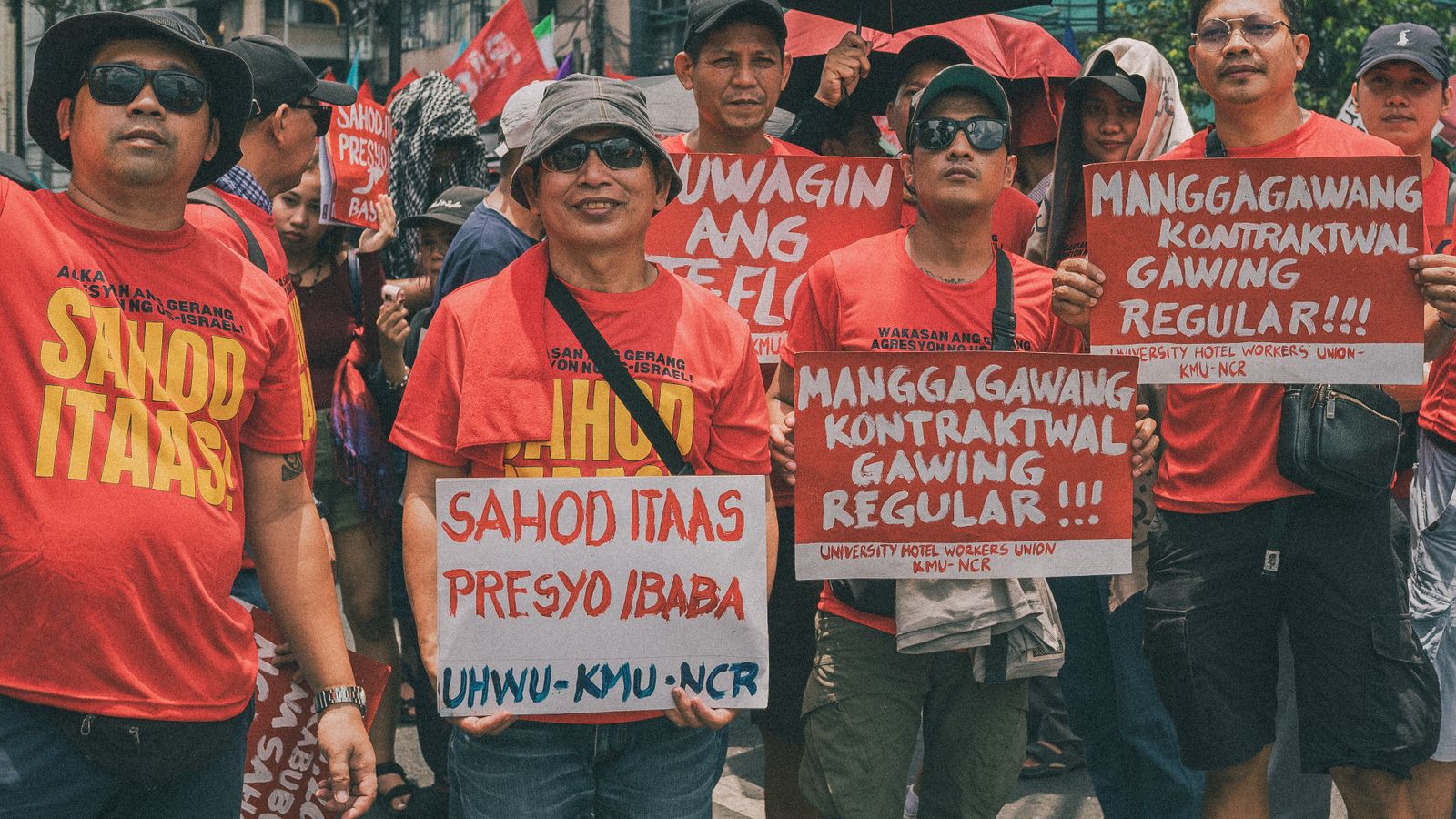
A group of adults protesting for regularization and higher wages in Manila.
Labor Backing for Federal Legalization
The UFCW's endorsement positions the union as the first major labor organization to publicly support the Cannabis Administration and Opportunity Act in 2026. The bill, reintroduced in February 2026 by Senate Majority Leader Chuck Schumer and co-sponsors Cory Booker and Ron Wyden, aims to deschedule cannabis at the federal level while establishing a regulatory framework administered by the Food and Drug Administration and the Alcohol and Tobacco Tax and Trade Bureau.
The union cited worker-protection provisions and criminal-justice reform components as primary reasons for the endorsement, according to a statement released July 19.
UFCW's Cannabis Workforce Footprint
The UFCW has organized cannabis workers in 13 states since 2010. It represents an estimated 10,000 to 15,000 dispensary employees, cultivation technicians, and manufacturing staff. The union has negotiated collective bargaining agreements with multi-state operators including Curaleaf, Cresco Labs, and Green Thumb Industries in markets such as California, Illinois, Massachusetts, and New York.
Key contract wins have included:
- Wage floors ranging from $18 to $25 per hour depending on role and geography
- Employer-sponsored health insurance in markets where MSOs previously offered stipends only
- Grievance procedures for termination disputes tied to inventory discrepancies
Bill Provisions Driving Union Support
The Cannabis Administration and Opportunity Act includes language requiring federal cannabis permit holders to remain neutral during union organizing campaigns. It also requires them to recognize unions via card-check procedures if a majority of workers sign authorization cards. This represents a significant departure from National Labor Relations Act baseline rules, which allow employers to demand secret-ballot elections.
The bill also mandates expungement of federal cannabis convictions. It establishes a Community Reinvestment Grant Program funded by a federal excise tax starting at 10 percent in year one and escalating to 25 percent by year five.
Political Timing and Legislative Outlook
The endorsement arrives three months before the November 2026 midterm elections, with control of both chambers in play. The bill currently has 22 Senate co-sponsors, all Democrats or independents who caucus with Democrats. It hasn't advanced out of the Senate Finance Committee, where it was referred in February.
No Republican senator has co-sponsored the legislation. The House companion bill, introduced by Representatives Jerrold Nadler and Barbara Lee, has 67 co-sponsors and faces similar procedural obstacles in the House Energy and Commerce Committee.
Employer Reaction and Industry Splits
Multi-state operators have offered mixed responses to the labor-neutrality provisions. Public MSOs generally avoid comment. Privately, they're expressing concern about organizing mandates. The National Cannabis Industry Association hasn't taken a formal position on the bill's labor clauses, though the organization supports descheduling in principle.
Smaller operators and craft cultivators, represented by groups such as the Cannabis Regulators Association, have raised concerns that the 25 percent excise tax ceiling would price small businesses out of compliance and favor vertically integrated MSOs with economies of scale.
What Comes Next
The Senate Finance Committee has scheduled no markup hearings for the Cannabis Administration and Opportunity Act as of July 19, 2026. For context and legislative history, see the CannIntel topic hub on the Cannabis Administration and Opportunity Act.
The UFCW plans a lobbying push in August targeting swing-district House members in California, Colorado, and Michigan. Whether that pressure translates into Republican co-sponsors remains the bill's central variable.
For complete background, history, and our ongoing coverage of this story:
Open the CannIntel topic hub →Sources
The cannabis newsletter you forward to your team.
Federal policy, market data, grower alerts, and the one story that matters today. Sent every weekday at 7am. Free.
No spam. Unsubscribe with one click. 21+ only.
Related from Laws

Menominee Dispensary Cap Upheld as Michigan Judge Validates Local Limits
A Michigan judge ruled Menominee's three-dispensary limit legal, handing municipalities renewed authority to cap cannabis retail.

DEA Rescheduling Bet May Collapse on THCA Hemp Loophole Enforcement Gap
Industry's Schedule III wager hinges on total-THC testing rules DEA hasn't written yet.
DEA Rescheduling May Leave Hemp-Derived THCA Fully Legal
Schedule III move could create unintended loophole for hemp-converted cannabinoids under 2018 Farm Bill.
More from the newsroom

Brazil's Medical Cannabis Market Hits $500M Valuation in 2026
Regulatory reforms and patient demand drive rapid expansion in Latin America's largest cannabis economy.

Colder BHO Extraction Cuts Wax Compounds Without Losing Potency, Study Finds
Peer-reviewed Abstrax research shows lower temperatures reduce unwanted lipids while preserving cannabinoids and terpenes.

DEA Marijuana Rescheduling Timeline Faces New Delay Risk as July Ends
Administrative hurdles and political headwinds threaten the DEA's proposed move to Schedule III before the 2026 midterms.