Thailand Advances Cannabis Control Bill Reversing 2022 Decriminalization
Parliament moves to restrict recreational use and reimpose criminal penalties after Anutin Charnvirakul's 2022 delisting sparked unregulated market growth.
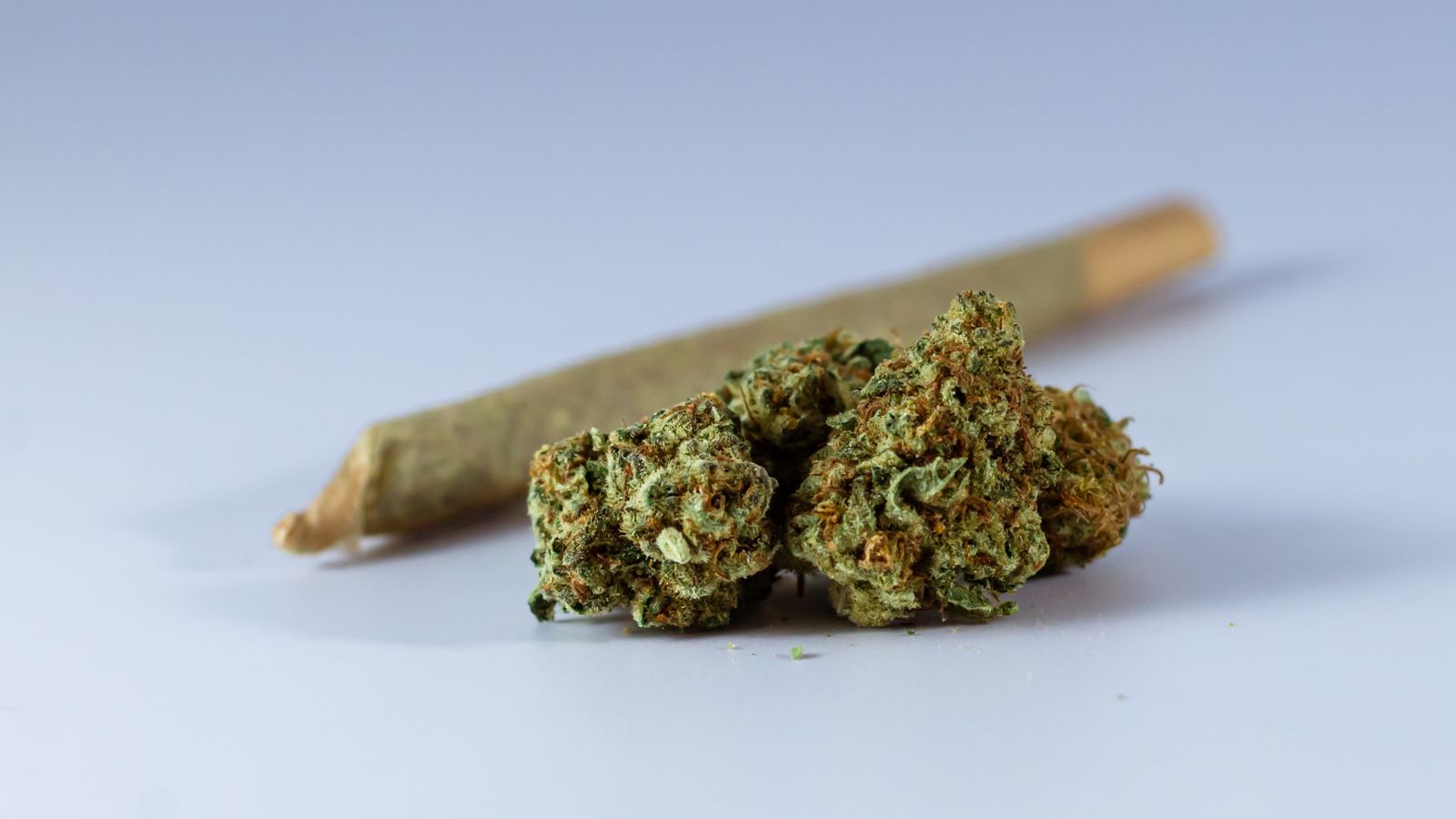
Macro shot of cannabis buds next to a pre-rolled joint, ideal for medicinal or recreational use imagery.
The proposed Cannabis Control Act would recriminalize recreational possession and narrow permissible uses to medical, research, and industrial hemp applications.
Thailand's draft Cannabis Control Act establishes a three-tier regulatory framework. Medical cannabis would require prescription and dispensing through licensed pharmacies. Industrial hemp cultivation — defined as cannabis plants with tetrahydrocannabinol content below 0.2 percent by dry weight — would require agricultural permits issued by the Ministry of Agriculture and Cooperatives. All other cultivation, possession, and sale would revert to criminal offenses under the Narcotics Act of 1979.
The bill passed its second reading in the House of Representatives on September 18, 2026. Final passage could occur before the current parliamentary session ends in December 2026, though coalition negotiations may push implementation into early 2027.
Penalties under the proposed statute mirror pre-2022 enforcement structures. Unauthorized cultivation would carry sentences of up to five years imprisonment and fines reaching 500,000 baht. Possession for personal use without medical authorization would trigger fines between 10,000 and 100,000 baht and potential imprisonment of up to one year. The Ministry of Public Health would gain authority to revoke licenses and impose administrative penalties on dispensaries found selling to non-qualified individuals.
The 2022 decriminalization triggered rapid market expansion but created enforcement and public-health gaps that regulators struggled to close.
Anutin Charnvirakul, leader of the Bhumjaithai Party and Deputy Prime Minister under the Prayut Chan-o-cha government, spearheaded the June 9, 2022 delisting of cannabis from Thailand's narcotics schedule. The move eliminated criminal penalties for cultivation and possession overnight, ostensibly to promote agricultural diversification and medical research. No comprehensive regulatory framework accompanied the delisting.
Within eighteen months, Thailand registered more than 9,000 cannabis dispensaries, concentrated in Bangkok, Chiang Mai, and tourist zones. Most operated under ambiguous legal authority, selling cannabis flower and edibles marketed for recreational consumption despite official guidance restricting use to medical purposes. The Food and Drug Administration issued non-binding advisories against recreational sales but lacked enforcement mechanisms to compel compliance.
Public-health officials documented rising emergency-room visits linked to cannabis intoxication, particularly among adolescents and tourists unfamiliar with dosing. The Thai FDA reported a 340 percent increase in cannabis-related adverse-event reports between mid-2022 and mid-2024 compared to the prior two-year period. Provincial governors in Phuket and Pattaya imposed local bans on public consumption in response to complaints from residents and hotel operators.
The Srettha Thavisin government prioritized cannabis re-regulation as part of its coalition agreement with conservative and military-aligned parties.
Prime Minister Srettha Thavisin's Pheu Thai Party formed a governing coalition in August 2023 after the Move Forward Party, which had won the most seats in the May 2023 election, was blocked from forming a government. Pheu Thai's coalition partners — including the Palang Pracharath Party and United Thai Nation Party — required cannabis re-regulation as a condition of their support. Both parties draw significant backing from conservative rural constituencies and retired military officials who opposed the 2022 liberalization.
The Ministry of Public Health under the Srettha government drafted the Cannabis Control Act in consultation with the Office of the Narcotics Control Board and the Royal Thai Police. The draft was submitted to the Cabinet in March 2024 and forwarded to parliament in June 2024. Second reading occurred on September 18, 2026, following extended committee review and amendments that narrowed the definition of permissible industrial hemp and tightened prescription requirements for medical cannabis.
Bhumjaithai Party members voted against the bill in the second reading. They said re-criminalization would harm smallholder farmers who'd invested in cannabis cultivation infrastructure. Anutin characterized the legislation as economically regressive and warned it would drive the market underground rather than eliminate demand.
Licensed medical operators face a compressed timeline to restructure supply chains and divest recreational inventory before the law takes effect.
The Cannabis Control Act includes a 180-day transition period following royal assent. During this window, existing dispensaries must apply for medical licenses or cease operations. Operators holding recreational inventory — defined as any cannabis product not prescribed by a licensed physician — must destroy that inventory under supervision of Public Health Ministry inspectors or face criminal liability.
Thailand's medical cannabis licensing regime, established under the Narcotics Act amendments of 2019, requires applicants to demonstrate secure storage facilities, pharmacist oversight, and electronic reporting systems linked to the FDA's drug-tracking database. Fewer than 800 of the country's 9,000 cannabis dispensaries currently meet these infrastructure standards, according to estimates from the Thai Cannabis Trade Association.
The math is brutal.
Cultivators holding agricultural permits for industrial hemp may continue operations if their plants test below the 0.2 percent THC threshold. The Ministry of Agriculture hasn't clarified whether it'll require re-testing of existing crops or accept prior test results. Cultivators whose plants exceed the threshold must destroy those crops within the transition period or face prosecution under the Narcotics Act.
The bill exempts certain traditional medicine preparations but doesn't grandfather existing commercial operators.
The Cannabis Control Act preserves an exemption for traditional Thai medicine practitioners who incorporate cannabis into topical balms and oral preparations under the Traditional Thai Medicine Practitioners Act of 2013. These practitioners must register with the Department of Thai Traditional and Alternative Medicine and may not sell cannabis-containing products through retail channels. Consumption must occur on-site under practitioner supervision.
The statute doesn't include a grandfather clause for dispensaries that obtained local business licenses or operated in compliance with pre-bill FDA guidance. All operators must re-apply under the medical licensing framework regardless of prior regulatory history. This provision has drawn criticism from trade associations representing operators who invested capital in good-faith reliance on the 2022 decriminalization.
Foreign investors who entered the Thai cannabis market after 2022 face additional constraints. The Foreign Business Act of 1999 restricts foreign ownership in retail pharmacy operations to minority stakes unless the operator obtains a Foreign Business License from the Ministry of Commerce. Medical cannabis dispensaries fall under the pharmacy category, effectively capping foreign equity at 49 percent absent a specific license.
Enforcement priorities will focus on high-visibility tourist zones and online sales platforms that facilitated recreational distribution.
The Royal Thai Police has indicated that initial enforcement sweeps will target dispensaries in Bangkok's Khao San Road district, Chiang Mai's Night Bazaar area, and beach resort towns in Phuket and Krabi. These zones saw the highest concentration of recreational sales to foreign tourists and the most public complaints regarding underage access and impaired behavior.
The Cyber Crime Investigation Bureau will coordinate with the Ministry of Digital Economy and Society to identify and shut down e-commerce platforms and social-media accounts advertising recreational cannabis delivery. Under the Computer Crime Act of 2017, platform operators who knowingly facilitate illegal narcotics transactions face criminal liability and asset forfeiture.
Provincial police commanders have discretion to prioritize enforcement resources. Officials in provinces with significant agricultural cannabis cultivation — including Chiang Rai, Buriram, and Nakhon Ratchasima — have signaled they'll focus on unlicensed large-scale grow operations rather than smallholder farmers cultivating fewer than ten plants for personal or traditional use.
The policy reversal positions Thailand closer to regional peers who maintain strict cannabis prohibitions but creates uncertainty for ASEAN harmonization efforts.
Thailand's re-criminalization aligns its cannabis policy with neighboring countries including Malaysia, Singapore, and Indonesia, all of which classify cannabis as a controlled narcotic with severe criminal penalties. Laos permits limited cultivation under state monopoly but prohibits private commercial operations. Cambodia tolerates a gray market but hasn't formally legalized cultivation or sale.
The shift complicates Thailand's role in ASEAN discussions on narcotics policy harmonization. The ASEAN Senior Officials on Drug Matters has pursued regional coordination on precursor chemical controls and methamphetamine trafficking but has avoided cannabis due to divergent national policies. Thailand's 2022 decriminalization created friction with Singapore and Malaysia, both of which expressed concern that cross-border trafficking would increase. Re-criminalization may ease those tensions. But it leaves unresolved questions about the legal status of Thai-grown hemp exports to countries with distinct THC thresholds.
For comprehensive background on Thailand's cannabis policy evolution since 2019, see the CannIntel topic hub on Thailand Cannabis Regulation. We'll be watching the final legislative vote and the Ministry of Public Health's implementation regulations, expected within 60 days of royal assent.
For complete background, history, and our ongoing coverage of this story:
Open the CannIntel topic hub →Sources
The cannabis newsletter you forward to your team.
Federal policy, market data, grower alerts, and the one story that matters today. Sent every weekday at 7am. Free.
No spam. Unsubscribe with one click. 21+ only.
Related from Laws

Delaware updates enforcement statute to reflect cannabis oversight role
State legislation renames alcohol and tobacco enforcement officers to include marijuana enforcement duties.

Michigan Democrat Warns Cannabis Industry Against GOP Tax Cut Pledge
A Democratic state senator cautioned Michigan cannabis operators not to trust a Republican gubernatorial candidate's promise to reduce cannabis excise taxes.

Federal Court Upholds Reinstatement of NJ Worker Fired for Cannabis Test
Third Circuit ruling affirms state employment protections for off-duty marijuana use under New Jersey Cannabis Regulatory Act.
More from the newsroom
Vireo Growth Acquires Nevada Dispensary for $500K Cash
The Minnesota-based MSO expands its western footprint with a bargain-priced retail asset in Las Vegas.

Trulieve Added to S&P Total Market and Completion Indices
The Florida MSO joins S&P's broad-market benchmarks, signaling institutional recognition despite federal Schedule I status.
Michigan GOP Candidate John James Backs Repealing 24% Cannabis Wholesale Tax
James opposes the January 2026 tax hike passed under Whitmer's bipartisan road-funding deal.