Supreme Court Rules Marijuana Users Can Own Firearms
SCOTUS strikes down federal prohibition barring cannabis consumers from gun ownership, upending decades of ATF enforcement.

Front view of the iconic Supreme Court building with classical columns and majestic architecture.
Majority Opinion Applies Bruen Standard to Drug-User Prohibition
The Court held that the federal government failed to demonstrate a historical tradition of disarming citizens based solely on substance use, applying the test established in New York State Rifle & Pistol Association v. Bruen (2022). Justice Clarence Thomas wrote the majority opinion, joined by Chief Justice John Roberts and Justices Samuel Alito, Neil Gorsuch, Brett Kavanaugh, and Amy Coney Barrett. No analogous firearms restrictions from the Founding era or Reconstruction targeted non-violent drug consumers, the opinion found.
The case, United States v. Daniels, consolidated appeals from the Fifth and Ninth Circuits involving defendants prosecuted under § 922(g)(3) for possessing firearms while using marijuana in compliance with state law. Patrick Daniels, a Texas medical cannabis patient, faced federal charges in 2024 after purchasing a handgun and answering "no" on ATF Form 4473, which asks whether the buyer is an unlawful user of controlled substances.
Justice Thomas wrote that the government's reliance on 19th-century "dangerous persons" statutes fell short. Those laws targeted individuals adjudicated as mentally ill or convicted of violent crimes—categories requiring individualized findings of dangerousness, not blanket prohibitions based on substance consumption. He rejected the argument that marijuana's Schedule I status under the Controlled Substances Act automatically renders users dangerous within the meaning of the Second Amendment.
Other firearms prohibitions under § 922(g) remain untouched. Bans on possession by convicted felons, domestic abusers, or individuals subject to restraining orders still stand. Justice Thomas emphasized that the ruling applies narrowly to subsection (g)(3) and doesn't immunize illegal firearm possession by individuals who present demonstrated threats.
Implications for ATF Enforcement and Form 4473
The Bureau of Alcohol, Tobacco, Firearms and Explosives must immediately cease prosecutions under § 922(g)(3) for marijuana-related conduct and revise Form 4473, the federal firearms transaction record. Question 21(f) on the current form asks, "Are you an unlawful user of, or addicted to, marijuana or any depressant, stimulant, narcotic drug, or any other controlled substance?" Answering "yes" triggers an automatic denial. Answering "no" while using cannabis—even in compliance with state law—has resulted in federal perjury charges.
ATF Director Steven Dettelbach issued a statement June 23 acknowledging the decision and directing field offices to suspend all pending § 922(g)(3) cases involving marijuana. The agency didn't provide a timeline for revising Form 4473 but said it would seek guidance from the Department of Justice on interim procedures. Approximately 350 federal prosecutions under § 922(g)(3) are active as of June 2026, according to DOJ data; most involve marijuana rather than other controlled substances.
Firearms dealers now face legal limbo. Federal firearms licensees remain obligated to process Form 4473 as written until ATF issues revised guidance, but the form's marijuana question is no longer enforceable as a basis for denial or prosecution. Industry groups including the National Shooting Sports Foundation called for emergency rulemaking to clarify dealer obligations and liability.
State-level concealed-carry permitting is also affected. At least 23 states incorporate federal disqualifiers—including § 922(g)(3)—into their licensing statutes by reference. Those provisions are now void as applied to marijuana users, though states retain authority to impose independent cannabis-related restrictions under their own constitutions. For full background on this story, see the CannIntel topic hub on the SCOTUS cannabis gun rights ruling.
Dissent Warns of Public-Safety Risks and Federalism Tensions
Justice Sonia Sotomayor, writing for the three-justice dissent, said the majority ignored empirical evidence linking substance impairment to firearm accidents and that the decision creates a federalism crisis by nullifying Congress's authority to regulate dangerous combinations of drugs and weapons. Justices Elena Kagan and Ketanji Brown Jackson joined the dissent.
Sotomayor cited CDC data showing that states with higher rates of substance use report elevated firearm injury rates, though she acknowledged the studies don't isolate marijuana from alcohol or opioids. She criticized the majority for requiring "historical twins" rather than "historical analogues" when evaluating modern regulations—a standard she described as unworkable given that neither marijuana prohibition nor semi-automatic firearms existed in 1791.
Tensions between the ruling and federal drug scheduling also drew dissent fire. Marijuana remains a Schedule I controlled substance under the Controlled Substances Act, defined as having no accepted medical use and high potential for abuse. Sotomayor said the Court effectively overrode Congress's pharmacological findings by holding that marijuana use doesn't disqualify individuals from gun ownership, even though Congress expressly linked the two in § 922(g)(3).
Justice Kavanaugh wrote a brief concurrence emphasizing that states retain broad authority to regulate firearms and that nothing in the majority opinion prevents state legislatures from enacting their own prohibitions on gun possession by cannabis users. The Second Amendment's scope is a question of constitutional law, not drug policy, he noted, and disagreement over marijuana's risks doesn't alter the historical analysis required by Bruen.
- The ruling applies retroactively, potentially vacating hundreds of convictions under § 922(g)(3) for marijuana-related conduct.
- Federal courts must now evaluate whether other subsections of § 922(g) survive Bruen scrutiny, including prohibitions on gun ownership by individuals convicted of misdemeanors involving domestic violence.
- Employment or housing discrimination against gun owners who use cannabis remains unaddressed by this decision, and such discrimination remains widespread in federally regulated sectors.
- Congressional response is uncertain. Senate Judiciary Committee Chair Dick Durbin (D-IL) said he would explore legislation to reauthorize firearms restrictions for individuals with documented substance-abuse disorders, a category narrower than "unlawful user."
The next major test: whether lower courts extend the reasoning to other controlled substances. The Fifth Circuit is currently reviewing a § 922(g)(3) case involving psilocybin use in Oregon, where the substance is legal for therapeutic purposes under Measure 109. That case, United States v. Harrison, was stayed pending the Daniels decision and will now proceed under the framework announced June 23.
For complete background, history, and our ongoing coverage of this story:
Open the CannIntel topic hub →Frequently asked questions
Does this ruling legalize marijuana at the federal level?
No. Marijuana remains a Schedule I controlled substance under the Controlled Substances Act. The ruling only addresses whether cannabis use disqualifies individuals from Second Amendment protections; it doesn't alter federal drug law or immunize possession, distribution, or cultivation from prosecution.
Can states still prohibit gun ownership by marijuana users?
Yes. States retain independent authority to regulate firearms under their own constitutions. The decision invalidates only the federal prohibition under 18 U.S.C. § 922(g)(3). States must enact their own statutes if they wish to continue restricting gun rights based on cannabis use, and those laws will face separate constitutional challenges under state law.
What happens to people currently convicted under this statute?
The ruling applies retroactively. Individuals convicted solely under § 922(g)(3) for marijuana-related conduct can file motions to vacate their sentences. The DOJ hasn't yet issued guidance on how it will handle the estimated 1,200 individuals currently incarcerated under this provision, but legal experts expect mass resentencing motions in coming months.
Does the ruling affect background checks for gun purchases?
Yes, but the mechanics are unclear. ATF must revise Form 4473, which currently asks about marijuana use. Until new guidance is issued, dealers face uncertainty about how to process transactions. The National Instant Criminal Background Check System (NICS) doesn't independently track cannabis use, so the practical effect may be minimal for buyers who don't self-report.
What about other drugs listed in § 922(g)(3)?
The Court didn't address substances other than marijuana. Lower courts will now evaluate whether prohibitions based on use of cocaine, methamphetamine, or other Schedule I/II drugs survive Bruen scrutiny. The analysis may differ for substances with different historical profiles or demonstrated links to violence, but the framework established in this case will govern those challenges.
Sources
The cannabis newsletter you forward to your team.
Federal policy, market data, grower alerts, and the one story that matters today. Sent every weekday at 7am. Free.
No spam. Unsubscribe with one click. 21+ only.
Related from Laws

Missouri Misses Expungement Deadline, Hundreds of Thousands of Records Remain
Police departments acknowledge widespread failure to clear marijuana conviction records despite state-mandated June 2026 deadline.

New Jersey and California Cannabis Access Models Diverge in 2026
Regulatory frameworks in the two states now reflect sharply different approaches to licensing, taxation, and market entry.

Pennsylvania Voters Support Marijuana Legalization, Blame GOP for Delay
A new poll shows broad support for adult-use cannabis in Pennsylvania, with voters pointing to Republican lawmakers as the primary obstacle.
More from the newsroom
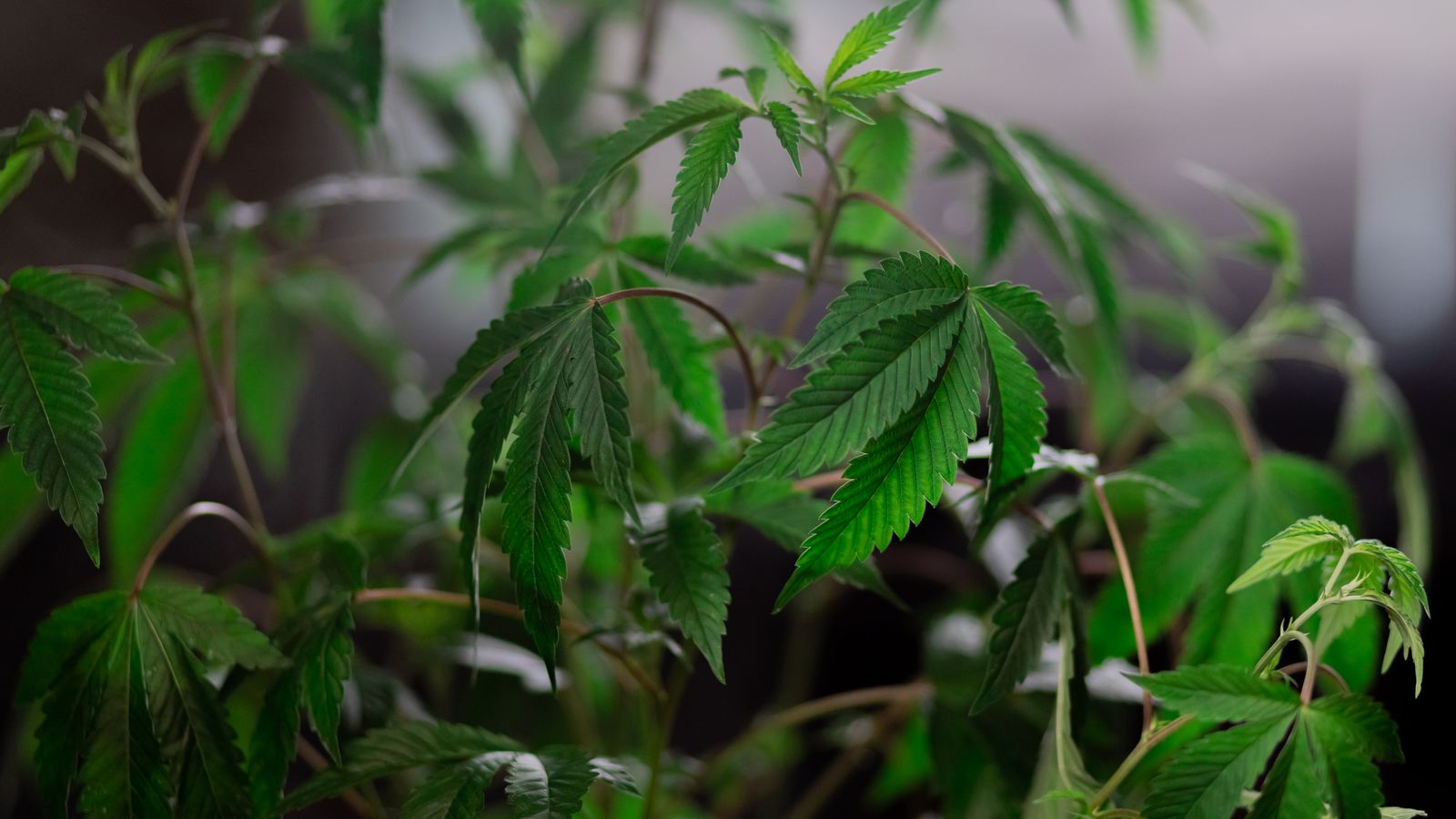
PSNI Seizes £1.1M in Cannabis Plants, Arrests 16 in Factory Raids
Police Service of Northern Ireland dismantles multiple cultivation sites in coordinated enforcement sweep across the region.

Northern Ireland Police Seize £1.1M Cannabis Plants, Arrest 16
PSNI's coordinated raids across multiple sites mark one of the region's largest enforcement operations against illicit cultivation.

Missouri Marijuana Expungements Fall Short of Automatic Promise
State's automated clearing system leaves some cannabis records untouched despite voter mandate.